Bringing The Garden Indoors: Part 1


I am no fan of plants in the house.  Once the gardening season comes to a close, it is a relief not have to worry about keeping plants alive. Plants inside the house-what could possibly be more unnatural than that?  Would I really subject a perfectly well meaning and decent plant to the dry heat and lack of sun that characterizes an interior space?  Perhaps this is wrong, but I like the separation of my gardening life, and my personal life.  OK, my gardening life is my personal life, but the thought of a winter getaway from the demands of the plants is attractive.
I have a very good friend whose house is loaded with all manner of tropical plants.  Julia does a great job with them, and I marvel at how she is able to keep all of them looking great.  She cannot bear to be without the garden for any longer than a moment; her house/conservatory is proof of that.  I think if she had her choice, she would live in a conservatory situated in the middle of a giant property.    

 I have had friends bring me plants for the windowsill behind my desk.  One Valentine’s day my landscape superintendent gave me a dozen auricula primroses-how I love them. I spent a whole winter doing watercolor paintings of them, such is my enchantment with them.  It took me 3 months to kil them, but kill them I did.  Stationed in the windowsill behind my desk, I could not remember to water them until they were in a state of utter dessication.  After too many water crises, they finally gave up on me.  
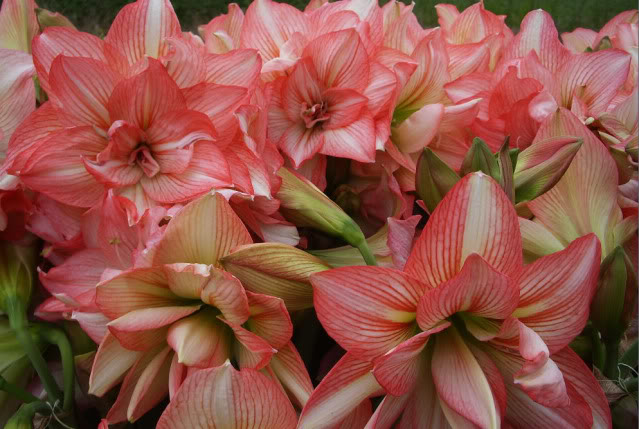
 My friend and  grower Marlene Uhlianuk, whose unusual plants and vegetables are a mainstay of my local market, gave me a pot containing the smallest rose in the world.  She insisted it would be easy to take care of.  On my window sill.  It took a few months to prove her wrong, but prove her wrong I did.  I still feel guilty about it. 
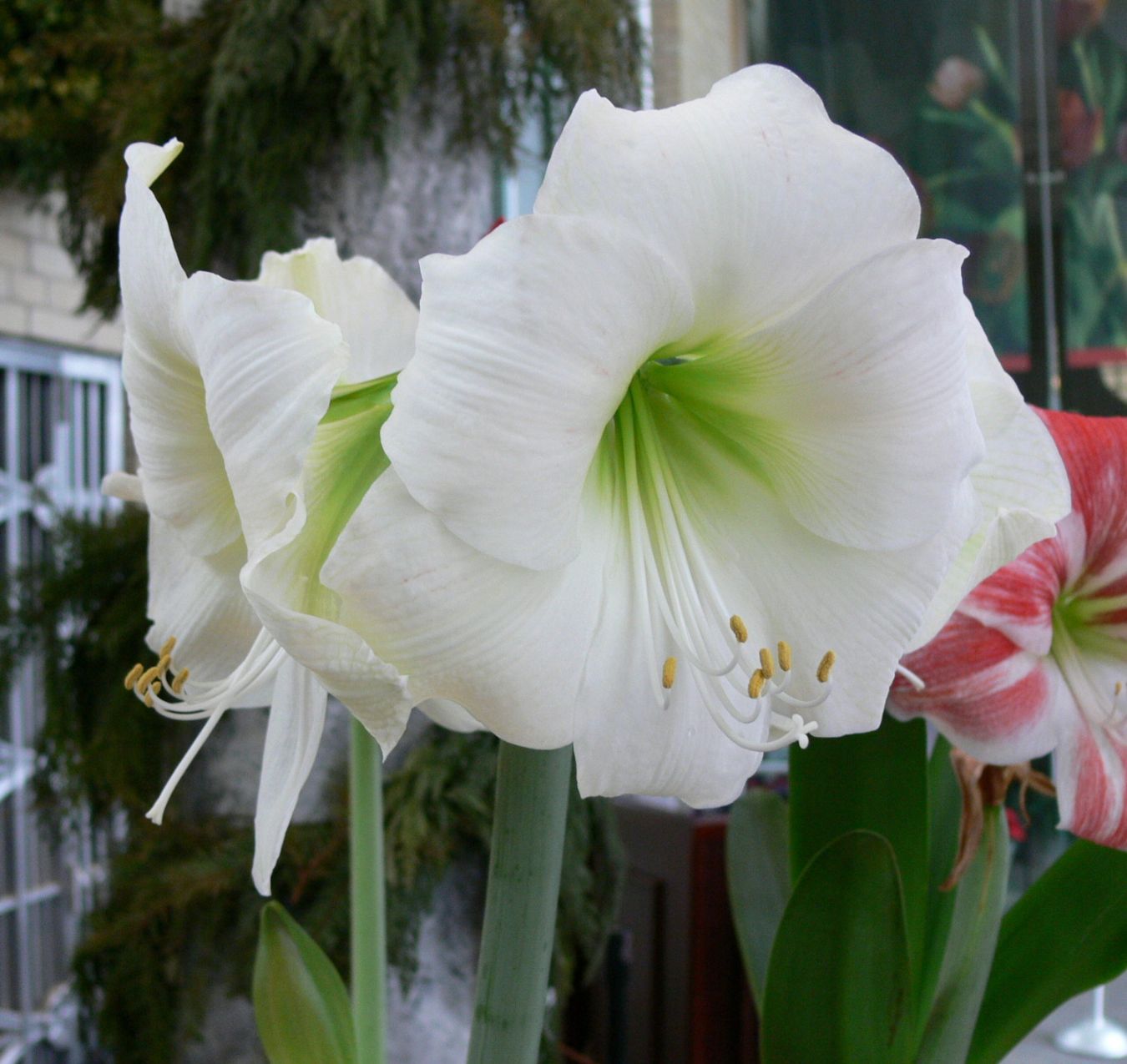
Though the thought of trying to keep tropical plants alive, inside over a winter leaves me absolutely cold, I can be seduced.  By amaryllis, that is.  Bringing on amaryllis bulbs indoors late in the gardening year-a means by which even I can bring the garden indoors. 

 The bulbs are enormous.  The bigger the bulb, the more stalks, and flowers.  The blooms are just as enormous-startlingly so.  There are miniature varieties, like the amaryllis “Evergreen” pictured above.  Though it is a miniature, it’s effect is anything but.  Amaryllis is a very small genus of flowering bulbs made up of just two species.  Amaryllis belladonna is a species native to South Africa.  The taxomony aside,  these hefty bulbs can produce flowering stalks from December until April. 
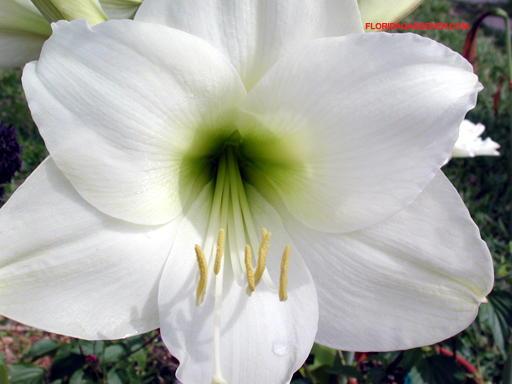
Potted up, a solid two-thirds of the bulb needs to be above the soil line.  This makes sense-big juicy bulbs have no need of too much water.  As for “planting” amaryllis in soil in clay pots, with 2/3’s of the bulb above ground-this leaves me cold.  I don’t have a conservatory or greenhouse, just a house.  My idea of a household is a space unsullied by dirt.  Apart from what the corgis track in, that is.  Forcing bulbs in water is an alternative that sounds good. 
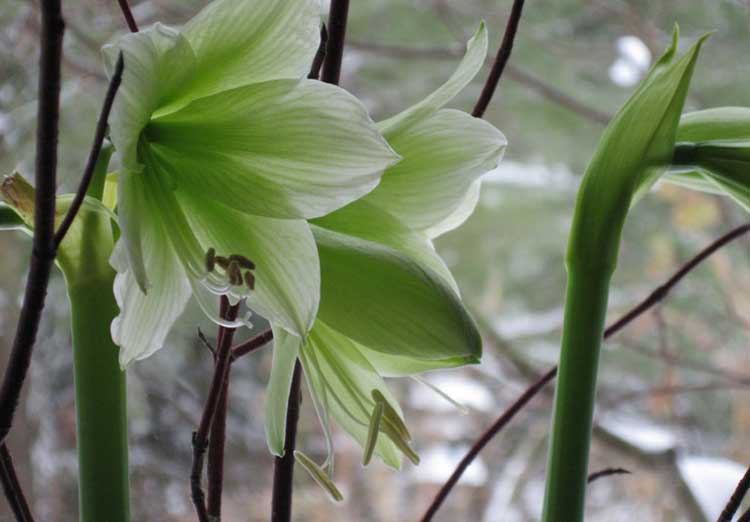
  

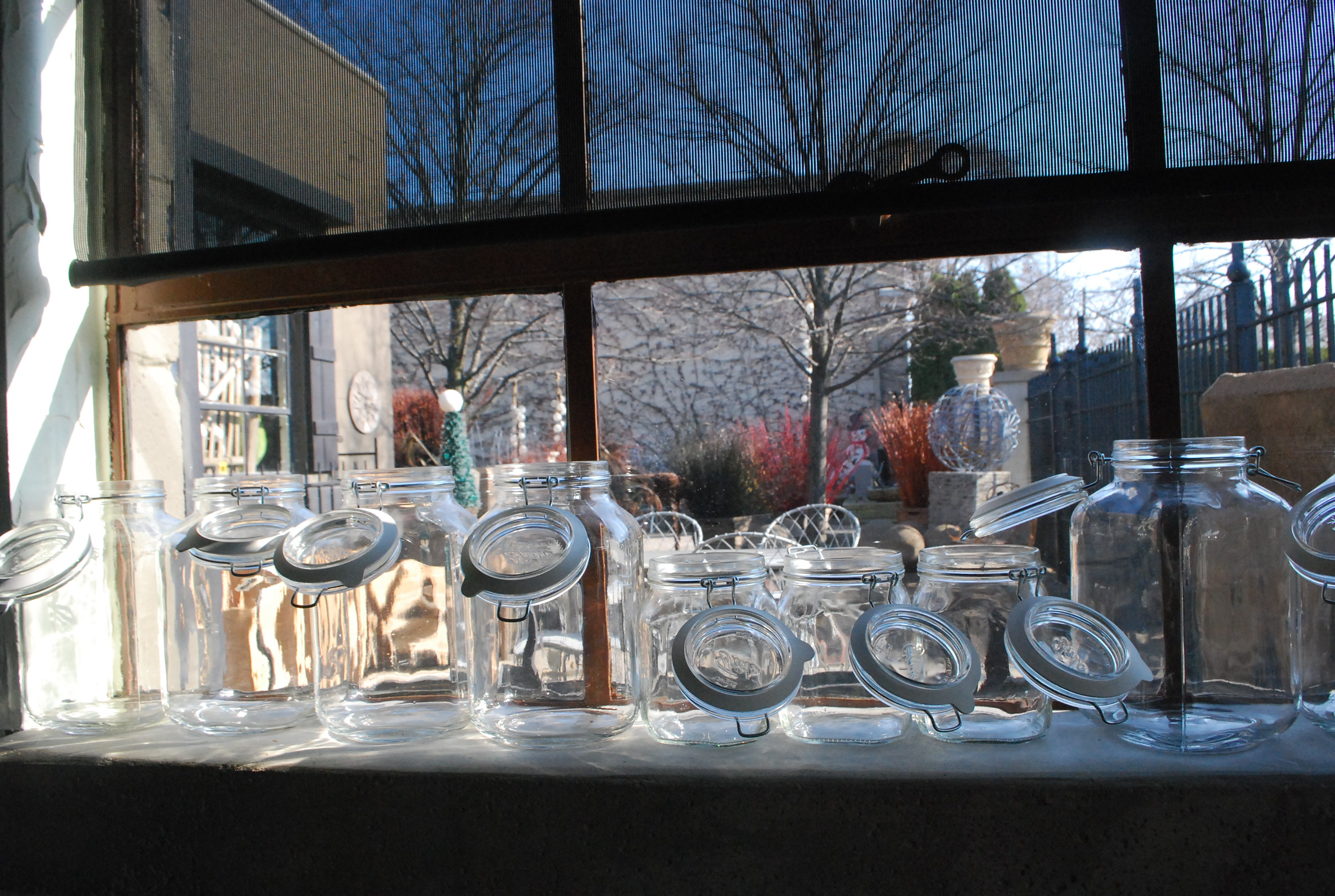
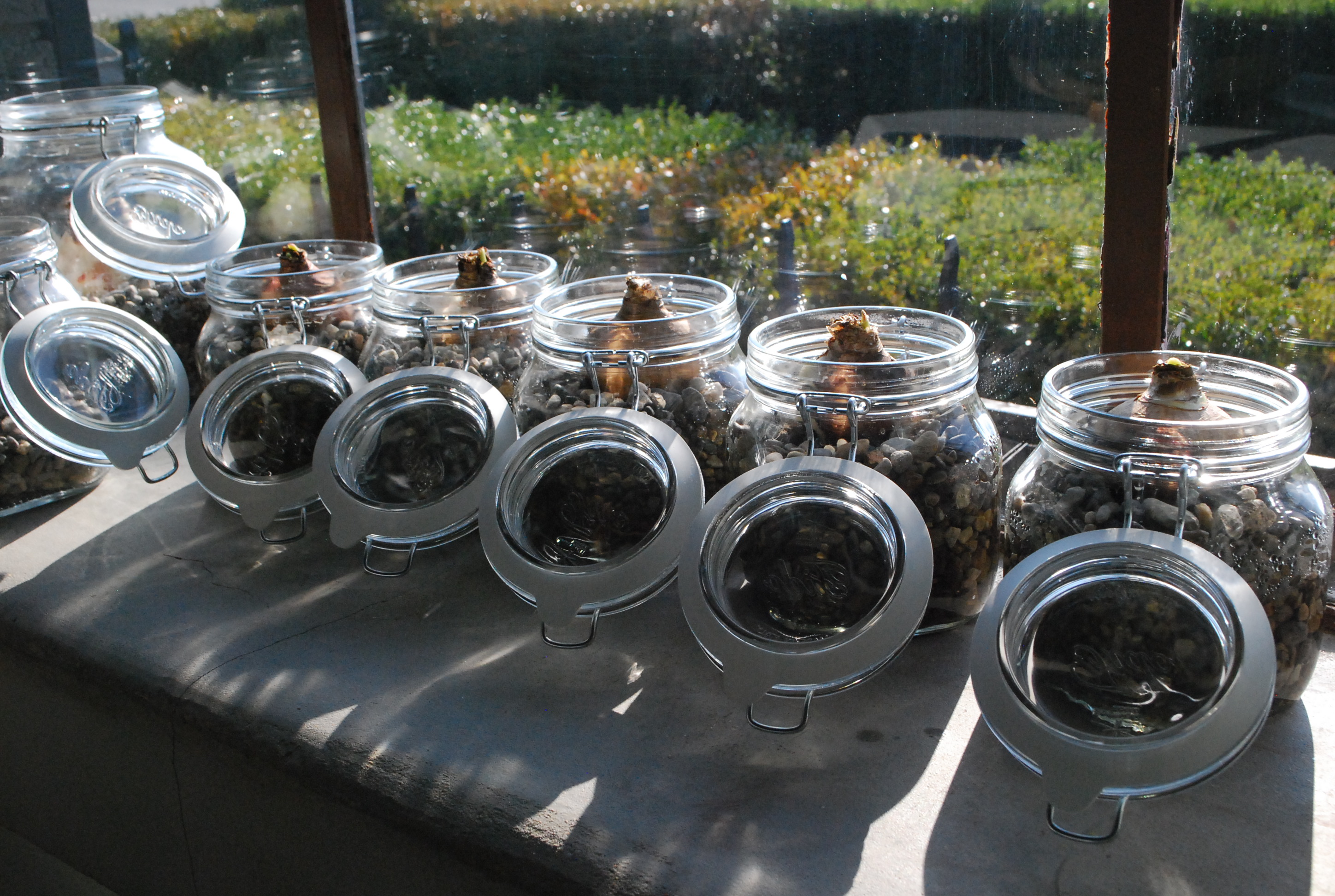
I like to grow amaryllis in water.  Water gardens are perfect for people who cannot remember to water-both inside and out.  A jar, a bulb, and a handful of stones is a simple and easy means of bringing the garden indoors.  The jar, and the stones-entirely up to you.  Rob bought canning jars for our amaryllis this year.  The capped jars from Fisk are so beautiful.   I am dubious of any idea about which might make my winter easier.  But in truth, the process of bringing the amaryllis into bloom indoors-simple and satisfying.

 The amaryllis Baby Doll is white, with the slightest hint of blush pink. If these pictures do not make you long to grow some on your windowsill, then nothing will.  The reward for your effort is considerable.  If you follow a few simple rules, amaryllis can be grown on, and kept for years.

Grumpy about the passing of the gardening season?  Growing amaryllis is guaranteed to help with that.  Set the bulb low in the jar.  The rim of the jar will help hold the heavy flowering stalks aloft.  Add water to just below the basal plate of the bulb-the water is for the roots to reach for.  Soaking the bulb itself in water is asking for rot.  Provide a warm place.  Amaryllis bulbs are ready and waiting to grow and bloom, meaning that even a haphazrd effort will probably produce flowers.  Not interested in hauling in jars and bags of stone?  Rob has all of these amaryllis ready and waiting.   


At A Glance 2: The Inside

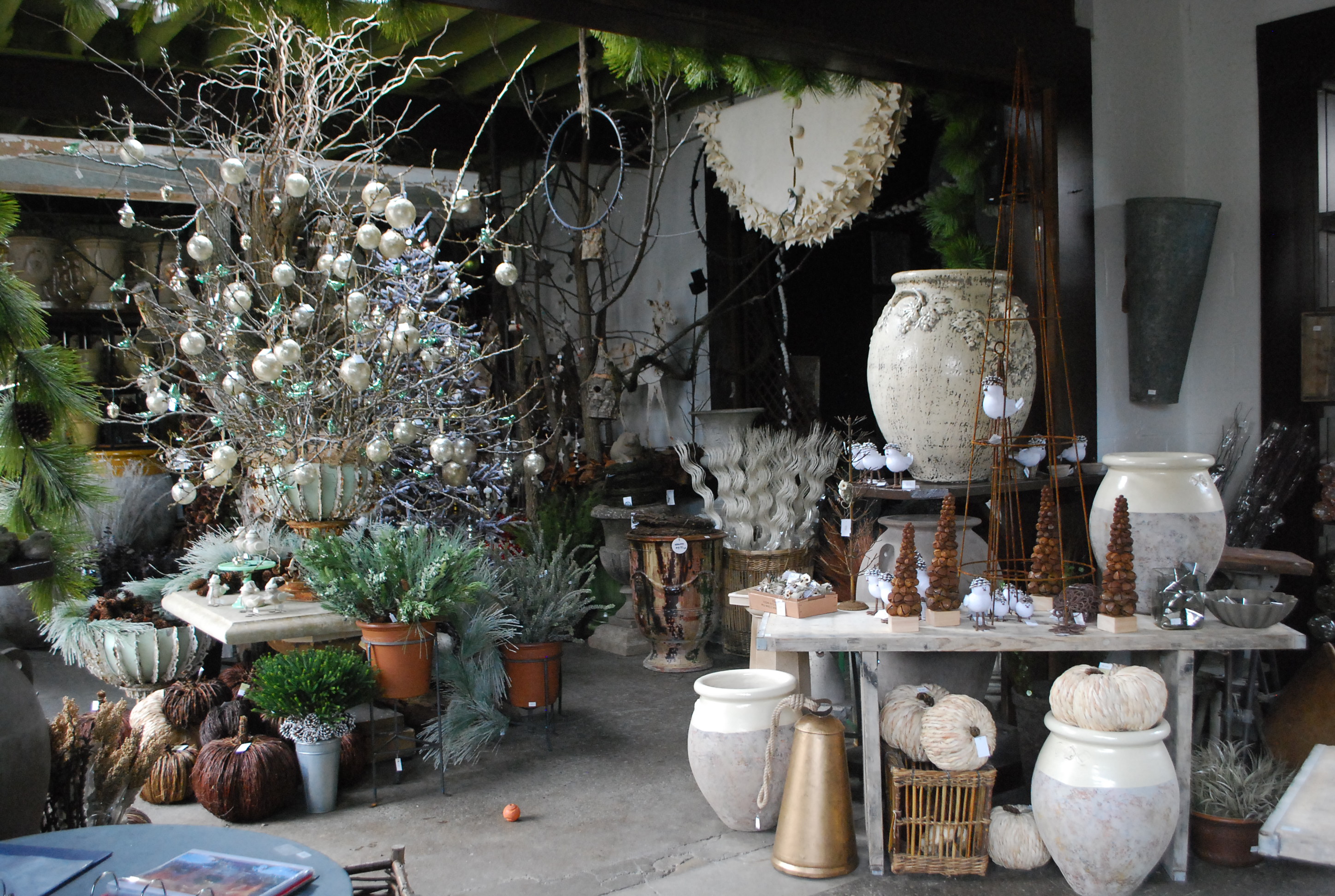
Ou holiday/winter open house started this past Thursday evening, and is just about to close today. To the many people who came both to visit and shop, many thanks.  For those of you too far away to visit, I hope these pictures give you some idea of how the place looks.  

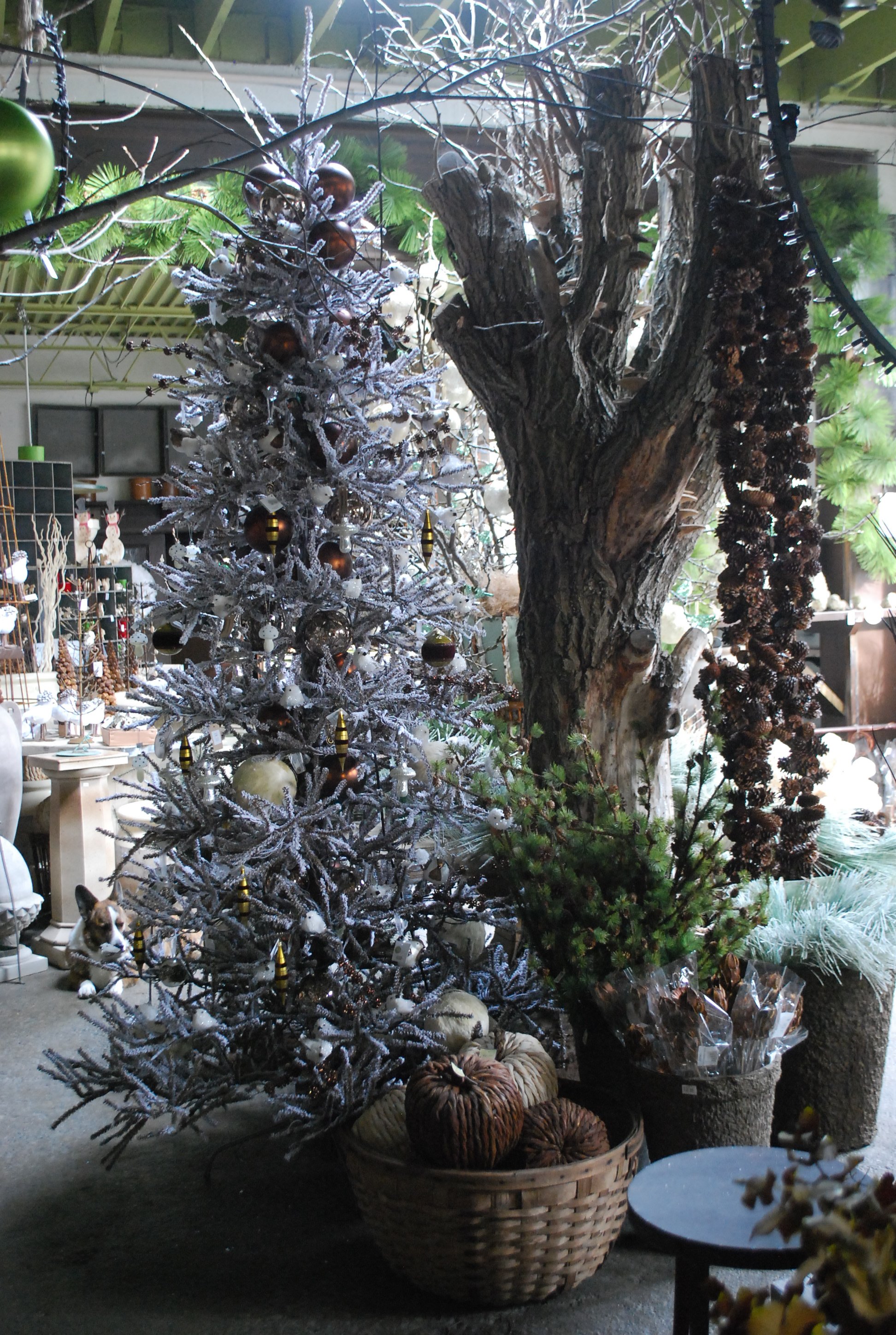
old willow stump and brown flocked tree

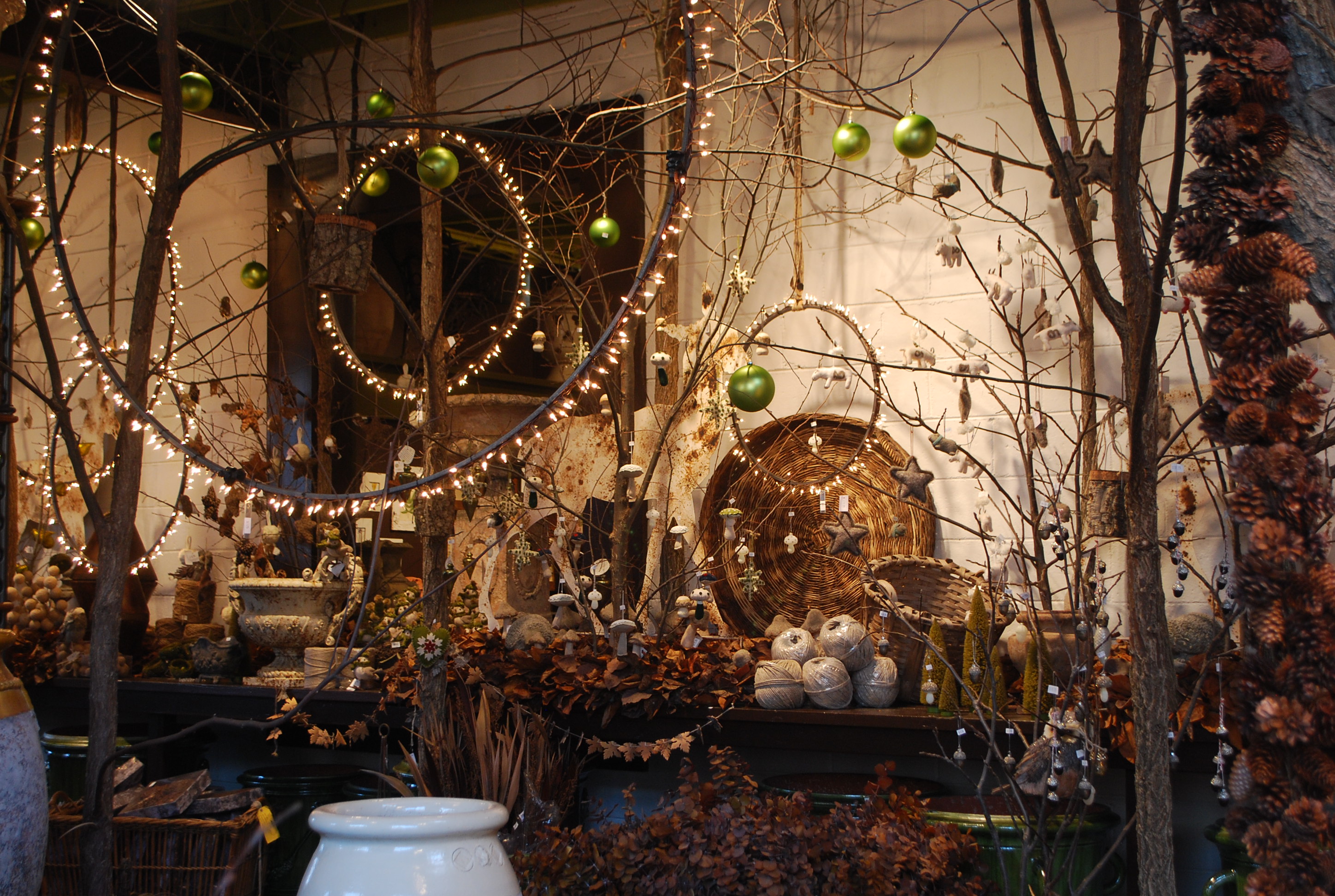
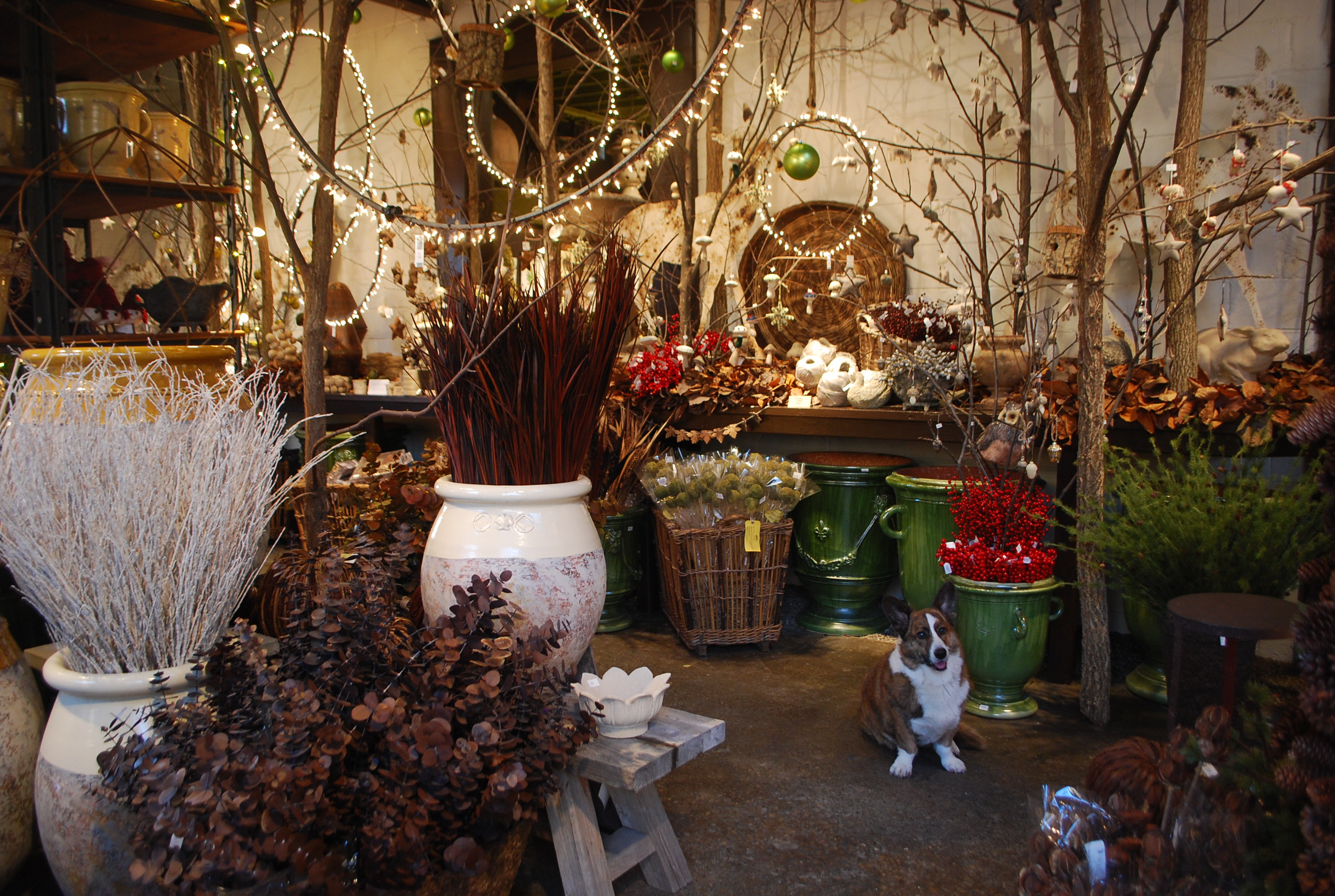
the forest floor

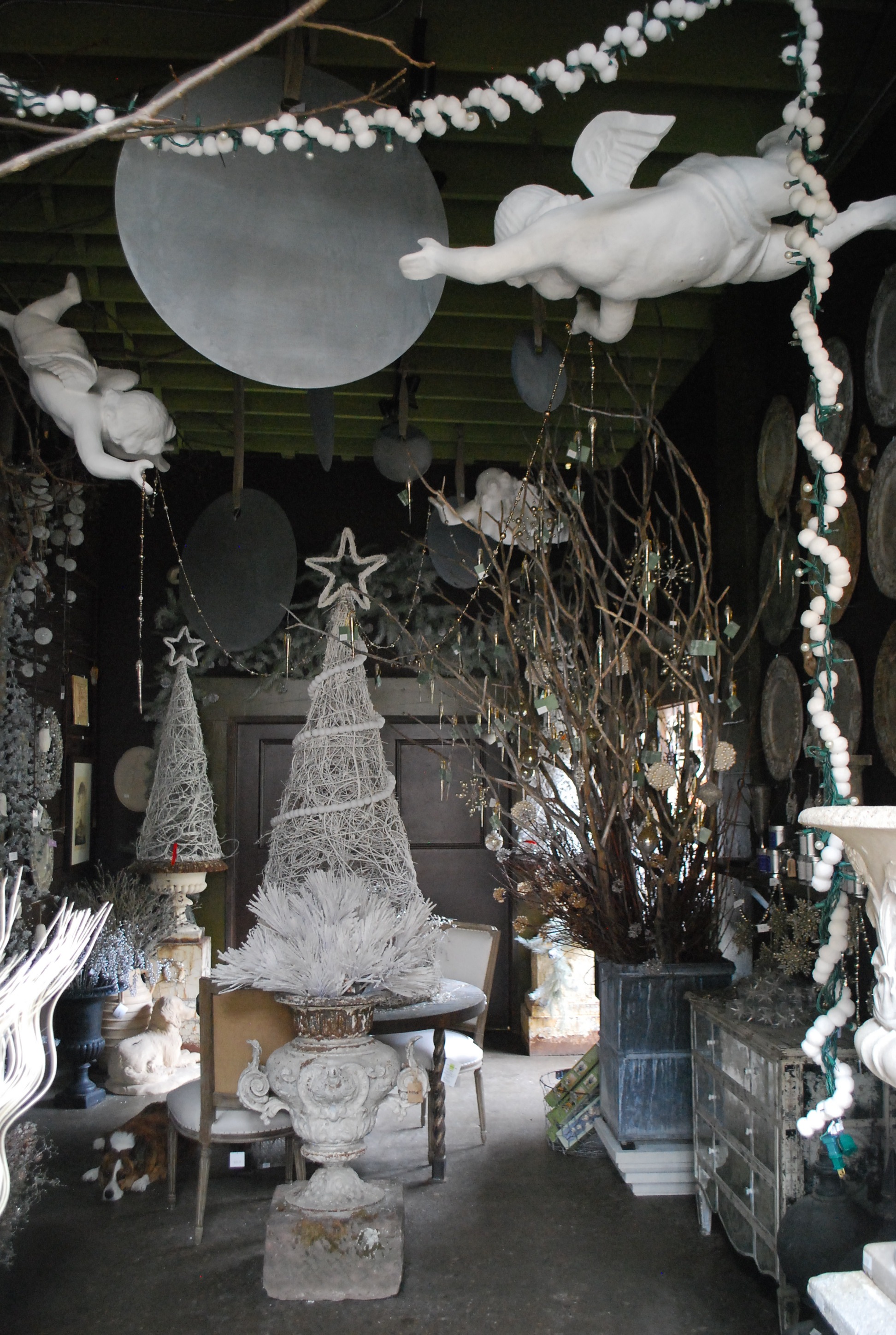
white painted cone topiary trees

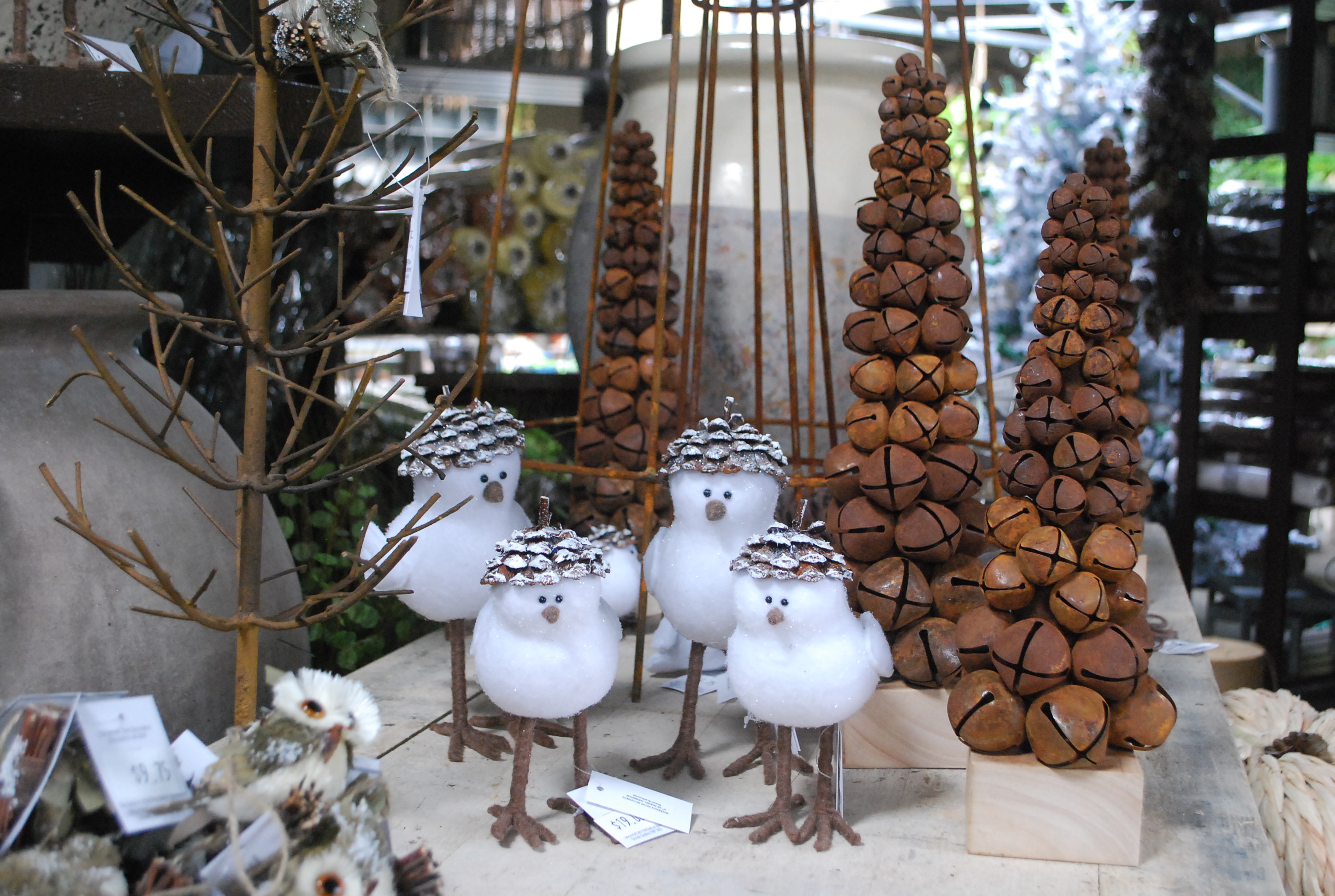
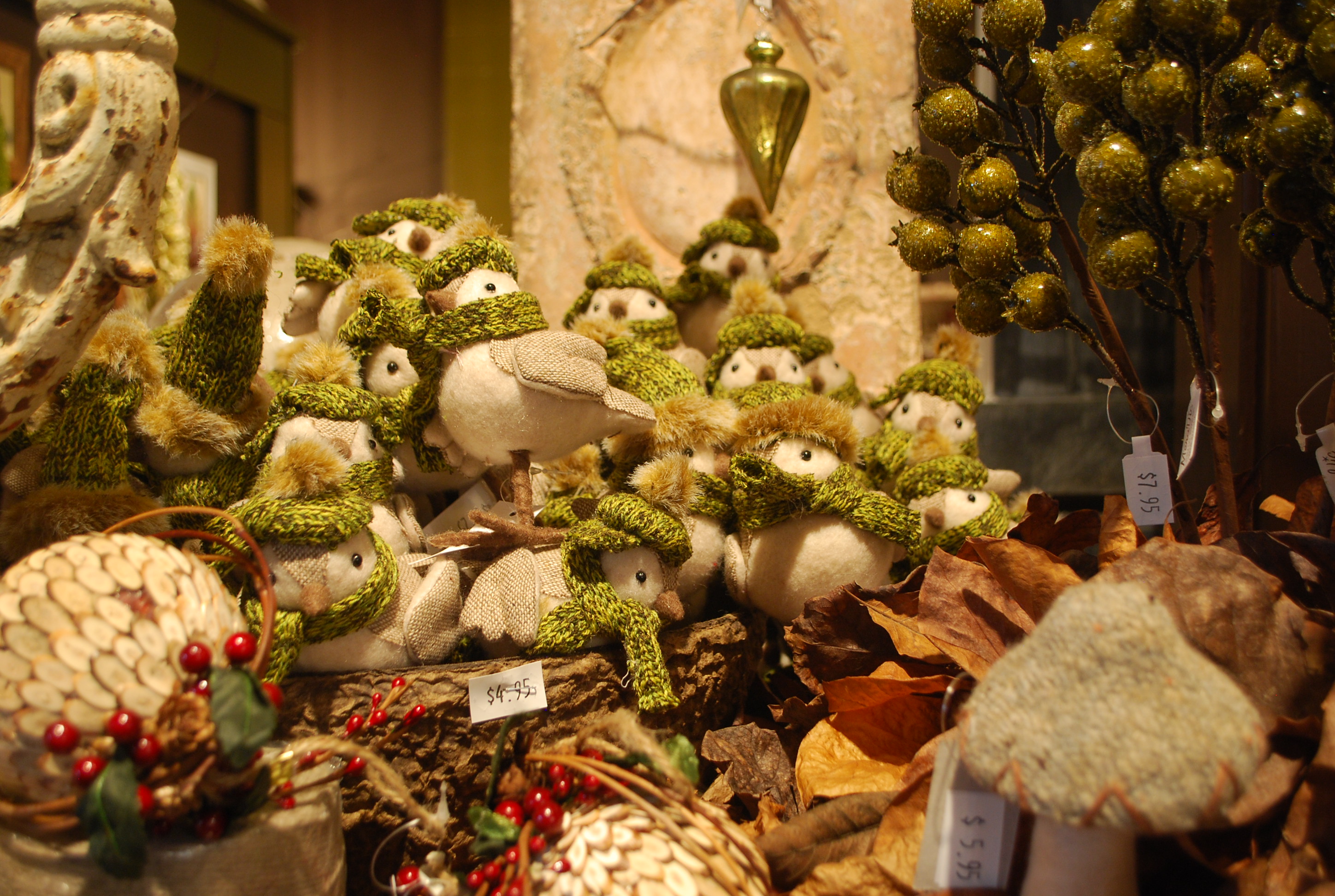
hatted birds

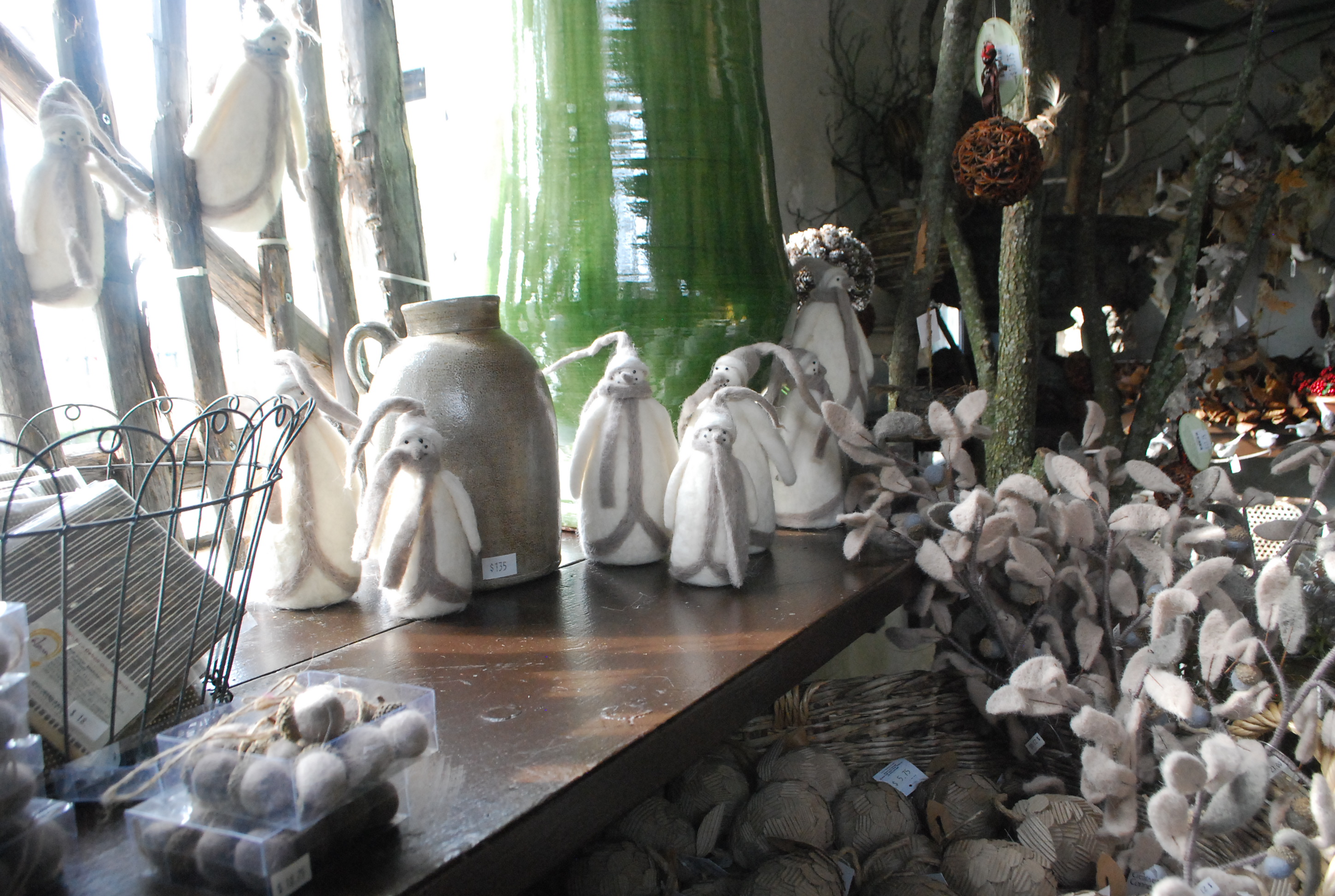
felt snow people

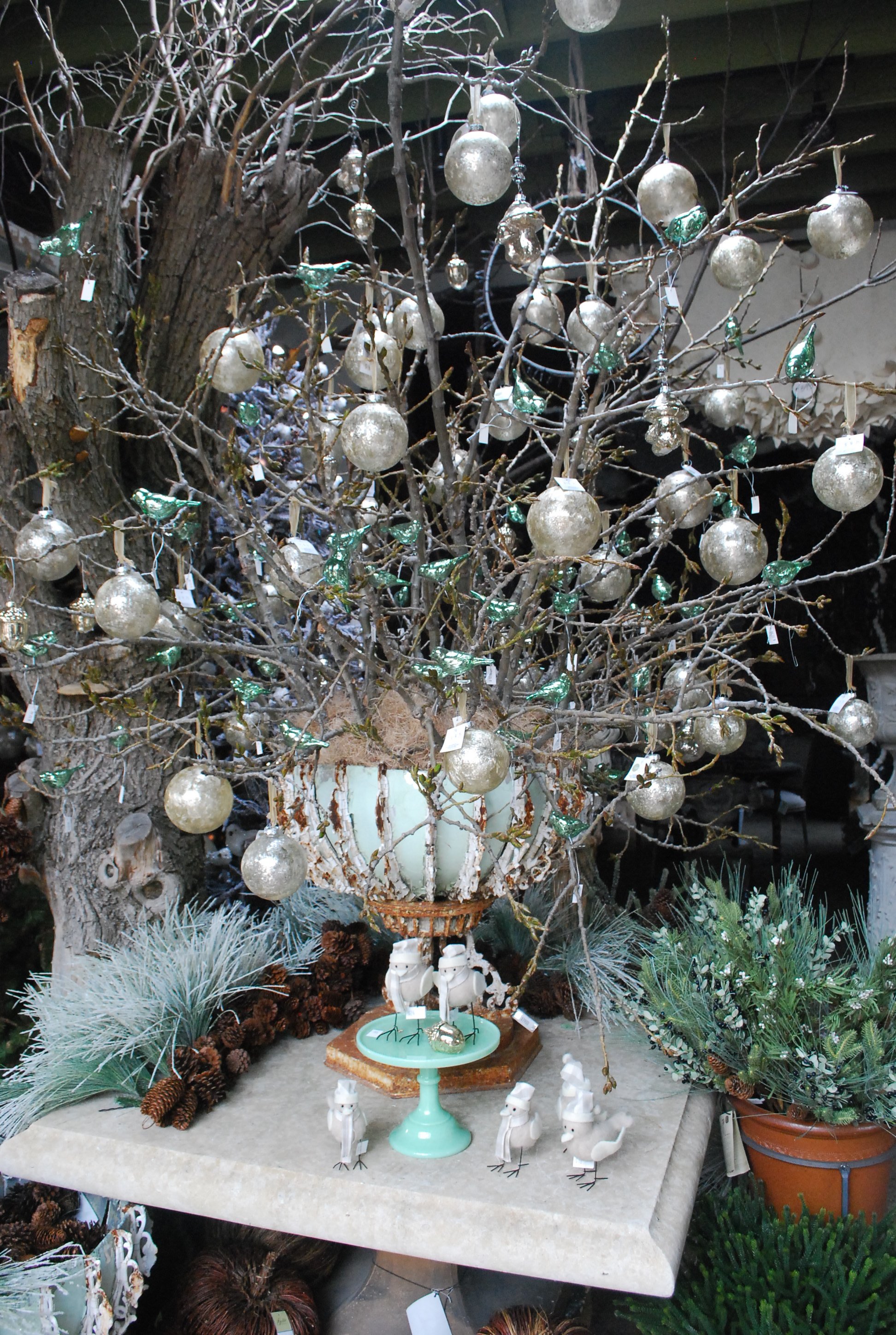
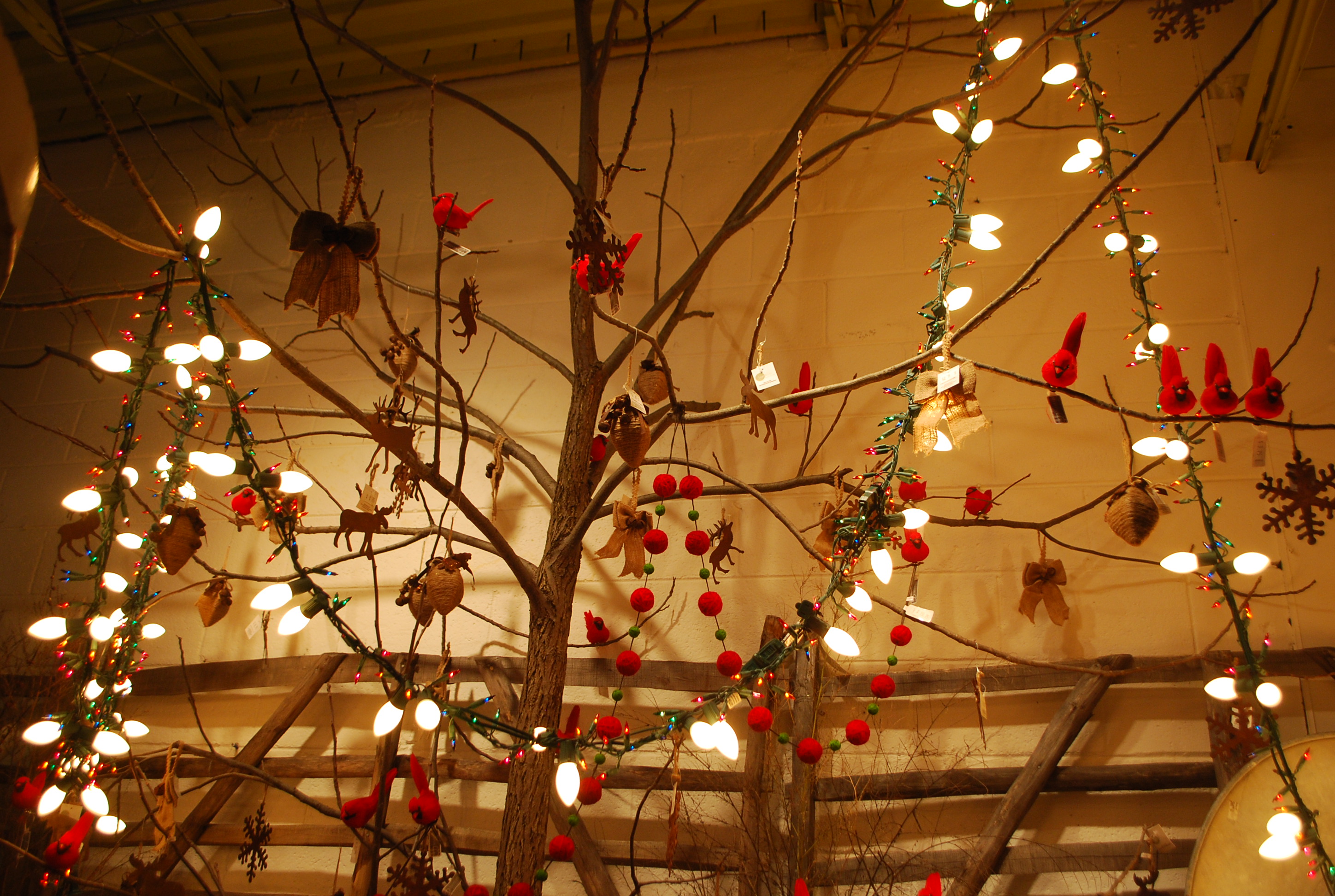
ornamented poplar branches

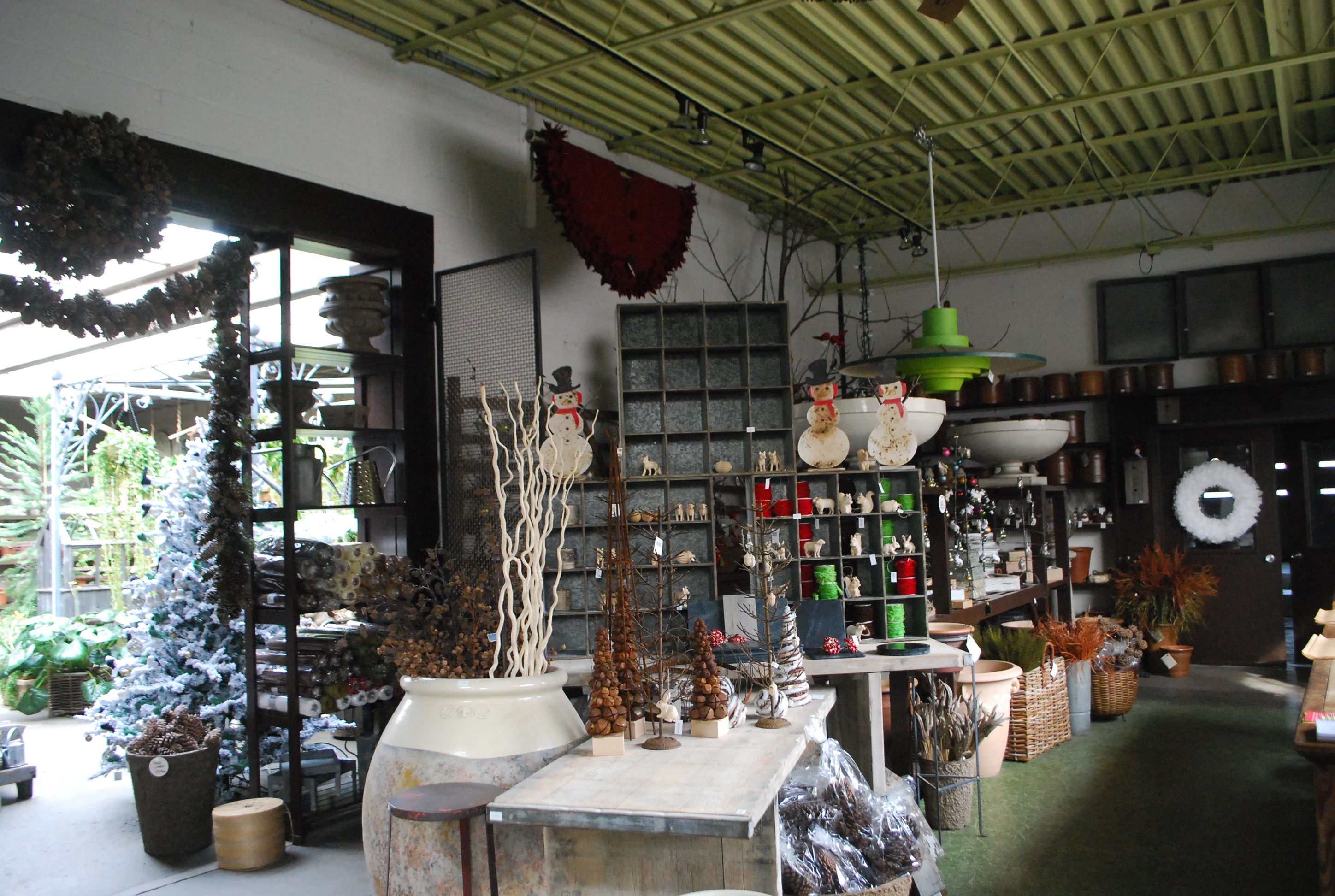
the shop at the holidays

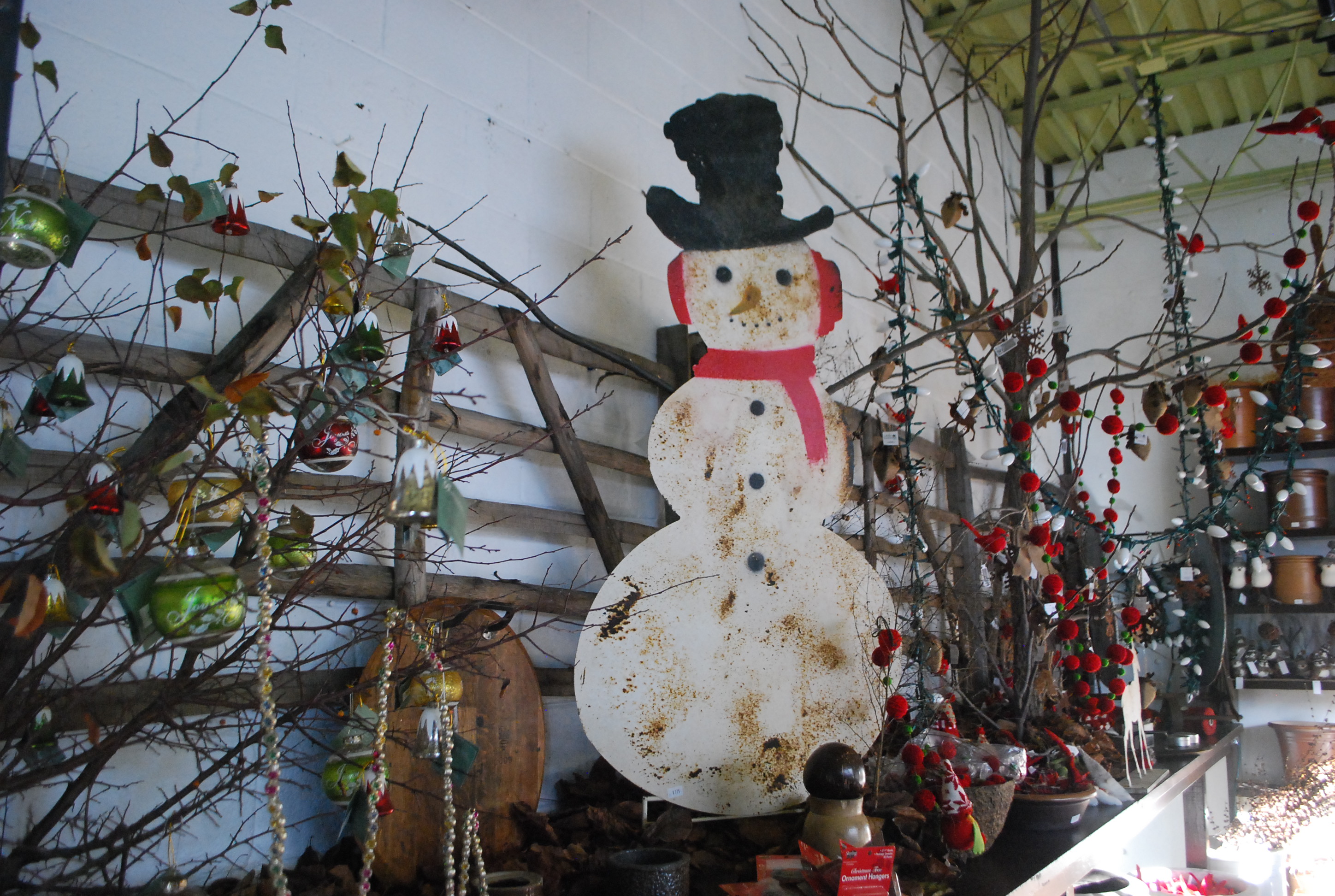
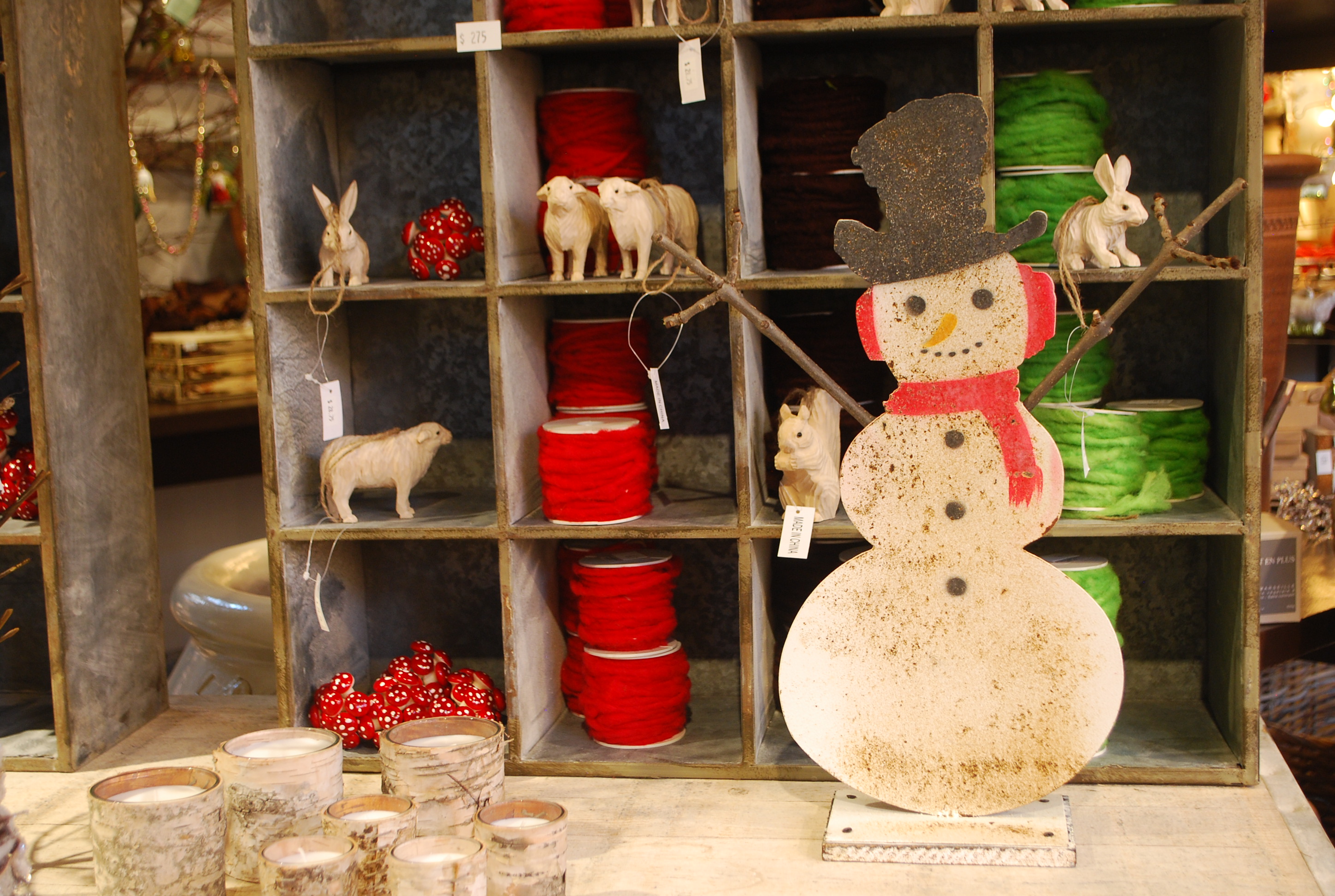
rustic painted steel snow man

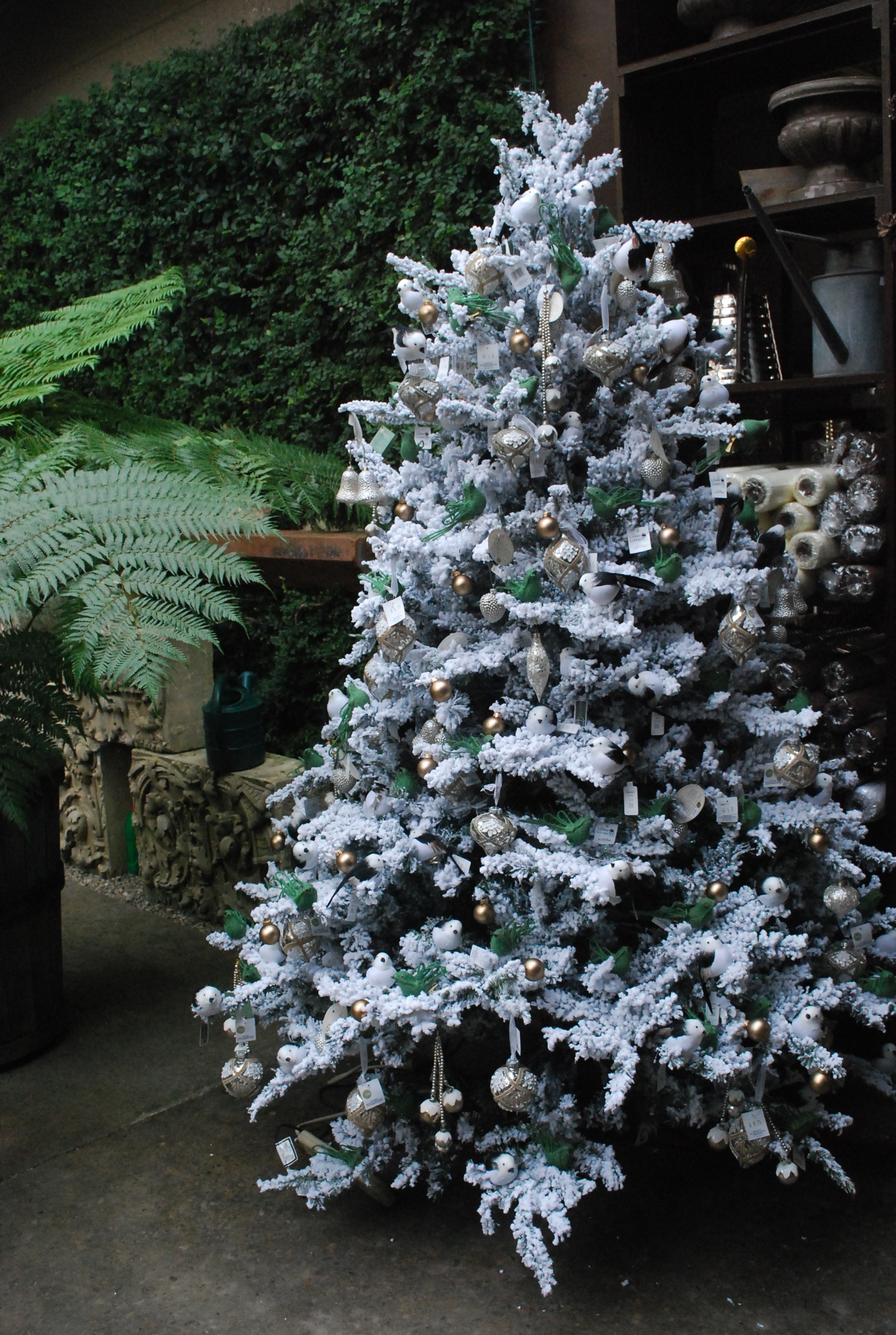
flocked tree with birds

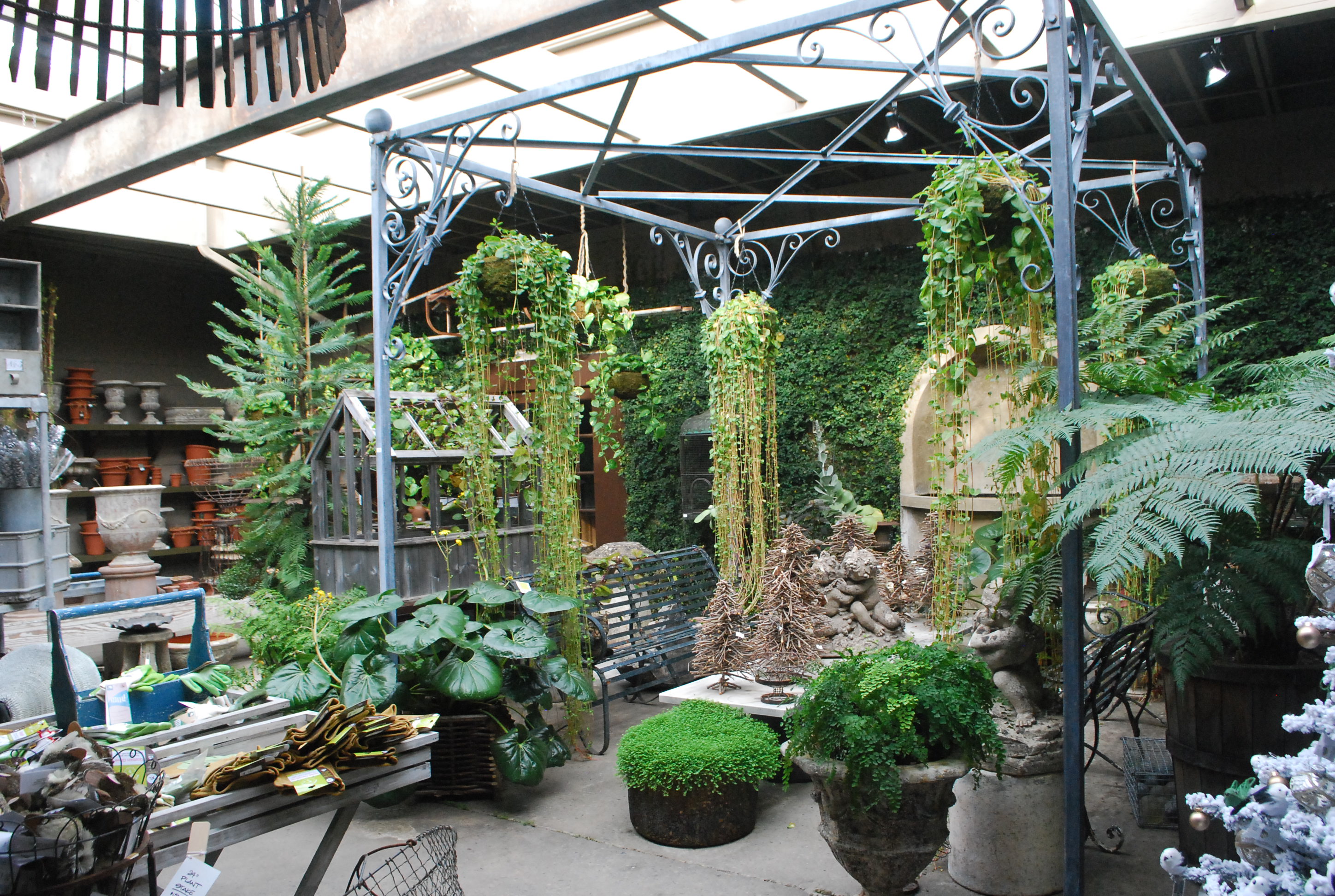
the green house space

Howard in the shop


Winter Preview


The close of the gardening season in late fall means the winter gardening season is not far behind.  The winter season at Detroit Garden Works had a very simple beginning 10 years ago.  Why does any gardener need to look at and live with empty pots all winter? We began slowly, with a selection of coppice wood twigs, fresh cut greens of every description, and weatherproof berry picks.  People liked that idea, and were game for more.      

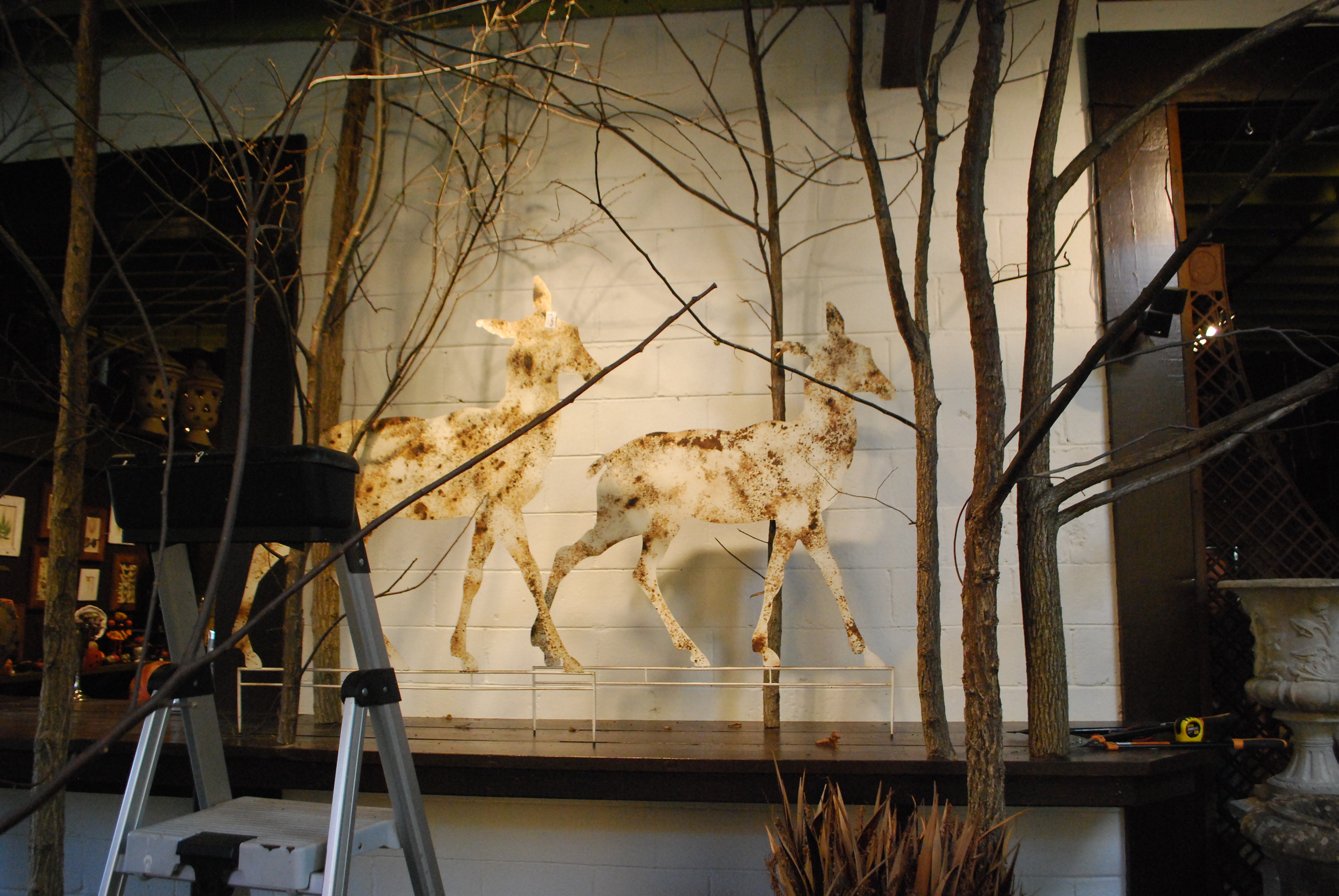
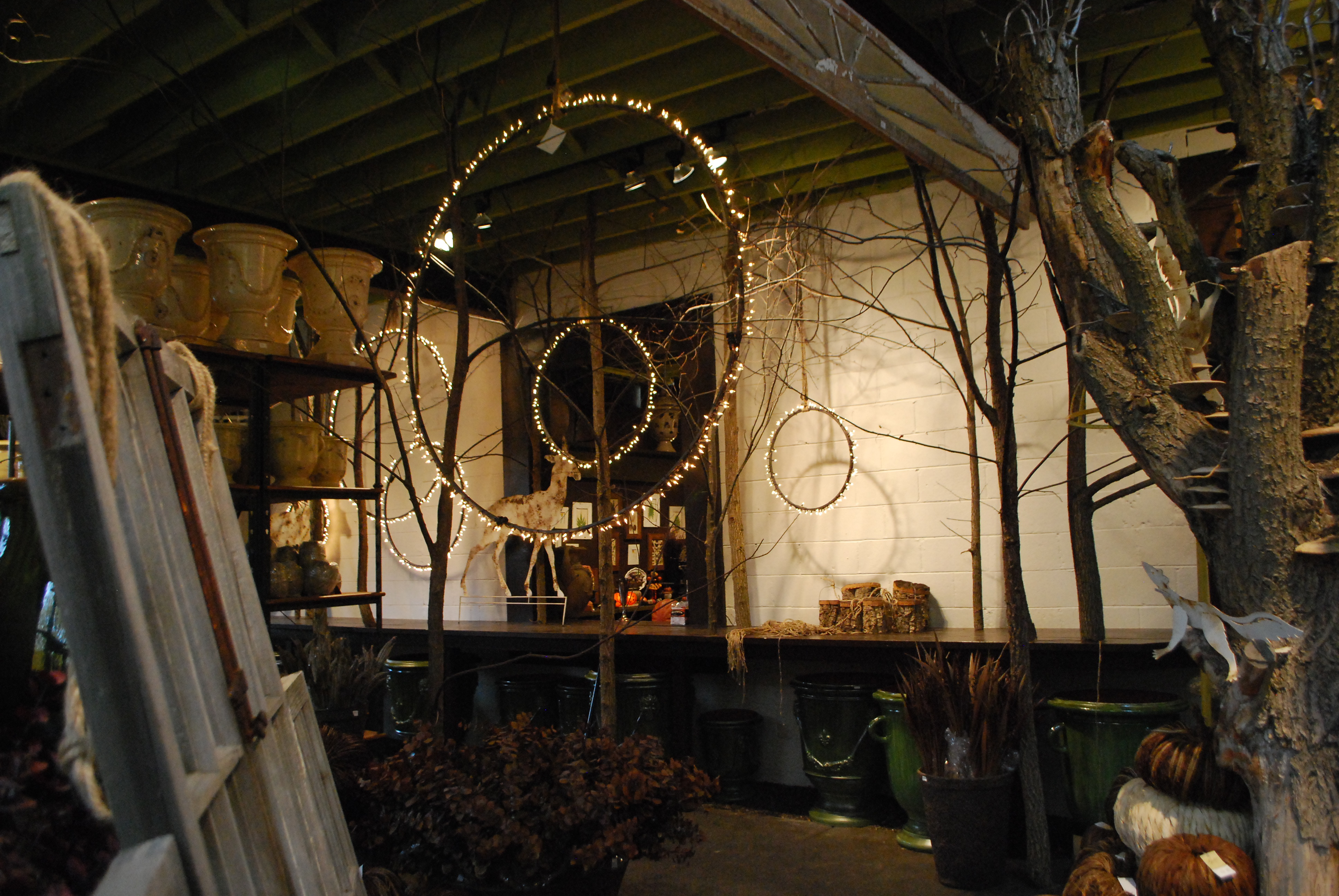
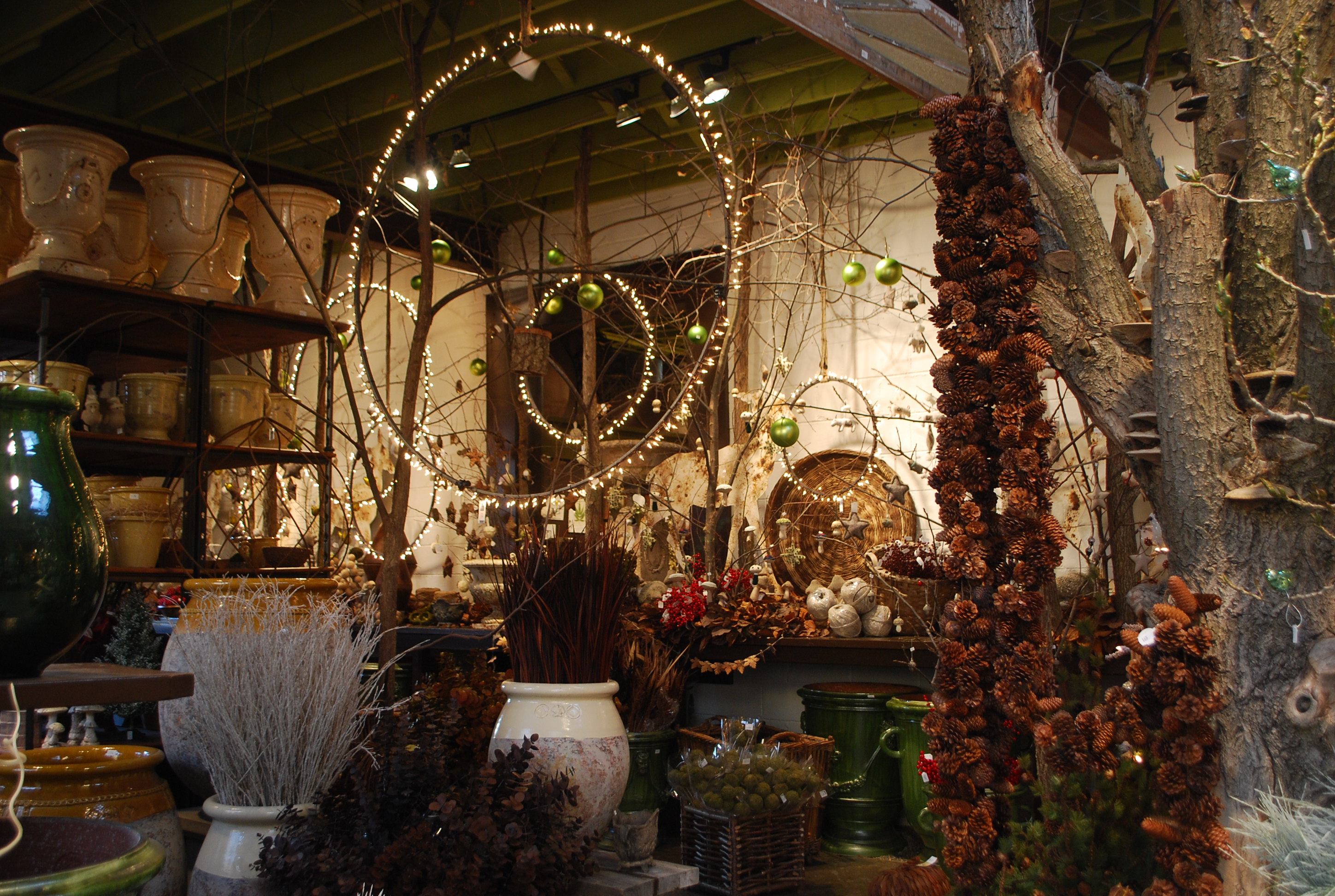
Now we offer a wide selection of materials for winter containers, both natural and weatherproof.  Materials for holiday and winter both inside and out fill the entire shop from the first week of November until the middle of January.  Though we try to carry a wide range of materials that appeal to gardeners of all kinds, we usually have an organizing metaphor or scheme for each season.  This year-the forest floor.  Lots of things get moved around, and every surface gets washed, before we set the stage.  This year, big branches were wedged or wired between the floor and the ceiling. The major and big items get placed. 

Weeks later, the details begin to fall into place.   

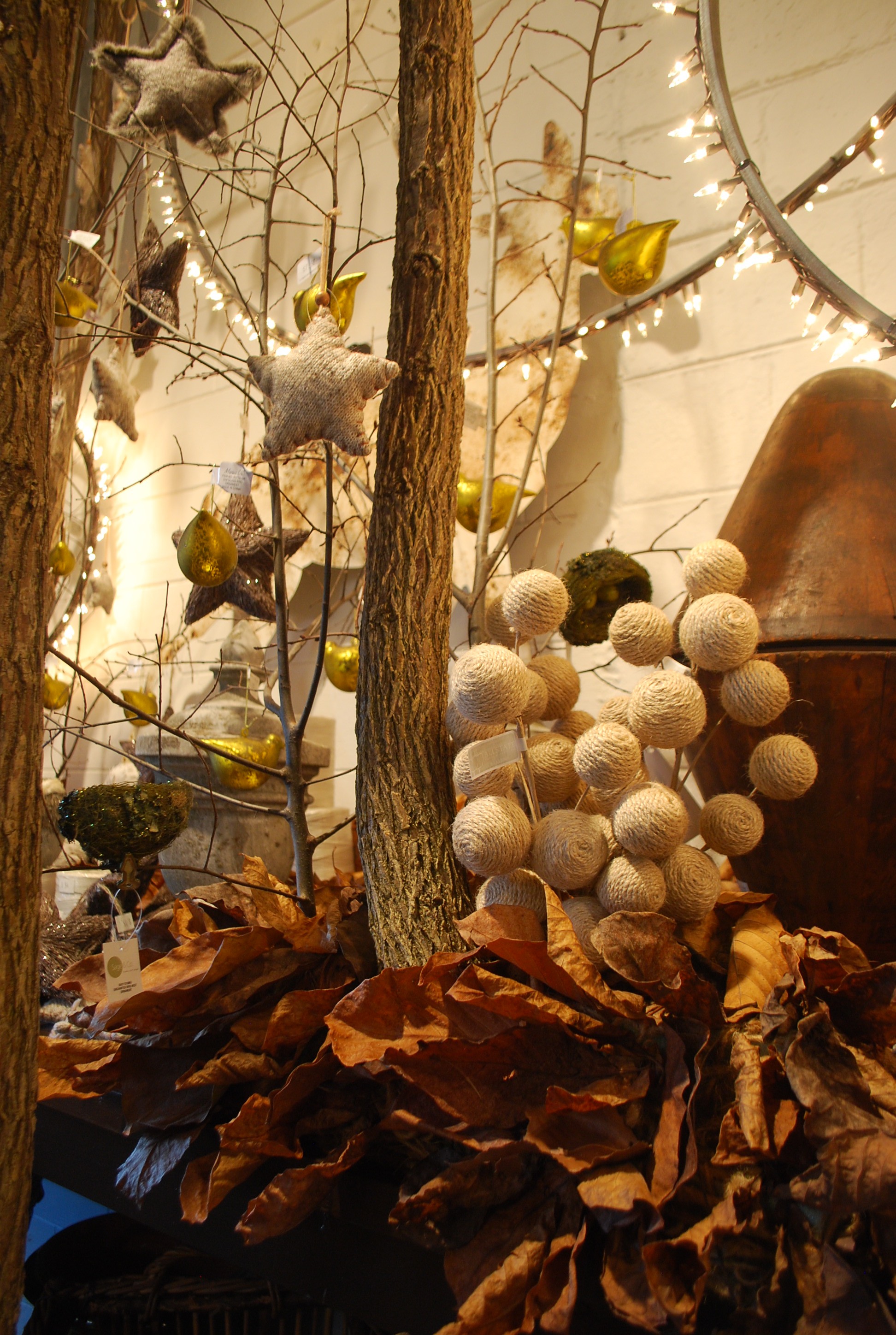
Once the trees were set in place, we needed a forest floor.  We collected the leaves that fell from my magnolias at home the day they fell.  Leaves that have just dropped still have moisture in them, and are flexible.  Of course we intended that our floor would flow over the edges of the shelves.  This meant that many of the leaves needed to be secured to our floor forms with fern pins.  Jenny and I must have gone through a box of a thousand.

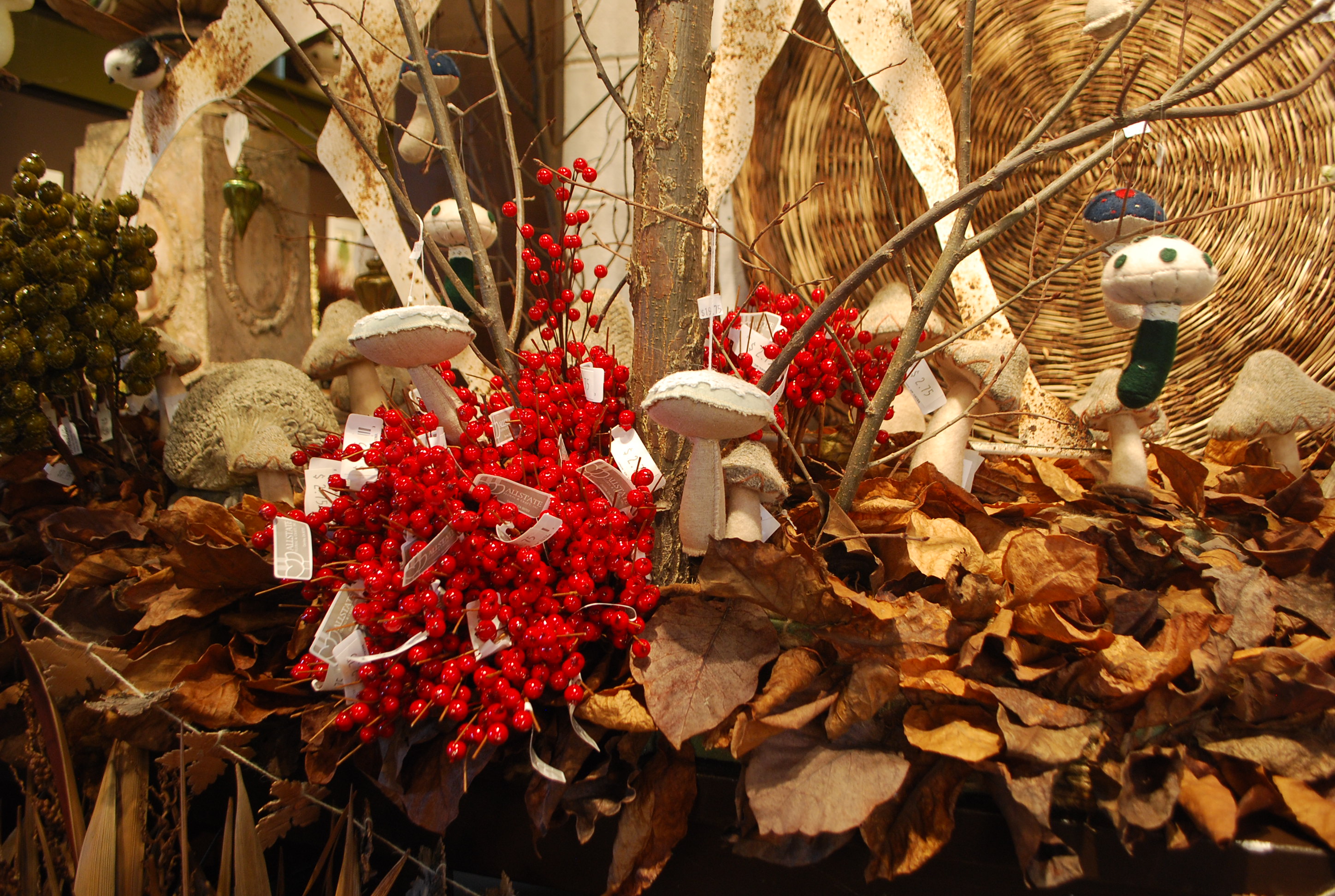
Why all this fuss?  The sourcing and cutting of a collection of giant branches and dragging them inside,  the collecting of the leaves and arranging them made a believable home for everything that we had shopped for.  The shop is not just a shop.  We hope it is an experience of the garden.  Though the short red berry picks and the muslin mushrooms came from different places, they both had a home to go to that made visual sense.

Though there is an incredible variety of objects, they all look as though they belong.  We never open a box, and set it out on a shelf.  The intent is to show how those materials can be used, and to what effect.  And that we celebrate each season in turn, as it deserves to be celebrated.

If you garden in Michigan, a sense of humor about the winter to come is a handy thing to have.  These felt birds with their caps and scarves make wry reference to the cold that is surely on the way.  Filling the front porch pots with an arrangement of materials, decorating a tree outside with lights and a tree inside with berry picks, making a wreath for the door-energizing, fun, creative-satisfying. 

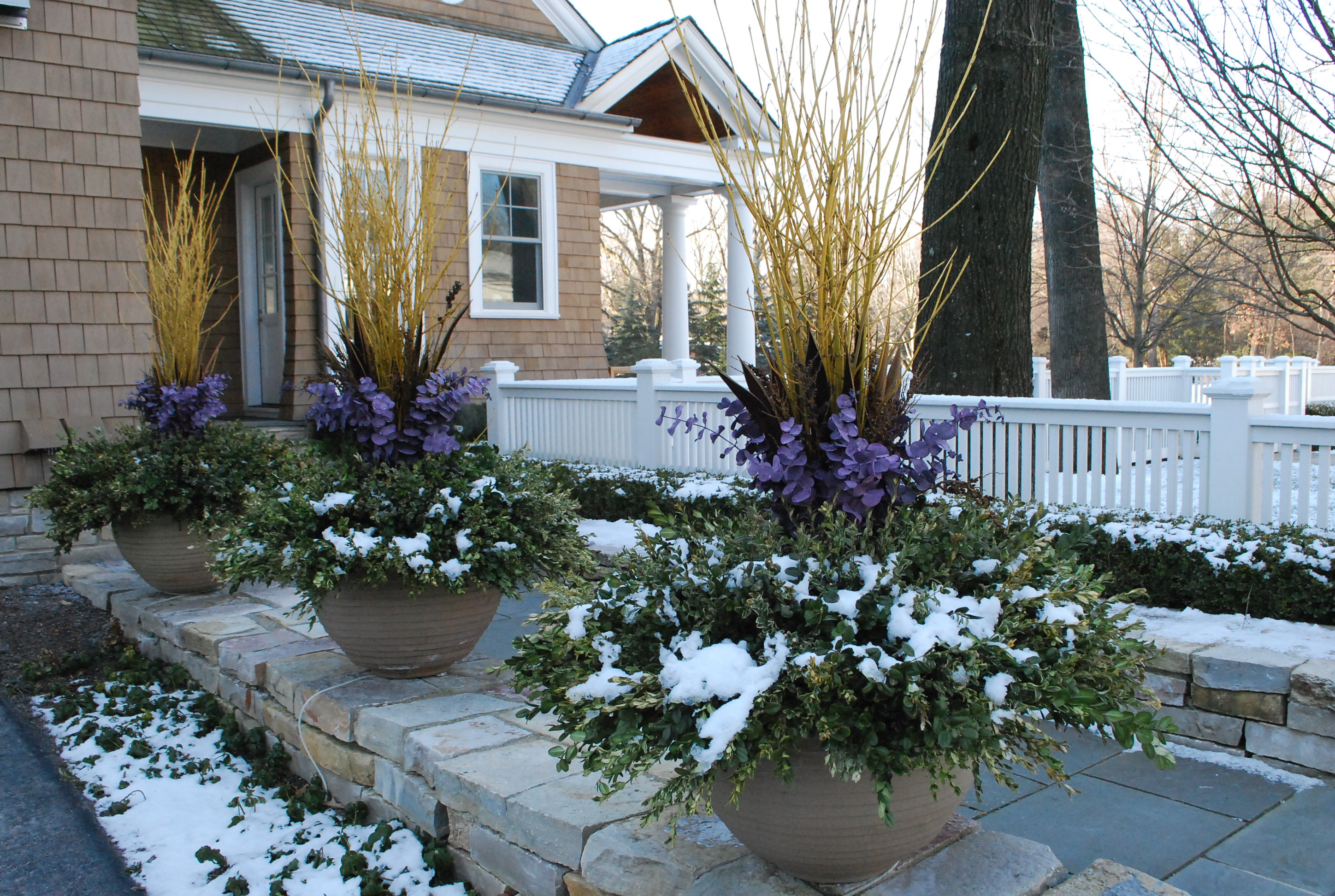
Decorating my yard for the holidays is a form of gardening.  Though I am not digging holes, and watering, I am designing with the intent that my winter garden embraces the season, and be beautiful.  Good gardens have a lot going for them in the winter.  The evergreens are beautiful in the snow.  The dry heads of the hydrangeas will persist most of the winter.  The dark angular shapes of the trees in their bare state are striking against a moody winter sky.  To this I mean to add a little cheer.

I am thinking I might want a big twiggy branch for a Christmas tree this year.  The bare branches are so easy to load with  lights, garland, and ornaments.  The shop this season is spectacularly twigged out.  Should you live nearby, our winter preview starts this coming Thursday evening at 5, and continues throughout the weekend.   

Our forest floor is by no means all of what we have going on.  It will take every bit of the time left between now and Thursday night for our group to get every last spot looking its winter best. Should you live too far away to visit, I will post lots of pictures in hopes you can get a feeling for our winter gardening ideas.

A celebration of the garden is always in order.


Coppice Wood

Coppicing is a traditional method of producing long straight woody stems by cutting a tree or a shrub back to the ground.  Many varieties of woody plants respond to this drastic treatment with vigorous growth-from the ground.  Coppice wood was used to provide firewood in European countries where the number of trees were vastly outnumbered by a large population requiring fire for cooking and heat.  Shrubby trees wre planted on the perimeters of farms; regular coppicing produced densely twiggy living fences.   

The new shoots emerging from the stump of a tree grow long and straight.  The juvenile growth is vigorous, and the color is vibrant.  In England, the coppice wood from the sweet chestnut tree is still used to make fencing and fence poles for livestock and poultry.  The sweet chestnut is coppicied on 12 to 18 year cycles, and then harvested to make fencing and gates.  The poles come from coppice wood which is allowed to grow upwards of 30 years before cutting. 

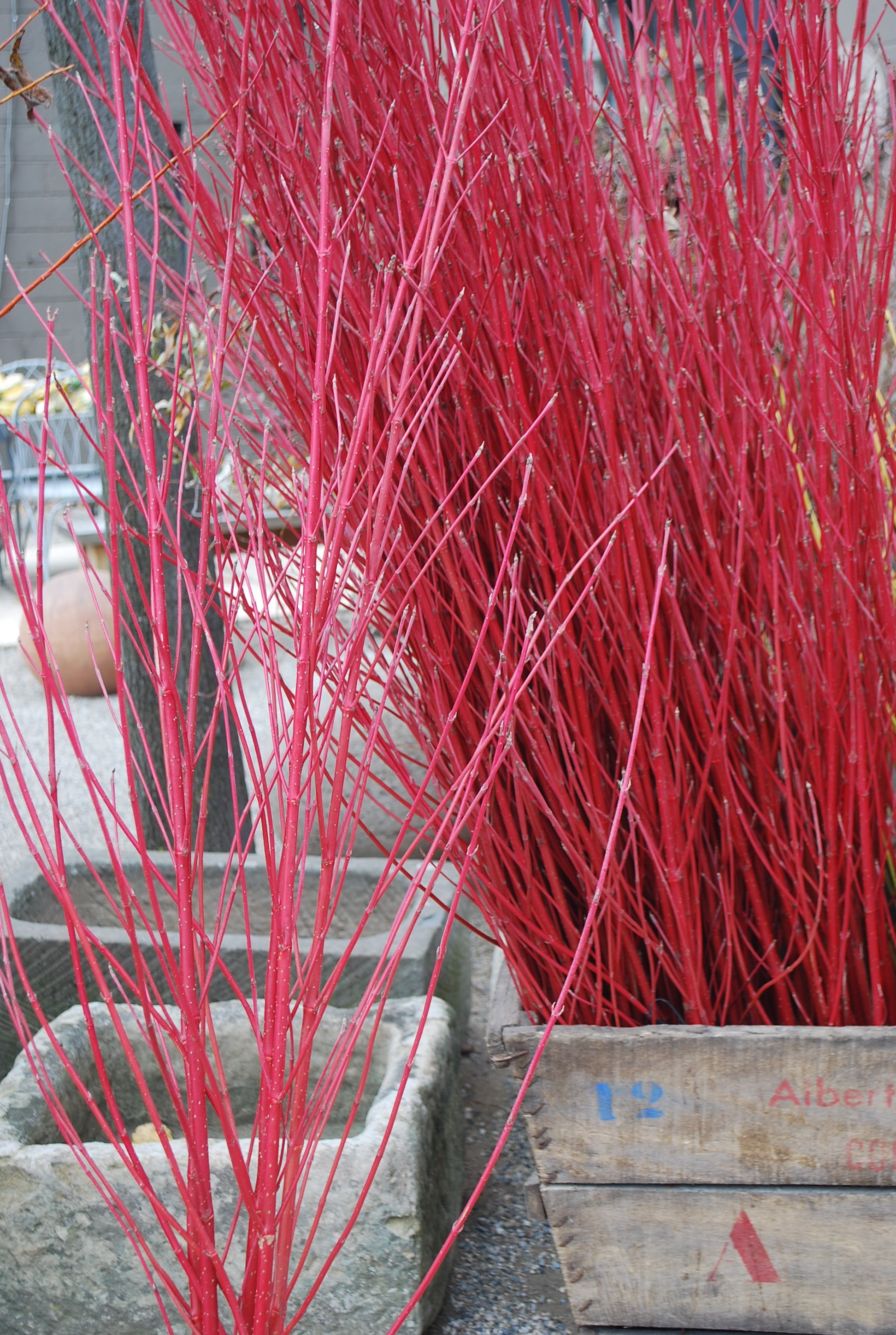
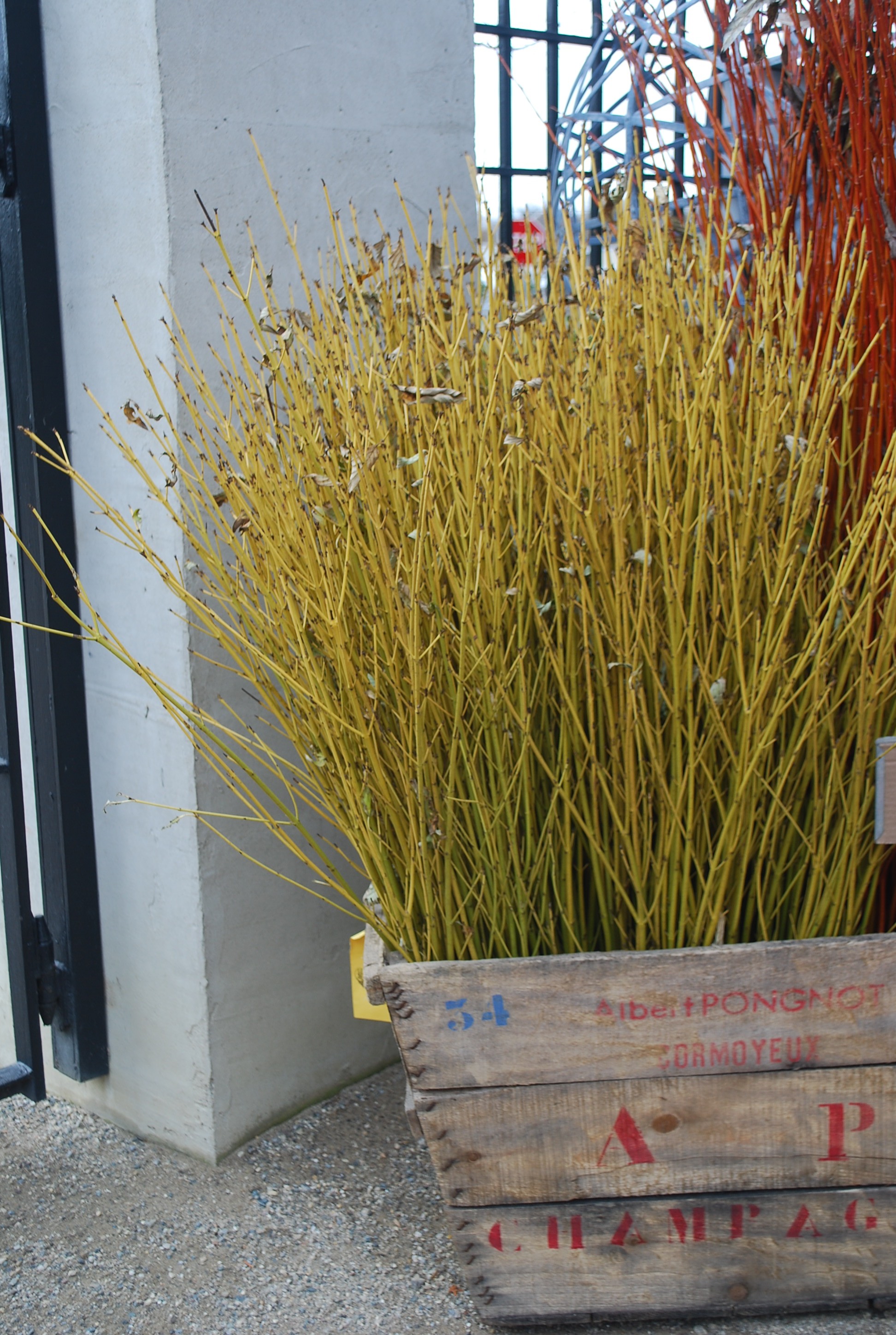
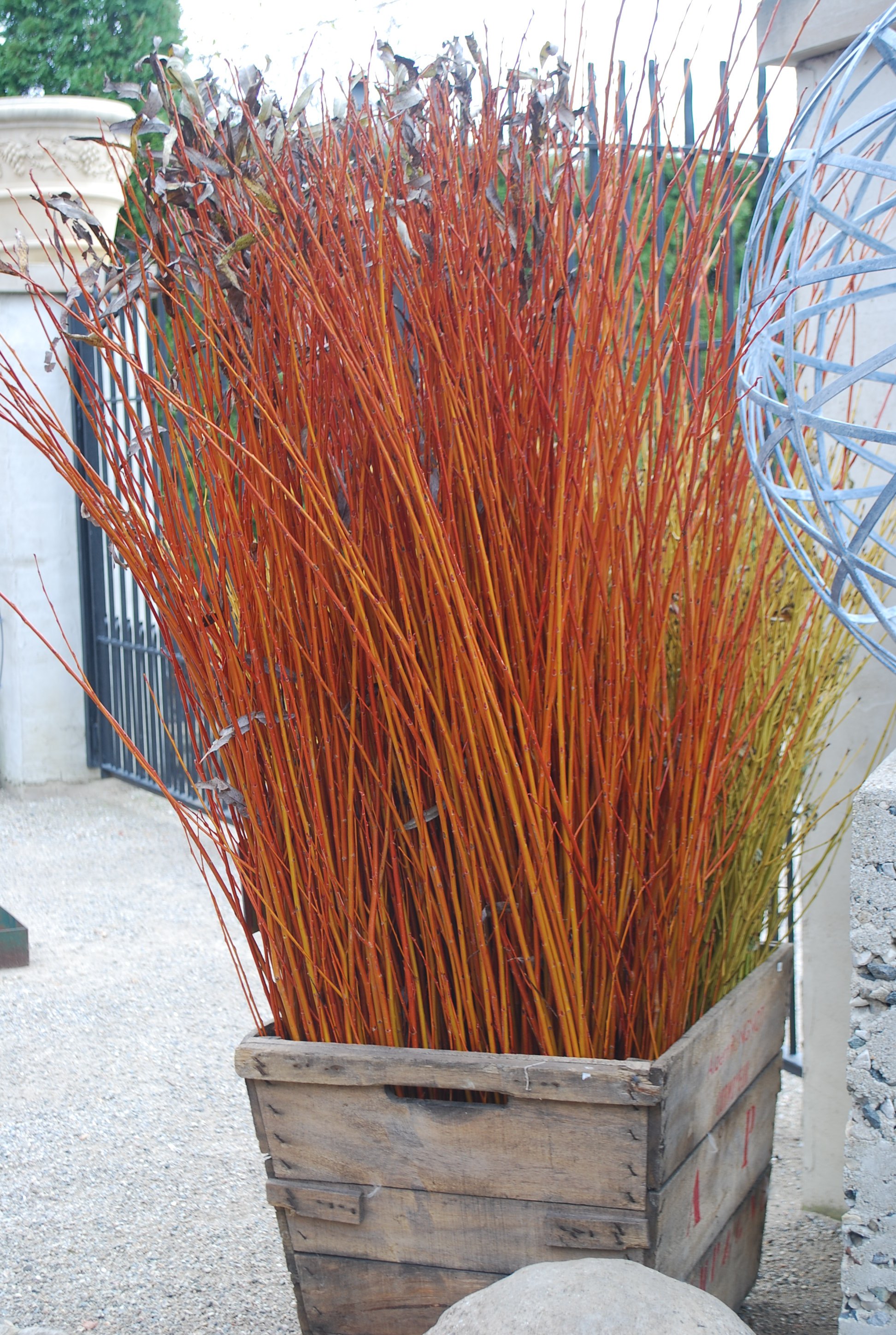
The fresh cut twigs which arrive at the shop in early November are grown by farmers who plant their shrubs in rows or blocks, like crops.  Large fields are harvested in rotation, so every year there is a crop of long straight stems.  Many of our twigs come from varieties of salix, or willow. Every gardener knows that the new or current year’s growth on a red twig dogwood shrub has the best color.  Mature stems become woody, and the color dull.  The new bark of coppice wood is lively.  Newer cultivars of the redtwig dogwood have better and brighter color.  The coppice wood of this redtwig dogwood cultivar is known for its especially brilliant color. 

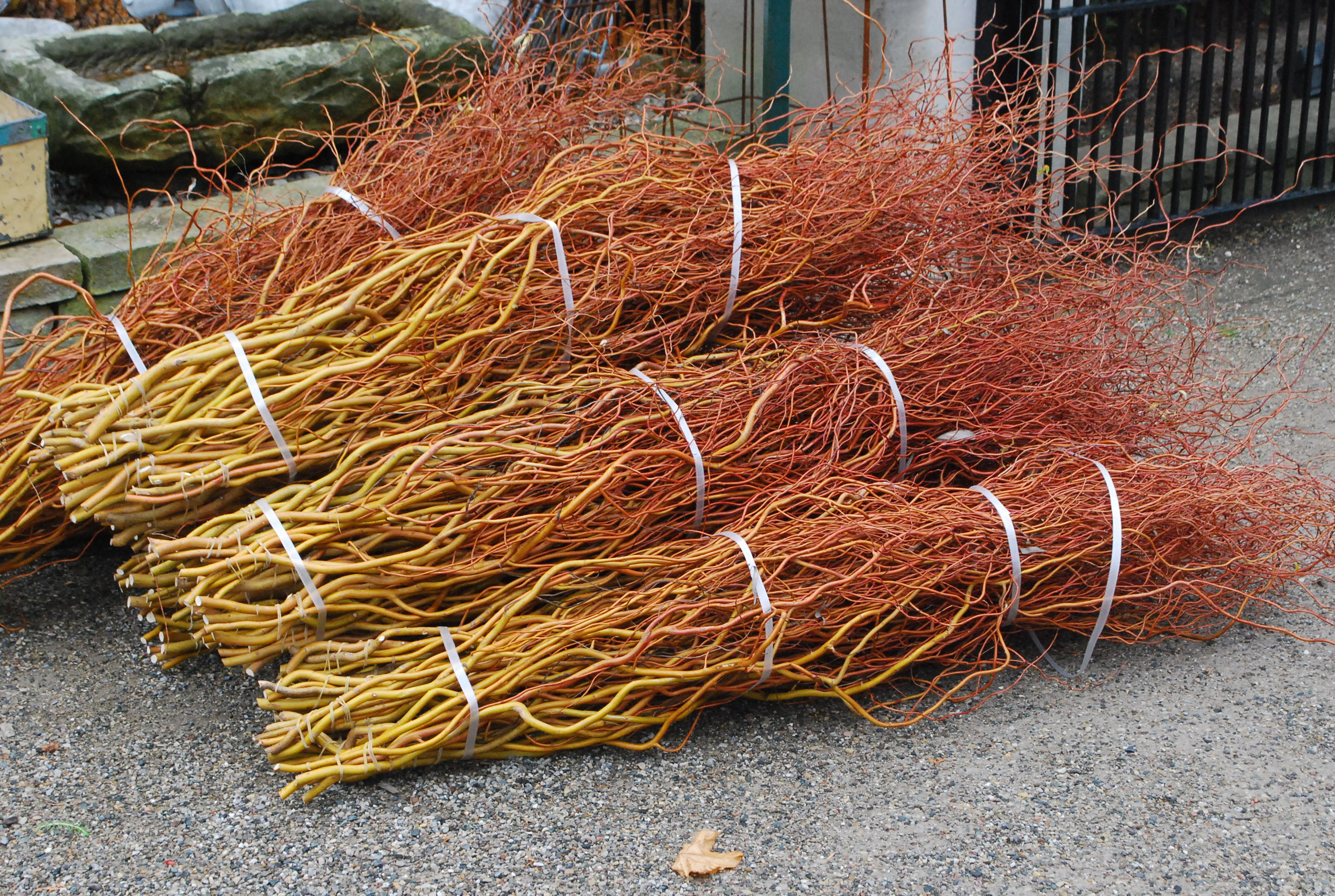
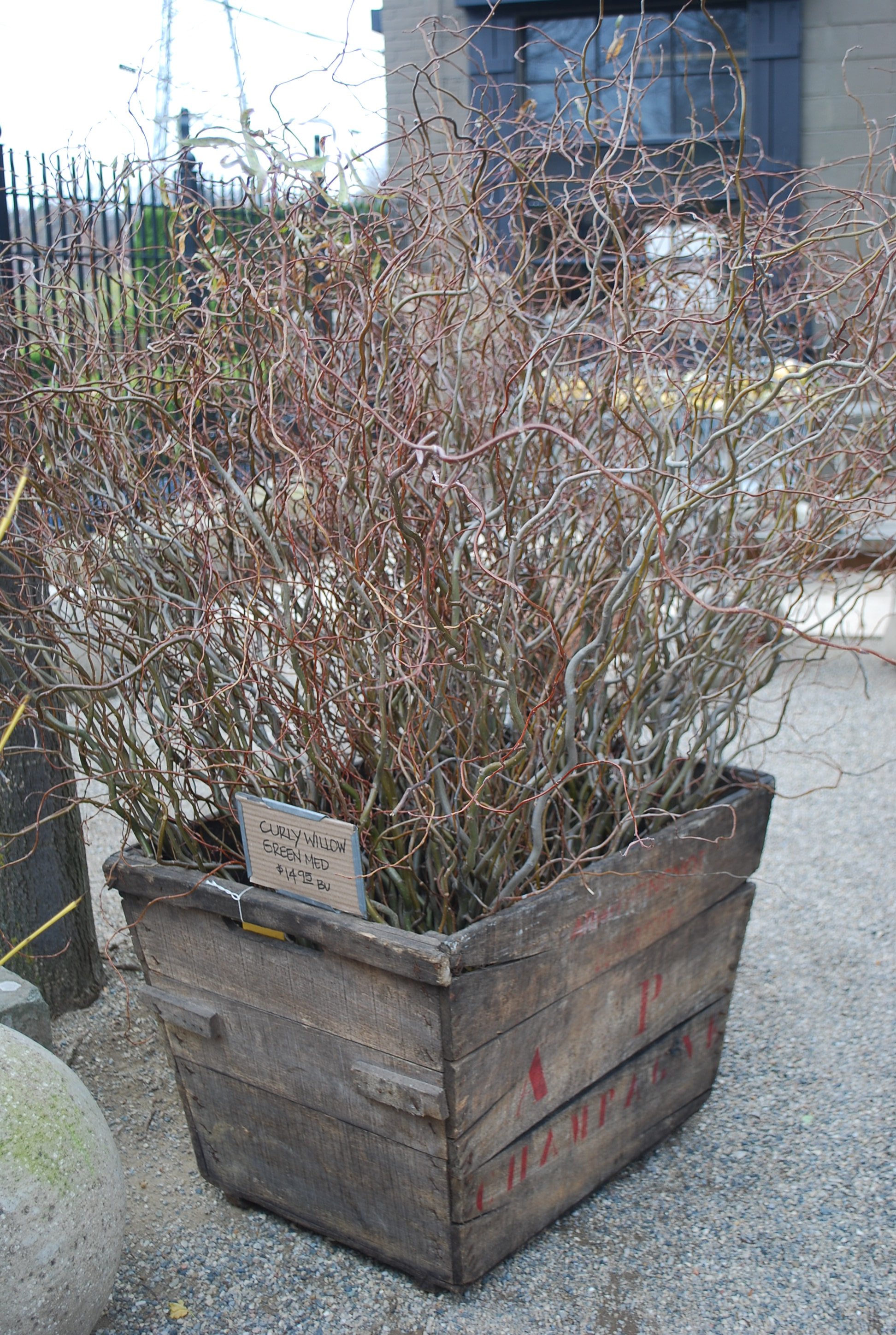
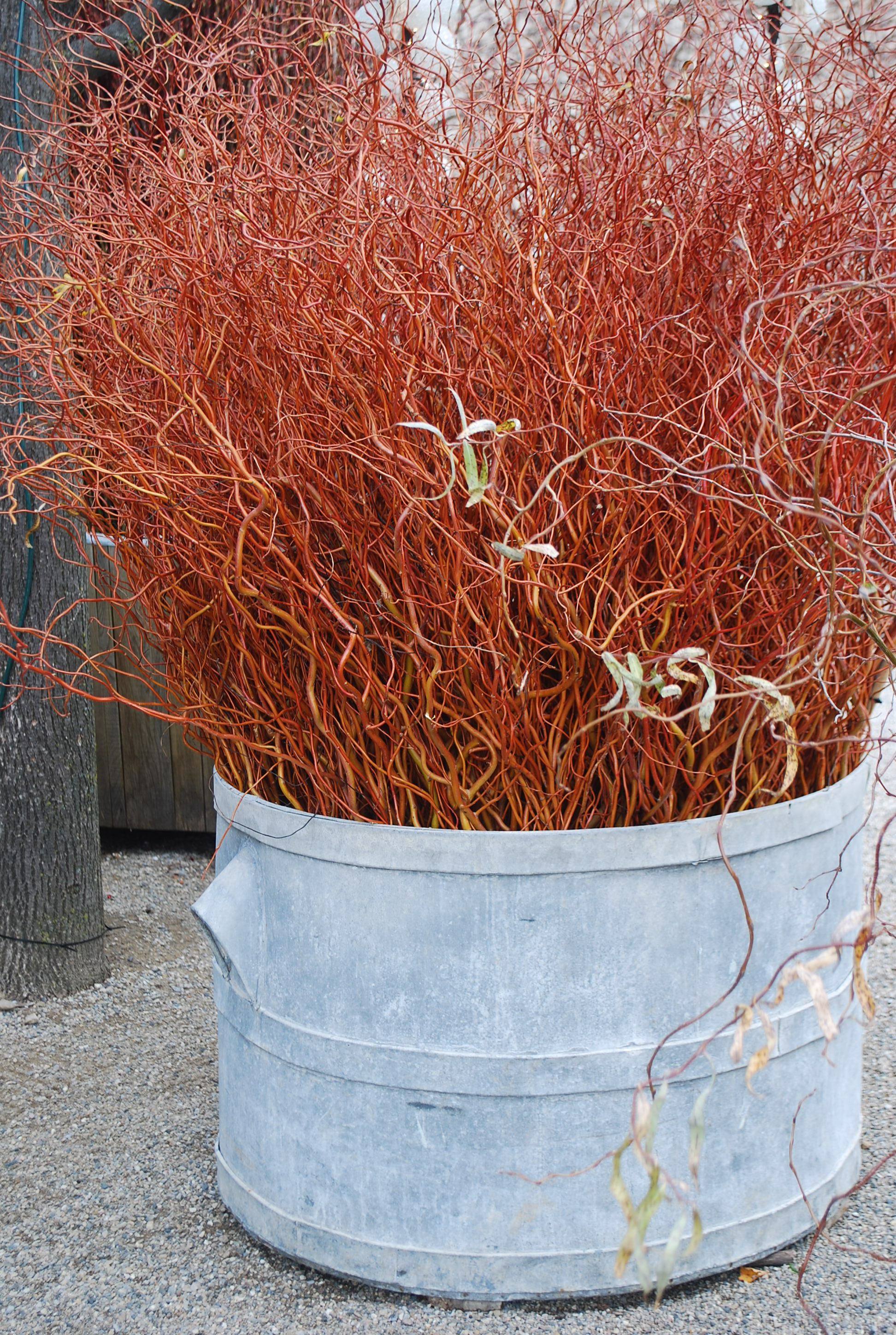
Once the leaves fall, those twigs which are ready are harvested, sorted by length, bundled and shipped.  Most bunches are 10 stems, except for the curly willow.  The winter color of curly willow stems is subtle, but no so its shape.  The curving and curling stems provide lots of volume-these voluminous bunches are usually 5 stems.  5 stems of this gracefully airy and unpredictably curving willow can endow a winter container arrangement with lots of rhythm and movement.

Coppiced yellow twig dogwood is brilliantly yellow green.  The twigs will be color fast the entire winter.  Used in a winter container, it is not unusual for the stems to root, and leaf out in the spring.  Though but a very few of the leaves are still clinging, the branches are vibrant at a time of year when most all else in the garden has gone dormant. 

Flame willow is a striking coppery orange in color-quite unlike the bark of the trees and shrubs that grow in my garden.  This warm cinnamon color is a standout in snowy and gray weather.  This variety of willow is much more handsome in its twiggy state than it is as a green-leaved shrub. 

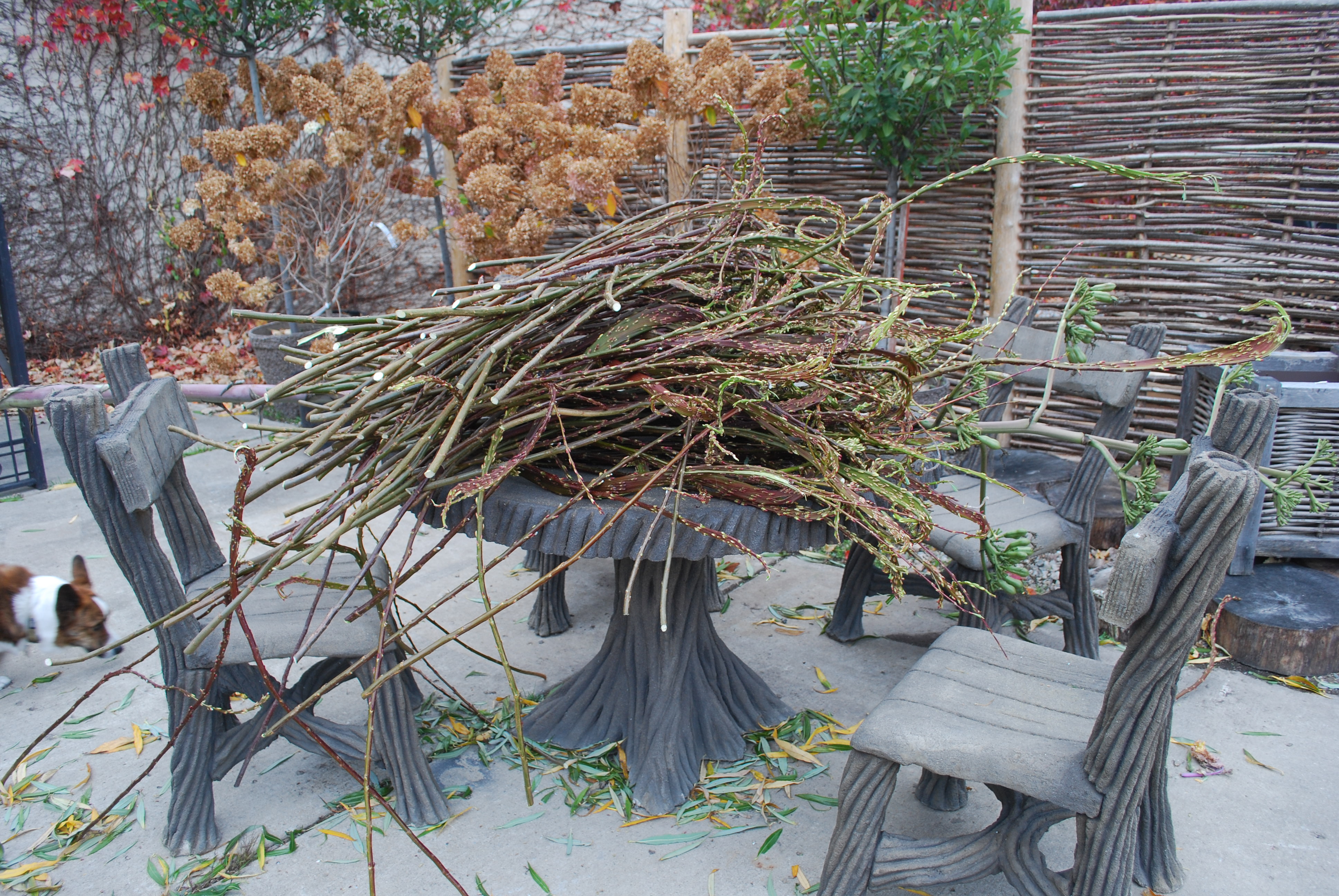
Japanese fan willow was cultivated from a fasciated, or flattened natural stem.  Many perennials and shrubs will exhibit this peculiar characteristic.  Some azaleas that exhibit densely twiggy growth were propagated originally from fasciated stems.  Fan willow is noted for its exotic shapes and forms.  No two branches ever look the same.

Curly copper willow exhibits much the same habit of growth as the green curly willow.  However the striking color means it will take fewer branches to make a statement in a winter container.  Our coppice wood has arrived at just the right time.  The cold temperatures outside will help keep them fresh, and the surface of the bark glossy.  Thought the color will survive the winter perfectly intact,  the warm weather in the spring will eventually dessicate and shrivel the stems. 

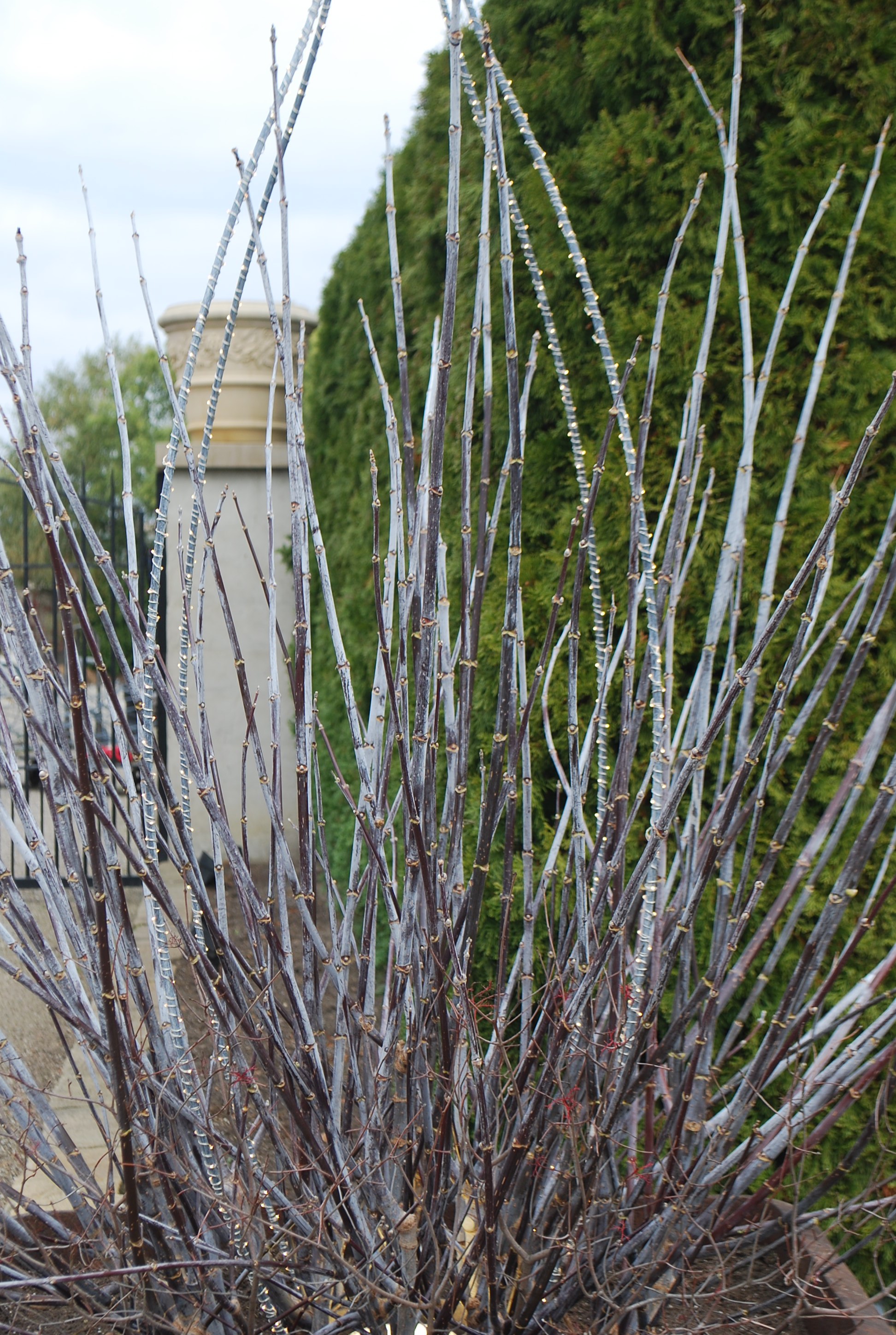
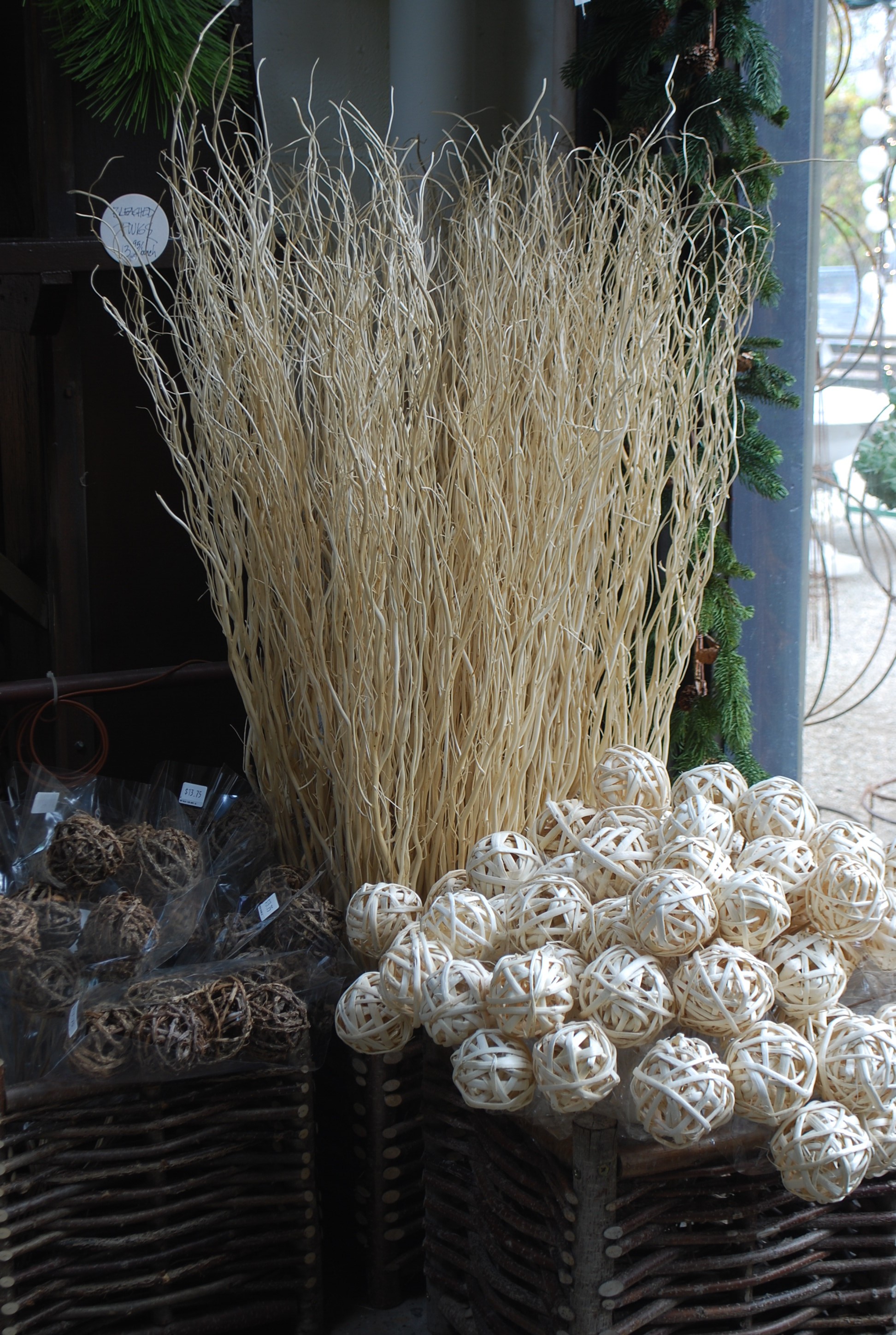
But there is a place for dry stems in winter containers.  Dead wood branches that have shed their bark can be beautiful in a winter arrangement.  Bleached natural branches are dramatically pale in color, and are visible from a great distance.  

The coppice wood-just one element of many that goes into a beautiful winter container arrangement.