A Holiday Wreath


A wreath is first and foremost an expression of unity.  No matter the materials used or style, every wreath begins as a circle.  A circle is a complete, continuous, and visually satisfying form. That decorated shape displayed at the holidays expresses the sentiments of the season, as well as a point of view about beauty.  This simple grapevine wreath adorned with a few dried bits from the garden and a wired paper bow says hello and welcome.
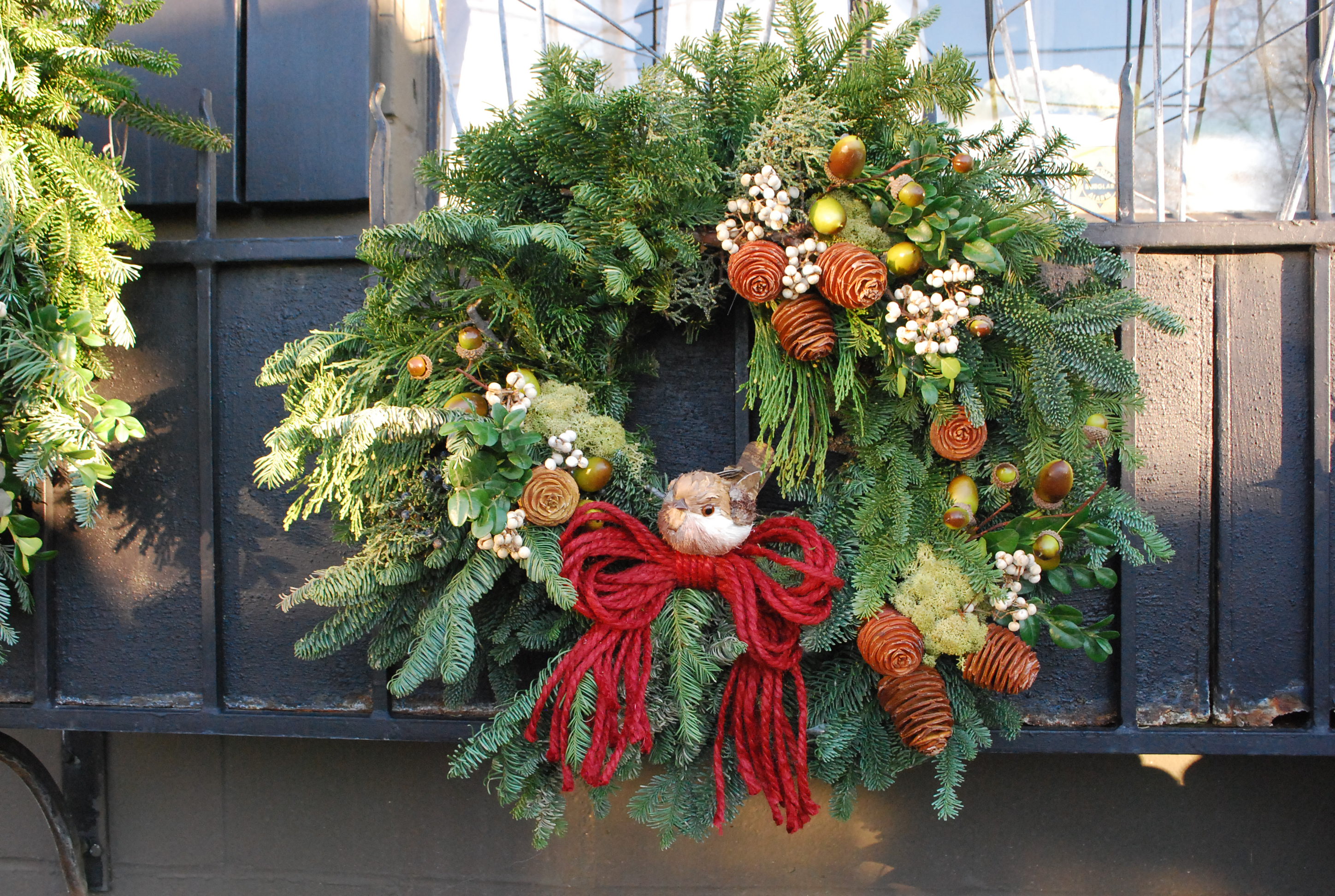
The history of wreath making is long, dating back centuries.  Holiday wreaths traditionally begin with a circle of evergreens.  The evergreens last a long time, despite being cut.  There is a strong element of hope associated with evergreen wreaths-that despite the quiet winter season, the natural world is still very much alive, and will persist through the winter. 
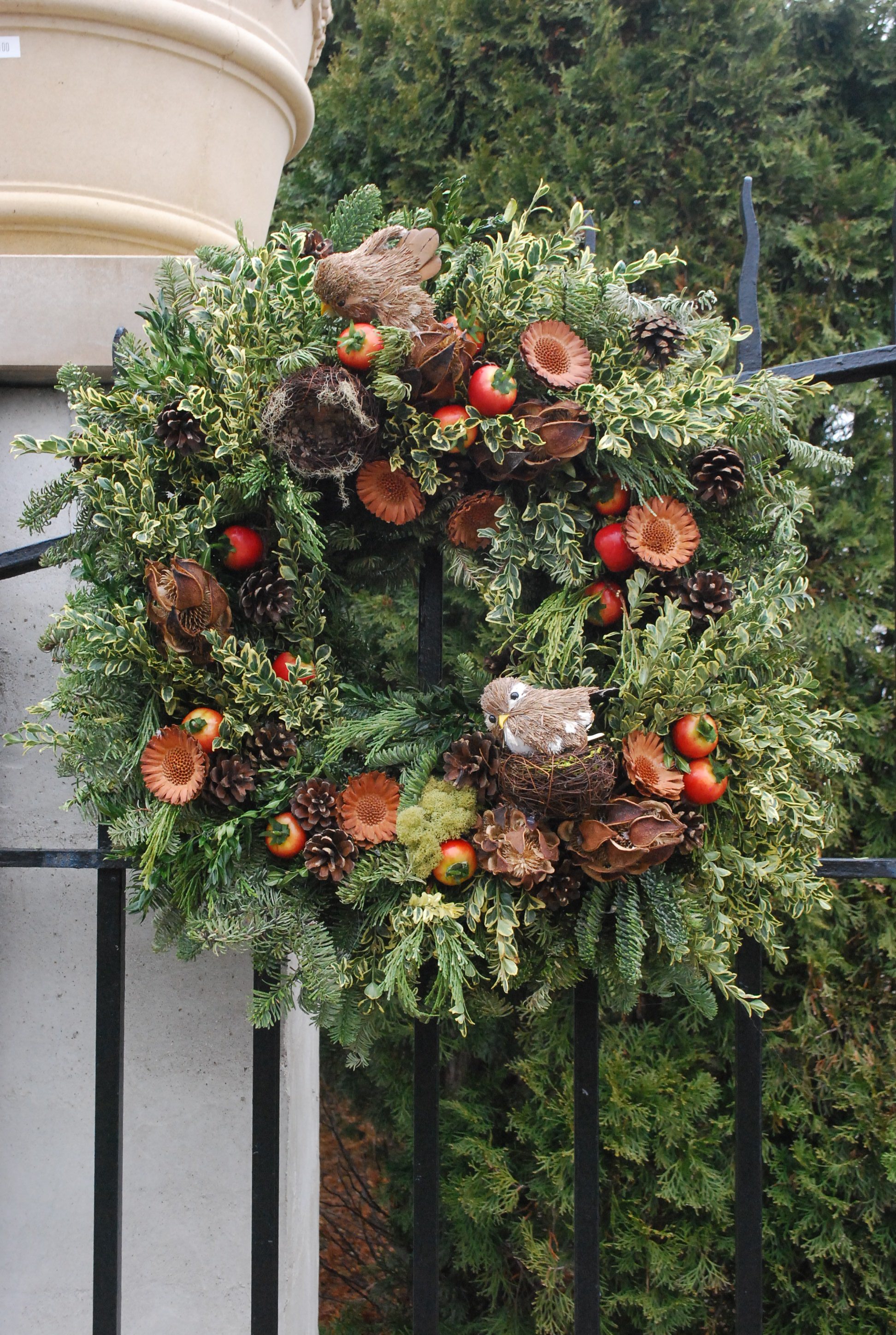
All of the evergreen wreaths at the shop are locally made to a certain size and heft that will keep its shape, no matter how much I may add to it.  The handmade part of them is obvious-they are not perfectly round, and they have a lively textured surface.
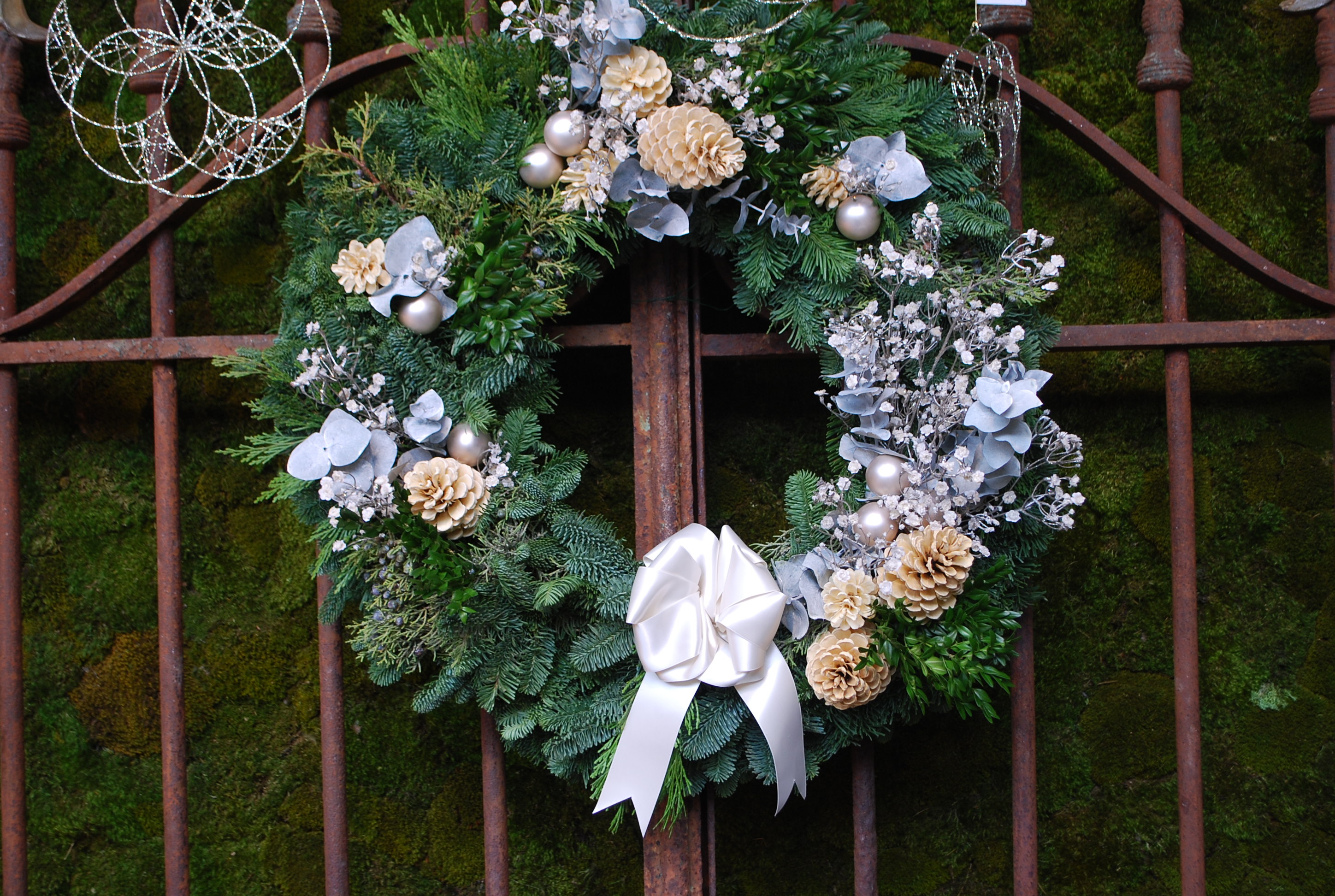
I like a basic mix of different types of fir.  Douglas, concolor, silver, noble and frazier fir stay fresh looking a long time.  Adding bits of other greens, such as boxwood, incense cedar, berried juniper and the like makes each wreath different-more personal.   

Decorating a wreath spices up the evergreen stew.  Natural materials-cones, mosses, dried berries, magnolia leaves, twigs, and eucalpytus provide color and texture of a different sort.  Arranging all of the materials-a satisfying and contemplative exercise in composition.    
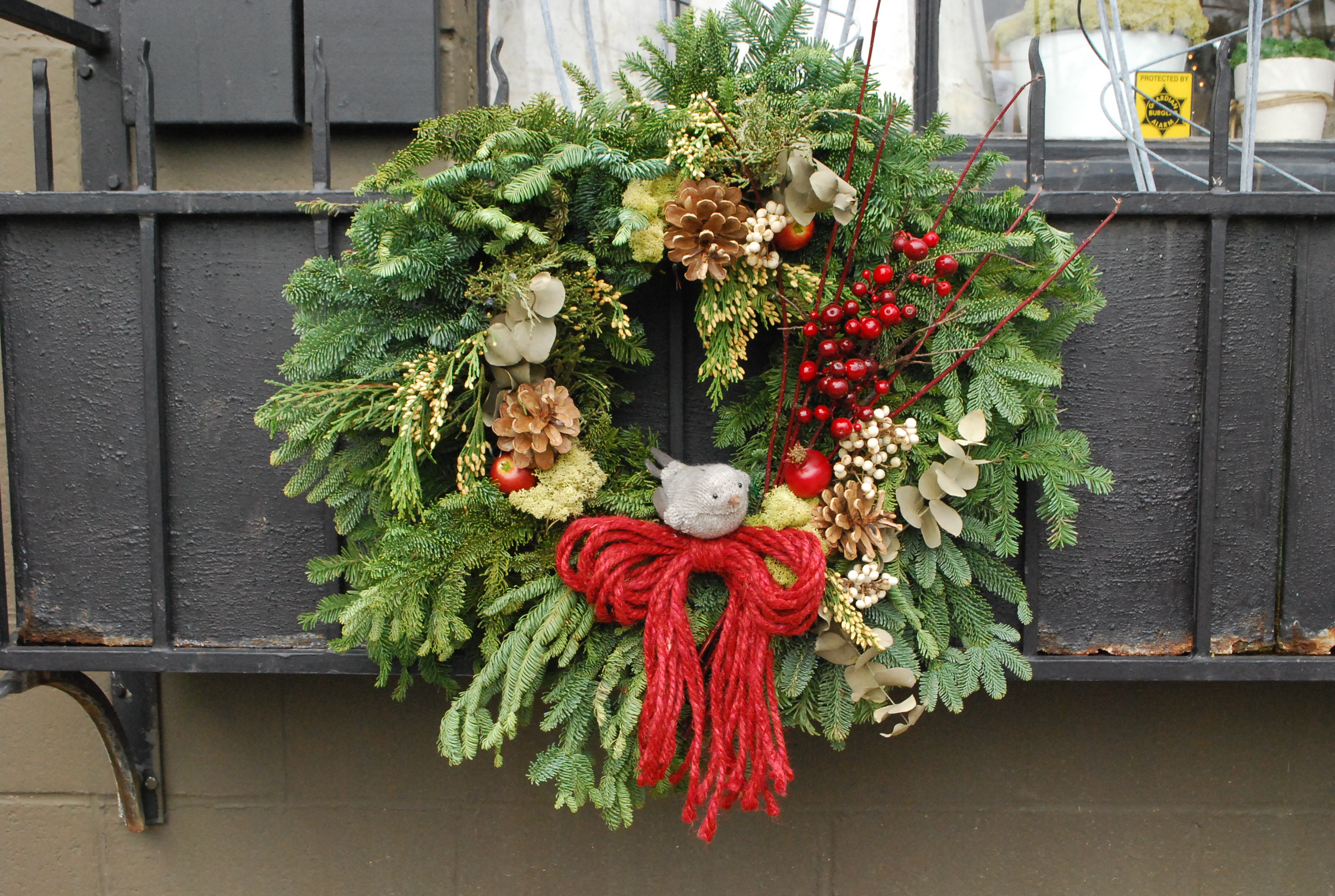
I probably make upwards of 50 wreaths a year-how I enjoy this.  Each client has a singular idea about what they like in terms of color, materials and style.  Some are quite formal-others more low key.   
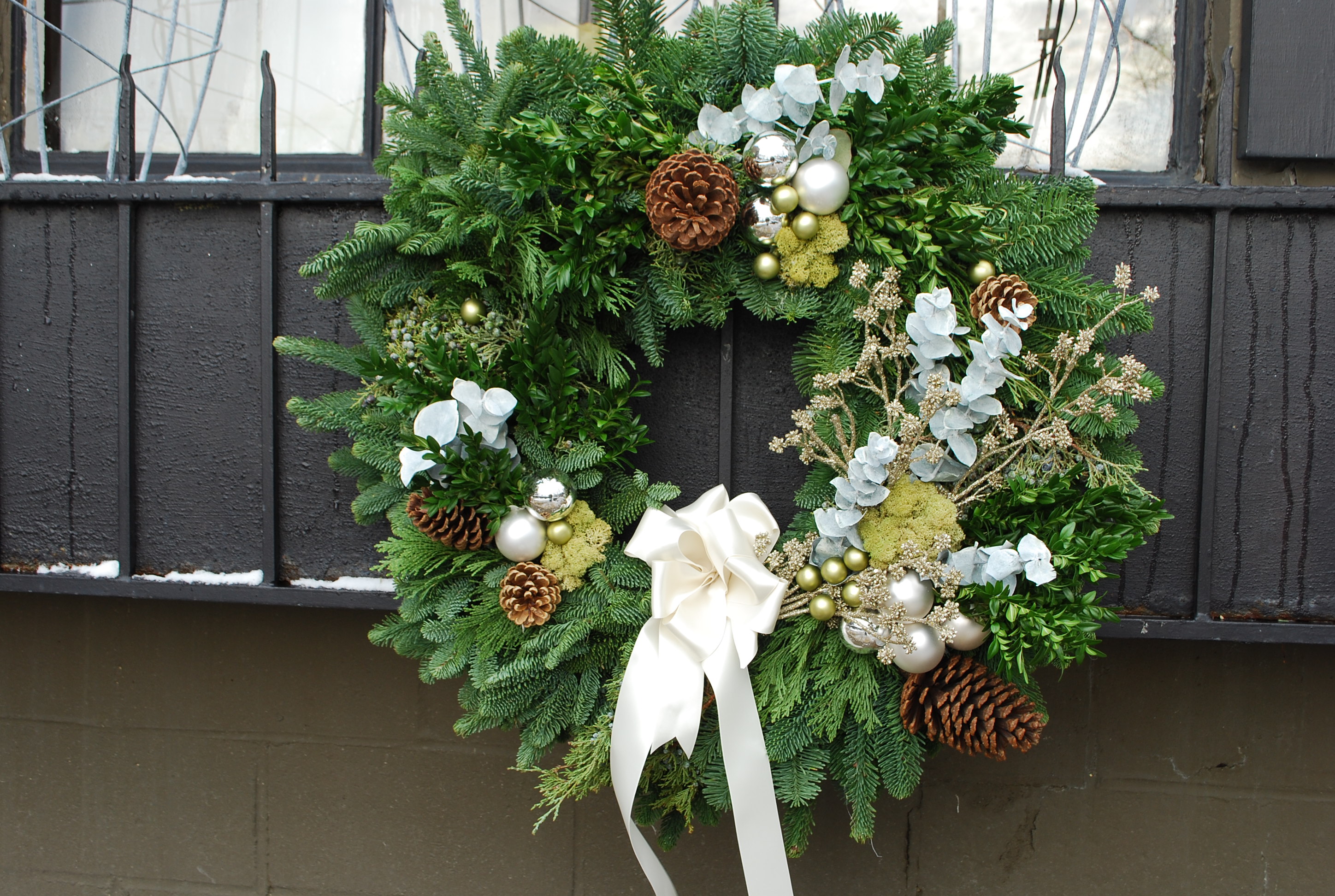
The mechanics of fastening has everything to do with the weight of the material and size of the material you are trying to attach.  Wire can be wrapped around the base of a pine cone, and poked through to the back of the wreath.  Anything that gets wired to the steel base of the wreath will stay put, no matter how blustery the weather.  I buy rolls of paddle wire.  The 22 gauge green wire is a continuous length wound round a paddle shaped spool.  I always have the perfect length of wire available.
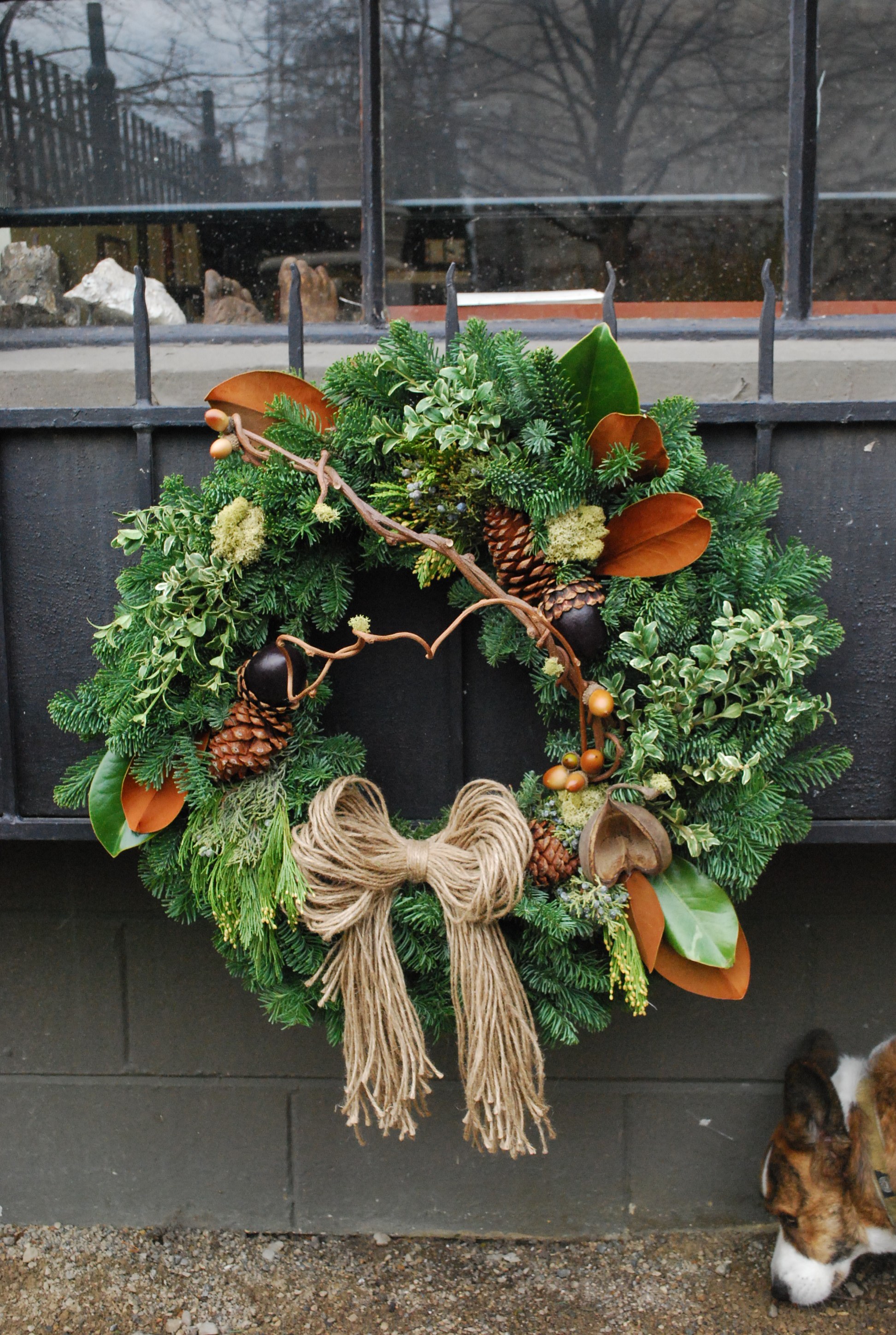
Florist’s wire comes in different lengths and weights.  The advantage of this wire-it is straight.  A straight wire can be easier to poke through the evergreens.  Smaller materials like twig bunches can be easily fastened with a single piece of wire. 


Some wreath materials are available already attached to heavy wire stems.  They can be wedged in between the evergreen branches. More often than not, I take the picks apart.  Many are just too large, or too long for the spot where I need them.  The acorn branches in the wreath pictured above came from a single pick.   
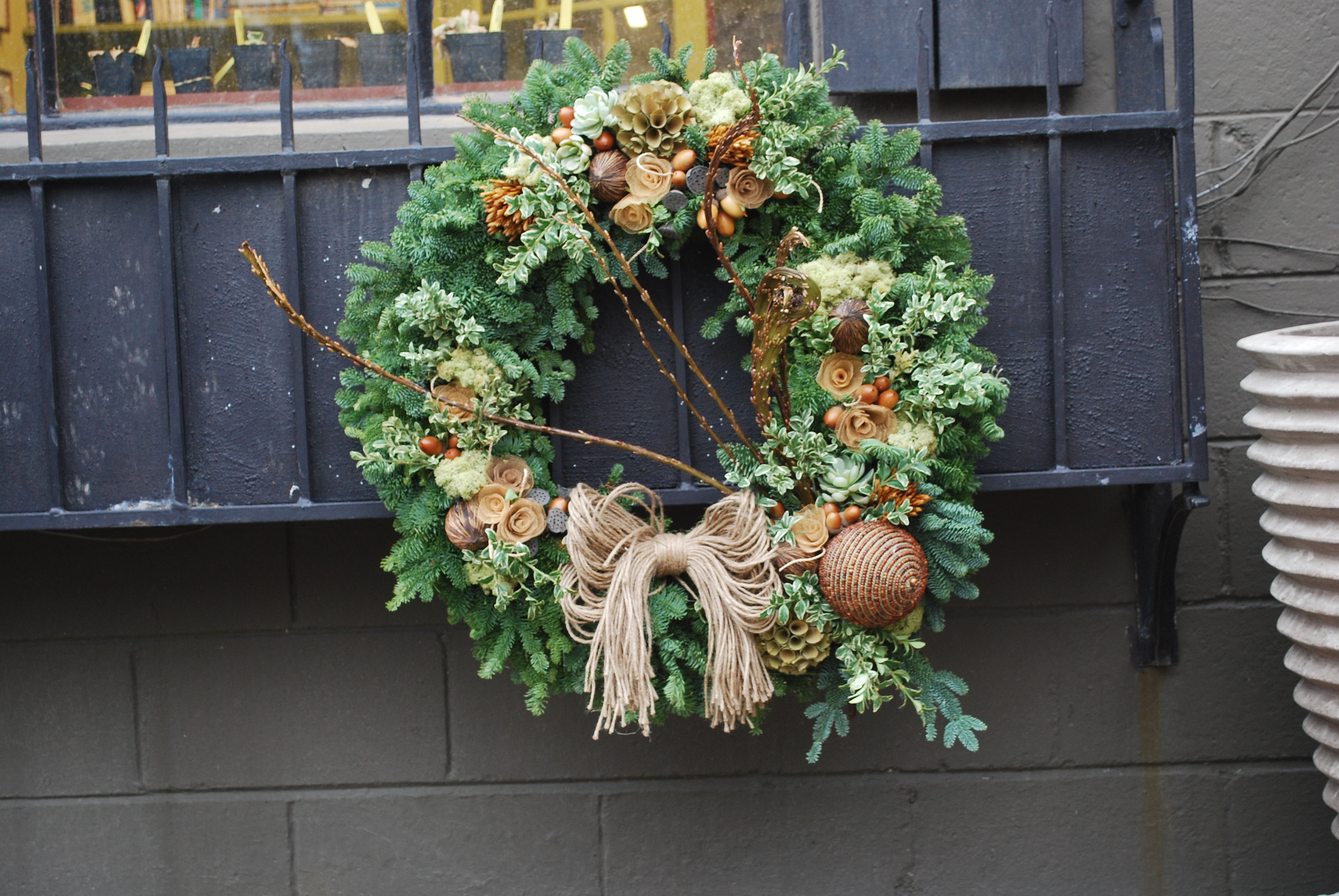
A jute bow is easy to attach with a zip tie that goes through the center knot, and around a stout branch.  Really heavy materials, such as faux fruit or ornaments like the bead ball pictured above need a fastening device that is both strong and rigid. Floral picks, or skewers come in various lengths, and can handle the heaviest ornament with ease.  Faux fruit is really tough skinned.  I pierce the surface with a steel awl,  butter the pick with hot melt glue, and insert the pick.  The wood pick can them be wired to the steel wreath frame.
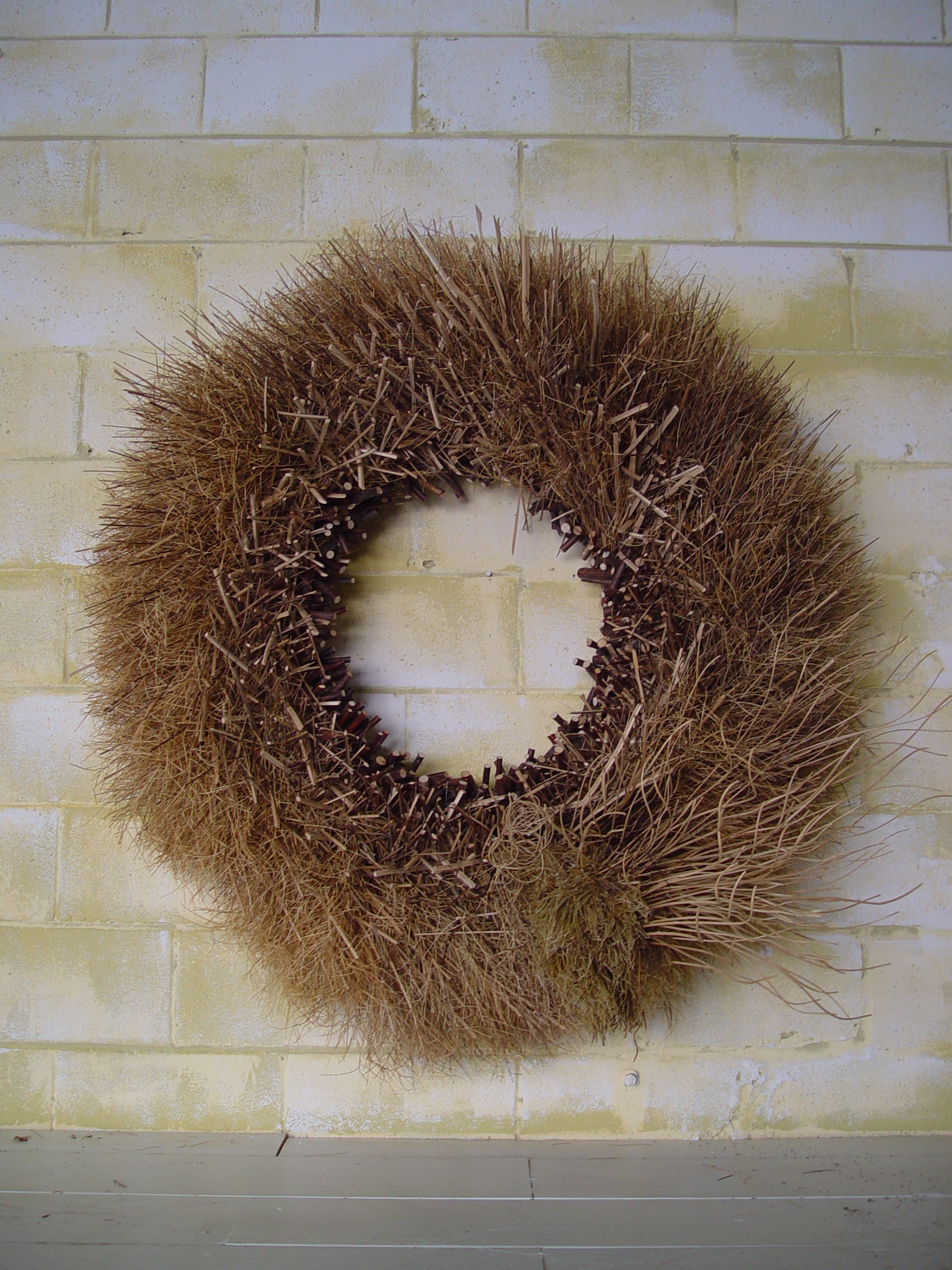
The hot melt glue gun is an indispensable, albeit dangerous tool.  Hot melt glue will stick to your skin just like anything else it touches.  My downfall almost always involves gluer dripping from the back of a piece of moss.  If you are using a glue gun more than 1 step from a sink, keep a bowl or glass of water handy, so you can put out the fire fast.  Gluing the sticks in the wreath above-not so dangerous.  The glue is at the other end.  This gluing project just took lots of time.  A wreath like this can last many years-and can be repaired if need be.   
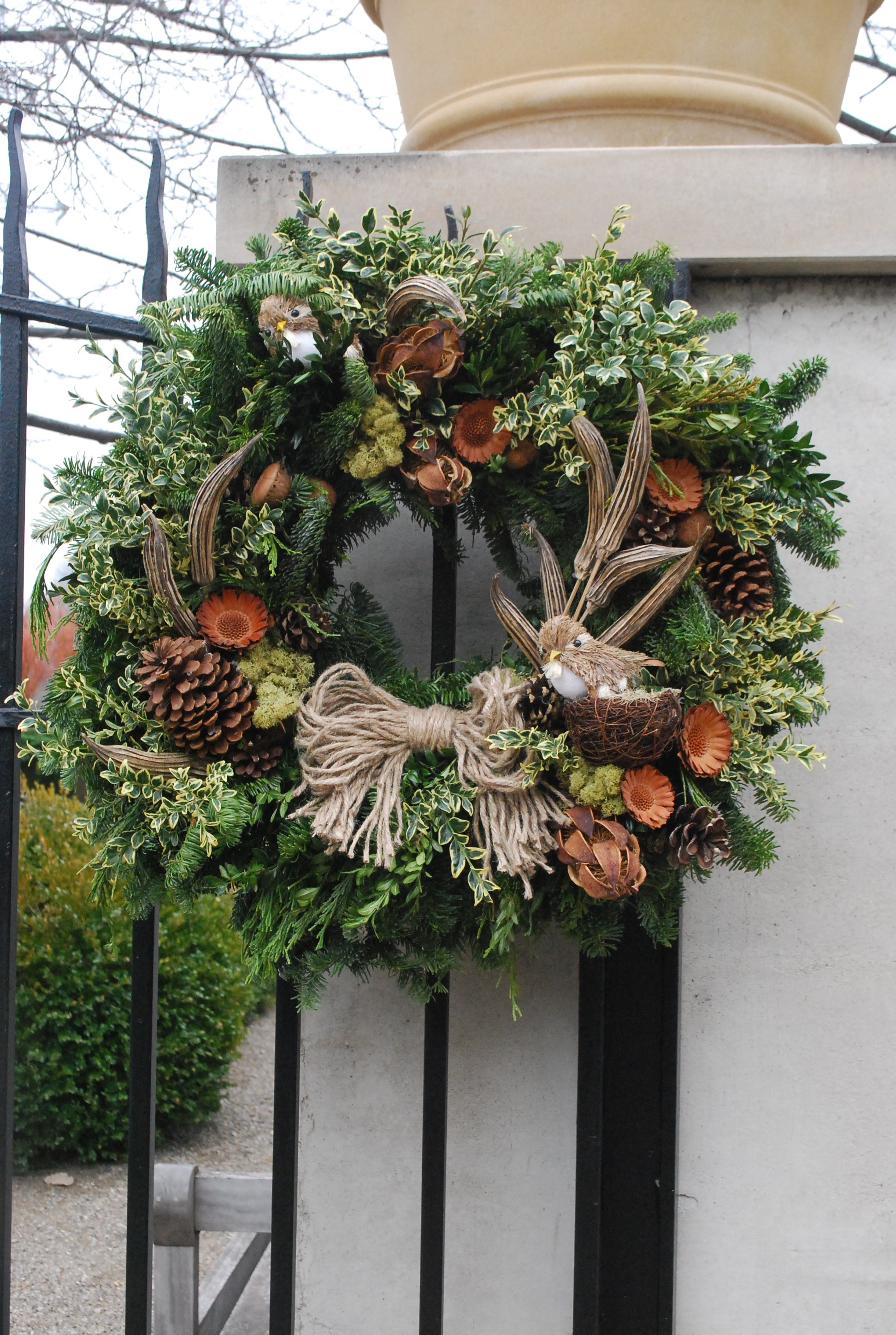
I don’t really have a favorite wreath.  The favorite part is in the making, not in the end result.  Having some time, and a good sized space to make a mess is a big help.  Wreath making-a primitive form of cutting and pasting.  Much more ends up on the floor or table, than on the wreath. 

Hand made holiday decorations have a very special feeling about them.


At A Glance: Other Holidays

 
2003


2004

2005

2005

 2006

2006

2007

2008

2009

2010

2011


The Shop Winter Garden


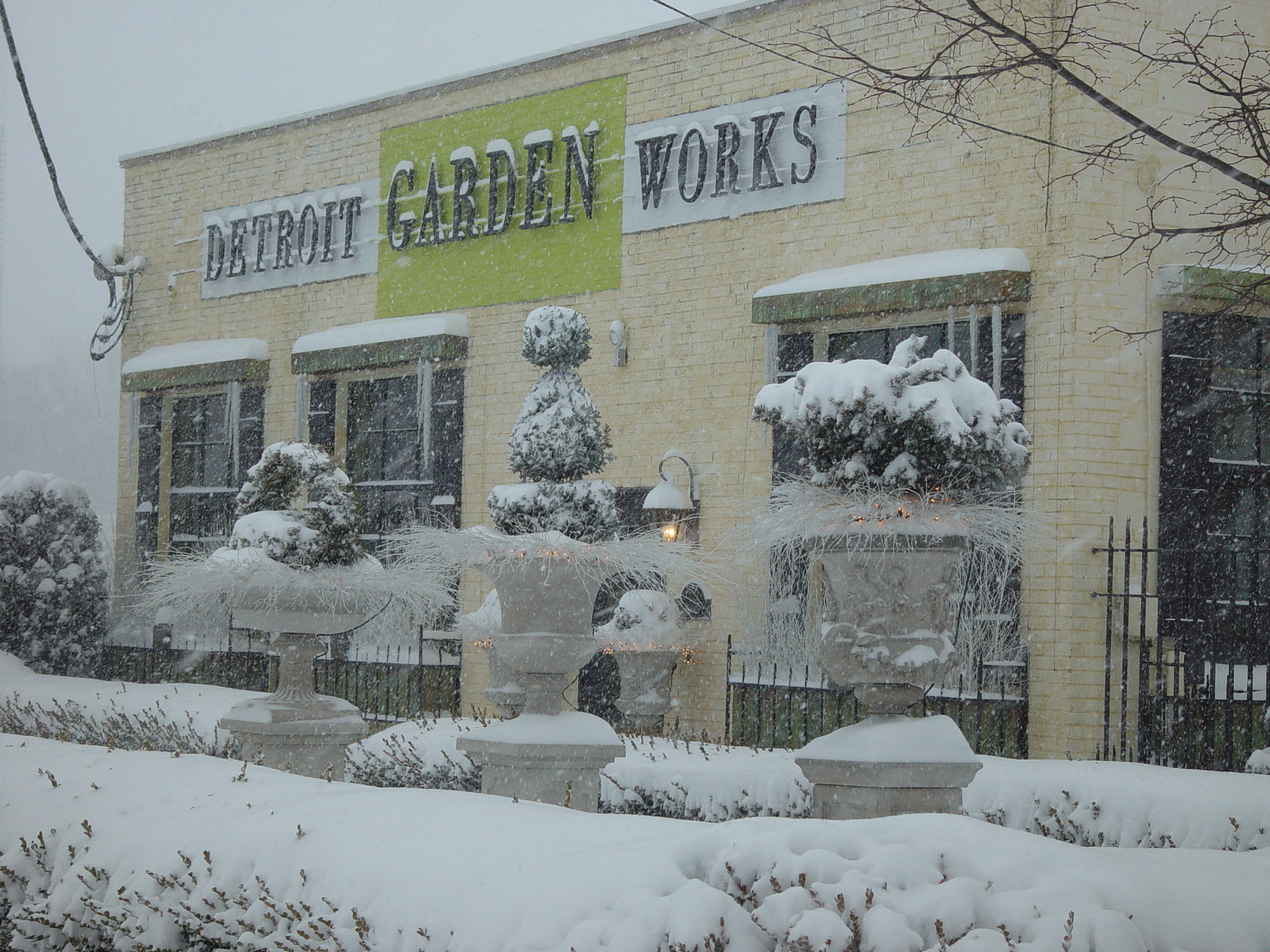
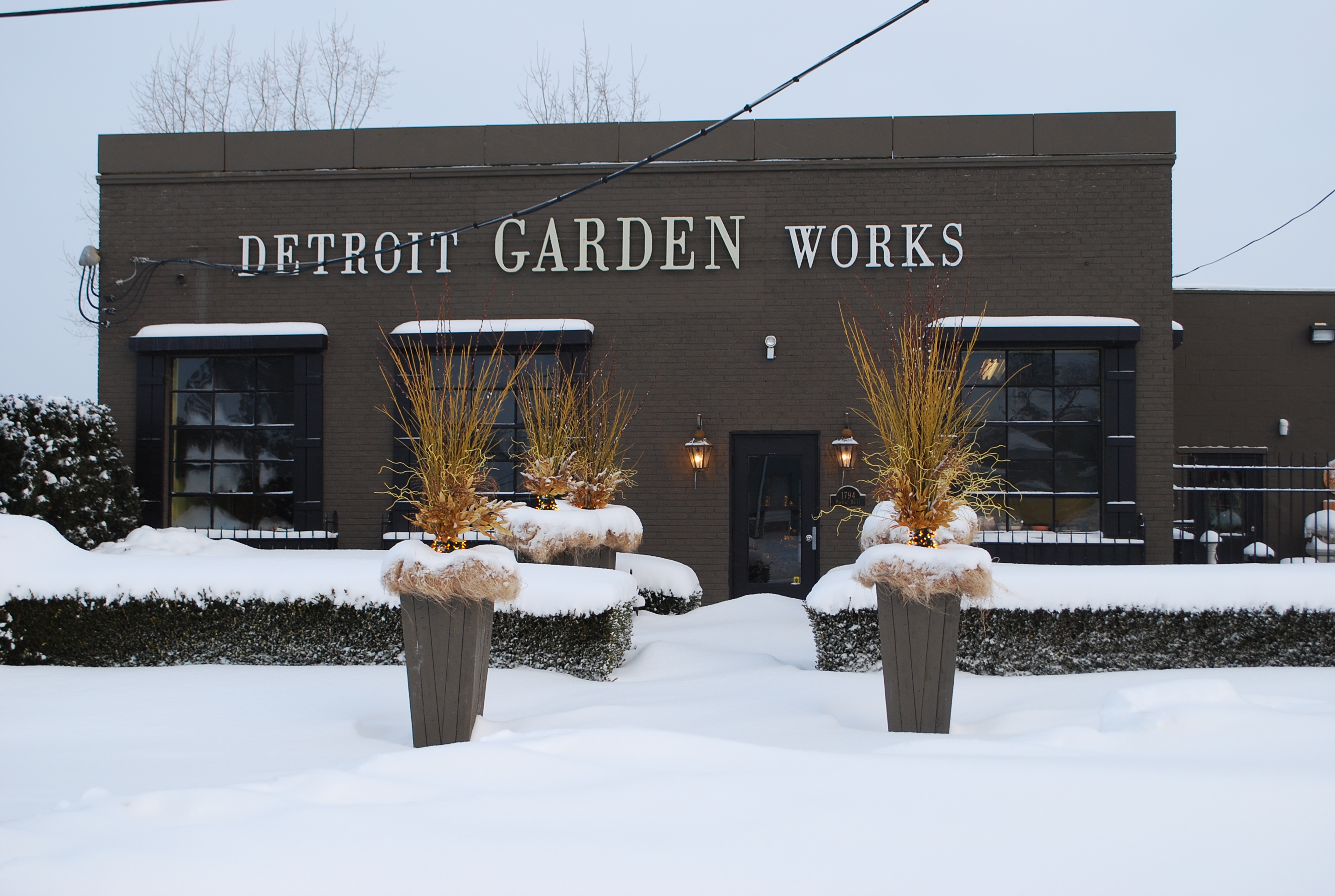
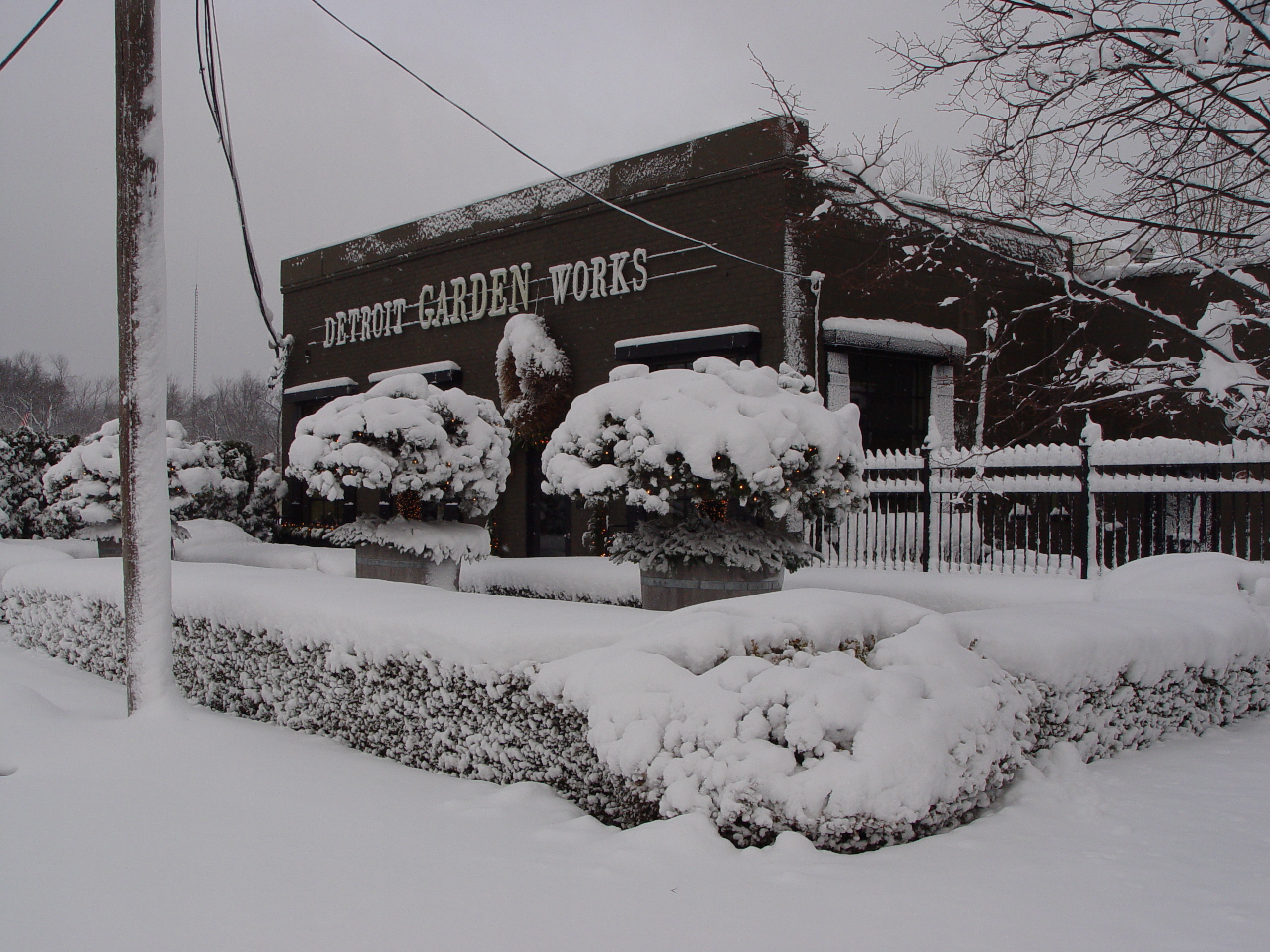
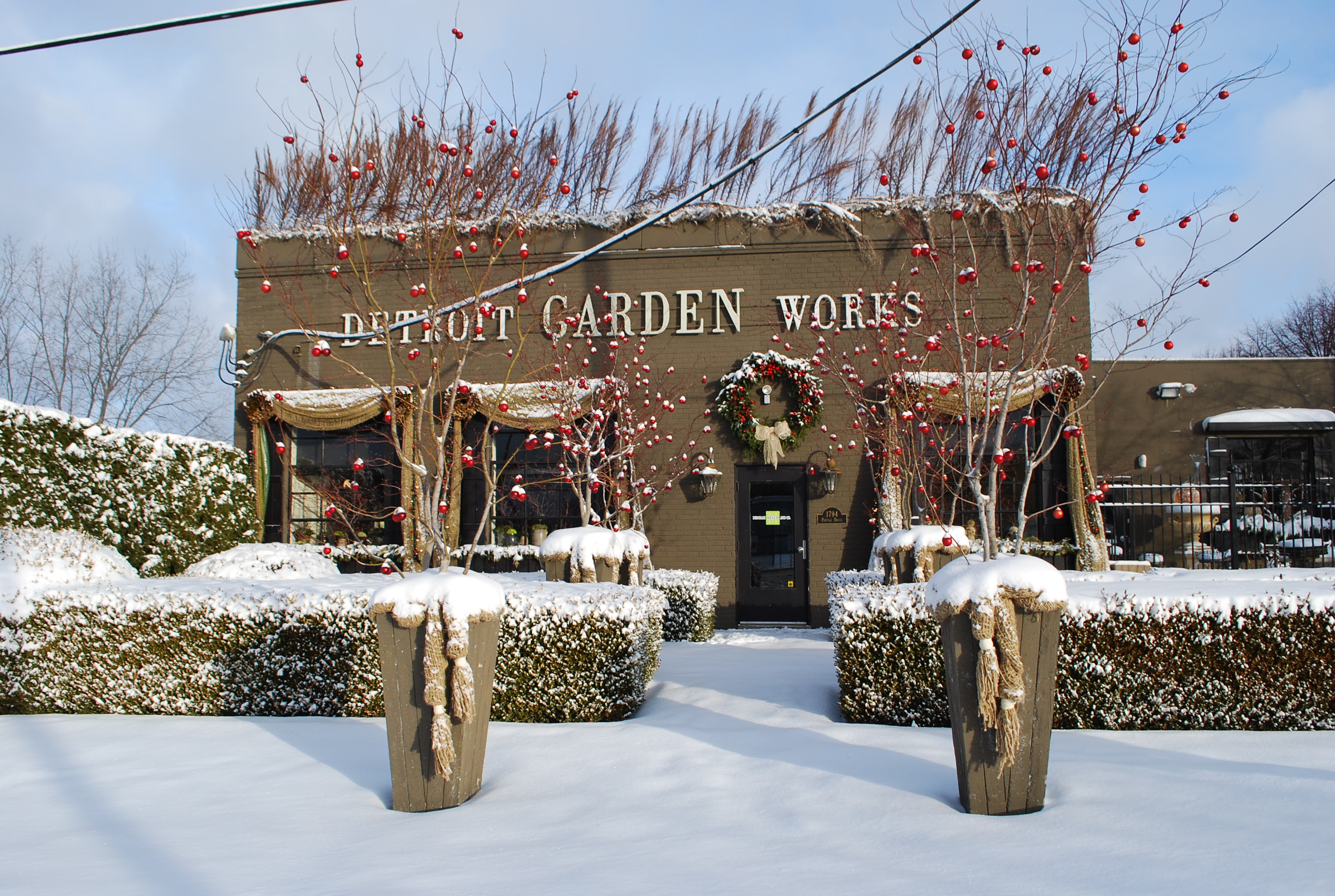
The shop landscape is very simple.  A rectangle of boxwood set in a generous plane of decomposed granite, a pair of Techny arborvitae bookends, and a pair of lindens is about all there is.  These plants, almost 20 years old, occupy a modest percentage of the overall space.  This means there is room for a temporary, ephemeral, and seasonal garden expression.  Gardening in a zone which features four distinct seasons is a challenge and an opportunity I would never want to do without.  The chance to start fresh given the change of the season-love that.  The holiday/winter garden is no different.

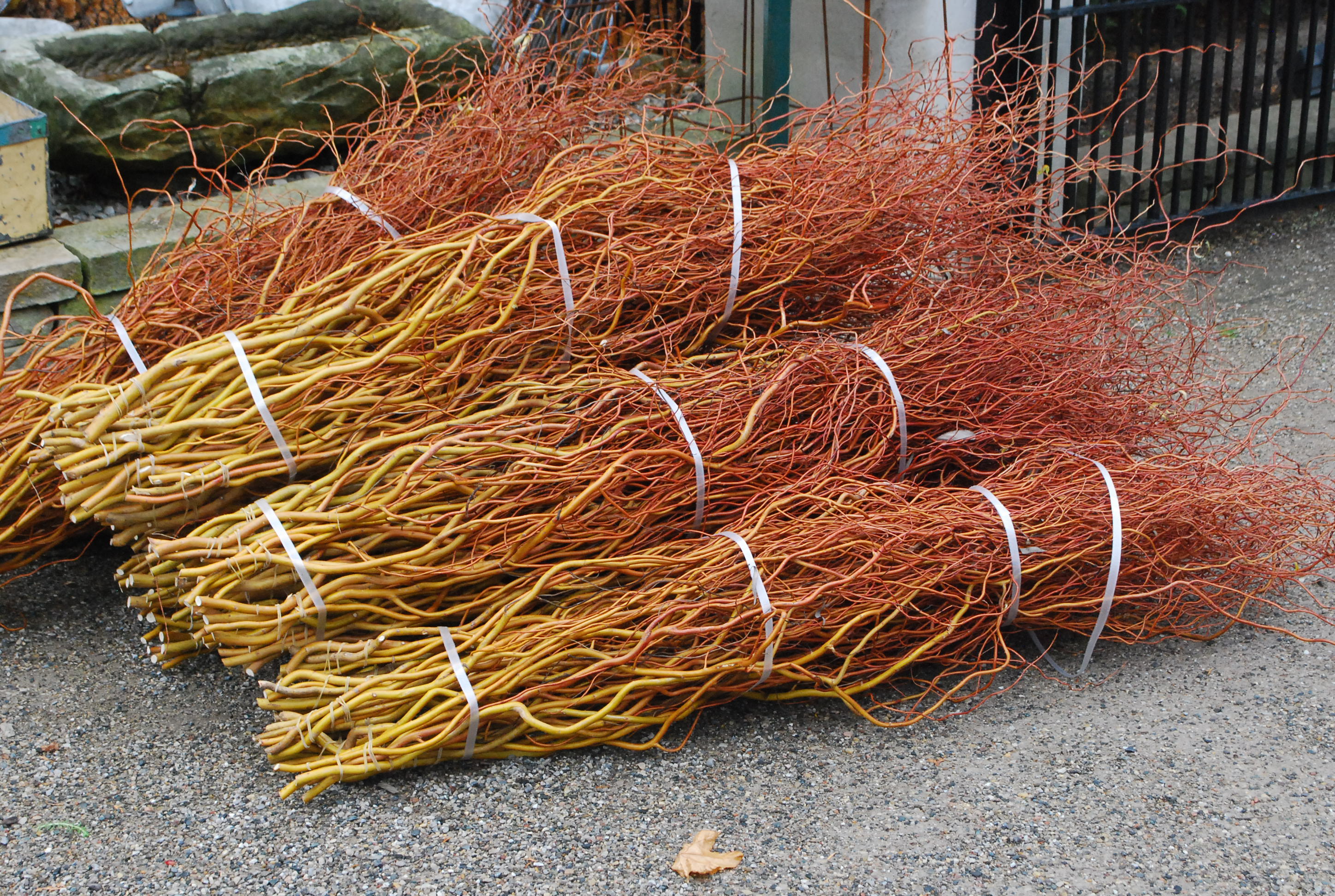
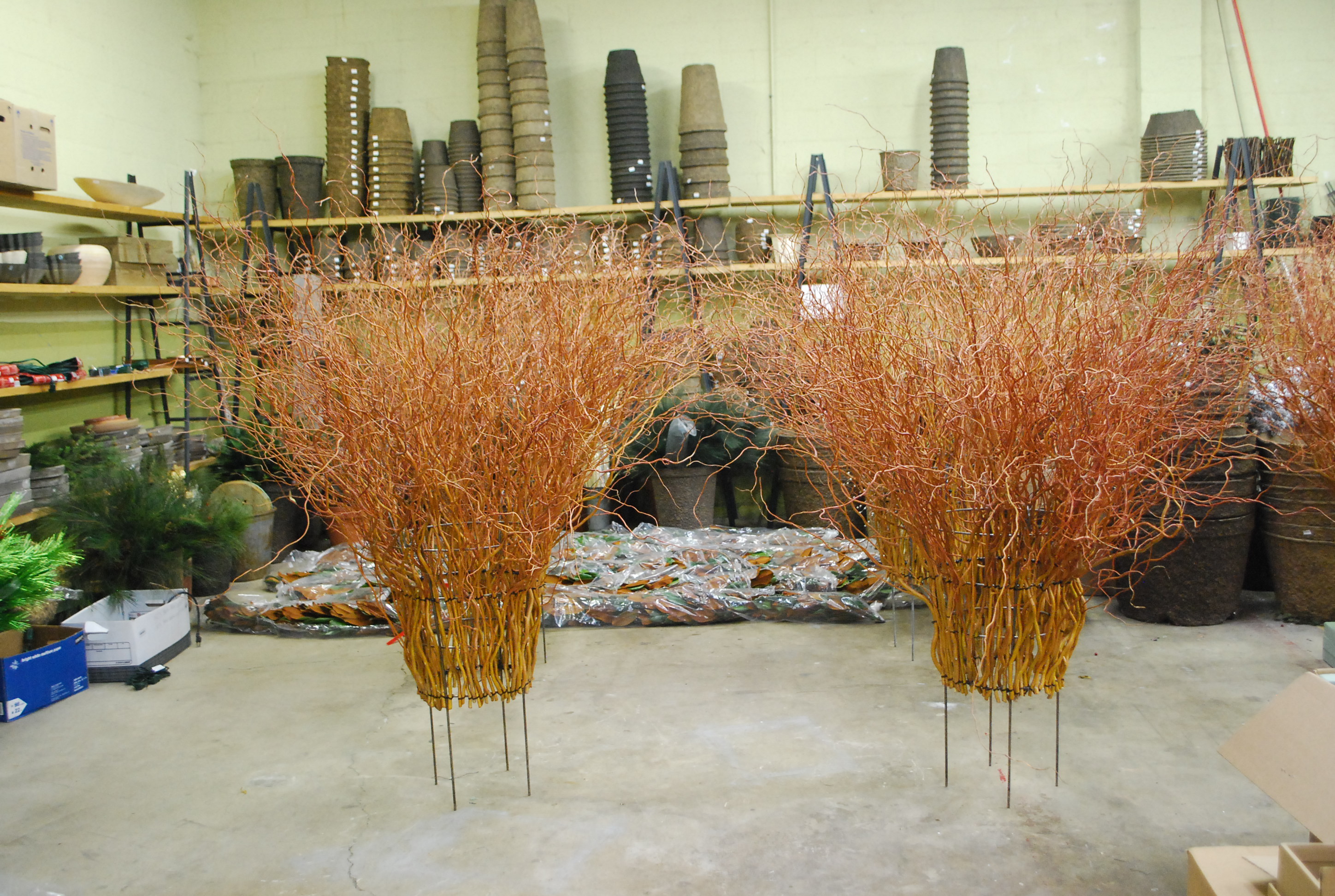
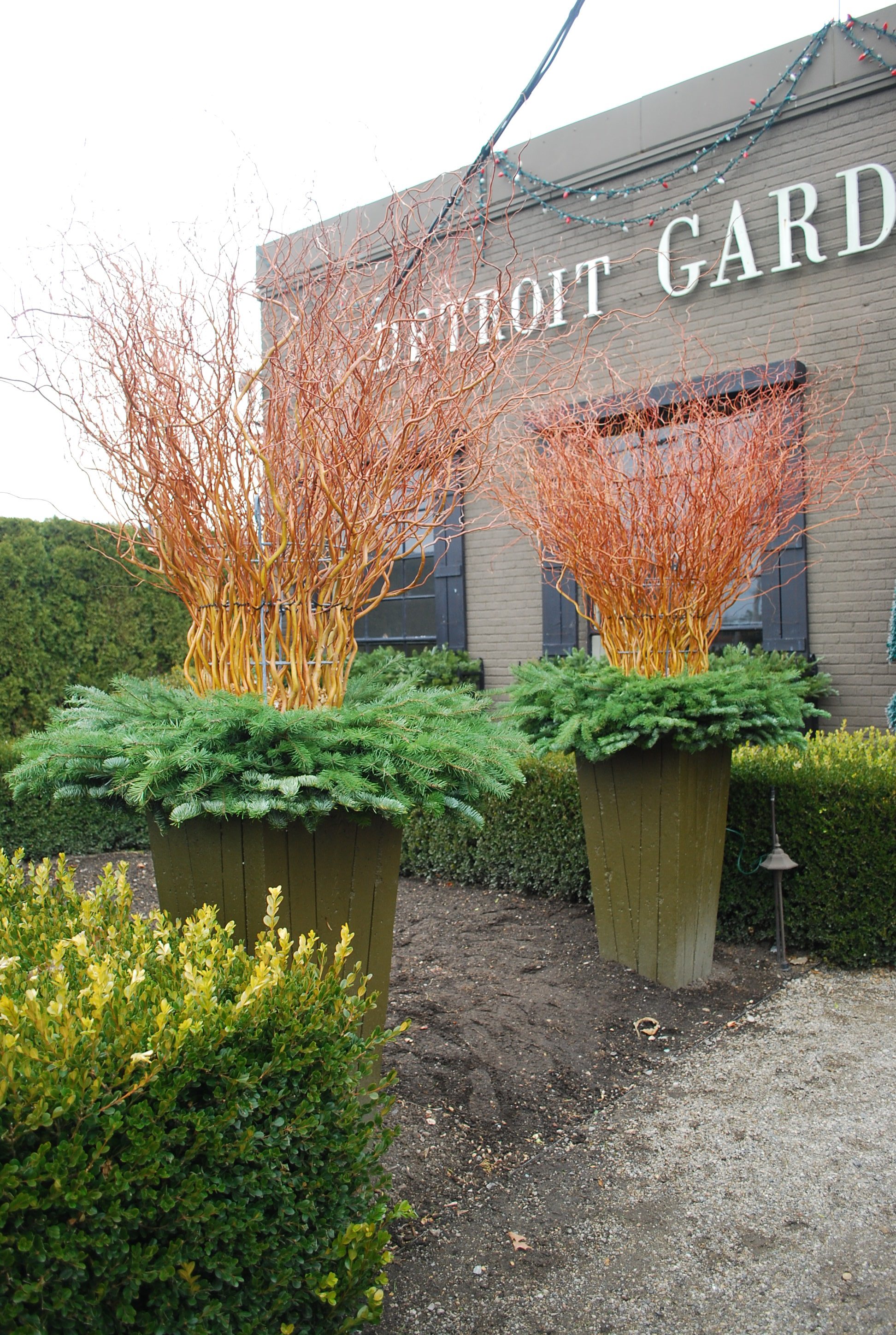
The inspiration is almost always driven by a natural material that catches my eye.  This year, the curly copper willow branches are incredibly beautiful.  The color is rich and saturated.  The stems are fat and juicy-there is no hint of stress from the drought they endured all summer.  They have a distinctly fresh fragrance.  Each stout stem was topped with a cloud of delicate branches-breathtaking.  I ordered extra, so I would have enough to do the garden in front of the shop.

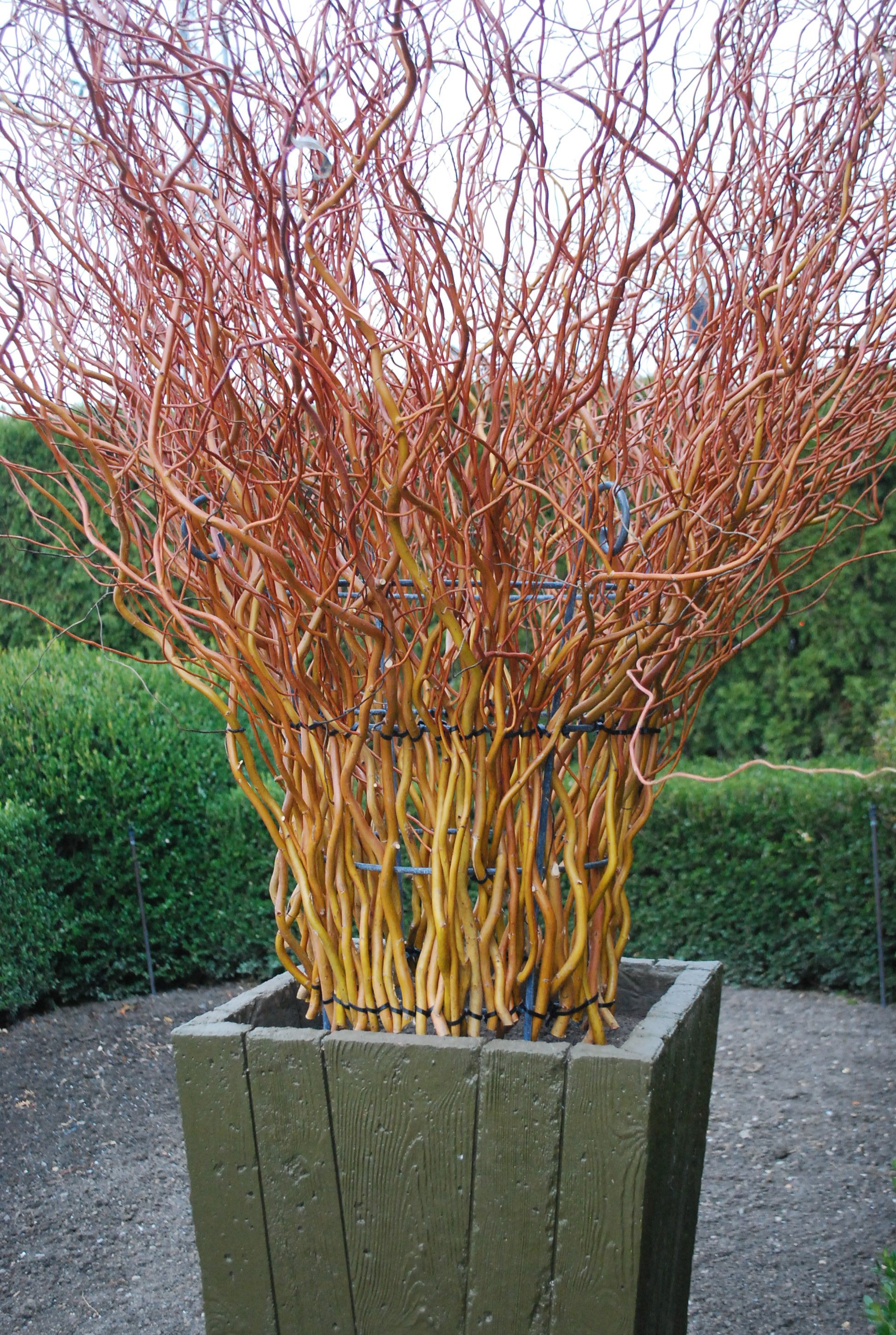
What would I do with them?  Fresh willow is incredibly flexible.  One could make baskets, fencing, wreaths-just about anything the eye could imagine, and the hand construct.  But I wanted a structure that would permit those thousands of tiny branches to make their own statement.  I use these steel forms at home to give my asparagus some support-I knew they would be perfect.  Attaching the thick stems, one stem at a time to this form, would provide stability without interfering with the natural form and inclination of the branchlets.   

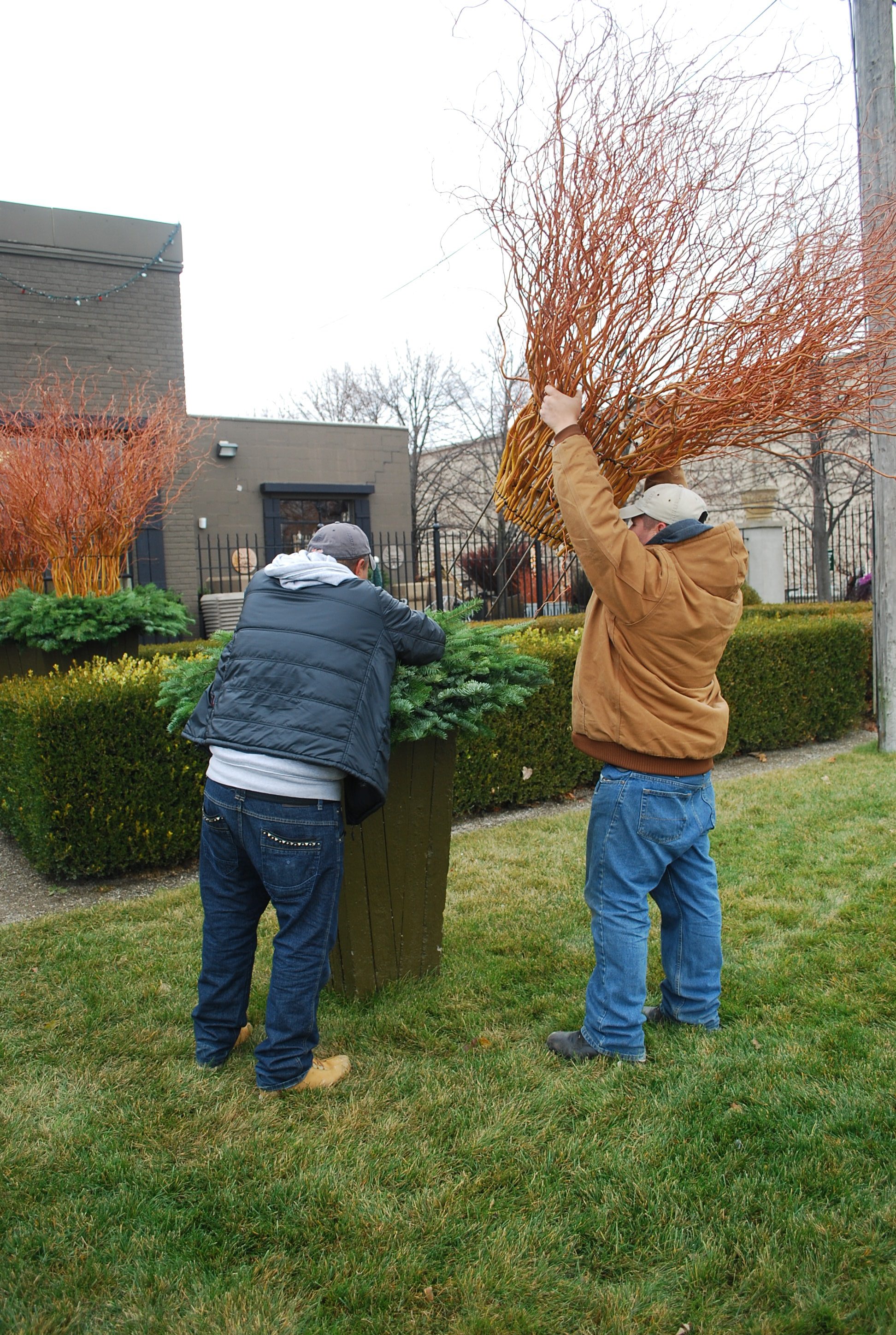
Zip tying each branch was time consuming, and not so easy.  Each stem needed a friendly neighbor.  My landscape crew does a superb job of all of my landscape installations-their seasonal winter work is no exception. They are not only incredibly talented and willing, they have an understanding of natural forms that comes only with many years of exposure to plants.  They never force anything to be.  They let the material dictate the construction, and the overall shape.  They use whatever they need to make the overall shape complete-even if that means I need to order more.  

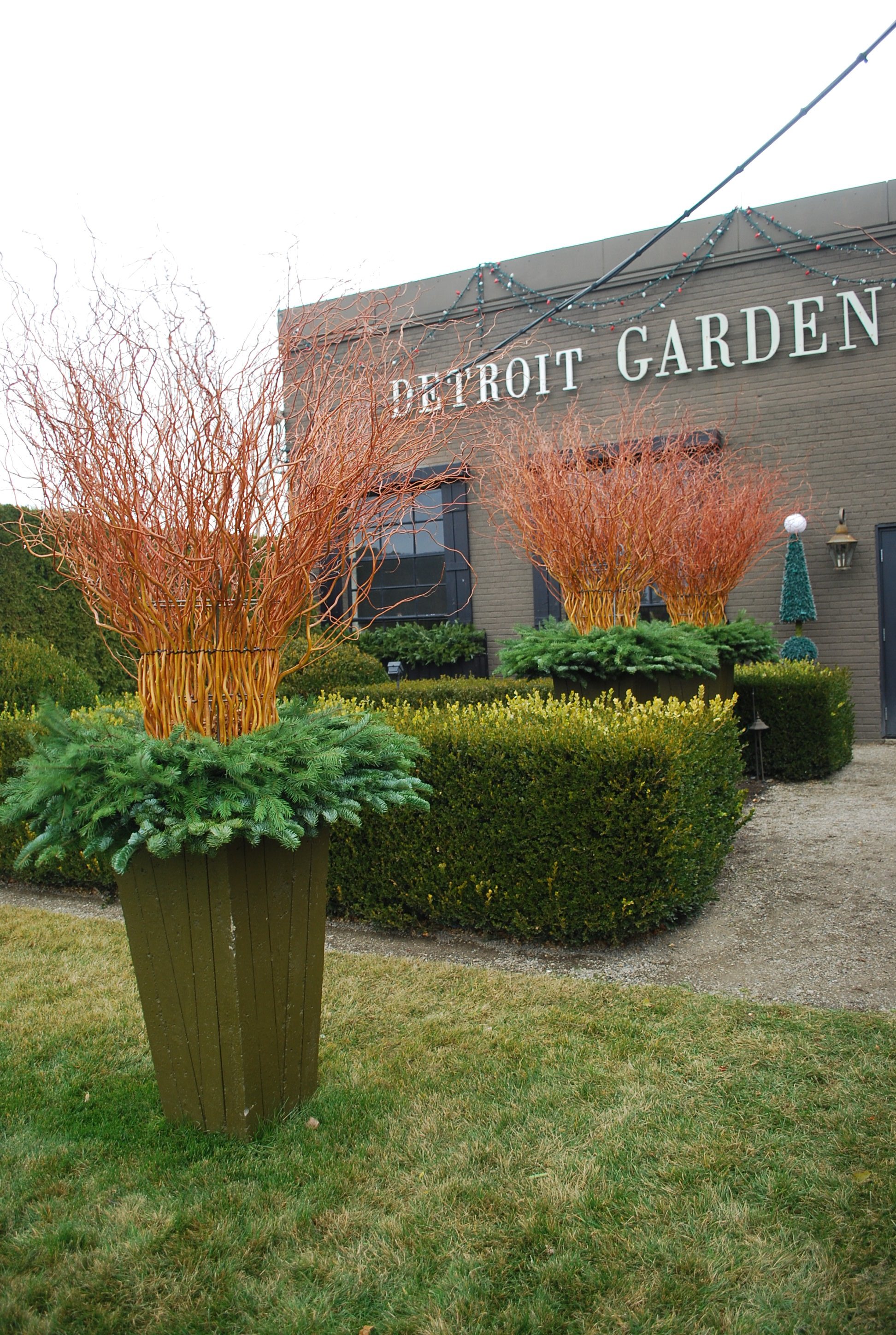
The douglas fir boughs have been stuffed into dry floral foam, some 6 inches thick.  The bottom 3 inches are wedged into the rim of the pot.  The six inches above the rim are a home to all of the boughs that are set horizontally.  A form this high off the rim of the pot needs reinforcing.  4 pieces of steel rebar are driven through the corners of the foam, and into the soil in the pots.  Once the soil freezes around that steel, it will take gale force winds to dislodge the curly willow. 

A cloud of copper willow and a low wide base of douglas fir- this year’s holiday/winter expression.  The time it takes to construct what will go on in these pots all winter is time I don’t spend moping about the closing of the garden.  Should everything come together, these pots will make a statement about what is good about the winter season.  A customer in the shop yesterday lives in San Francisco.  He tells me the climate and weather is the most consistent and unchanging of any city in the US.  Though he misses the change of the seasons, he does not miss the gray skies.  He is right.  Michigan is one of the grayest and gloomiest  of all of the states in the winter.

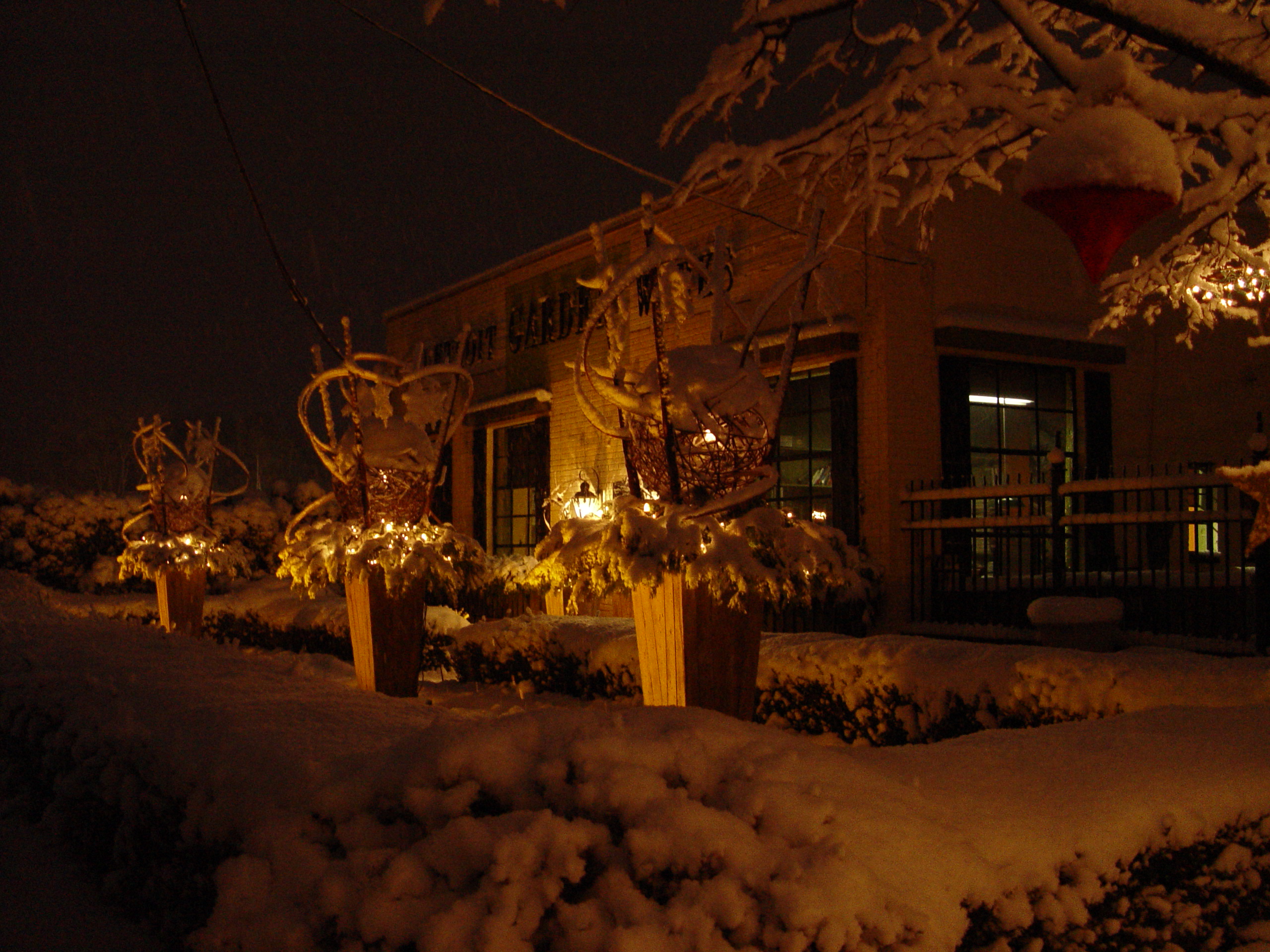
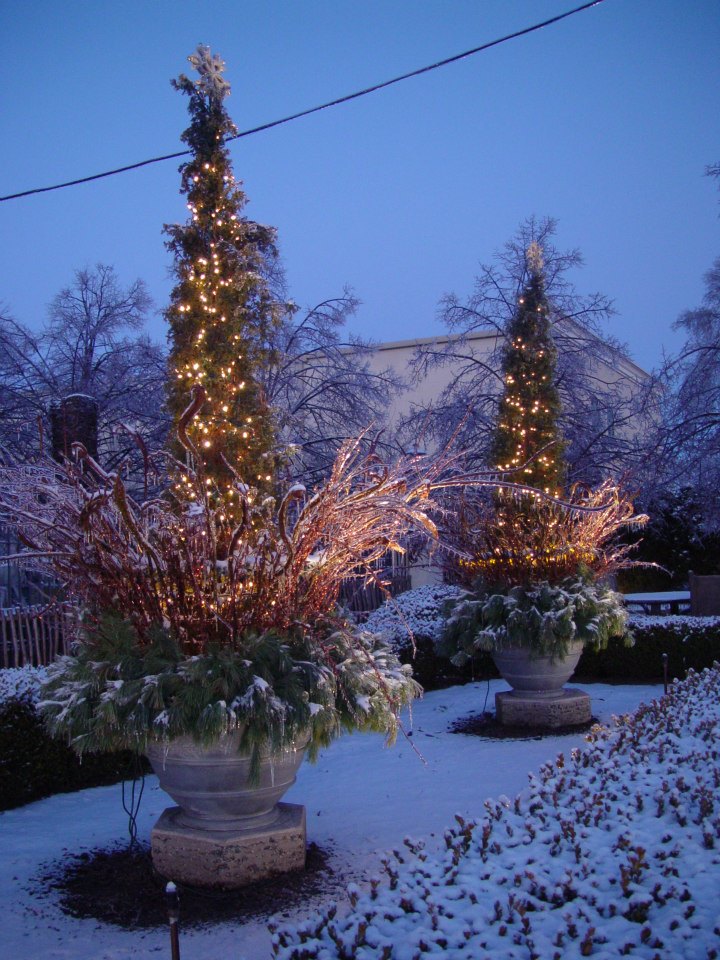
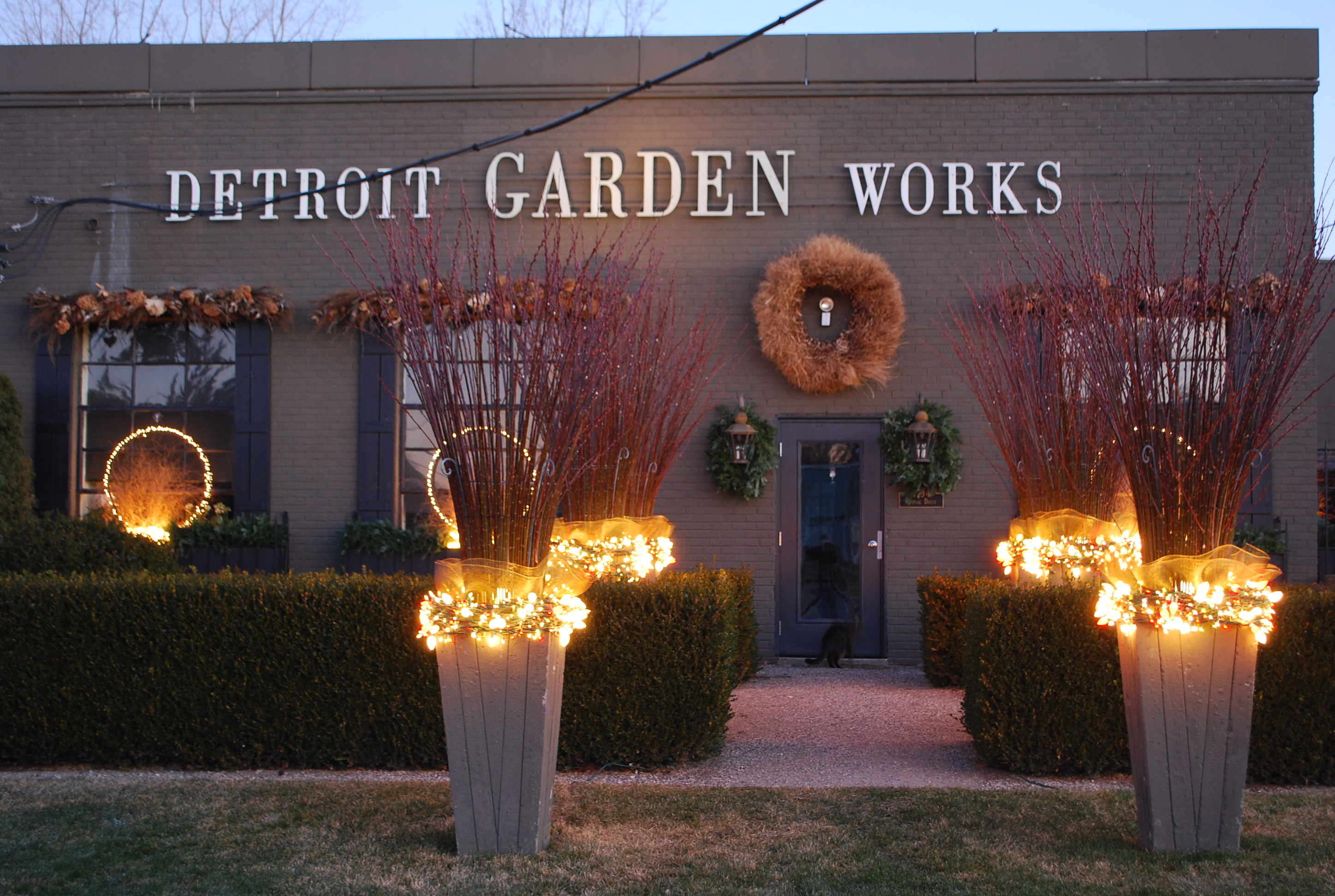
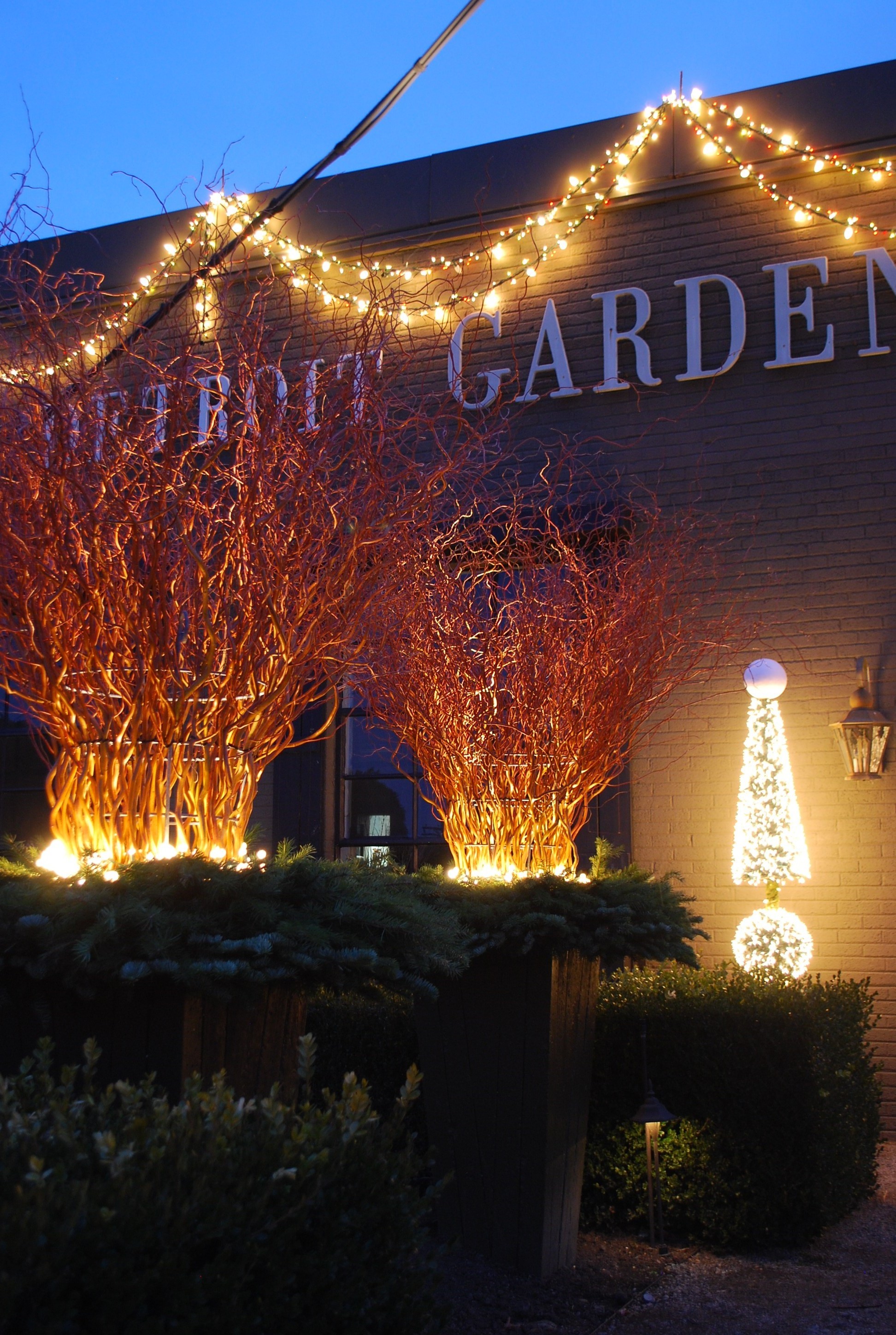
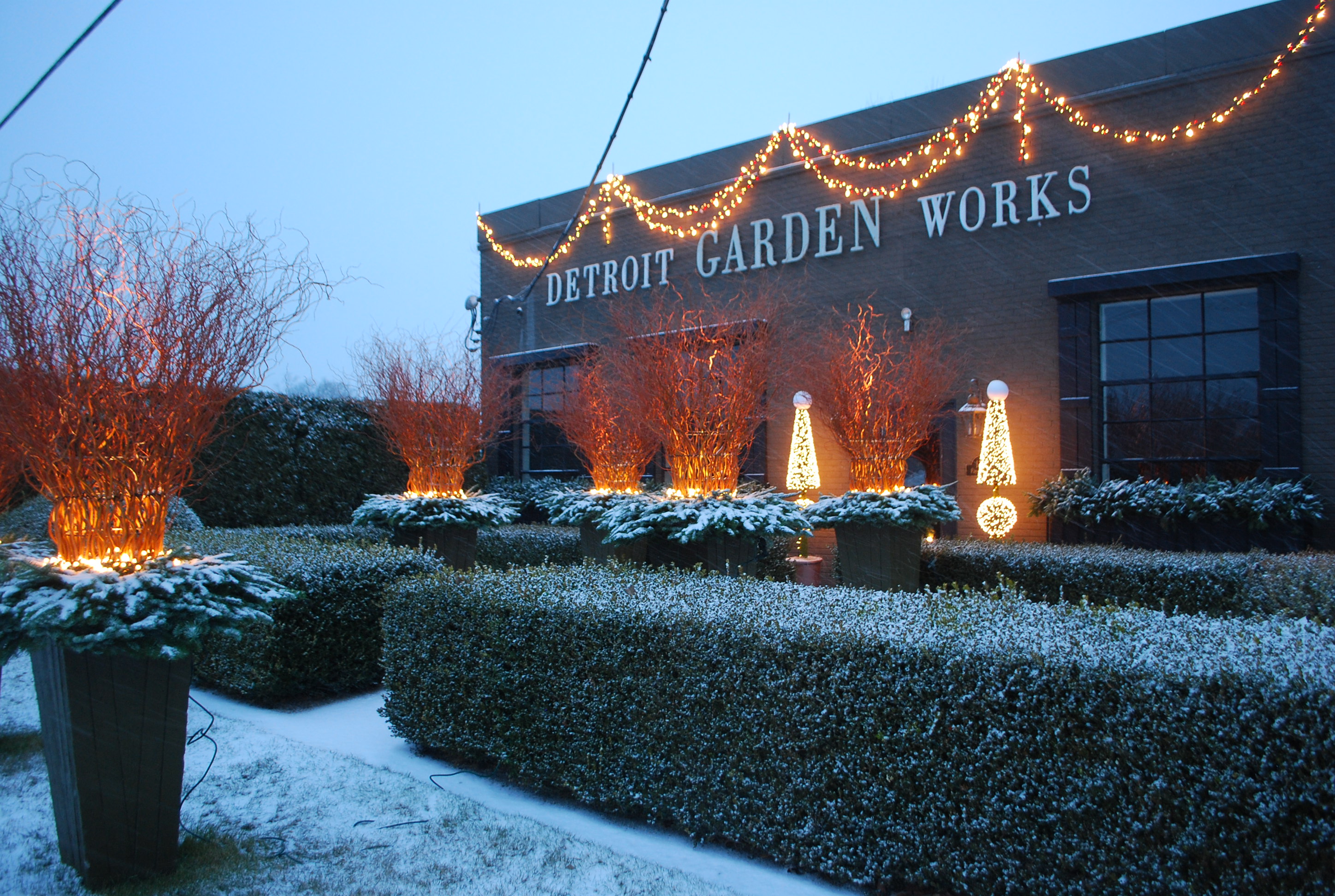
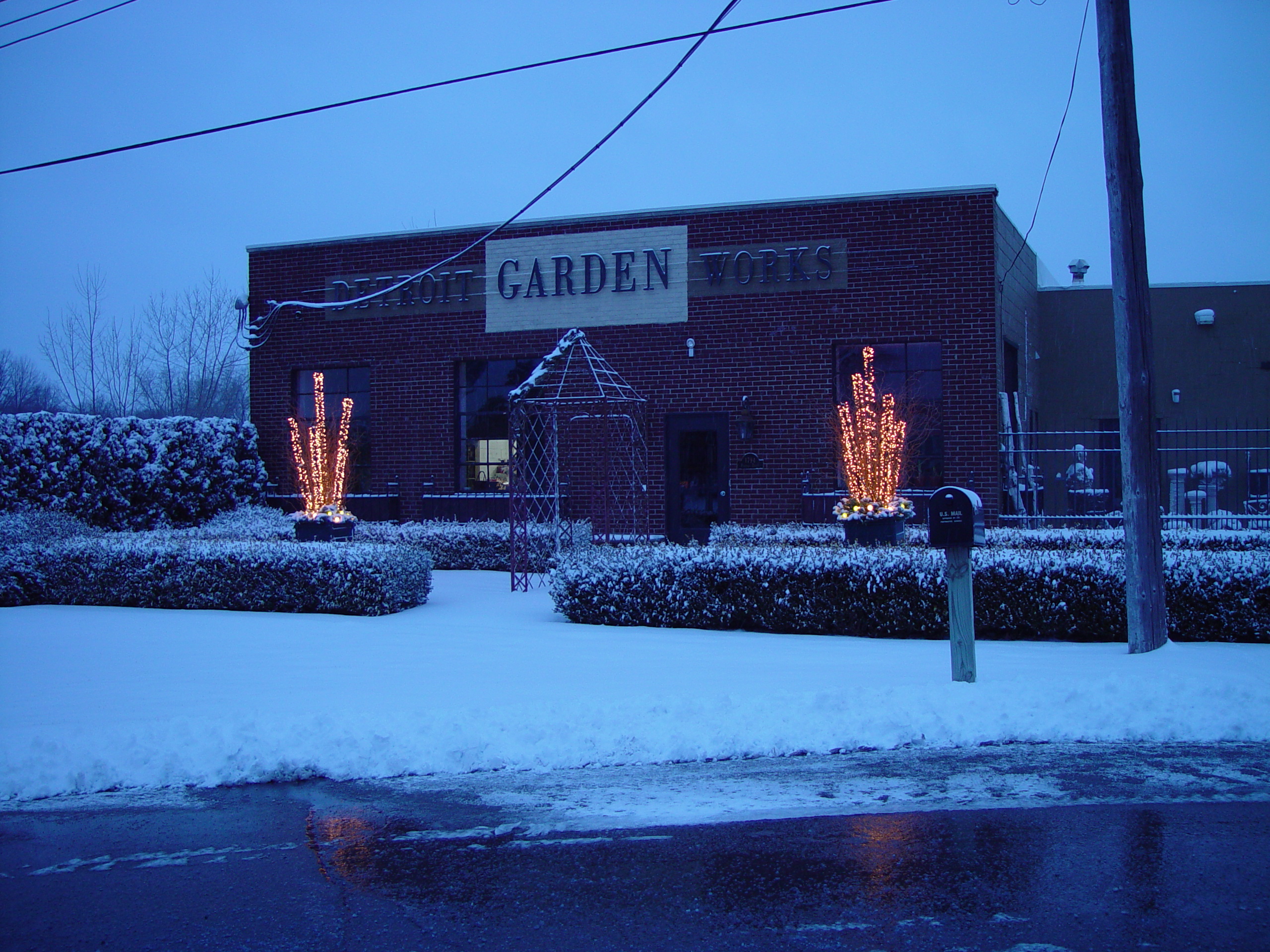
So a good part of our winter garden is about turning the lights on.  The light garland draped over the empty window boxes is comprised of three different strands of three different types of lights.  The weight of multiple light strings twisted around each other makes them drape gracefully-they are heavy.  Inside each willow cloud is a spot light, wedged into the floral foam.  A collar of dry limelight hydrangeas flowers conceals it from view.  The spot light illuminates the willow from within.  How I like this idea, and and how it looks.  A light garland would around the base of the willow illuminates them from the outside.  A pair of ball and cone topiary froms are wound solid with ordinary garden variety mini lights.  Ordinary materials do not have to be used in an ordinary way.  

Having turned the lights on, I have no idea what I will do with this next.  Part of the joy of a winter garden is having the time to tinker with it.  The spring and summer garden-I am always running to try to keep up.  This and that always needs something.  Though I have a lot of work yet to come helping clients with holiday and winter containers and decorating, there will be time to figure out what else this garden might need.       


Early this morning, a first dusting of snow.  As my winter is most assuredly on the way, I would rather like it than not.


Giving Thanks

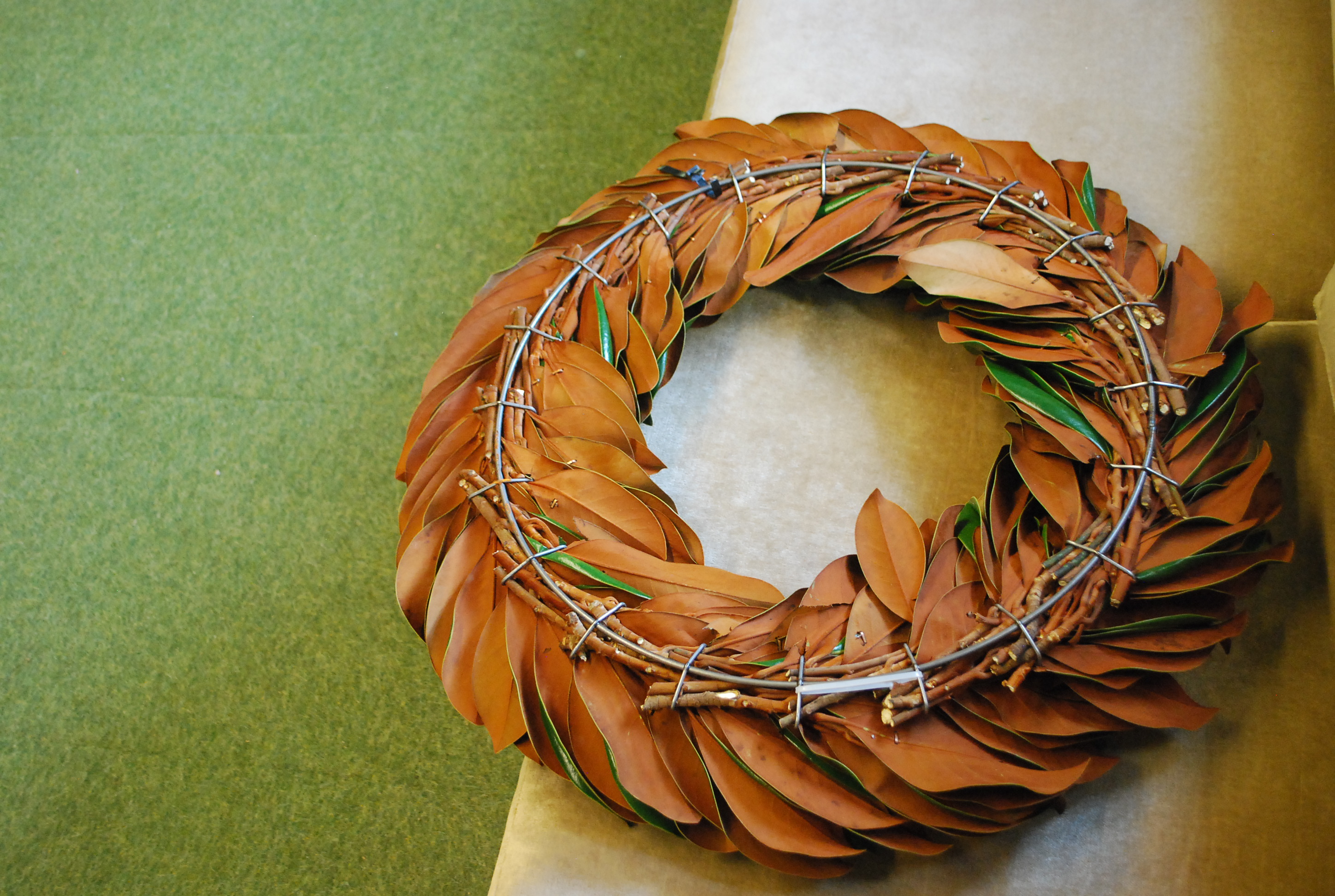
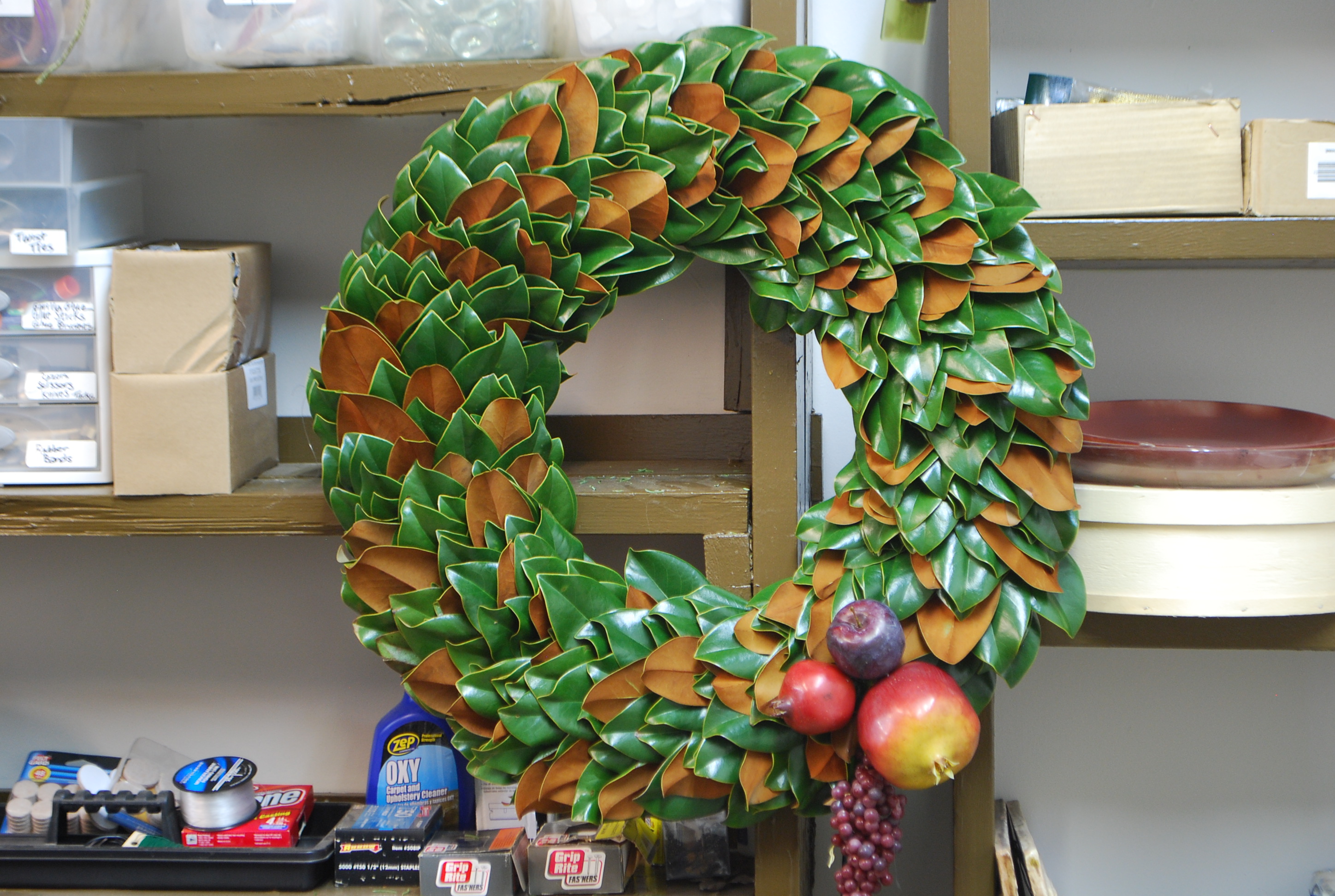
Though my 8th grade American history book ascribed the first Thanksgiving holiday to the Pilgrims for the bounty of their harvest in 1621, many cultures celebrate some version of Thanksgiving.  Sometimes referred to as a harvest festival, a great crop yield meant food would be available for all during the winter.  I cannot imagine being responsible for growing the food I would need to survive the winter, much less the survival of many.  Issues of life and death are much better left to physicians, theologians, parents and teachers than me.  But celebrating the harvest, and giving thanks, is a tradition in our culture that I value.  We buy magnolia wreaths, garland and stems for the holidays from a company whose sole crop is magnolia cuttings.  When the trees are well looked after, they grow.   They weave the harvested branches onto heavy galvanized steel frames.     

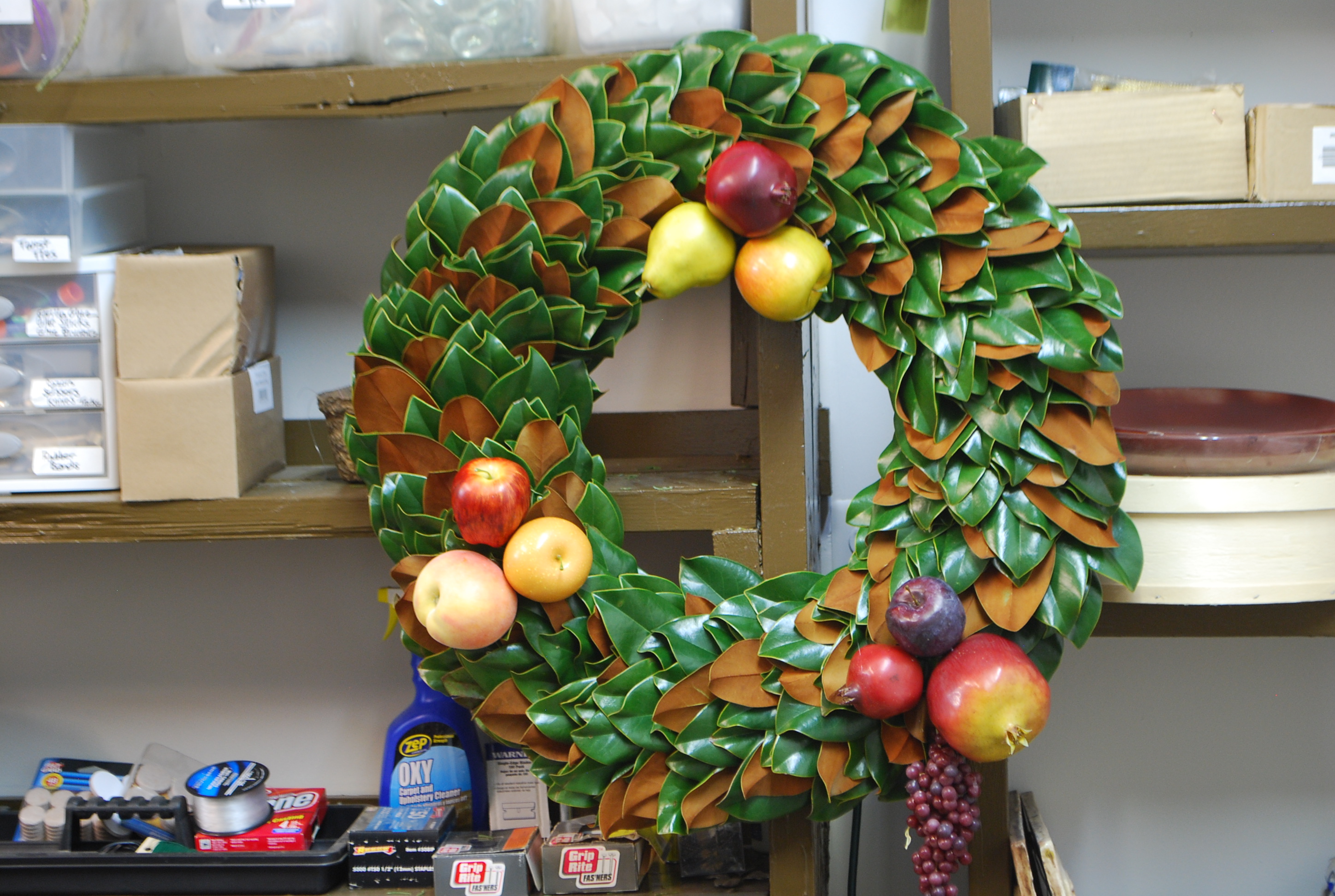
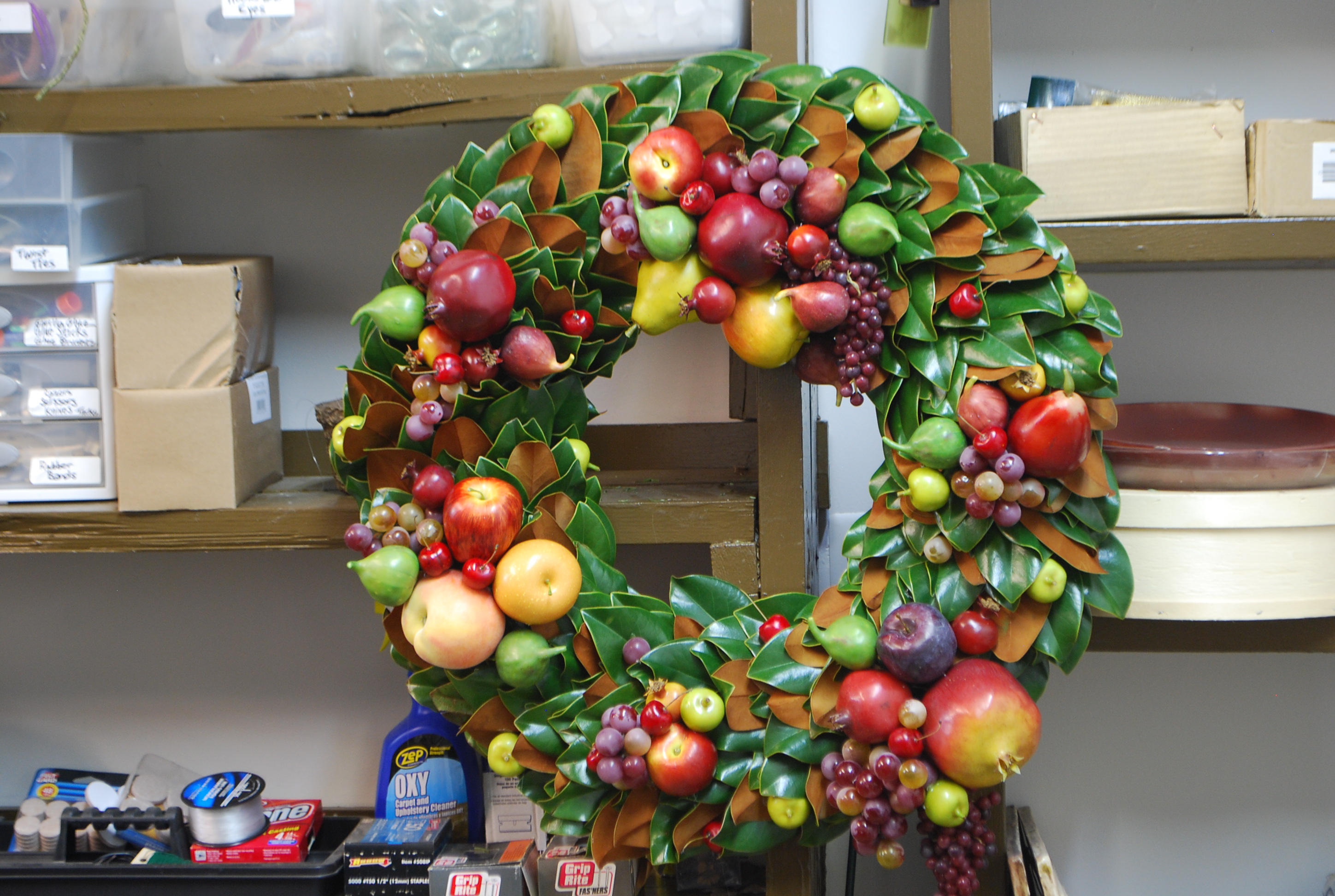
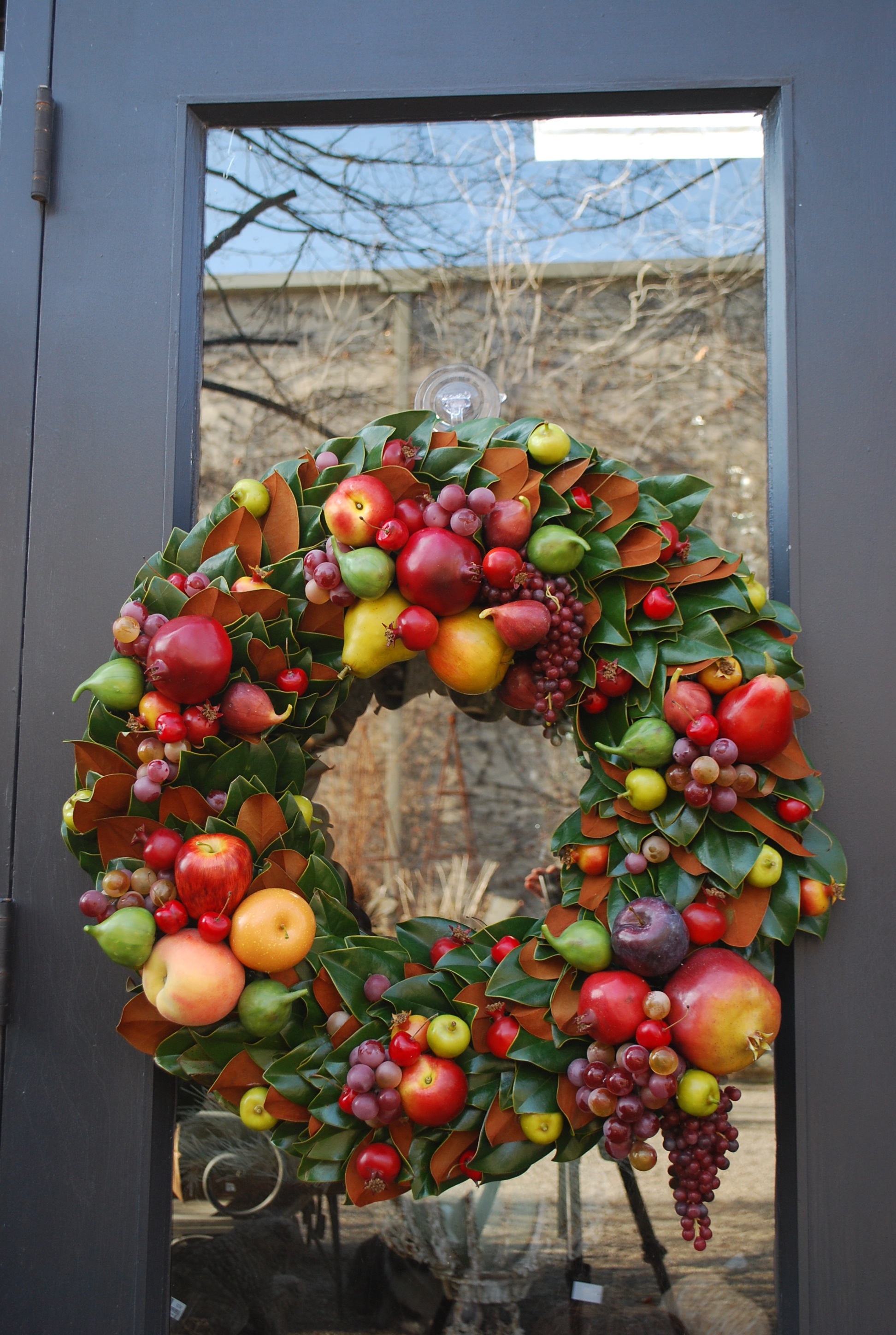
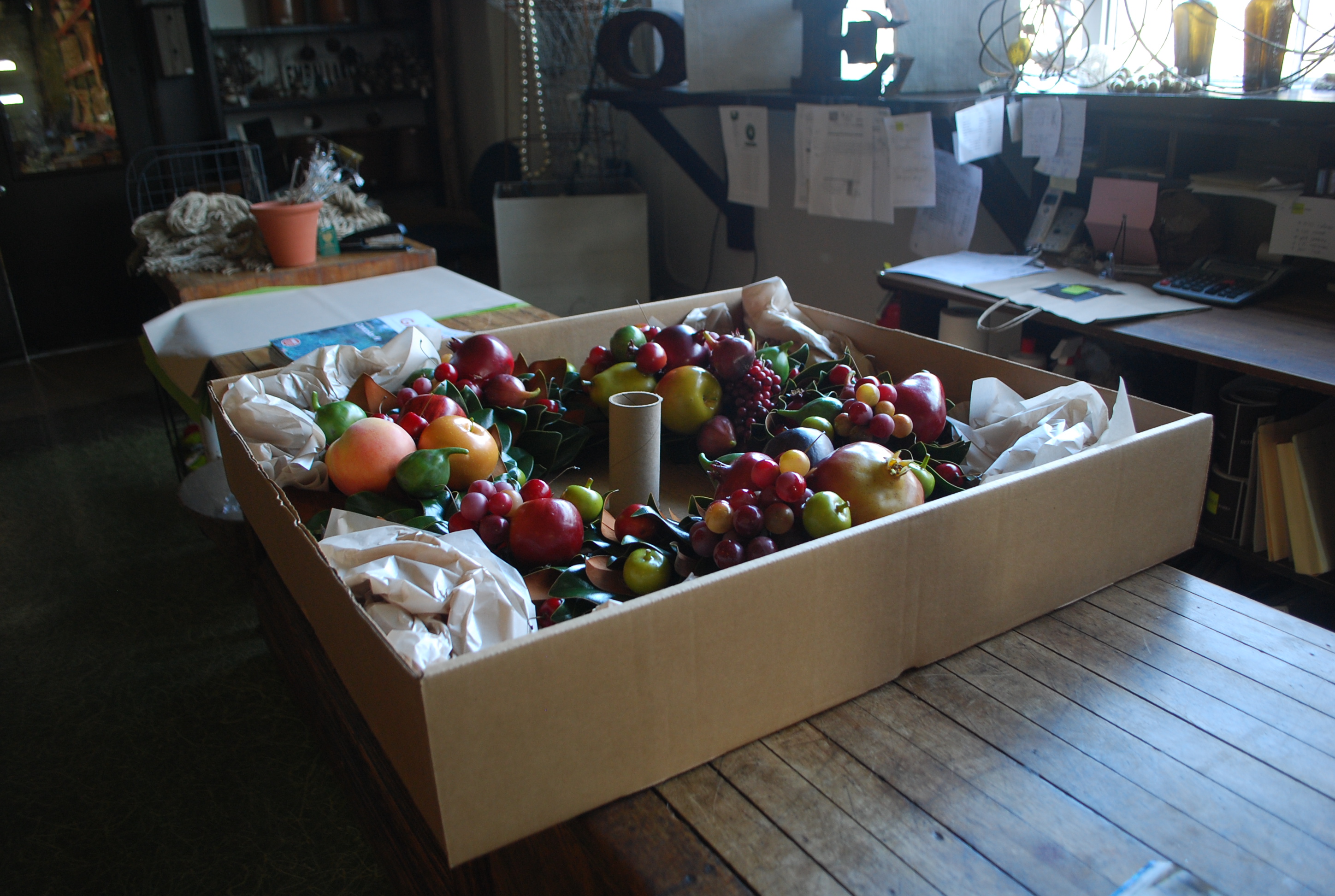
Their construction is worth it.  A magnolia wreath will dry; properly cared for, it will last many years.  Their classic wreath features both the front, and the brown felted backs of the leaves.  This 30 inch wreath is perfect for a front door, or over the mantel.  A client from out of state wanted a magnolia wreath decorated with fruit.  She is in town visitng her kids for the holiday.  Would I be able to get it ready for her to take home?  Holiday decorations focused on fruit is a holiday tradition dating back to the delle robbia wreaths in Italy.  Traditional Williamsburg is noted for their fruit centered holiday decor.  I am both appreciative and thankful for that precedent.     

Traditions come with that aura of connection-whether they be cultural, religious, regional or neighborhood oriented.  One generation to the next.  Every creative expression has roots.  I am thankful to have a few clients every year who are interested in this particular and traditional representation of the celebration of the harvest.  It is comforting to feel a part of something that came before, and will go on beyond.  My faux fruit are most certainly not part of this tradition.  But they will age with the same grace as the wreath.     

I am thankful to have a professional gardening life that allows me to design.  I am more than thankful for those many opportunities clients provide to make something grow.  Yes, I did go to work today to make this wreath.  I have lots of good reasons.  The corgis dislike having their go to work routine interrupted.  Buck dislikes being distracted when he is planning a holiday dinner.  I enjoy the opportunity to be at work making something, uninterrupted.             

I start with the major fruits-by this I mean the fruits of considerable size.   I pierce them with an awl, and insert a floral pick coated in glue.  Sturdy and solid construction is a must.  Yes, I am thankful for that company that makes wired floral picks.  That pick wedged into the wreath frame means that heaviest of the faux fruit is secured to wreath frame.    

The finished wreath is a traditional nod to the celebration of the harvest.  Our 2012 gardening season was not the easiest.  Bitter and very late frosts damaged so many plants.  A summer that was incredibly hot and even more dry-daunting.  Many local farmers harvested more disappointment than anything else.     

But no matter the trouble, there is always something, and more importantly, someone to be thankful for.  A good friend, a family member, an associate, a client-so many people who deserve thanks.  A practical knowledge of traditional expressions provides a solid base from which to move on.  I am thamkful to have a culture that provides community.          

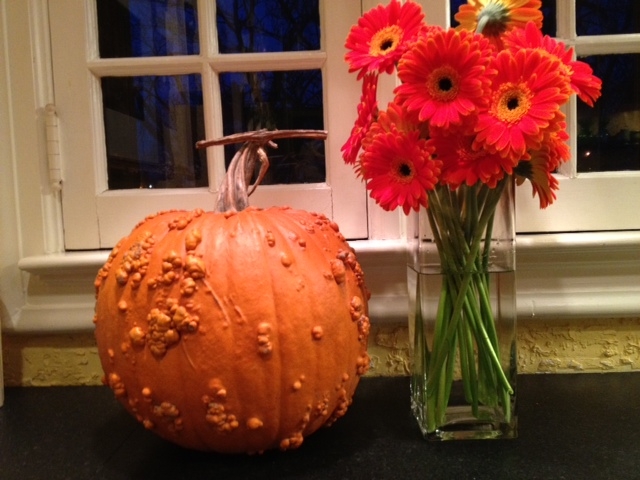
My sole contribution to our Thanksgiving?  A very good looking pumpkin, and a vaseful of orange gerbera daisies.  Our Thanksgiving tradition-I am grateful for it.