Spring Pruning

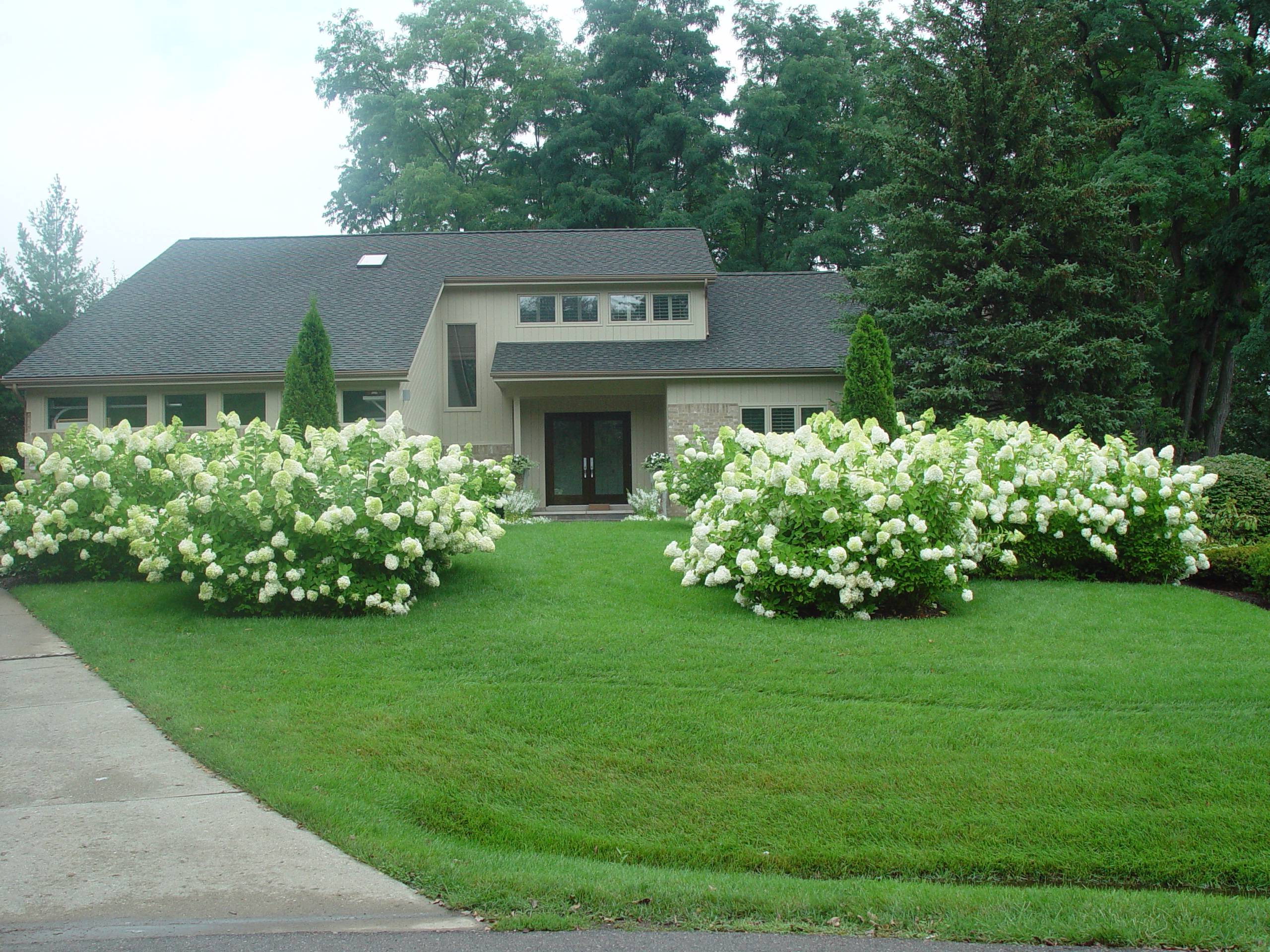
limelight-hydrangeas.jpg

The day you put a plant in the ground is the first day of a relationship.  If you plant cosmos, that relationship constitutes one season.  If you plant a tree, that relationship might survive for generations.  If you plant shrubs, you could have a good many years of pleasure ahead of you-provided you prune.  Woody shrubs, left to their own devices, go to rack and ruin.   They spend no end of effort piling on enough wood to send the tips of their branches to the sky.  What is the big attraction of the sky?  No competition for light, air, and rain. No shrub feels any inclination to bloom where you want to see blooms-at eye level, that is.  Plants grow with survival in mind.  Should you have another idea in mind, wade in.  Participate.
pruning-hydrangeas.jpg

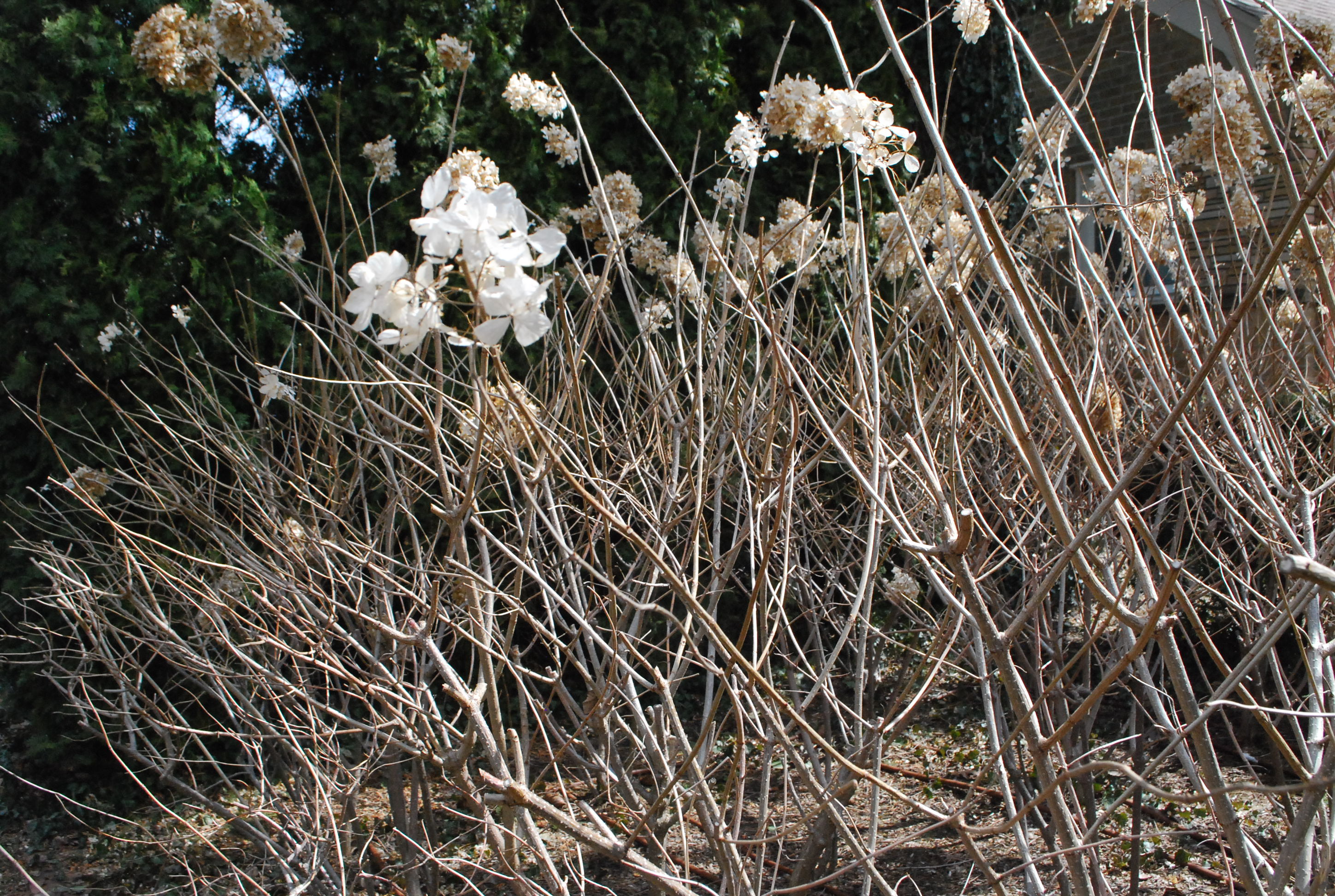
Shrubs will grow sideways, around an obstacle.  They will sprout back, if cut to the ground.  They will survive the indignity of a homeowner with a hedge trimmer gone amok.  They will survive, even though the overall shape may be ungainly, or sheared to within an inch of its life.  The instinct to live is strong.  Lucky for me, and every other gardener who has learned on the job.  Pruning a hydrangea is not hard-it just requires the patience to consider every branch, before you cut.  I prune each branch, one at a time.
pruning-hydrangeas.jpg
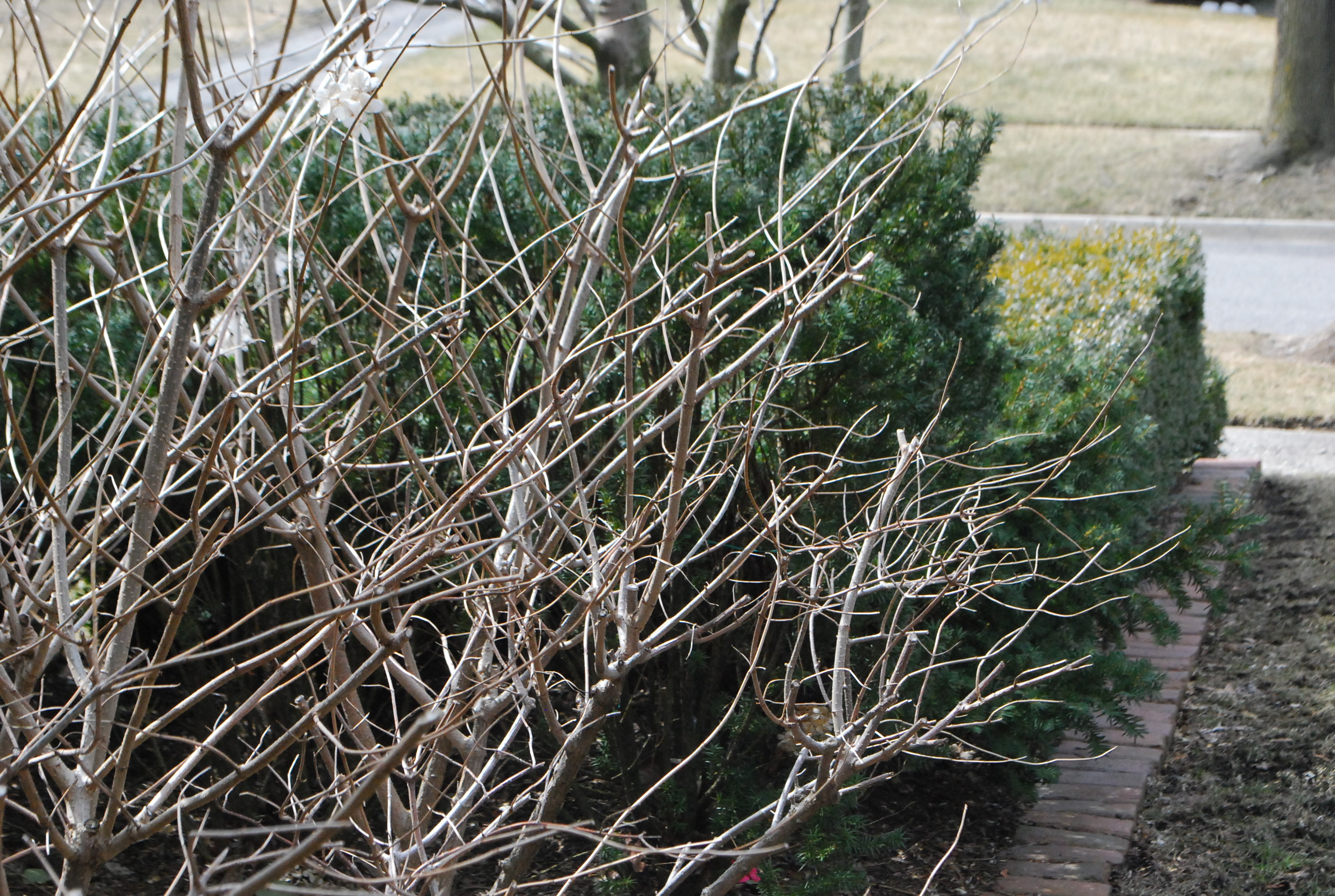
A well pruned hydrangea looks like it has had a shag haircut. Every branch has its our airspace. This means some branches get last year’s flowers cut off-only. Other branches get 8″ removed. Others get 16″ removed. Some old and thick branches in the middle get cut even harder, so air and light can reach down in to as many branches as possible.  Some gardeners prune their Limelight hydrangeas to within 14″ to 24″ of the ground, forcing them to produce basal shoots which originate underground. This method tends to produce a shorter shrub, with fewer and larger flowers.  I dislike cutting this hard-it takes so long for the shrub to regain a natural and airy shape.  I would rather have lots of flowers, than a few gigantic flowers.  I would rather plant the shorter growing version of Limelight- “Little Lime” – than prune a Limelight too hard.
pruned-hydrangeas.jpg

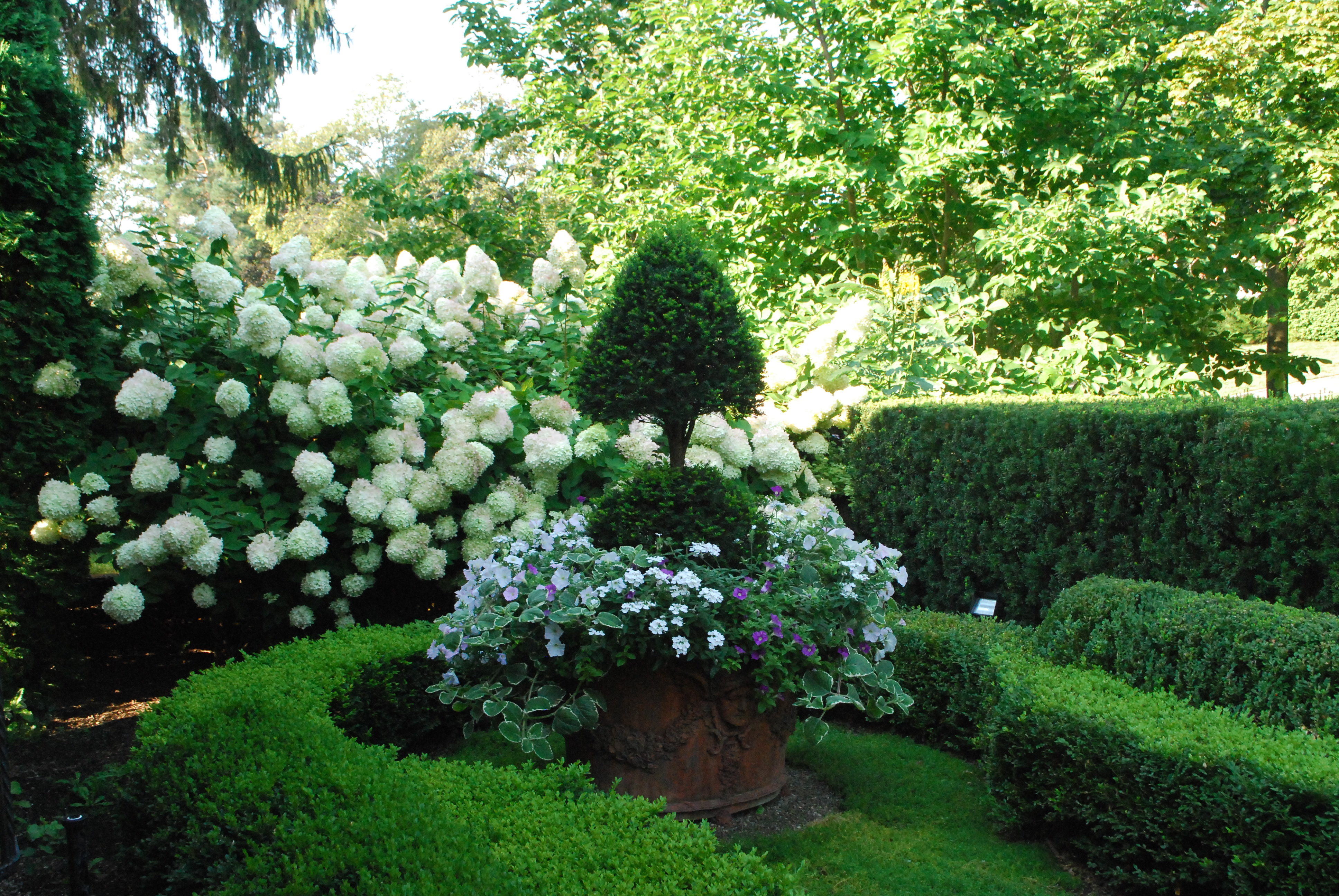
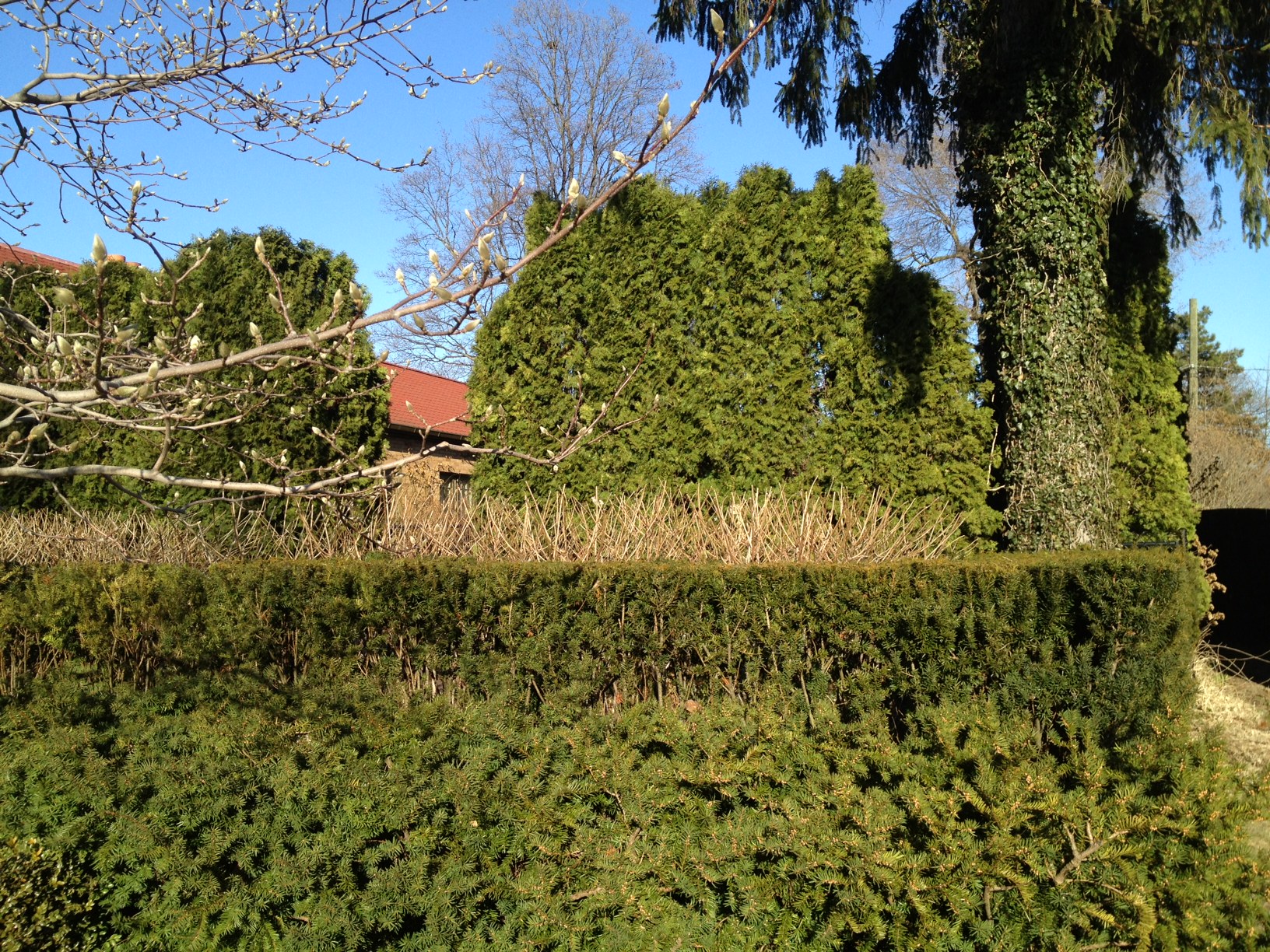
I like my Limelight hydrangeas tall, and I like lots of flowers. My yews are 48″ tall at this end of the garden, and the arborvitae are 14′ tall.  The hydrangeas grown 6′ to 8′ tall-perfect for this spot. For good flowering from top to bottom, the lower branches need to be left long, and the top branches need to be shorter. The finished shape should be very loosely pyramidal, or like an egg on its side.  Step back frequently, to see how things are shaping up.  This hydrangea blooms on new wood, so no matter how you prune, you will get flowers.  Shearing a branch will encourage that branch to produce multiple shoots below the cut.  Thicken up, and out.  As long as the exterior shape is loosely described, the shrub will prosper.  Shearing deciduous flowering shrubs may take less time, but produces less than desirable results.  Renovating shrubs that have been sheared takes a long time.  One cut at a time-this is my advice.  Invest in a great pair of pruners-this makes the work easier.  The moment that all I can hear is the birds, and the action of the pruner blades bypassing each other, is a spring gardening moment I treasure.
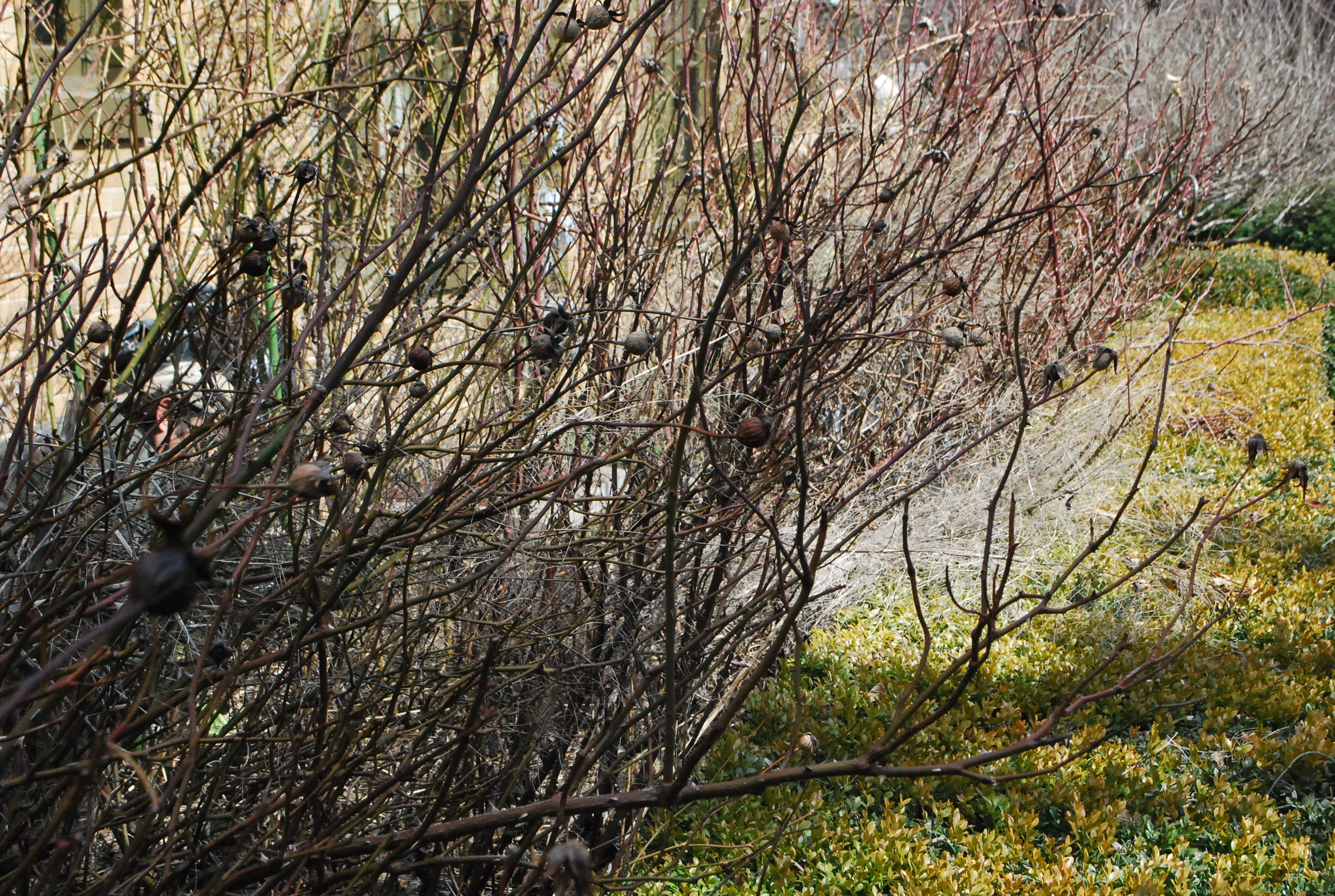
pruning-roses.jpgI do grow a few shrub roses.  Sally Holmes, Carefree Beauty and Earthsong.  I have read lots of articles about pruning roses, none of which I have paid much mind to.  I stop dead heading my roses in mid-August.  I actually love the rose hips in the fall and winter.  In the spring, when the buds swell, I prune. The swelling of the buds?  You will recognize swelling buds when you see them.  My roses bloom on the new shoots.  I never cut a branch back by more than 1/3rd.  I prune the entire collection of roses as if they were a single plant.  I leave them loose. Last fall I secured the summer’s growth of the climbing roses to the wall-not much needs to be done to them now.
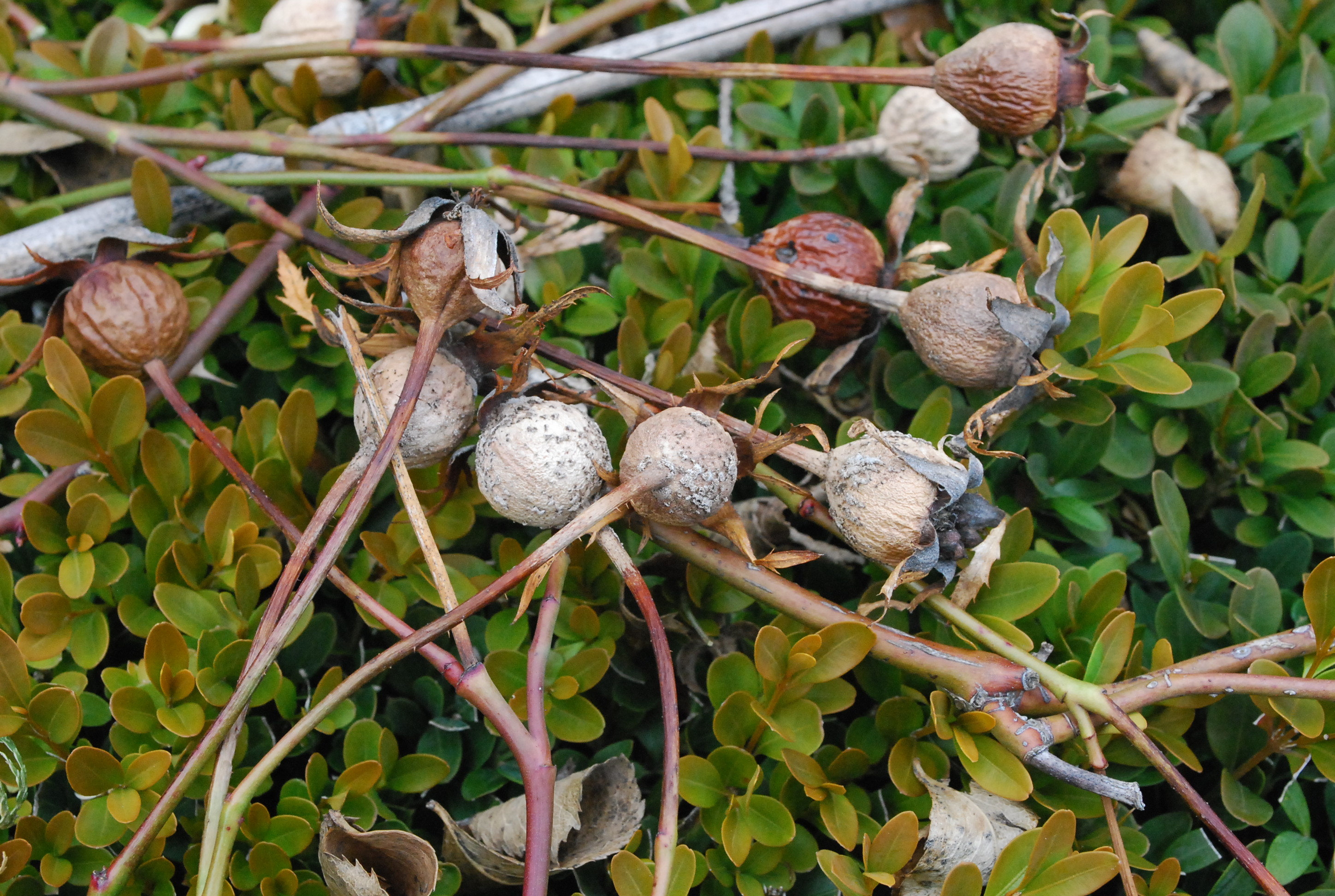
rose-hips.jpgOccasionally I will hard prune an old climbing rose cane low to the ground.  This keeps new growth coming from the bottom. Pruning stimulates growth.  Pruning a climbing rose cane 6 feet off the ground will result in a rash of shoots.  A long stalk with a tuft of shoots on the top-not the best look. Any cane which you can train to grow horizontally will flower more heavily.  If you think about the where the sun and rain comes from, this makes sense.  Is the afore mentioned a guide to pruning roses-not really.  Every gardener has to deal with their roses one to one.  Look at them, and decide how to prune. I prune my roses so they have the best possible overall shape.  Most roses are very ungainly growers, so pruning for a good shape is not always so easy.  That’s why I grow asparagus with my roses.  The  ferny fronds conceal those awkward and ungainly branches.  Do I prune my asparagus over the summer-oh yes.  I keep them at a height which conceals those legs.  Does this affect my asparagus crop?  Maybe.  But everything in the garden is about choices.  I want great roses more than I want home grown asparagus.
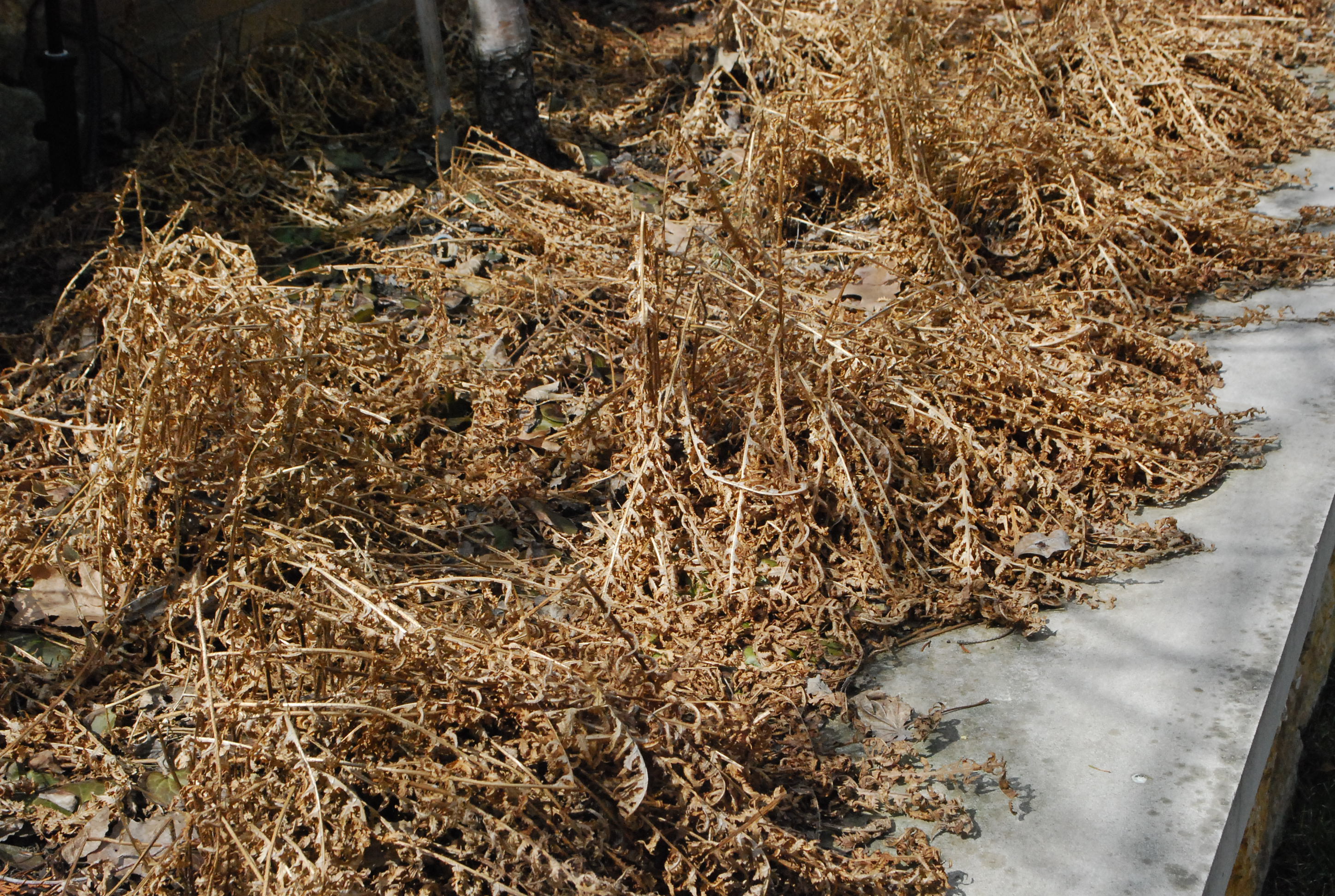
beech-ferns.jpgI do not cut back my beech ferns in the fall.  The dead fronds mulch and protect the European ginger over the winter.  By April 1st, those fronds have cut loose from the crown.  I do not need to prune.  I rake them off.  A rubber rake does a great job.  My fingers do the best job.
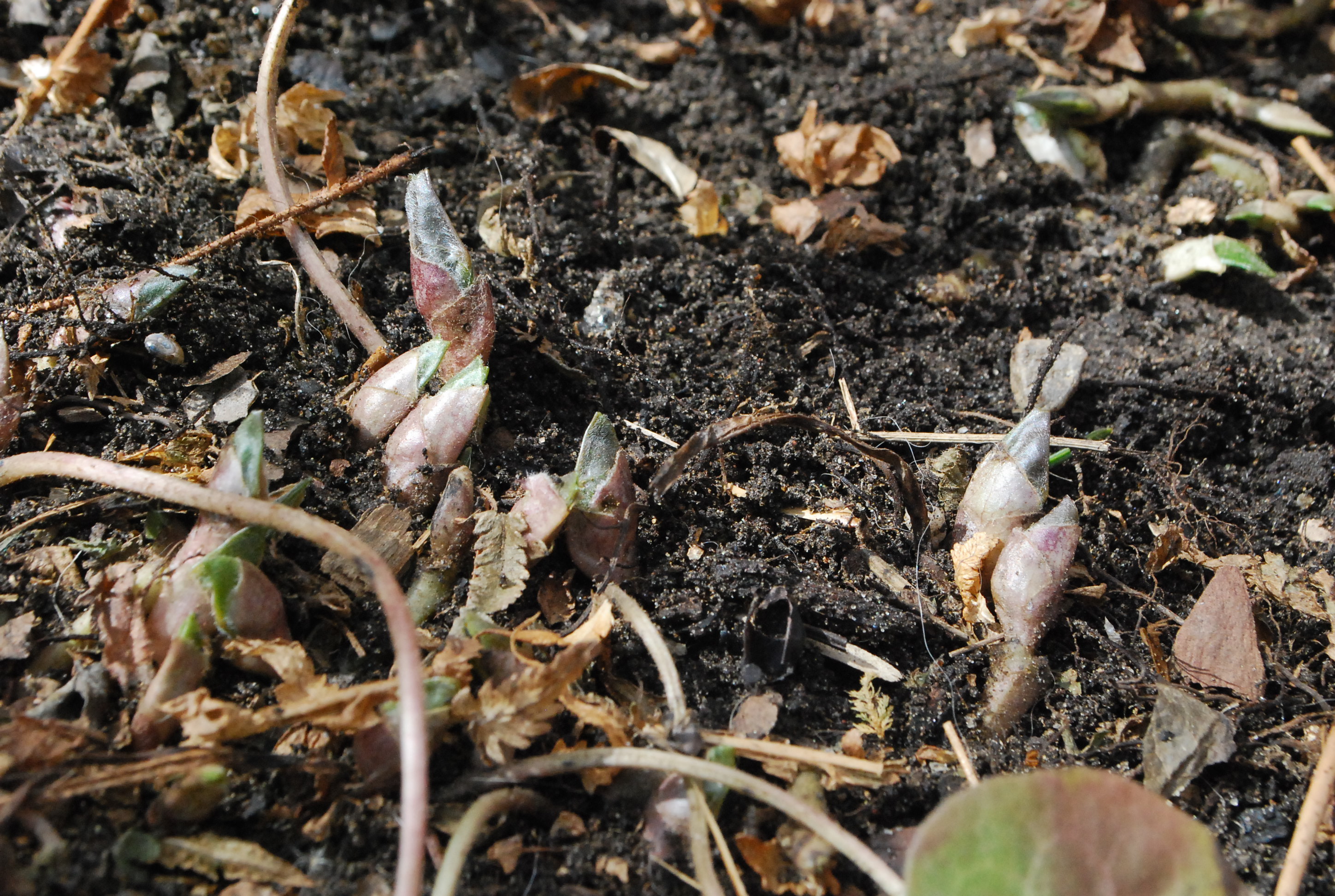
european-ginger.jpgThe European ginger has already been busy, sending out new shoots.  A steel rake, or a size 8 boot can damage these tender new shoots.  One of the pleasures of the spring-the new growth.  Friable soil.  My housekeeping inside-rather rude and abrupt.  I just want to get the job done.  When I am cleaning the garden in the spring, I take my time.  I do it-gently.  I have a relationship with this garden that I intend to nurture.

snow.jpg
Lifting a lower branch of a spruce, I see icy snow. The transition from winter to spring has been incredibly slow this year. Really shady spots in my garden are still frozen. The night temperatures are still below freezing.  Frozen ground, frozen branches-my advice is to let them be.
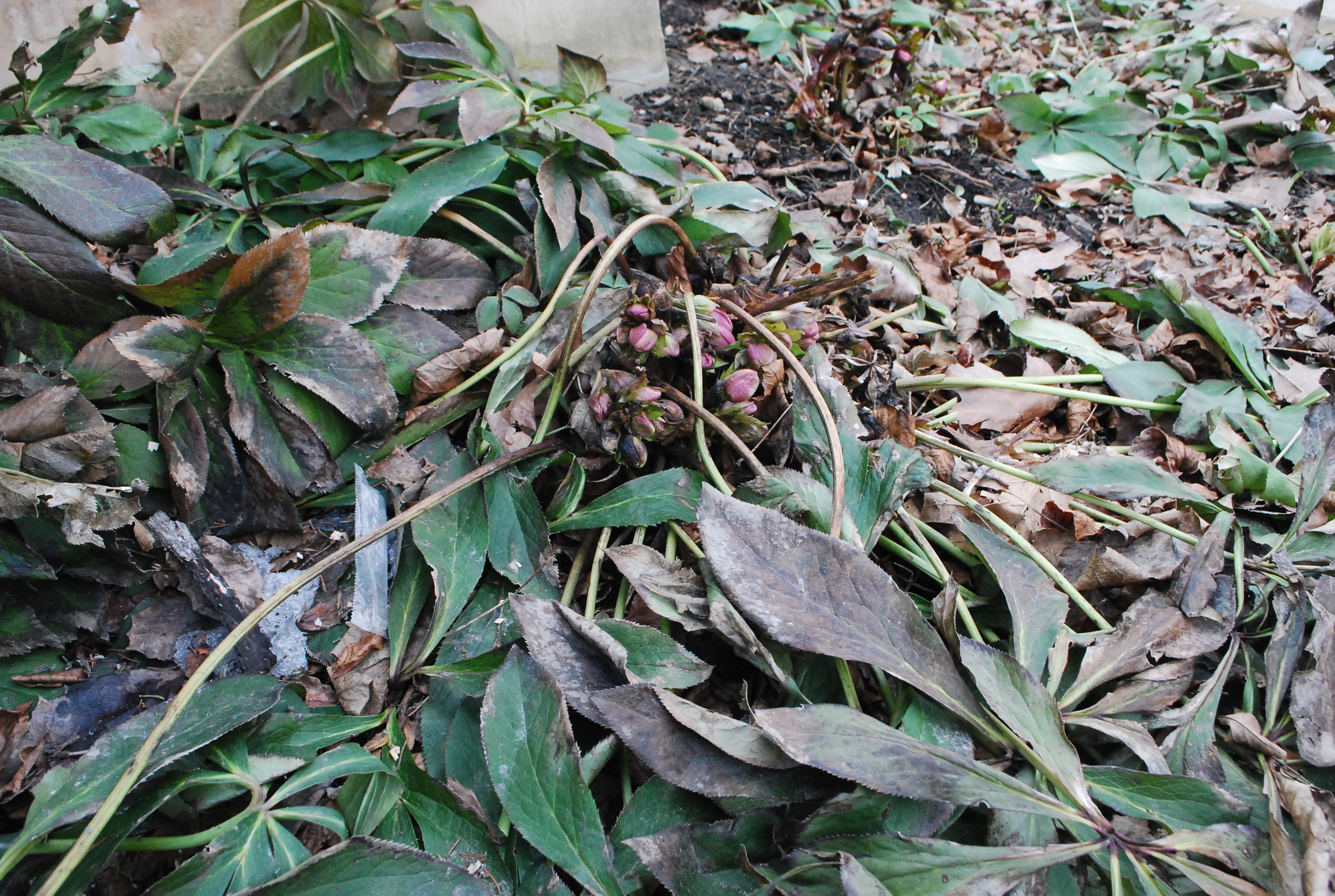
April 2 2013 (40)The hellebores are awake.  Last years foliage has collapsed in a heap on the ground.  Every day I think about cutting that old foliage away.  Clean and bare is not always the best situation.  The newly emerging flowers benefit from all that fluff. The transition from winter to spring can be a rocky journey.   Sometimes, the best thing to do is to do nothing.
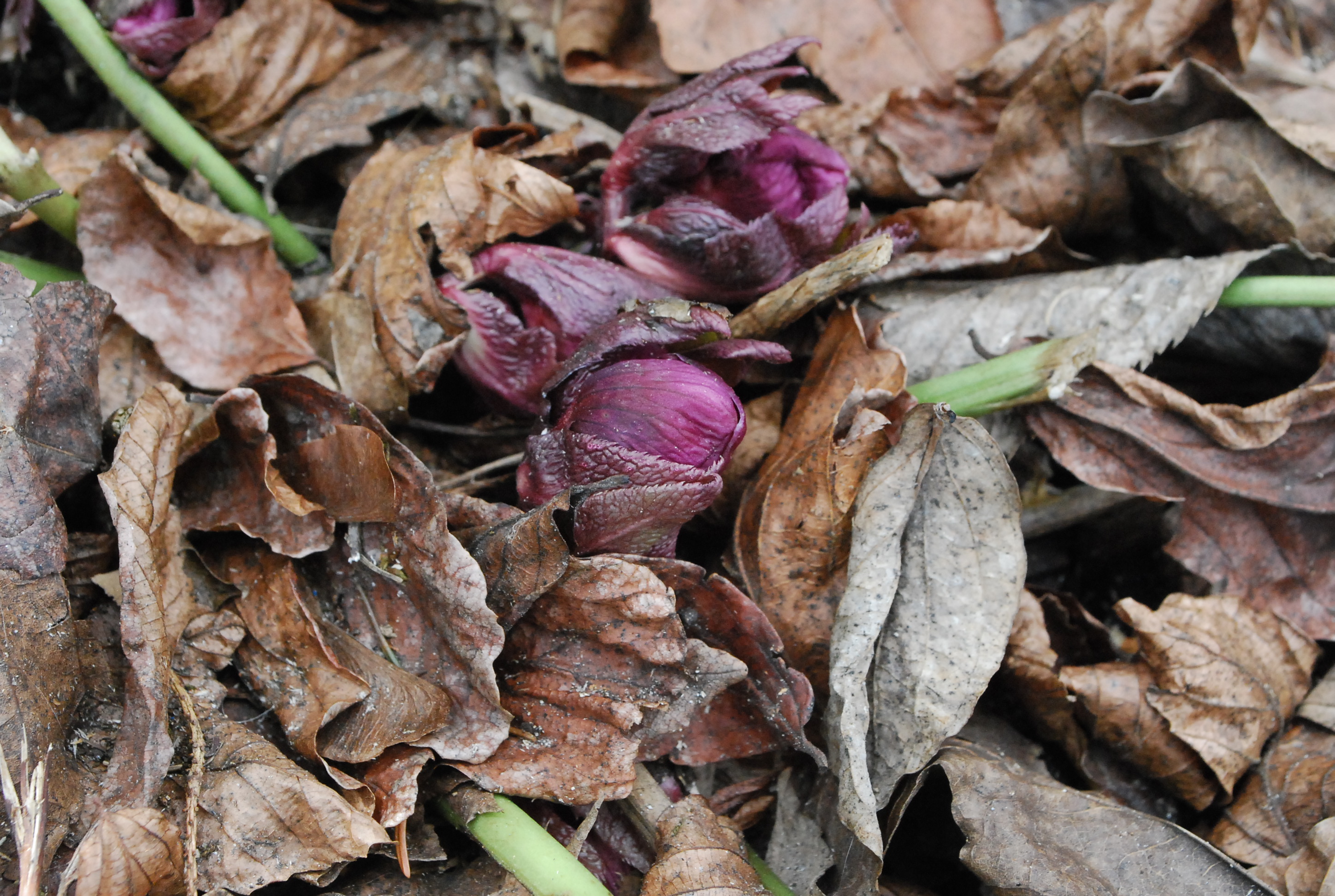
hellebore-flowers.jpgLast year’s foliage protects those flowering stalks, ready to emerge.  A warm spell in March proved to be damaging.  The buds sensed it was time to grow.  Nature had a different idea in mind.  We have had a run of really cold weather, the past 3 weeks.  Some of the exposed buds on this plant are black with the rot produced by freezing temperatures.

uncovered-hellebore.jpgCutting away last years foliage  exposes new flower buds.  Very tender flower buds.  Just to look at them, you would know they are not armed against the cold.  I cut the dead leaves away, and put them back over the top of these buds.  It is too soon to clean here.  What constitutes better days?  Warmer nights.  The ground is still very cold.  It will be 2 months before the soil really warms up in my zone. Hellebores do not require warm soil, but the flowers will be damaged by night air temperatures in the mid to low 20’s.  They need all that litter on the ground over them.  It’s not time yet to wash and put away the blanket.
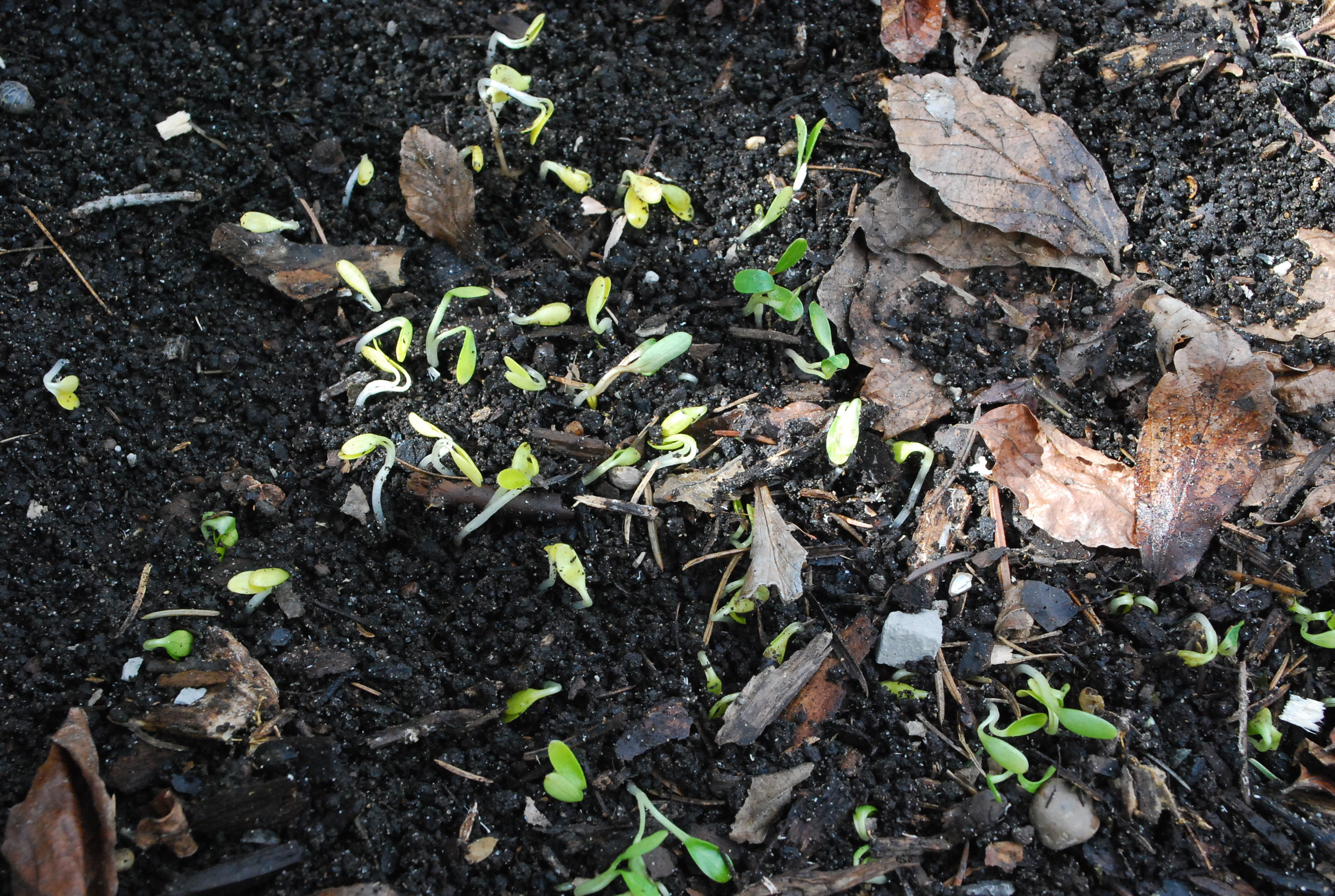
hellebore-seedlings.jpgI am shocked and pleased to see that I have hellebore seedlings sprouting.  I spent a few moments taking this in, before I covered them up.  I am not sure how long it will be, before I expose them to the light of the new season.  The pruning and the cleaning-all in good time.  A slow spring-this is what we have now.
Pruning Trees

March 30a 2013 (2) There are plenty of reasons to prune.  The branch of a tree, shrub, or rose may be dead, and need removal.  It may be growing across the sidewalk, and need some heading back.  An old lilac may be blooming only at the top, 15 feet above ground, and need rejuvenation.  Branches of shrubs that cross over each other, and rub off the bark is an invitation to disease or insect damage.  Intact bark protects the life inside.  Pruning can help keep woody plants vigorous, healthy, and beautiful.

linden-row.jpg
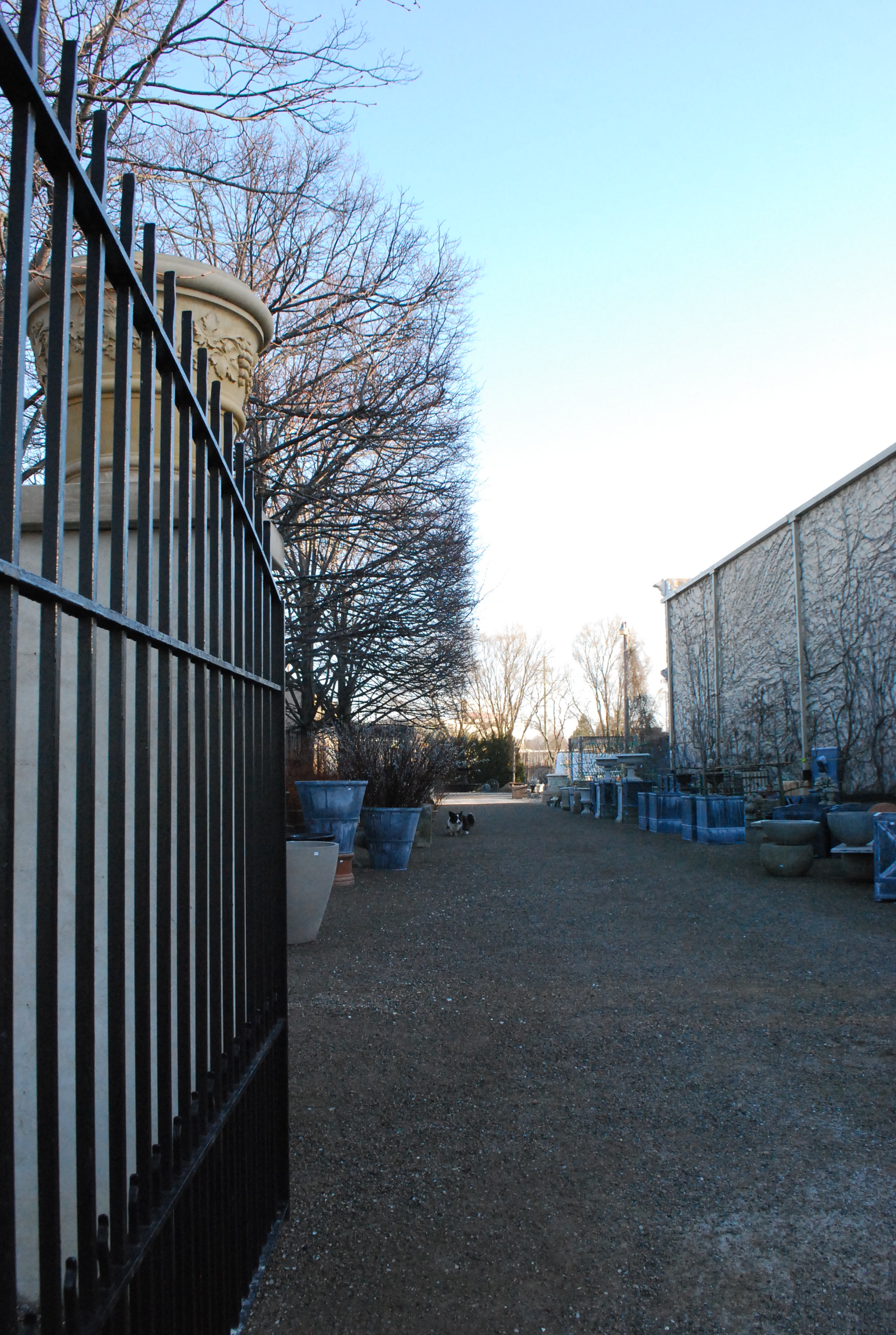
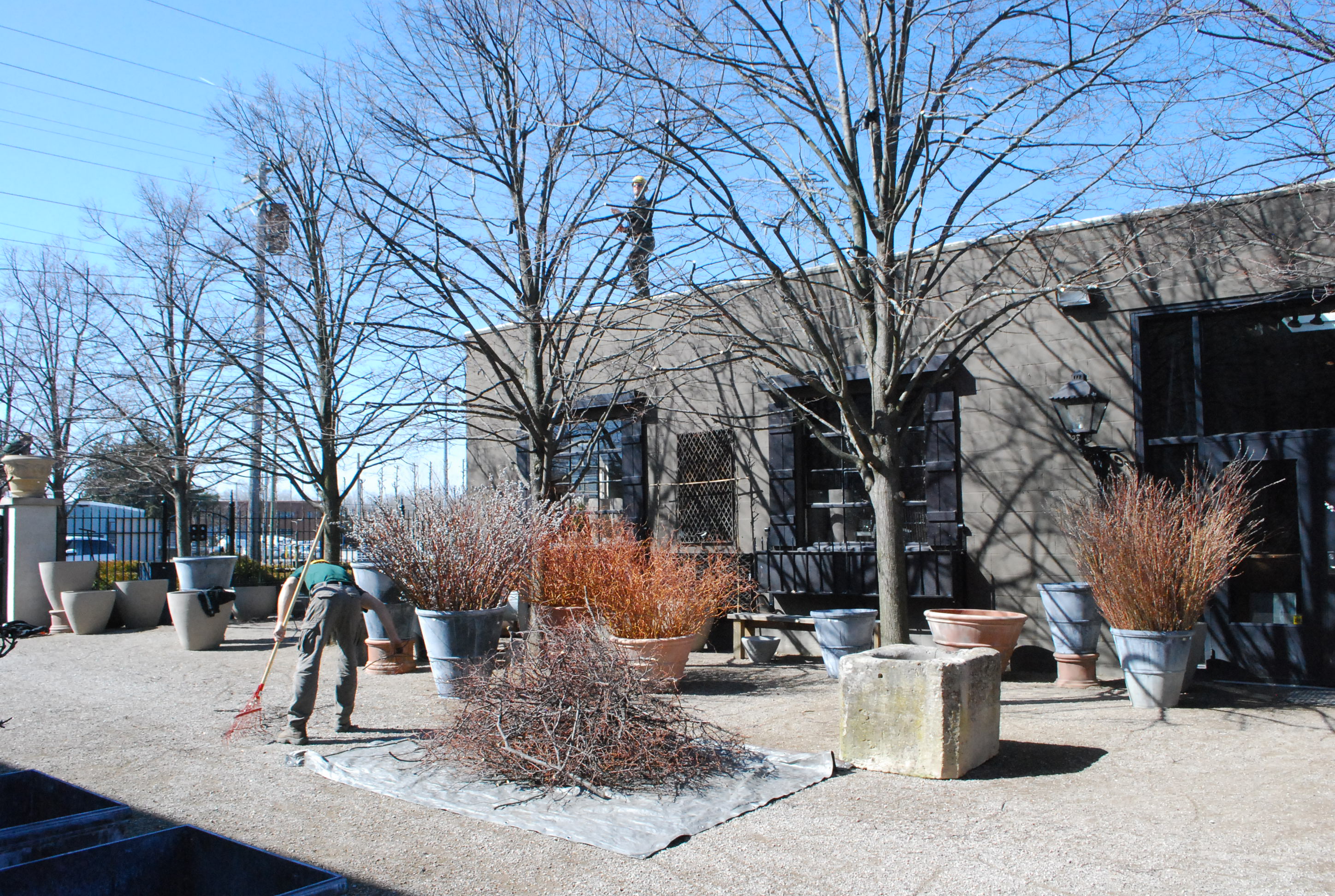
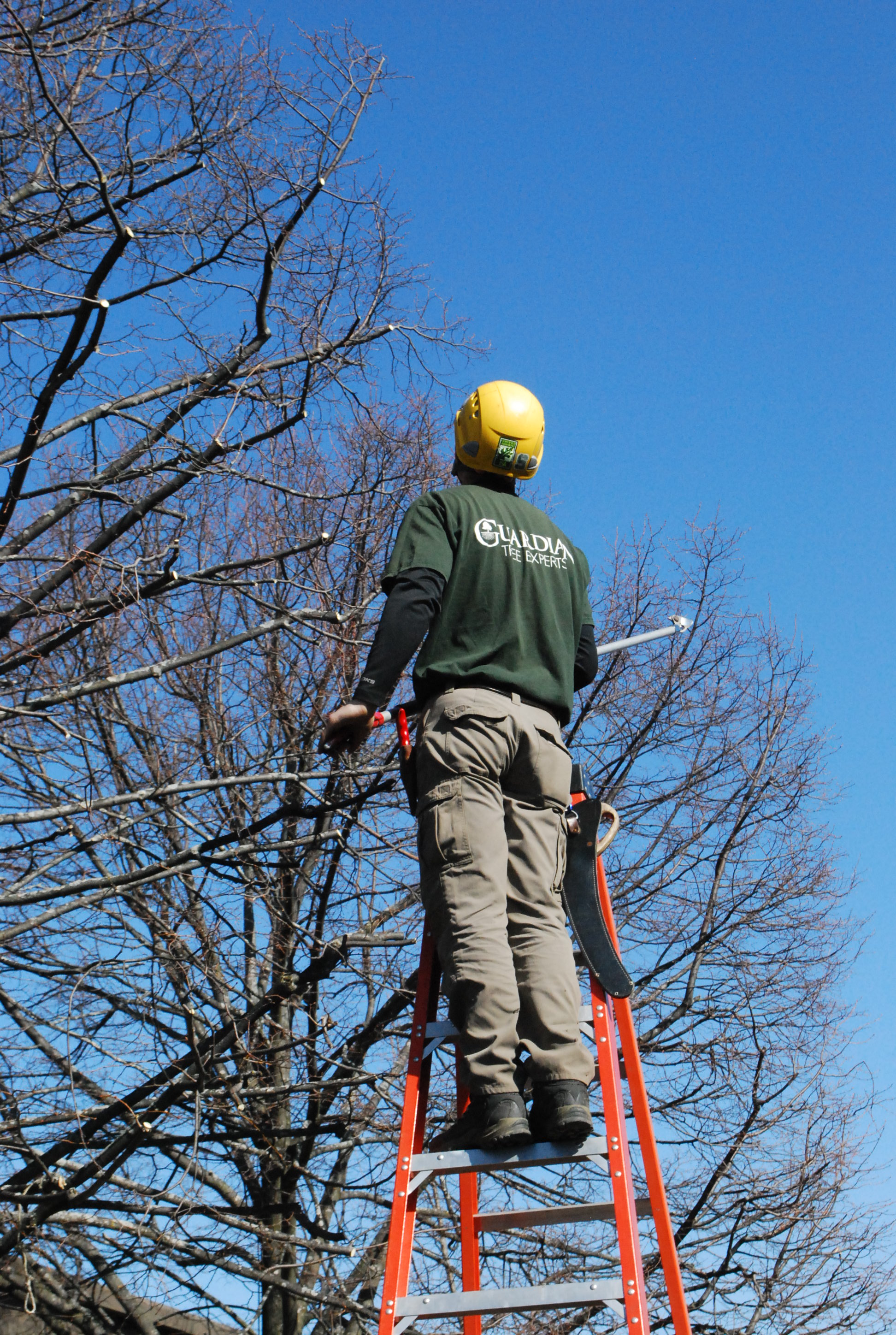
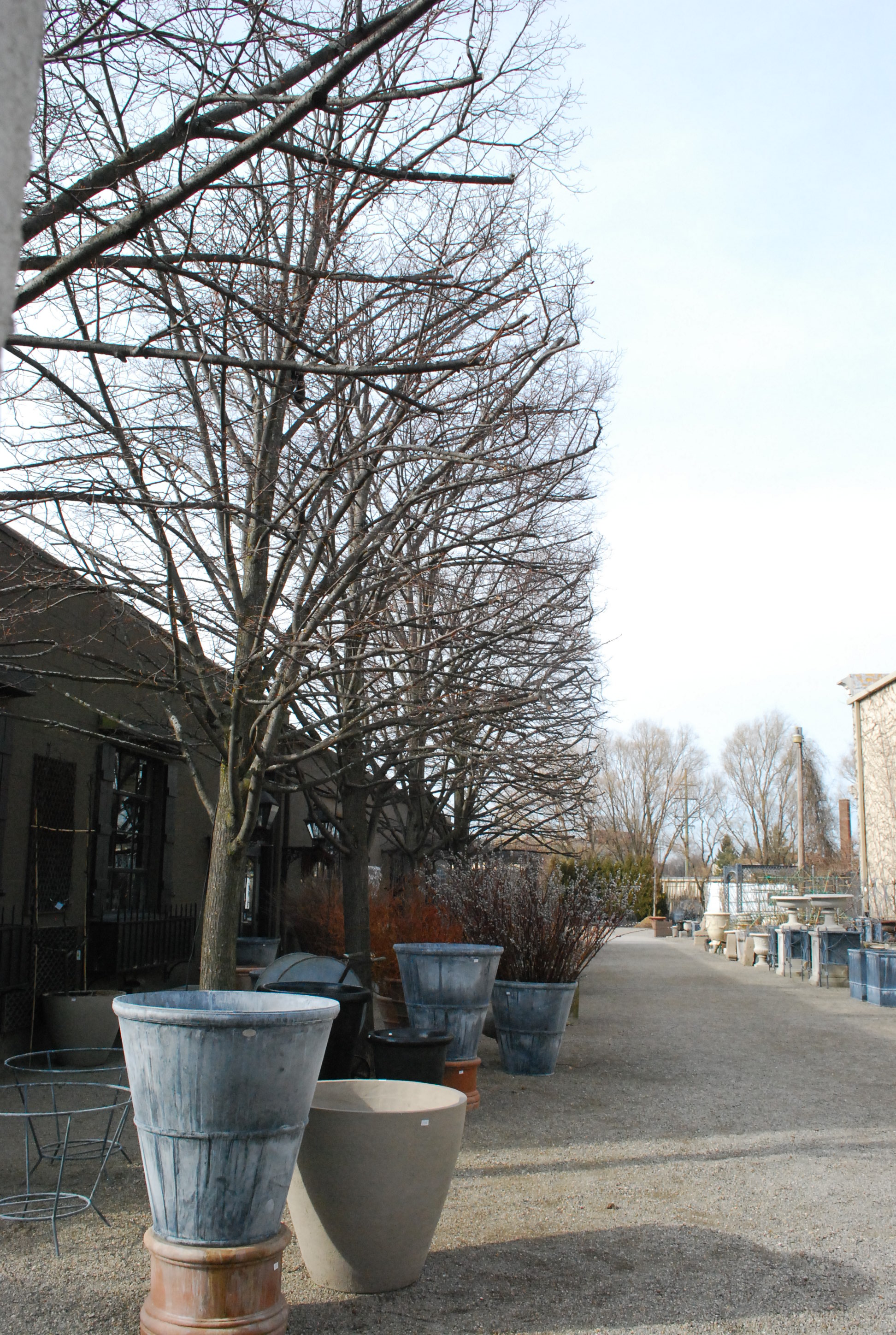
Plants maintained as hedges require regular pruning. The lindens at the shop form a hedge the body of which is above ground.  The branches at ground level have been removed over the years so people may walk underneath them.  Regular pruning of the trees promotes a good framework of branches that represent the desired shape.  These lindens were overdue.  Though I am a serviceable pruner of shrubs and roses, this job asks for an expert.  Someone who knows how to safely navigate high above the ground, and someone who understands the consequences of each cut, deliberately pruning in anticipation of a desired result.
pruning-the-lindens.jpgTrees that are trained as an overhead hedge are pruned with the idea of encouraging lateral growth.  Anyone who has ever topped a shrub knows that the plant responds to a single cut with multiple sprouting shoots.  This results in a dense pattern of twigs on top, which blocks the light to the interior.  Every branch of a plant needs light.  Shrubs that are repeatedly cut back so every branch is the same length eventually decline on the interior, and will need more drastic pruning to restore them to health from the inside out.

pruning-trees.jpg
Pruning trees in late winter means there will only be a short time before growth resumes, and the healing of the cuts can begin. Another reason to prune now is that the cuts will stimulate growth at a time of year when new growth is expected.  Trees actually stop growing and begin to go dormant in late summer.  This is part of the process by which they are eventually able to  go totally dormant, and endure the winter without injury.  I do not like to prune seriously at the end of the summer or in the fall-the plants should be going to sleep.  Not shocked into growth.  Pruning these trees the end of March will encourage dormant buds to flush out.

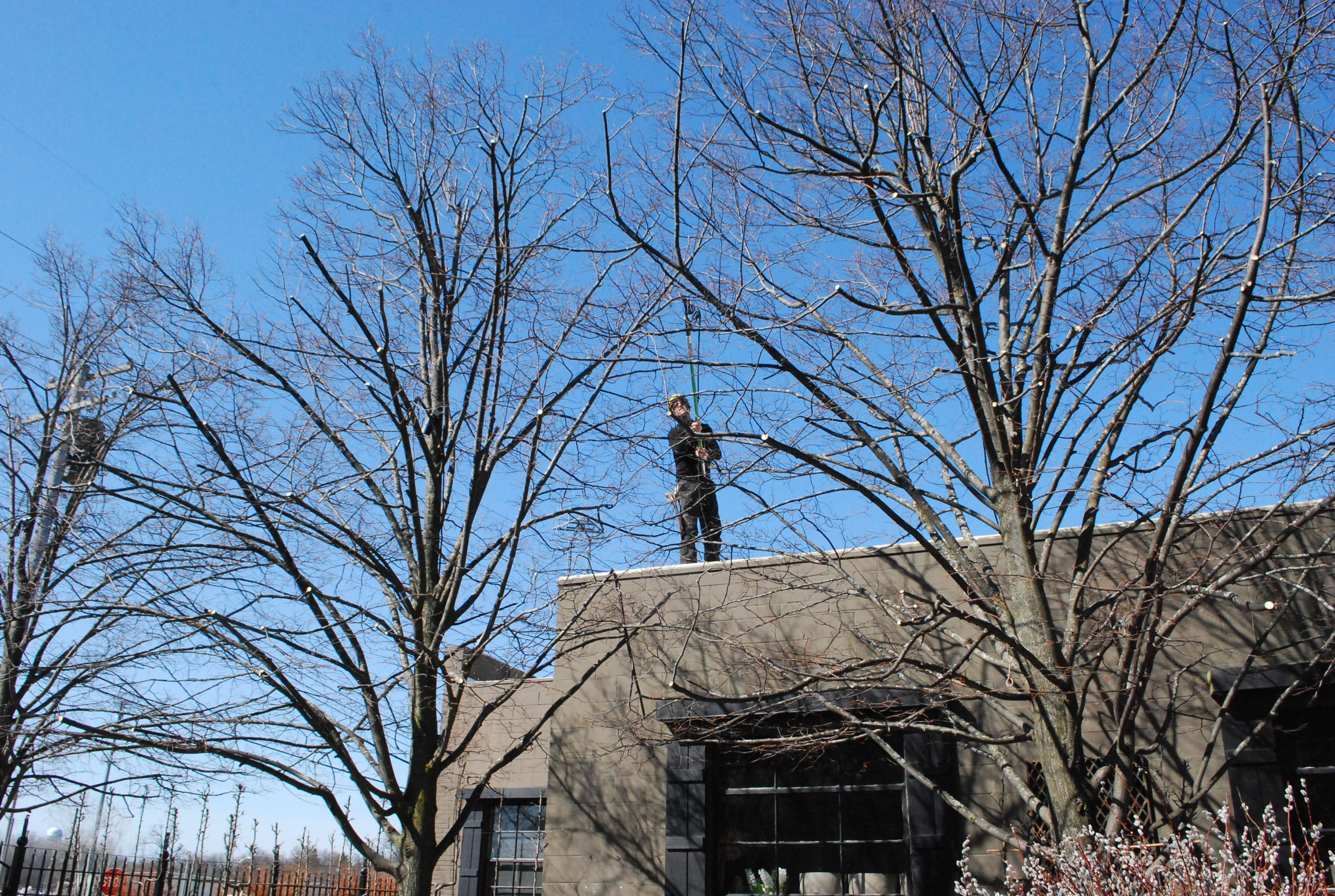
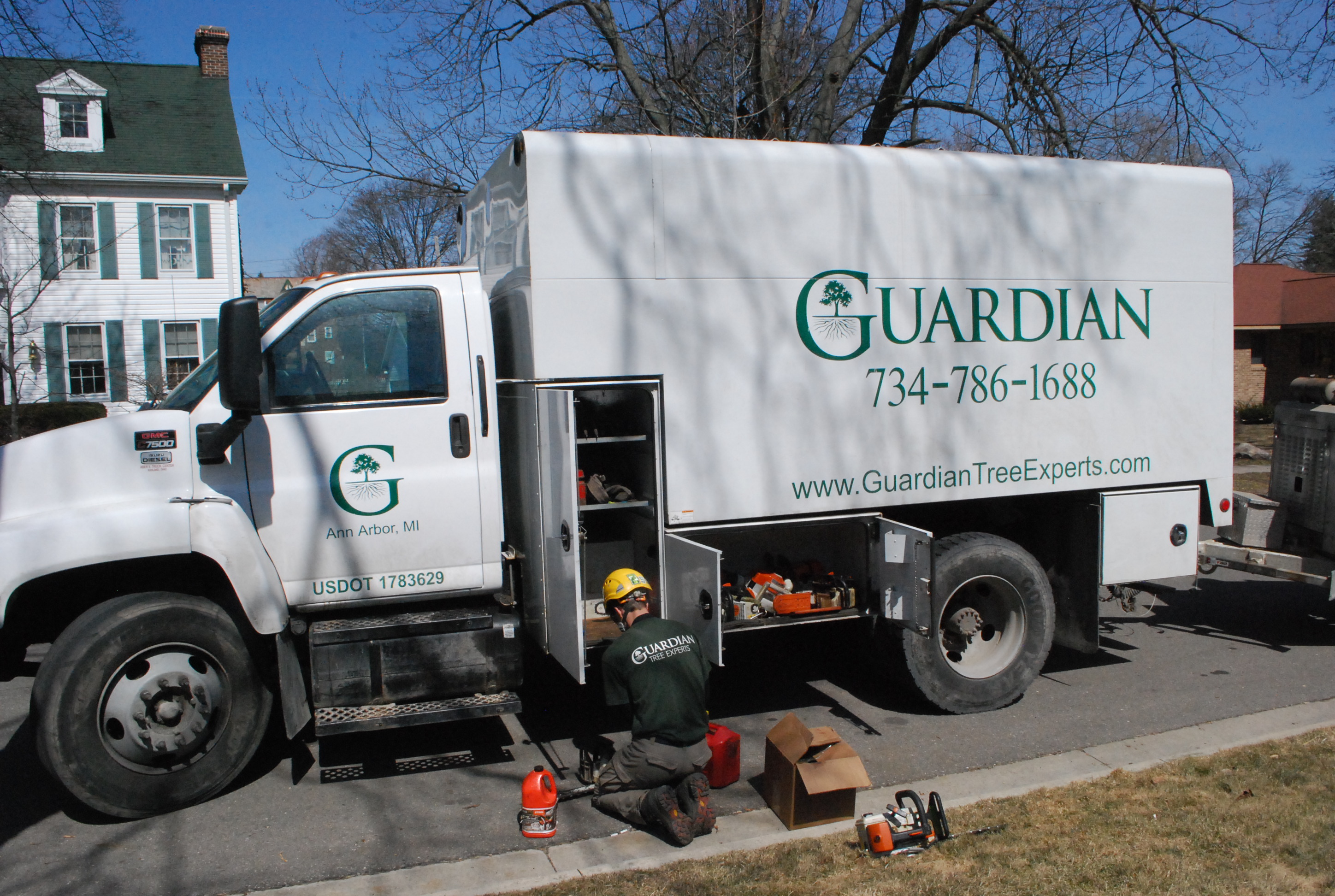
on-the-roof.jpgThe roof next to the trees turned out to be handy.  This perch, and a long and very sharp pole pruner, enabled Jack Richardson, owner of Guardian Tree Experts, to trim the inside flat sides of the lindens.

inside-pruning.jpg

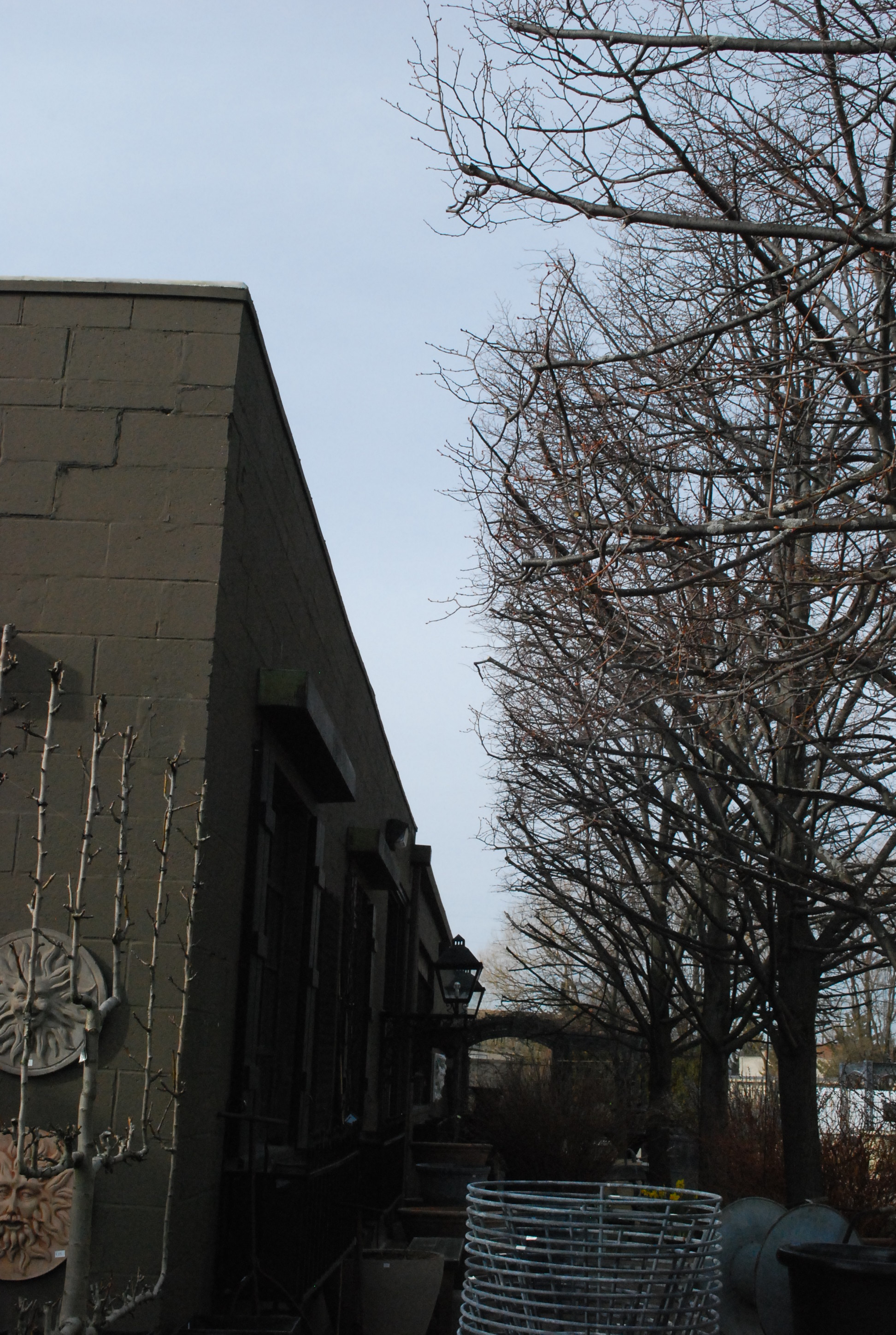
When the trees leaf out, those leaves will make a giant rectangle above ground.  They will represent this better next year than they will this year. Pruning that waits too long means more time will be needed for the trees to grow in how you envision.  The trees were originally planted far enough away from the building so the shape would be easy to see.  This also permits light to wash that dark wall.  The relationship of the sun to the shade is a feature of this space in the summer.

pruning-trees.jpgThe big cuts make it easy to understand the concept of lateral growth.  The thick branches are pruned back to a smaller branch which is already growing in the proper plane.  The smaller branch will benefit from the growth energy in the tree directed its way.  Dormant buds at this point will emerge, and grow into the space around the larger branch.

hedging-the-lindens.jpgThe overall vertical plane has been reestablished.  In a year, a decision can be made about whether to prune again, or wait until the following year.  That said, frequent and less drastic pruning makes for a quicker recovery time.  Regular pruning from the beginning helps to create a strong and healthy structure.

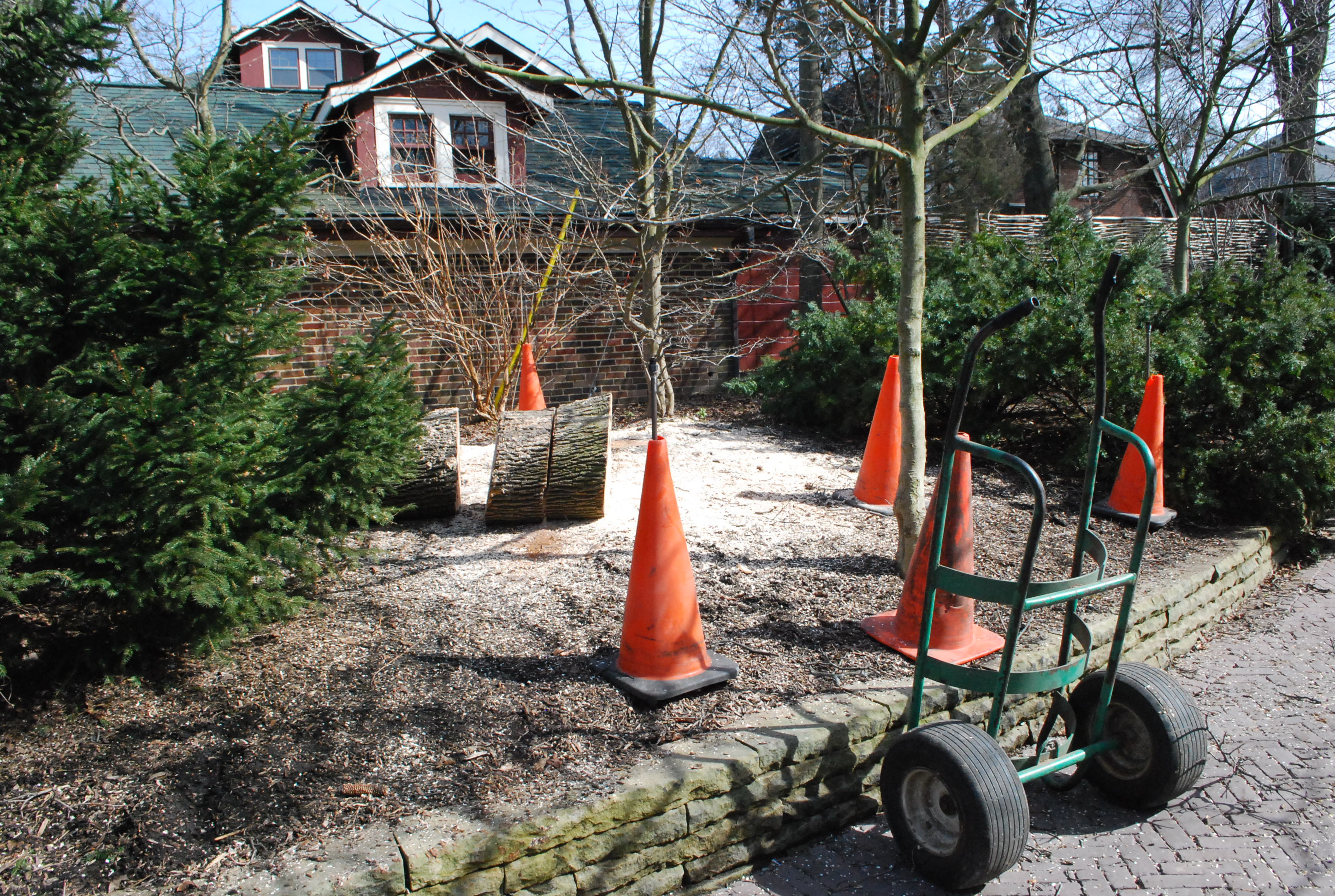
dying-tree.jpgThe ultimate pruning means taking a tree down to the ground.  This maple, suffering from girdling roots and severe injury from lightning has become a hazard.  The large left lateral branch is at such a near horizontal angle that the branch has begun to split.  The original wound never really healed, and now the tree has begun to rot.  No one could foresee the exact moment that this big tree will give way, but all of the signs are there.  This tree needs to come down.

taking-down-a-maple.jpgNorway maples are especially prone to girdling roots.  A root that encircles a tree trunk can eventually grow enough to strangle the tree.  At a certain point, the pruning of the offending root is too late to make a difference.  Every one of the maples on my property had significant girdling roots when I moved there.  Knowing that this tree would eventually die, I planted other trees around it.  The loss of a large tree can be devastating to the community planted underneath it.  This maple had been in serious decline for many years.  Very little remained of its crown.

making-room.jpg
There are 5 trees that were planted fairly close to the maple-2 magnolias, and 3 parrotias. Those trees had been in ground and growing long enough for their upper branches to reach the height of the lower branches of the maple. The time was right to take the maple down. The 5 remaining trees will prosper from the light, space, and less competition for water. They should grow very fast now; their filtered shade will be just what the garden underneath them will need.  Guardian Tree Experts in Ann Arbor-they do first rate work.  The trees are ready for a little spring weather.

Growing Topiary Plants

topiary evergreens
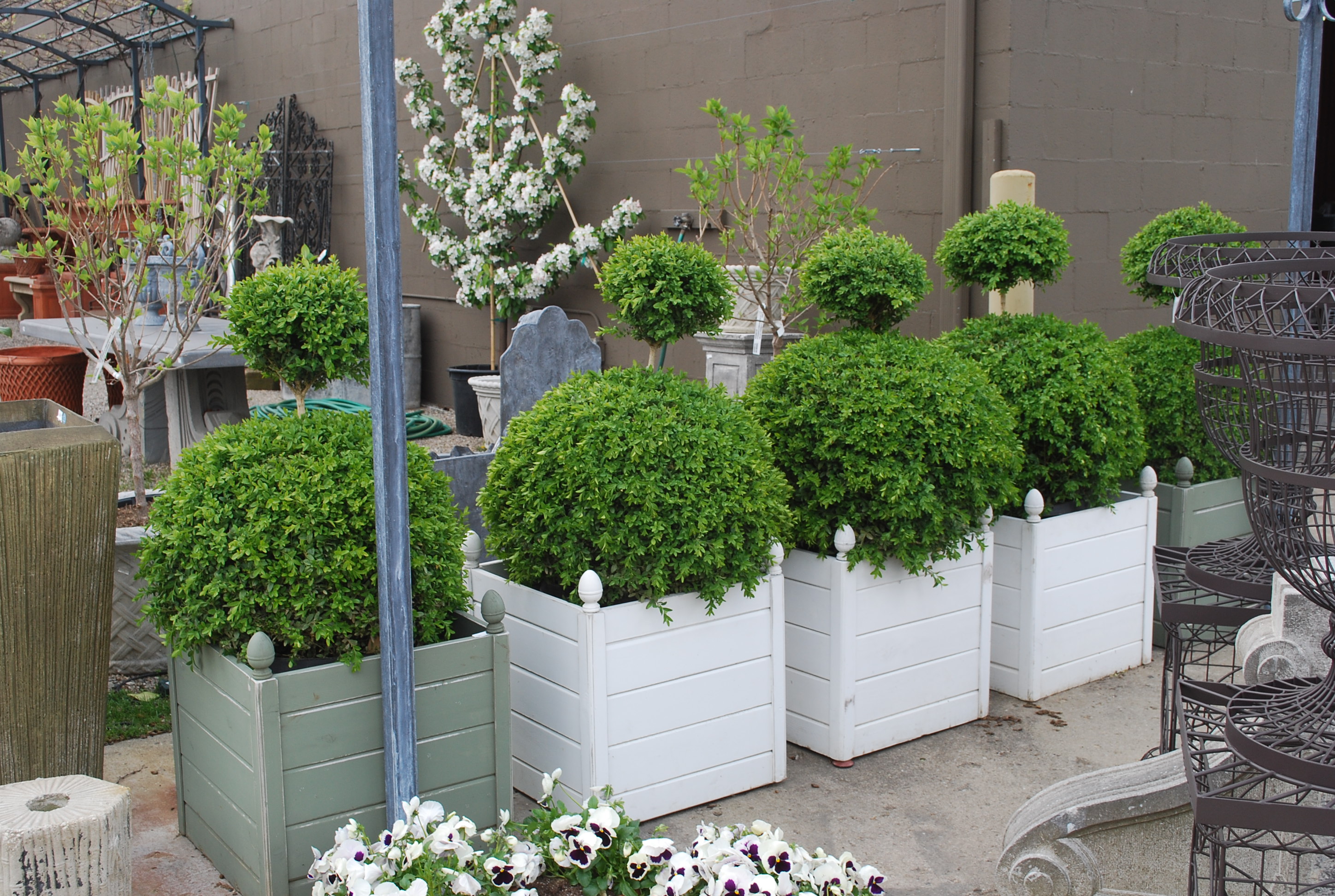
I had so many calls, emails and comments about the topiary nursery in my previous post- wow!  I could thank you for that attention, but it wasn’t me who grew those plants.  It is a very special person with an extraordinary and singular vision.  People with vision-there is always something worthwhile to take from their efforts.  His palette of plants is quite spare.  His patience with the process I call growing is unlimited.  And his ability to prune is superb.  These boxwoods of his in 3 gallon pots are plants that have been given a very good start.  Any gardener could take this pot home, and resolve to grow that boxwood on.       

Another grower we buy from makes a point growing this particular form.  These boxwood with tufted top knots are charming and distinctive.  Anyone willing to take one on, and commit to growing and pruning would in just a few years have a boxwood topiary worth talking about.  To get to this stage, the nursery spends 10 years.  They are happy to hand what they grow off to you.  Are you game?

Most of my boxwoods are 21 years old.  7 years old at purchase, and 14 years in the ground.  I water and feed them.  But I would not dream of touching them with a pair of shears.  I am a serviceable pruner-not an inspired one. I am fortunate to have someone in my community who makes a specialty of pruning.  Mindy and her group of 7 takes an entire day to prune my evergreens.  The day they come-the best day of my gardening year.     

boxwood topiary

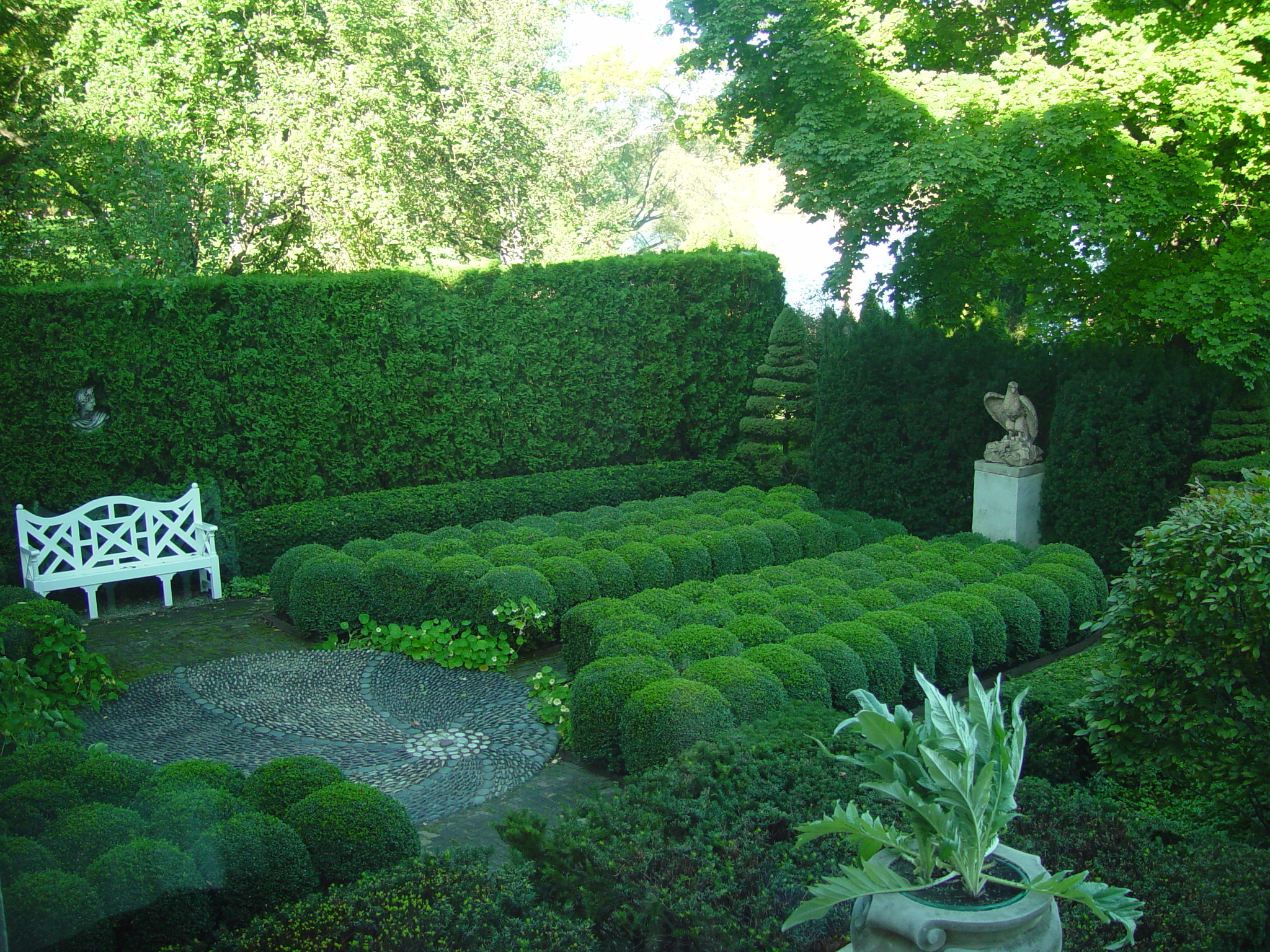
Gorgeous topiary trees and shrubs are first and foremost about the years, and the good care.  The years devoted to growing them on.  Transplanting large topiary material comes with no end of peril.  Transplant shock is routine.  They are very expensive, given how long it has taken to grow them to a subtantial maturity.   Once the plant is in place, the work begins.

It was many many years ago that I planted this topiary garden.  The first year was no cause to throw a party.  But a client with vision was determined to take relatively small plants, and grow them into plants of note.  She saw to the water, the feeding, and the pruning.  In my zone, in a good year,  boxwood flushes on an average of 6 inches.  Six inches seems like not much, but 6 inches times 10 years-a big flush.  Years later, her plants are gorgeous-gorgeous enough to make any gardener blush. 

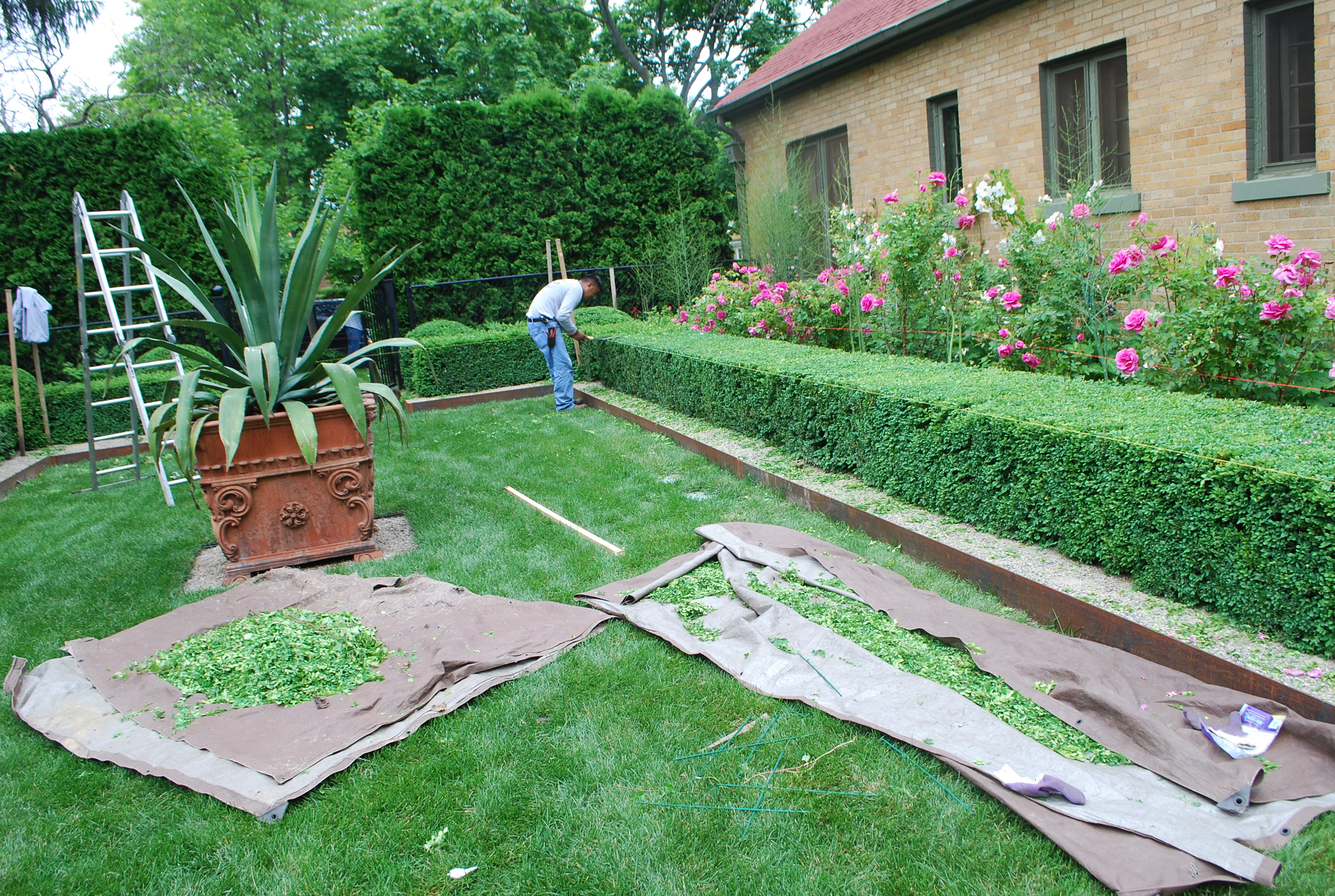
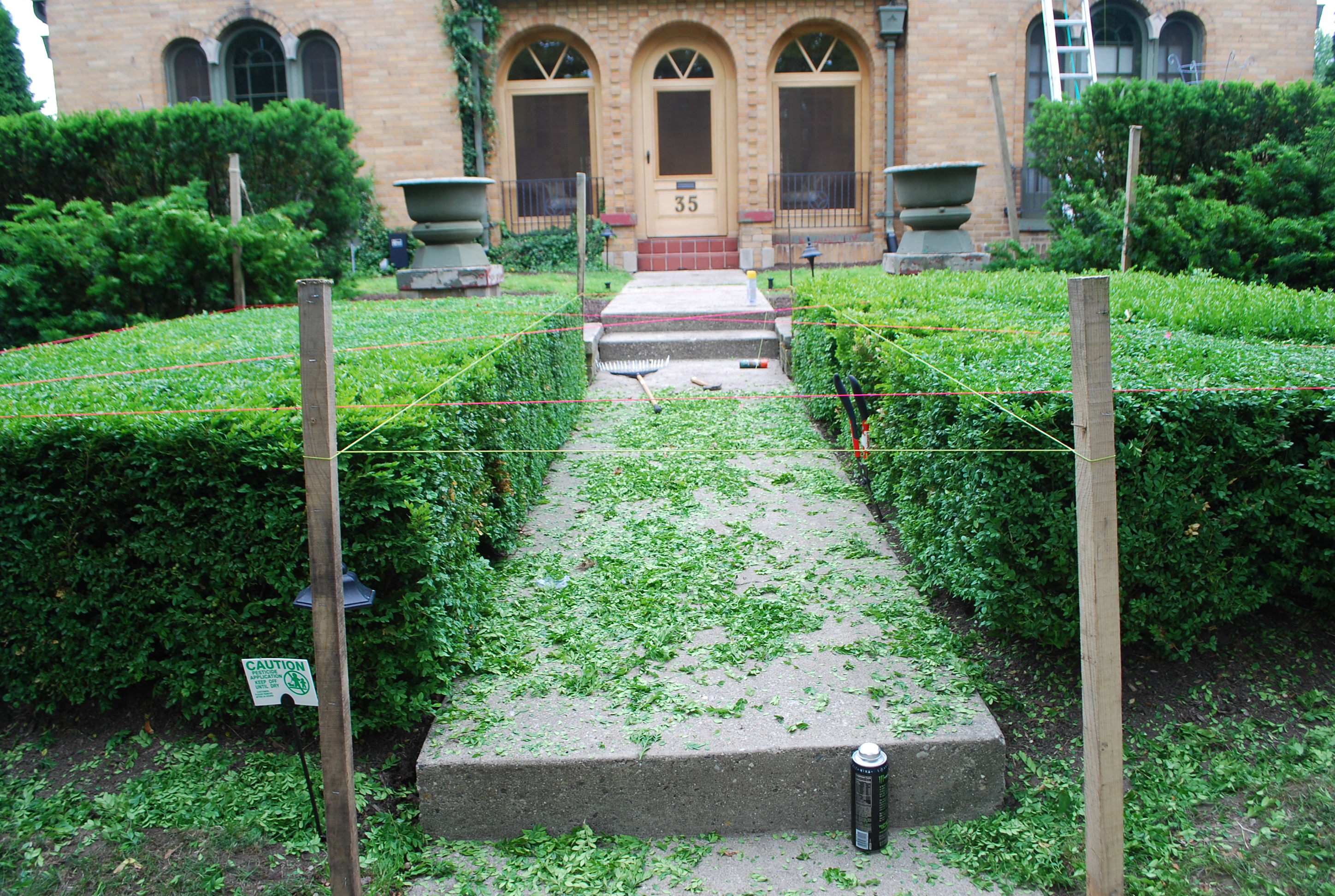
Mindy prunes with a forest of stout stakes, and a network of level lines.  Her group clips with hand shears.  I cannot imagine how many times in the course of a day those shears open and close.  The sound of that work-I cannot describe in words how beautiful this is.  They take the time it takes to do the work properly.    

pruning boxwood

To the last, her crew is entirely modest about their skills.  They focus on the plants.  Any gardener could make it their business to learn how to do this.  Though in my heart I believe she is gifted, I would try to replicate her care, if I needed to.  Great topiary plants are about the relationship between the stalwart start of a plant, and a gardener.  Buy a plant.  Resolve to train it-just how you envision it.       

pruning carpinus

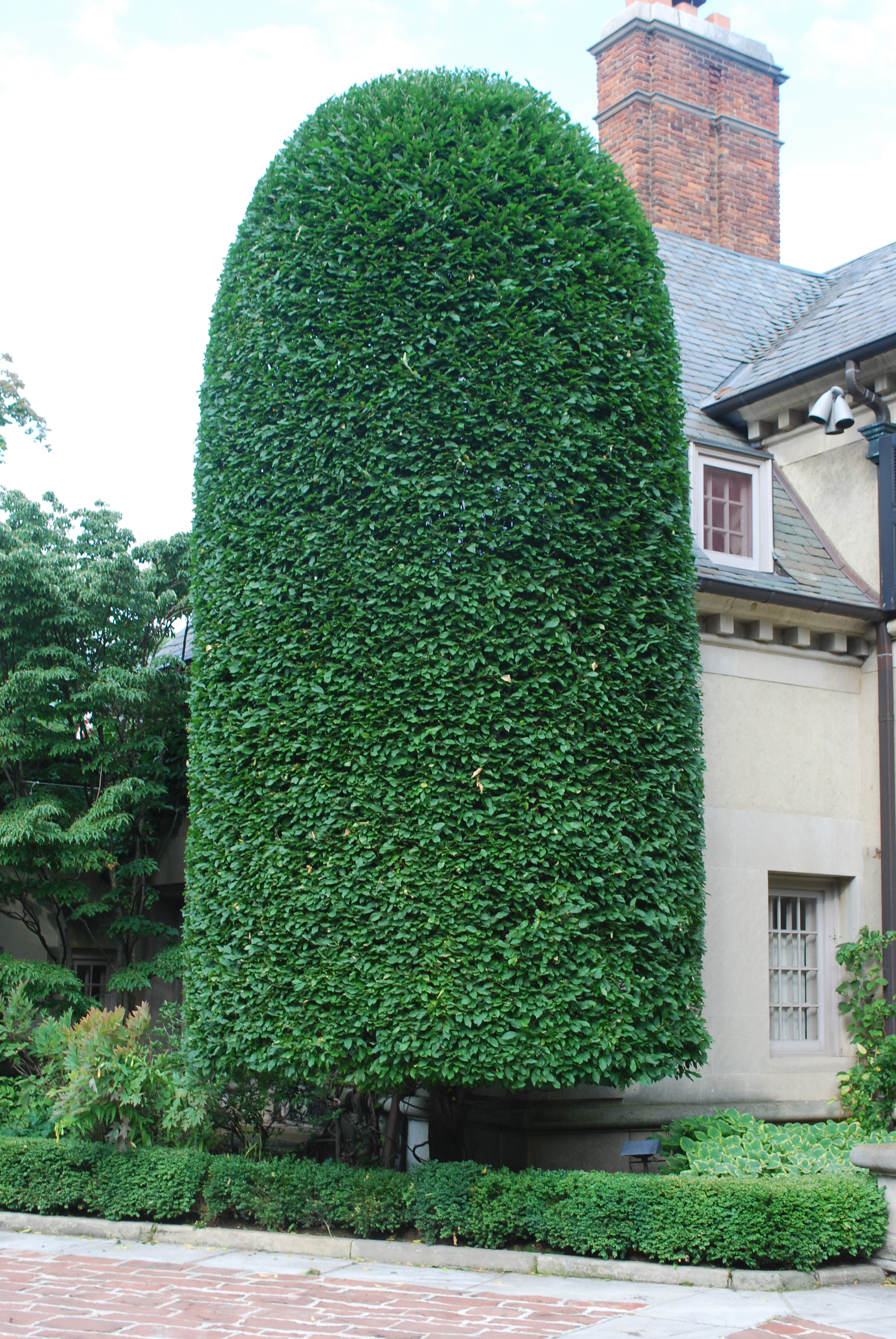
I was young, when I planted this tree.  It bore no resemblance to this, the day it went in the ground.  It is as grand and gorgeous a topiary carpinus that has ever been my pleasure to see. It is as beautiful as any topiary tree anyone might see anywhere.  The form of this tree was many years in the making.  The pruning is amazingly precise.  The company who prunes this not only has skilled people, it has big equipment.  What an extraordinary job they do of the pruning.

Mindy looks after this property.  Every hedge is perfectly pruned.  The topiary evergreens not shown in this pictuire are in excess of 20 feet tall.  Did we move plants in to this landscape, full grown?  No.  Beautifully grown, hefty specimens got planted.  Every year she works on establishing the forms.  Every year, they are bigger, and better.

My yew topiaries in these pots are but 3 years old.  The boxwood surround is but 3 years old.  Given another 10 years, we will have something to talk about.  In the meantime, I see to the day to day. I can safely say that the process of growing enriches my gardening life.  I like the dailies perhaps more than the finish.  

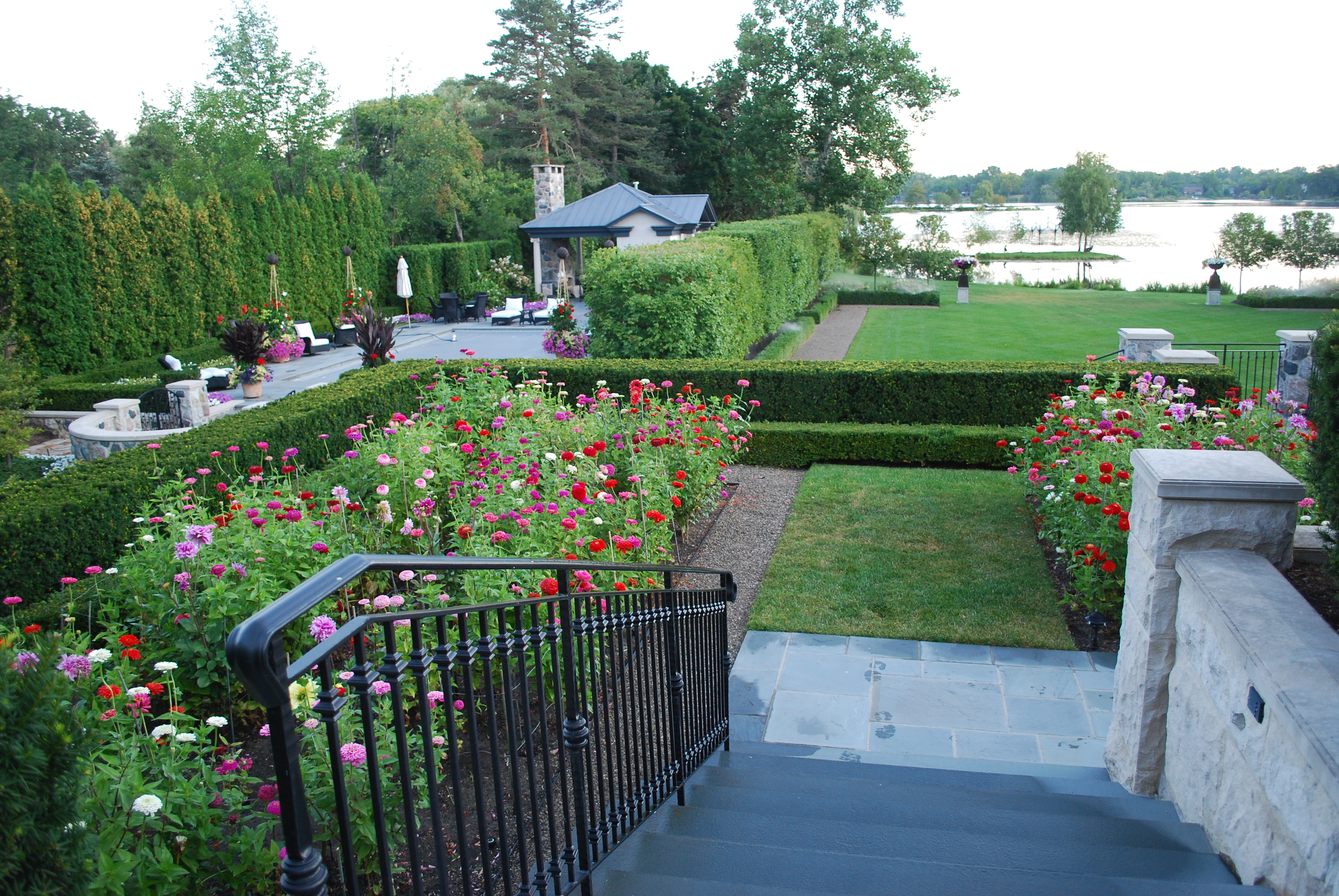
The hedge maples on standard in the back right cewnter side of this landscape-they have been growing on for years.  Every year, that pleached hedge of trees looks better.  One day they will fill in completely from side to side, and front to back.   The land drops from the house to the lake.  The trees nearest the water are much taller than the trees on the near side.  A lvel pleached hedge on sloping ground-years in the making.  The day they fully pass muster-a day to celebrate.  Great gestures in the landscape take time.

This beech arbor is but a few years along.  It will take another 5 years for it to fill out.  My advice to you?  Buy two small beech.  Plant them opposite each other, far enough apart,  where they will be perfect, 15 years from now.  Today is the best day to start to grow a topiary.  Planting small plants does not mean your vision is small.  Planting small plants with an eye to the future-a big vision.

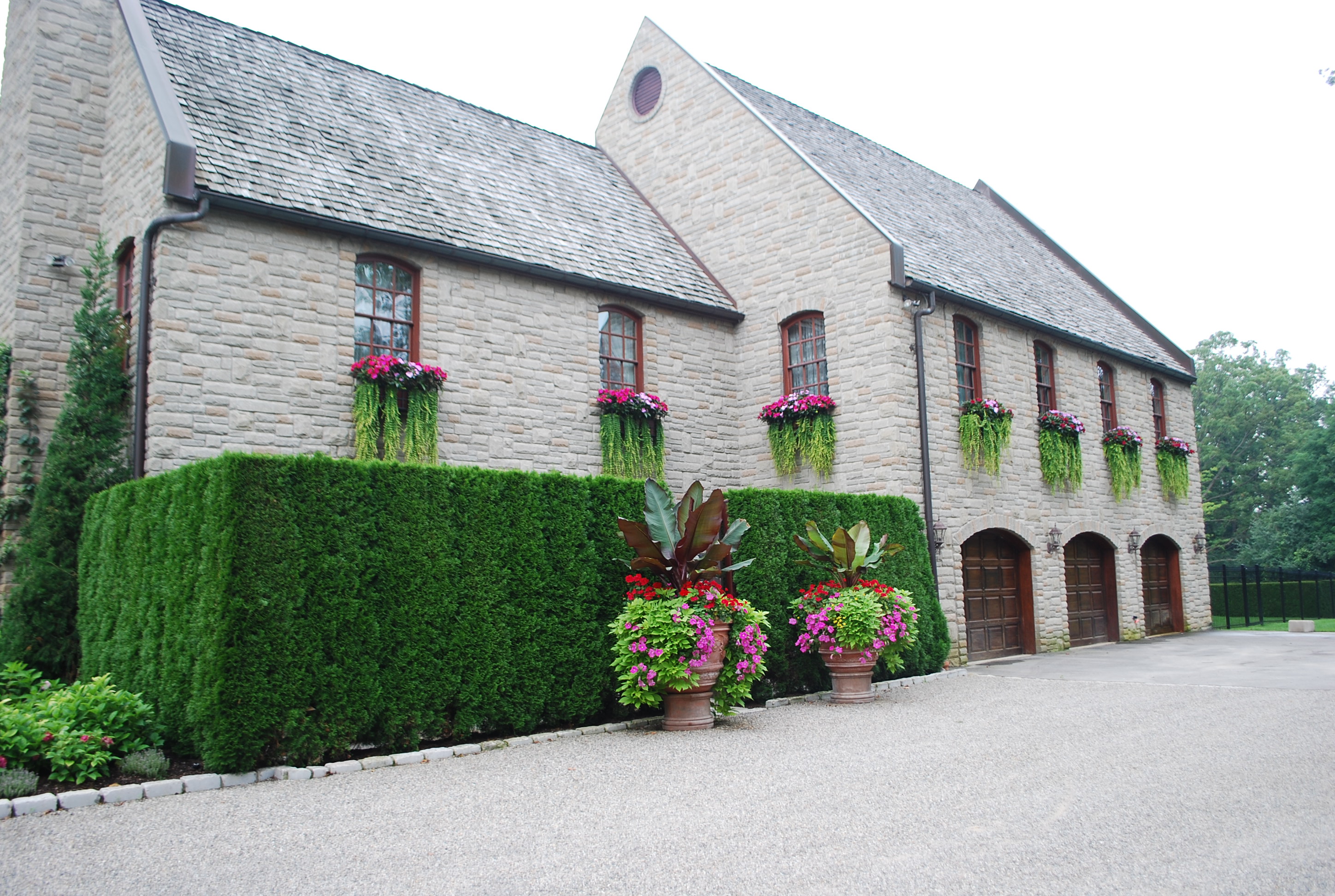
Level with the horizon-is this not beautiful?  It took more than a few years to get here.  I can attest to that, as this is my yard.  Visit your local nursery.  Scrutinize what trees and shrubs might grow into something extraordinary, given your care and some time.  Take the time to source a great pruning company-or make it your business to learn how to prune.  For my clients-I source the best plant material that I can find.  I have no trouble placing those extraordinary plants.  At the same time, I buy those smaller plants that I imagine, given a few years and a lot of care, will prove to be garden makers.  I hold and grow those small plants-waiting for the right and so sparkly client to come along.  Those extraordinary large and full grown plants moved to a new home, I love this process.  Placing those smaller plants- with such a great future ahead of them-even better.

Monday’s Strictly Opinion: Angie’s Theory

Bear with me, as I am about to post for the umpteenth time about proper watering.  I have just cause-most problematic issues I am dealing with now regarding the landscape have to do with water.  A scheme for watering the plants has been the hottest topic of our season, given the high heat, and the utter lack of rain.  I mean to discuss the water that your plants, garden, and landscape require.  Thoughtful and dispassionately informed watering makes a difficult season more manageable.  I hope by association to address the problems that arise from too much water.  My clients who have not watered, or who have overwatered-we have a discussion pending,   

Our August nights have been on the cool side- downright chilly.  I ordinarily dial back the water when the nights cool off.  This makes sense.  Cool temperatures means water evaporates from the soil at a slower rate.  Hot days do not tell the entire story.  The night time story is a story line worth following.   My advice?  Ignore the day temperatures.  Follow the night temperatures.

Overly wet soil under any circumstances, hot or cold,  can result in root rot.  Rotted feeder roots means that no matter how much water is available to absorb, the mechanism for that absorption has been destroyed.  A plant with root rot cannot absorb any water from the soil.  Your worried watering may be killing your plants. Why am I blathering on about the importance of proper watering?  A misguided hose, watering can, or sprinkler system kills more plants than any other factor.  Too much water kills more plants than drought, insects, or disease.  Too much water can sicken and endanger an entire landscape. 

Those gardeners that never water anything are not really gardeners.  Those gardeners that water over and over again given a tough summer season are fearful gardeners.  I understand that fear-I reacted to the steamy heat and dry with my hose, open full blast.  But I see now that my off the top of my head reaction was harmful.  Thoughtful watering makes for a great landscape and garden.  As Buck says, be cool, and assess the situation.  Being cool, and properly assessing the situation-a good thing.   This is my theory.  Cool off.  Observe before you make a move.  Water only when there is a call for water. Do not water solely thinking you will help plants suffering in the heat.  Plants have an extraordinary will to live.  A drink now and then will help them to survive.  An ocean of water -they may drown.   

Consider these simple examples.  Japanese iris love wet ground-during their growing season, that is.  Flooded fall and winter ground will kill them.  Lavender can endure heavy clay-meaning astonishly water retentive soil-over the summer, but winter wet will kill them.  Yews are a snap to grow, unless an overactive irrigation system drags them down, and eventually drowns them.  Established landscape plants rarely need supplemental  irrigation, unless there is a drought.  Overwatered trees and shrubs will go yellow in leaf.  Hydrangeas appreciate a regular source of water-it takes a lot for them to produce prodigious blooms of great size.  Water them regularly.  Smart watering makes the difference between a passable landscape-and a stellar landscape.  Think through the wet and the dry-make a plan to endorse and follow that happy medium. 

Angie supervises one of my crews.  She is of the opinion that containers and plants should be watered first thing in the morning.  This gives them the entire day to soak up, to make use of,  that morning water.  Once dusk comes, the warmth of the day has already absorbed the the day’s watering.  The excess-so much steam.  This is a theory, remember.  This is a garden story that might make no sense scientifically, but could make emotional sense.  Dryer, overnight, given cooler temperatures-a good thing.  Good water during the day feeds the plants.  Dryer at night ensures their survival. I like my summer container plantings to go on into the fall.  Watching the water really carefully now will make a difference in their longevity.

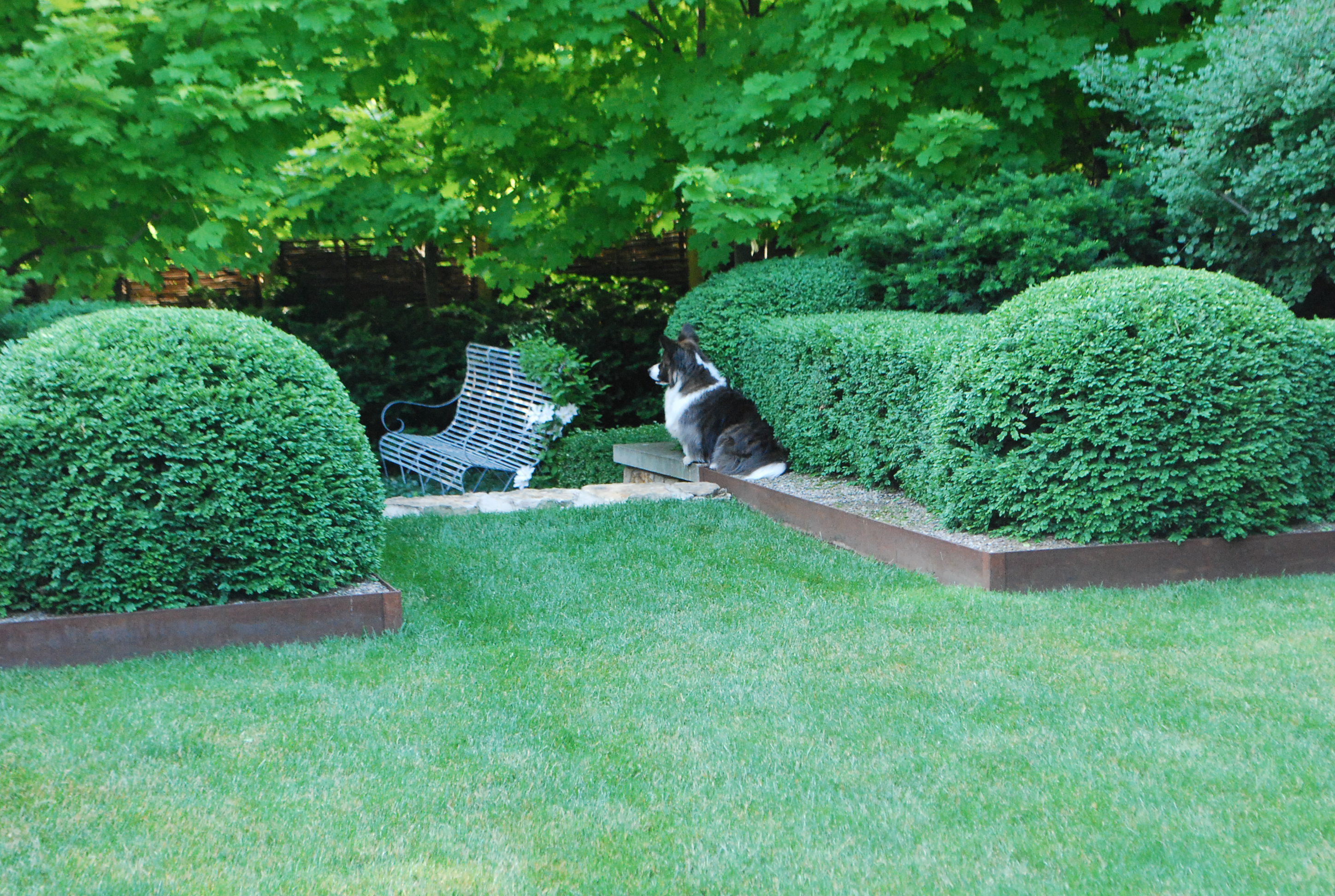
 I usually water my containers after work-this is when I have time.  I load up the corgis at 6:15 most mornings-to go to work.  They fuss if I am late serving breakfast-they really fuss if we do not leave on time.  Given those dogs, I am not a morning waterer.  Tonight I find that all of my containers have just enough moisture to survive until morning.  If I water them tonight, they will be soaking wet in overnight chilly weather.  I make a call – no water tonight.  Tomorrow morning I will water-the corgis loaded up in the Suburban.  I will load them in the car, and water what really needs water.  

I read somewhere long ago that plants do most of their growing in the wee hours of the morning-meaning 4 until 6am.  It makes sense that their roots need to be able to breathe then.  My containers are the most water sensitive of any plants I grow.  As I am interested that they grow on into the fall, I am interested in testing Angie’s theory.  Water in the morning.  Make the daytime evaporation rate work in the interest of enabling  dryer and happier plants overnight-before morning. 

Every gardener needs to carefully observe how their plants react to their care.  Good observation makes for a really good garden.  Great gardens are unquestionably more about care than design.  Make every effort to get the water right.