 As busy as we have been with landscape installation projects, we have a full roster of clients for whom we do fall container installations. We are happy to oblige. I understand wanting to change the pots out for the season to come. A summer planting that has declined, or not done well, or which has not measured up to expectation – it can be a relief to put that planting to rest, and move on. I have other clients who would prefer to move on to the fall when the summer planting is at its super nova best. Watching a container that has been a pleasure to experience the entire season go in to decline is a painful acknowledgement that the garden season has begun its long slide towards dormancy. Yet other clients like the fall season the best, and are ready for a new look as soon as the night temperatures drop. Not matter the reason, we are available to plant containers for fall. We try to treat the fall season with fresh eyes, and we like to represent the fall season in the most robust way possible. The summer season provides no end of plant material that is tall and vining, of medium height, of short stature, and of trailing habit. I could make lists. But the fall season challenges anyone who plants a container to create a variety of levels, contrast, and volume. We look first at the construction of a centerpiece that might organize the entire arrangement. Our fall container pots sometimes feature centerpieces of a variety of materials that celebrate the end of summer, and the harvest. Constructing those centerpieces is in preparation for a fall container planting.
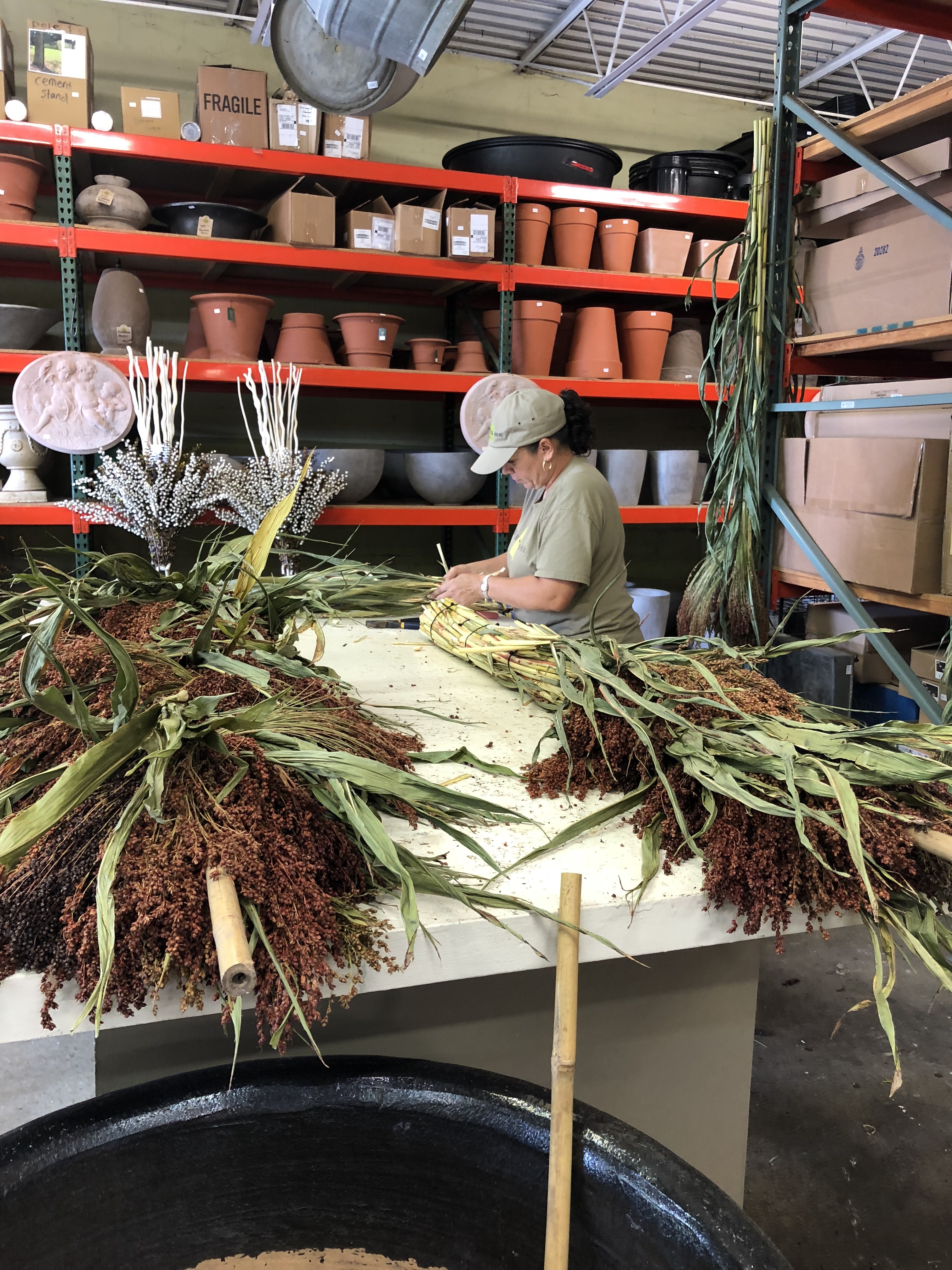
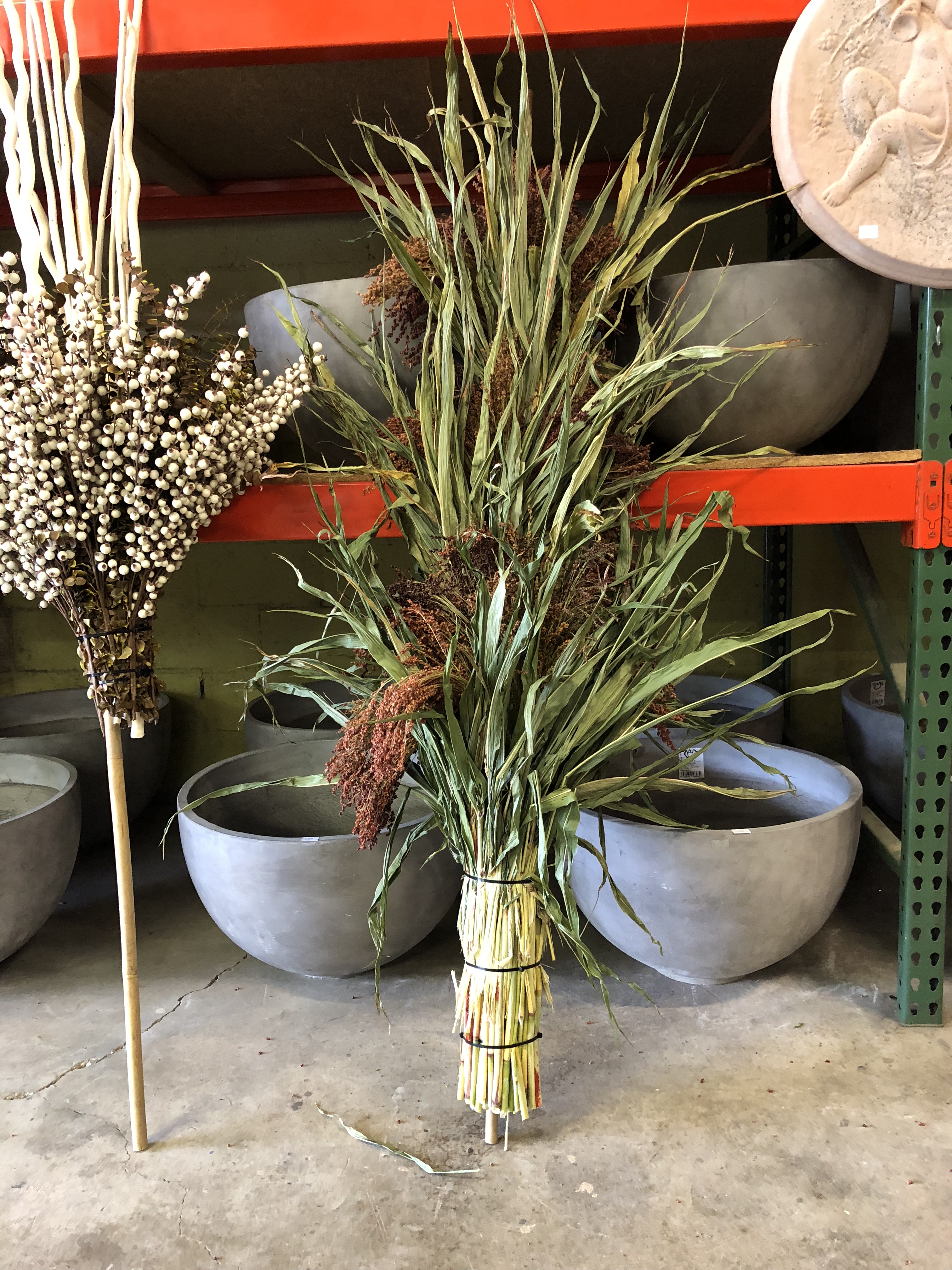 We rely in great measure on the height, volume, and color provided by cut stems of broom corn. The seed heads and drying leaves can provide a dramatic centerpiece to a fall pot. The broom corn we purchase is hung upside down from the moment we get it. That drying process up side down will challenge the effect of gravity – somewhat. This fall maturing crop was and still is grown for the production of corn brooms, but we value its bold good looks. Marzela has a gift for handling and arranging these heavy stems in a graceful way. Her centerpieces, no matter the materials, anchor the plantings we are about to do. All of her materials are arranged around a stout bamboo pole, the length of which will be driven in to the soil in the pot. She has been creating centerpieces our installation scheduled for tomorrow, for the past 2 days.
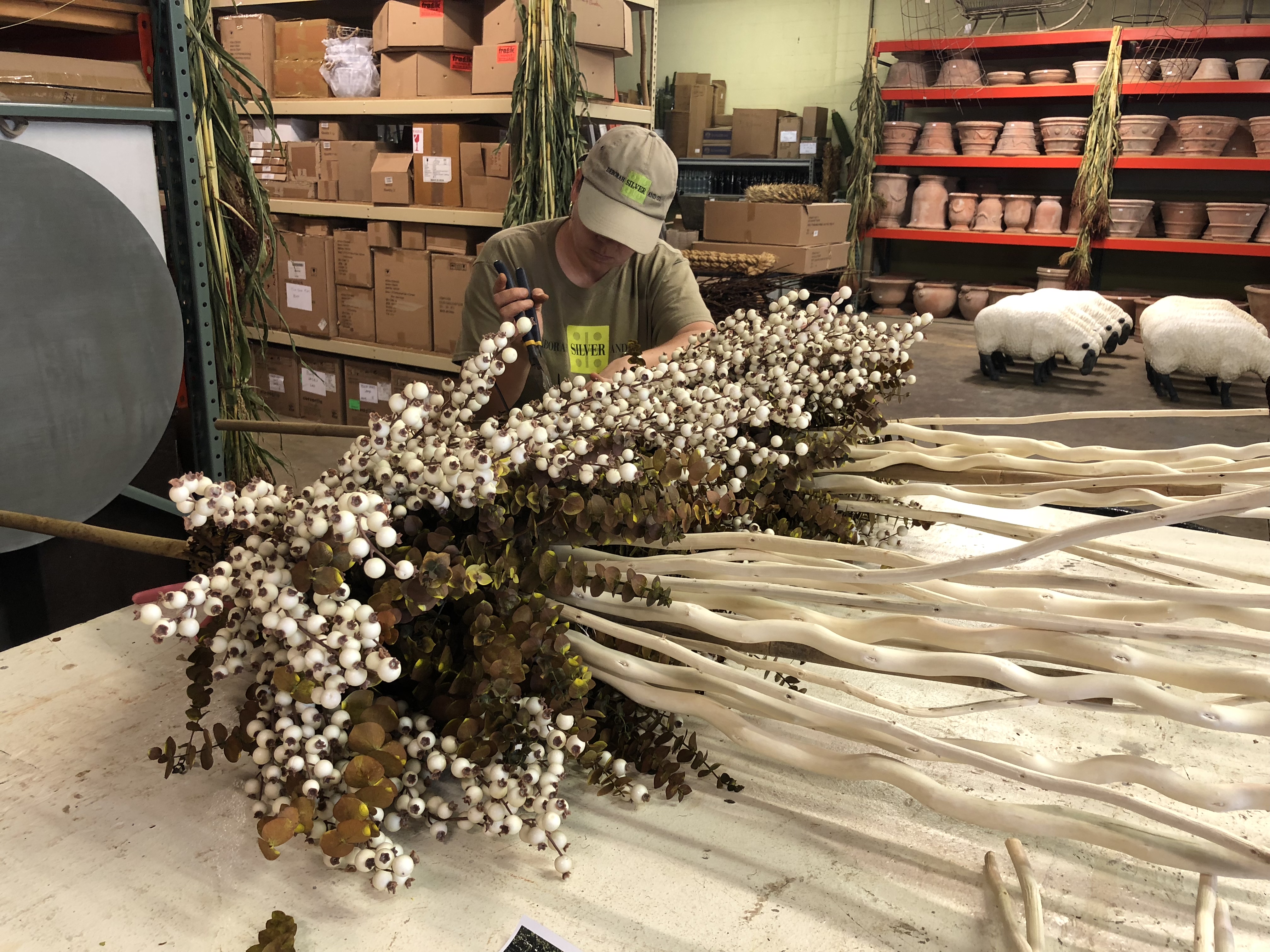 Some summer pots have centerpieces that still look great. I am thinking about the figs, the lemon cypress, the rosemary, the boxwood topiaries, and a whole host of dwarf evergreens. But other central players in summer pots will go down in concert with falling night temperatures. There are few fall plants that provide stature, and represent the color or the spirit of the season. So what other materials might be available? This is the long way of saying that not every centerpiece we do for a fall pot involves live material. In the interest of celebrating the fall season, we may assemble lots of materials that are not especially living, but are very lively visually. These centerpieces are a mix of all of the above. The bleached kuwa branches are a natural curly stem available to us in dried bunches. The preserved eucalyptus is a natural material that has been treated to last for months, no matter the weather. The white berry picks are as fake as fake can be. But they reference the natural world in a graphic way.
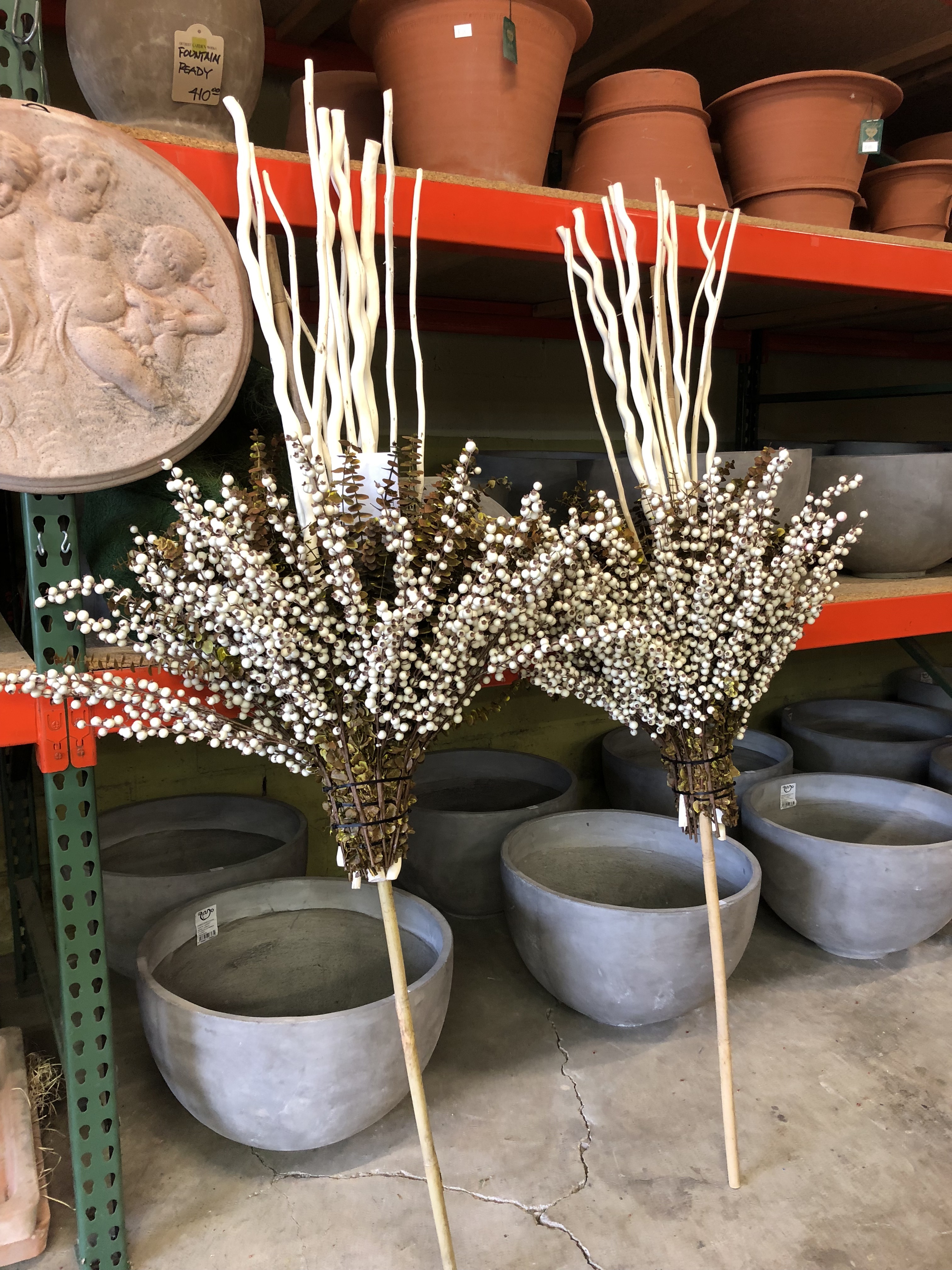 These centerpieces are slated for a specific pair of pots on a terrace that features a number of pots. The primary view is from a distance, so the creamy white centerpiece will read.
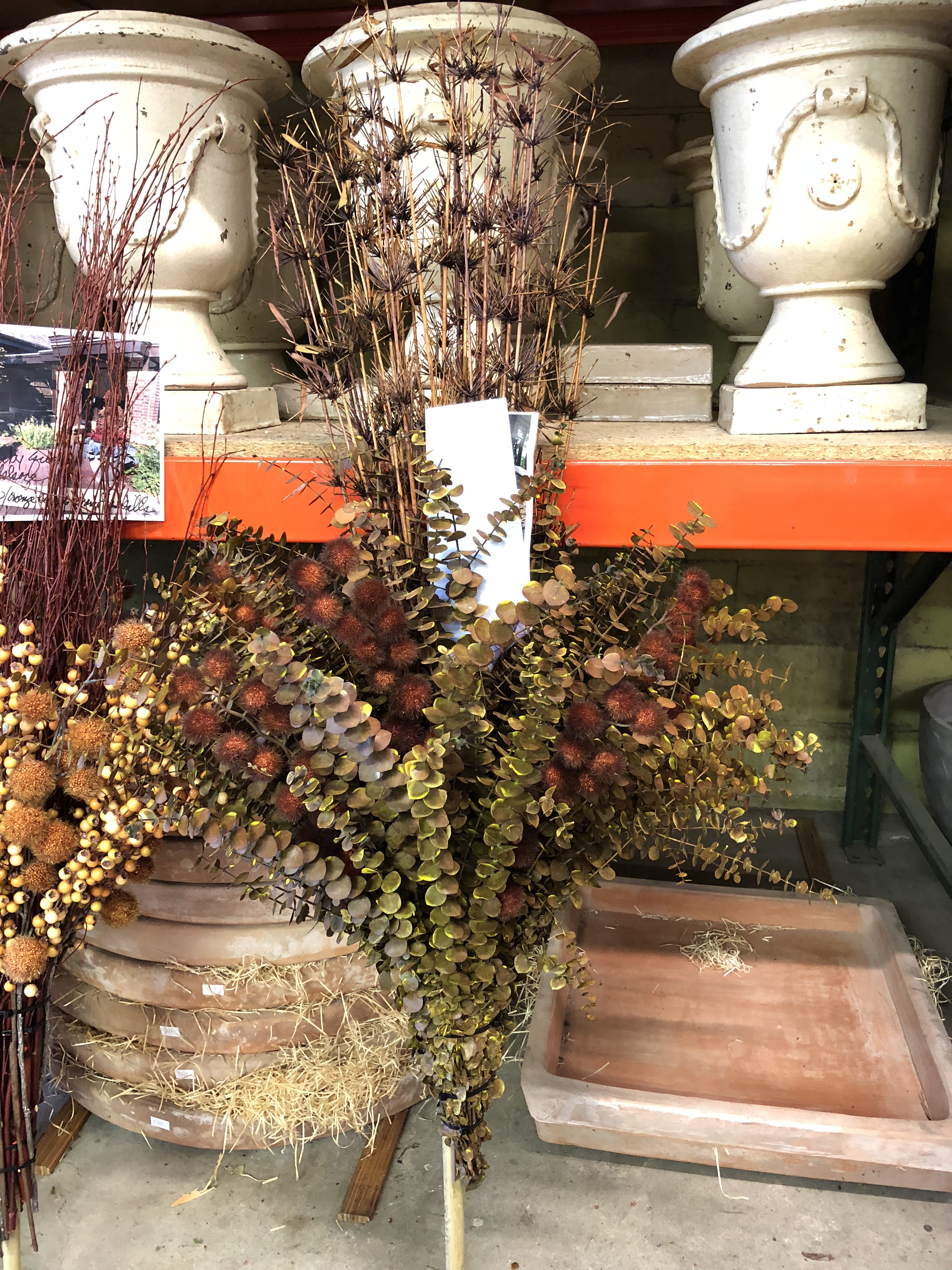 This centerpiece will be viewed from up close, so the darker colors and more subtle variations in color will be appreciated. A centerpiece of distinction, no matter the origin of the materials, can endow a fall container planting with with fall appropriate style and verve. I like the idea of endowing the garden with seasonal plantings that are vervacious. If you are a gardener like me, you understand that a garden and landscape is about a certain kind of earthy and unforgettable romance. I am a fan of bringing on the romance every season. The fall season coming up asks for a representation of the end of summer harvest.
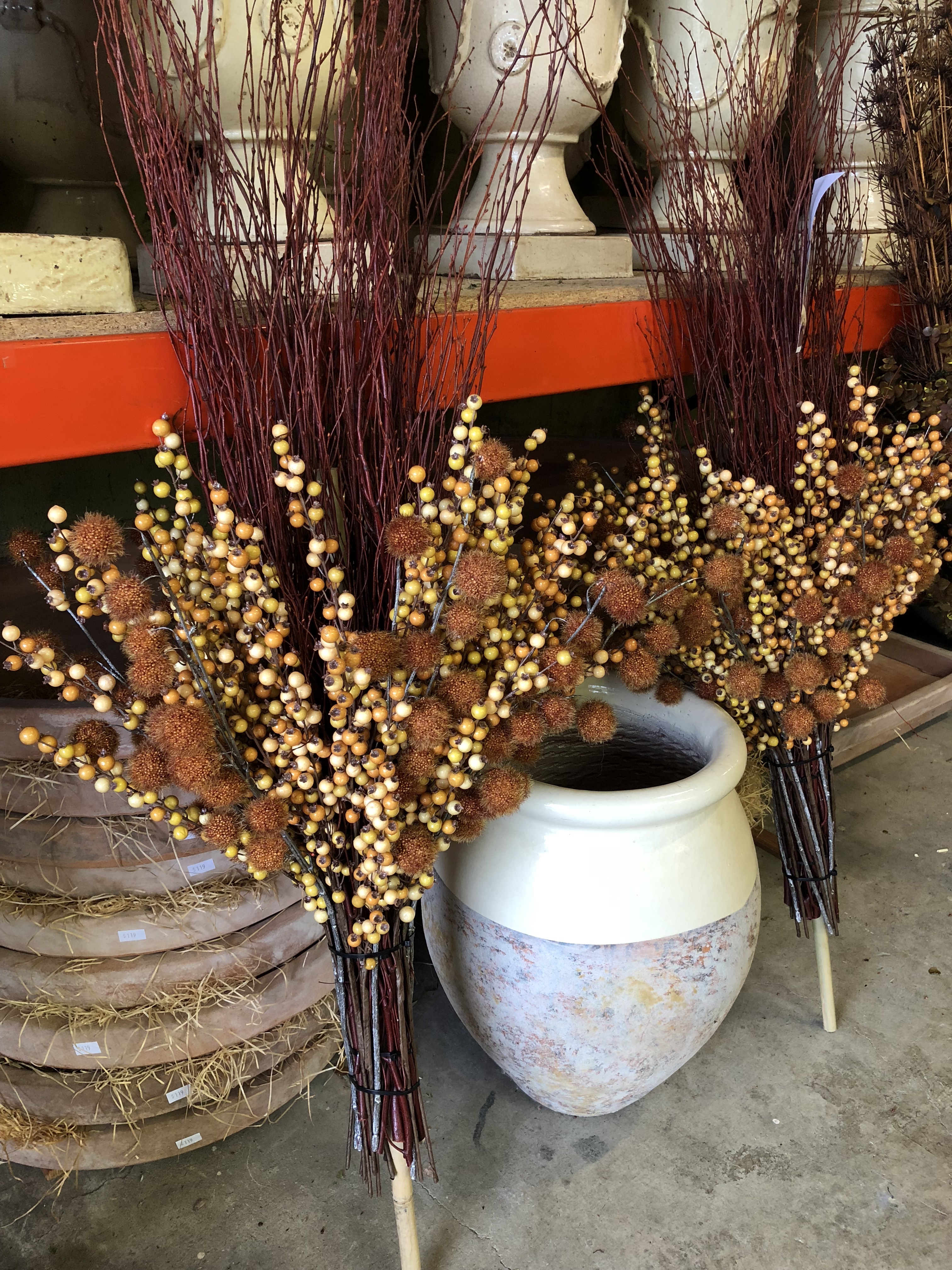 fall centerpieces
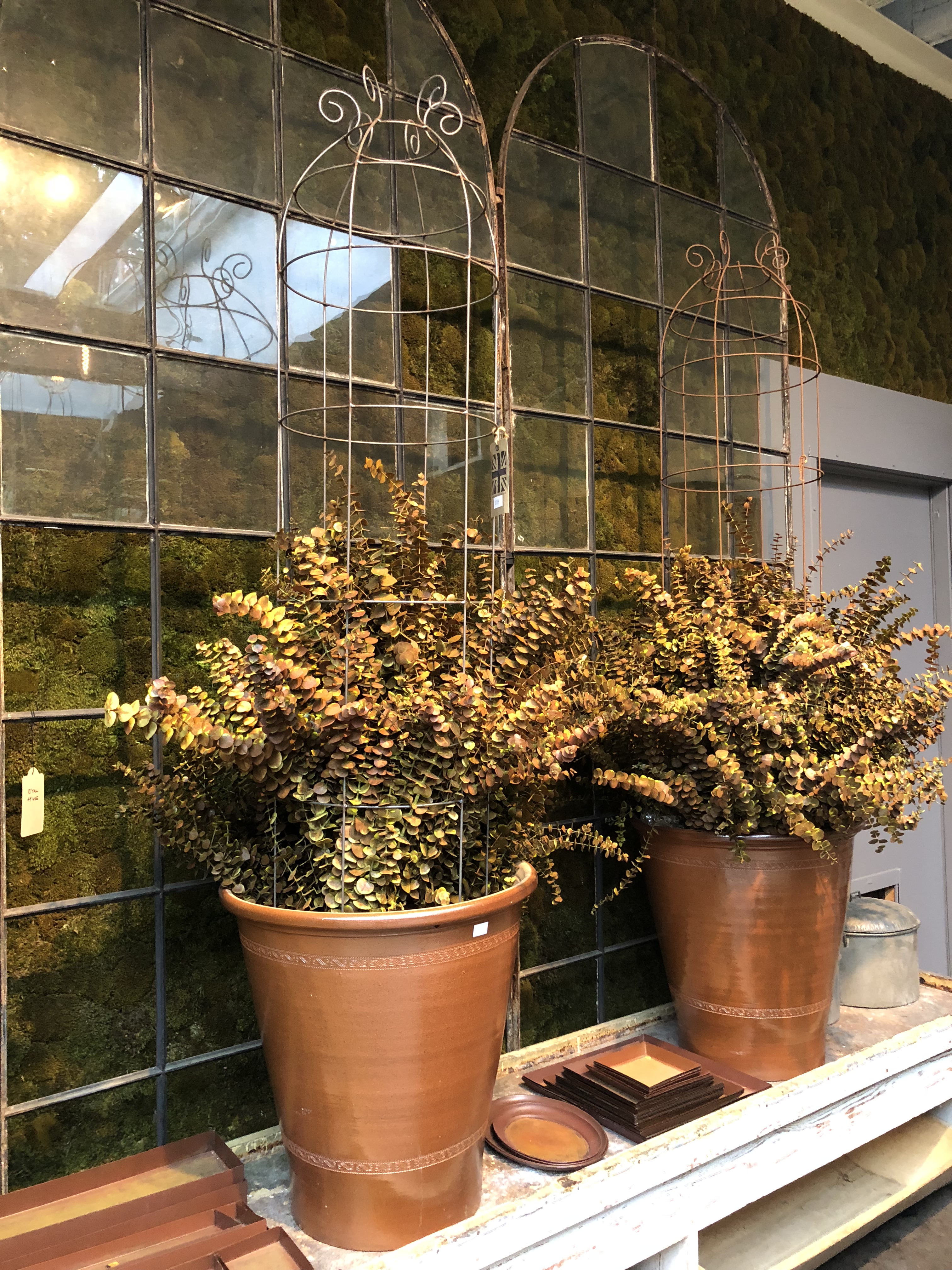 preserved eucalyptus in butterscotch
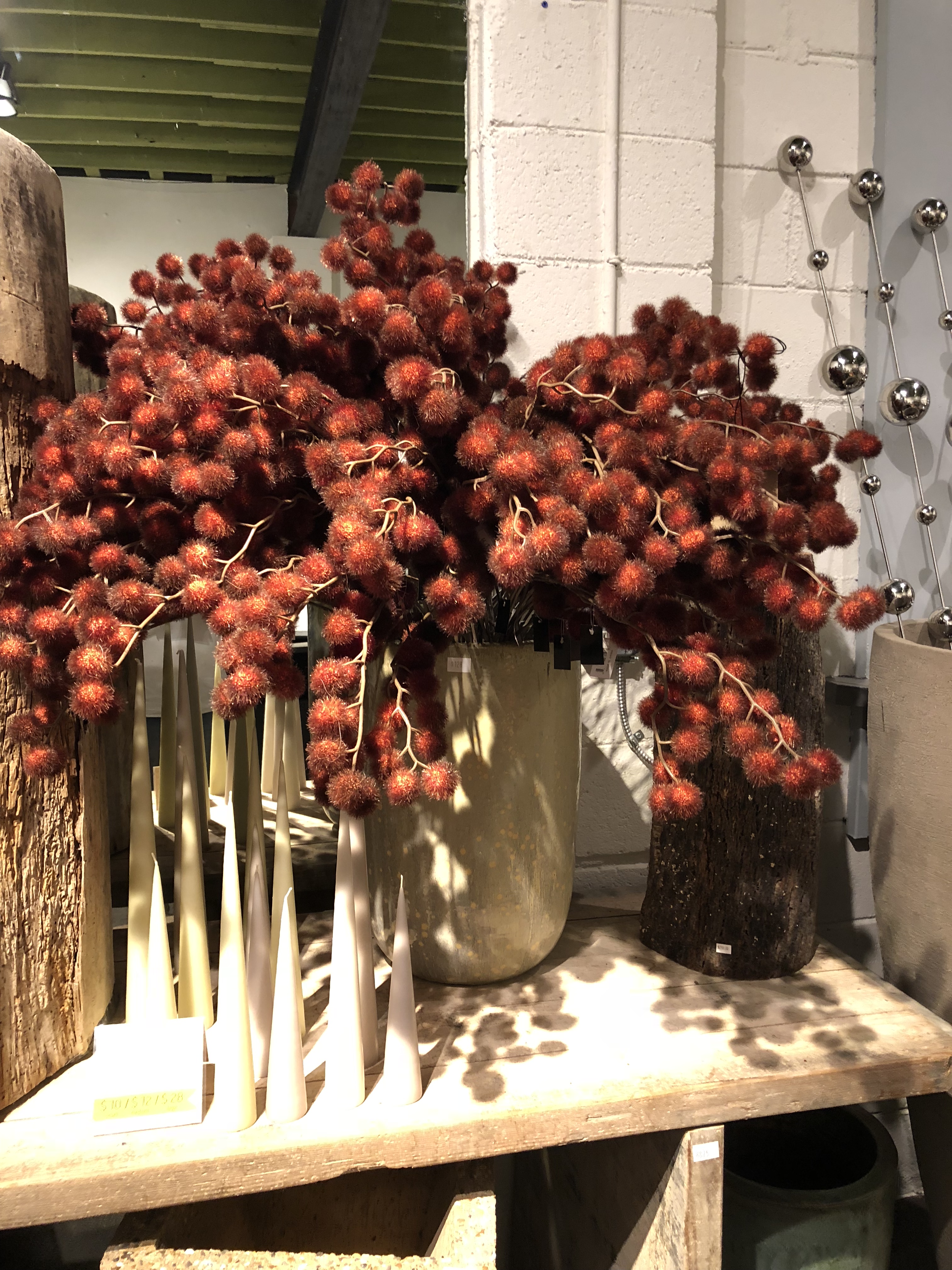 fall picks
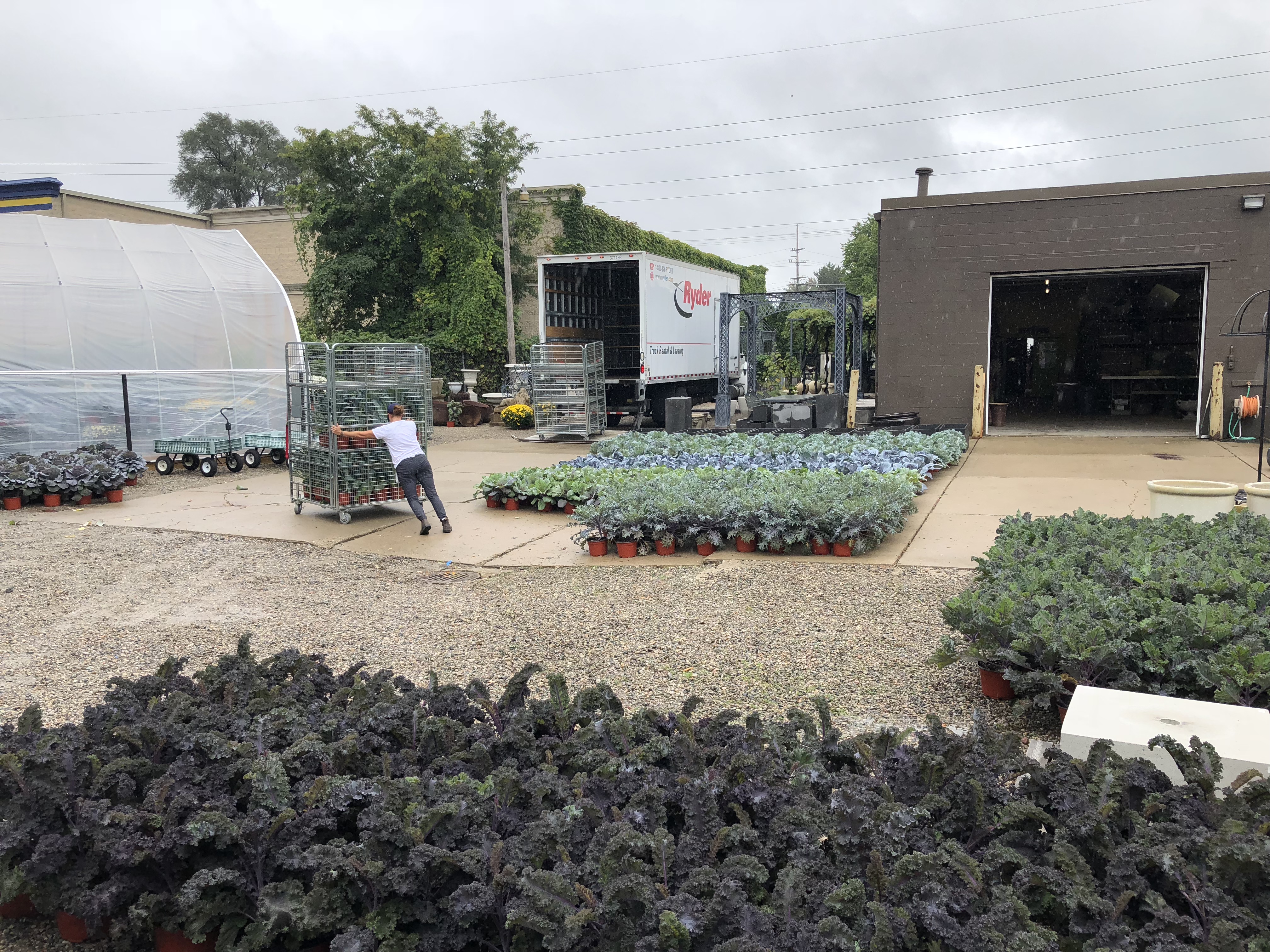 Of course every fall pot we plant involves living plants. All of our custom grown cabbages and kale are incredibly well grown. See for your self. They benefit from regular water and food, as they are growing fast this time of year. Our September weather has been unseasonably warm,. Once the temperatures cool, the leaves will color up dramatically, in shades of purple, pink, cerise, and white. Tuscan kale is a tall, all green variety that I hear is delicious to eat after a few frosts. Having superior quality plant material available to plant makes the process and outcome a pleasure all around.
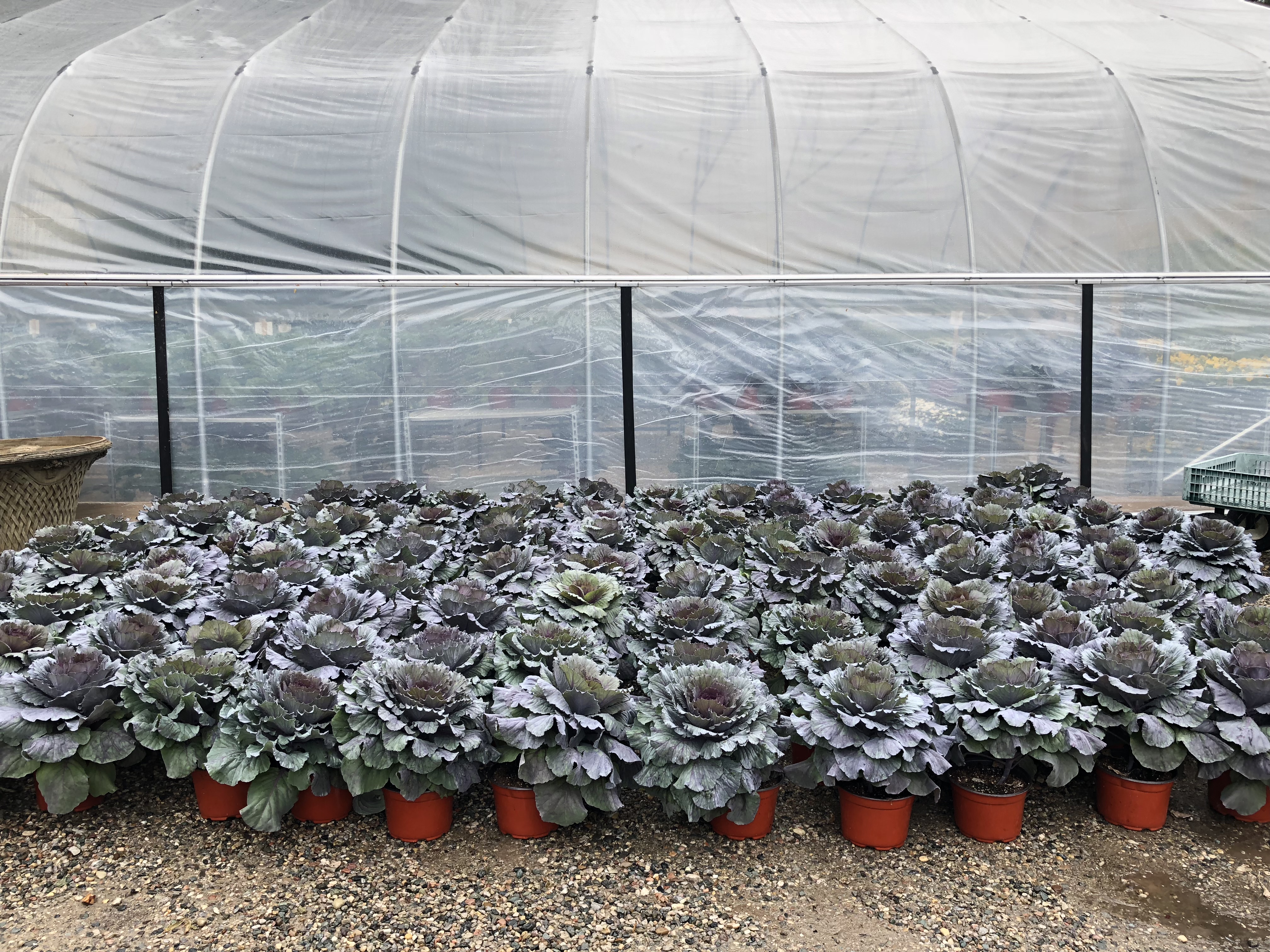 The outer leaves of this cabbage variety, Osaka Red, will darken, and the center will turn a brilliant deep cerise pink, given some chilly weather. The look of the pots will evolve as the plants take on their fall color. If the early winter season is mild, these glorious and showy ornamental vegetables will look great in to December.
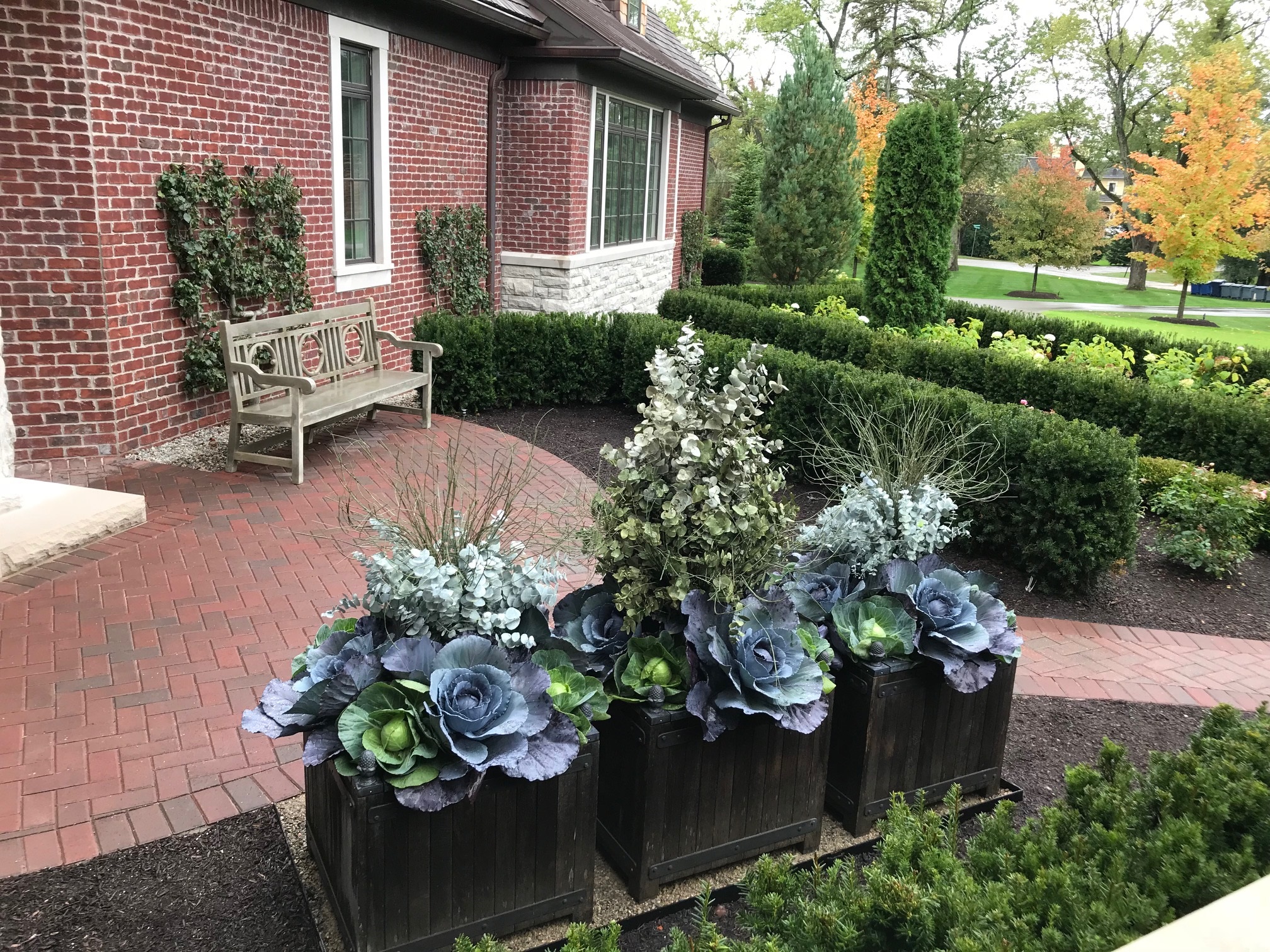 Each centerpiece has a photo tucked into it that shows which pot it belongs to, and what will be planted with it. That kind of planning helps to make a large planting job go smoothly and efficiently. But no matter the planning, seeing the work come together is always a pleasure. Pictured above is a trio of pots planted for fall last October. This year’s pots will feel just as fallish, but will feature whatever interesting materials Rob has purchased for the shop.
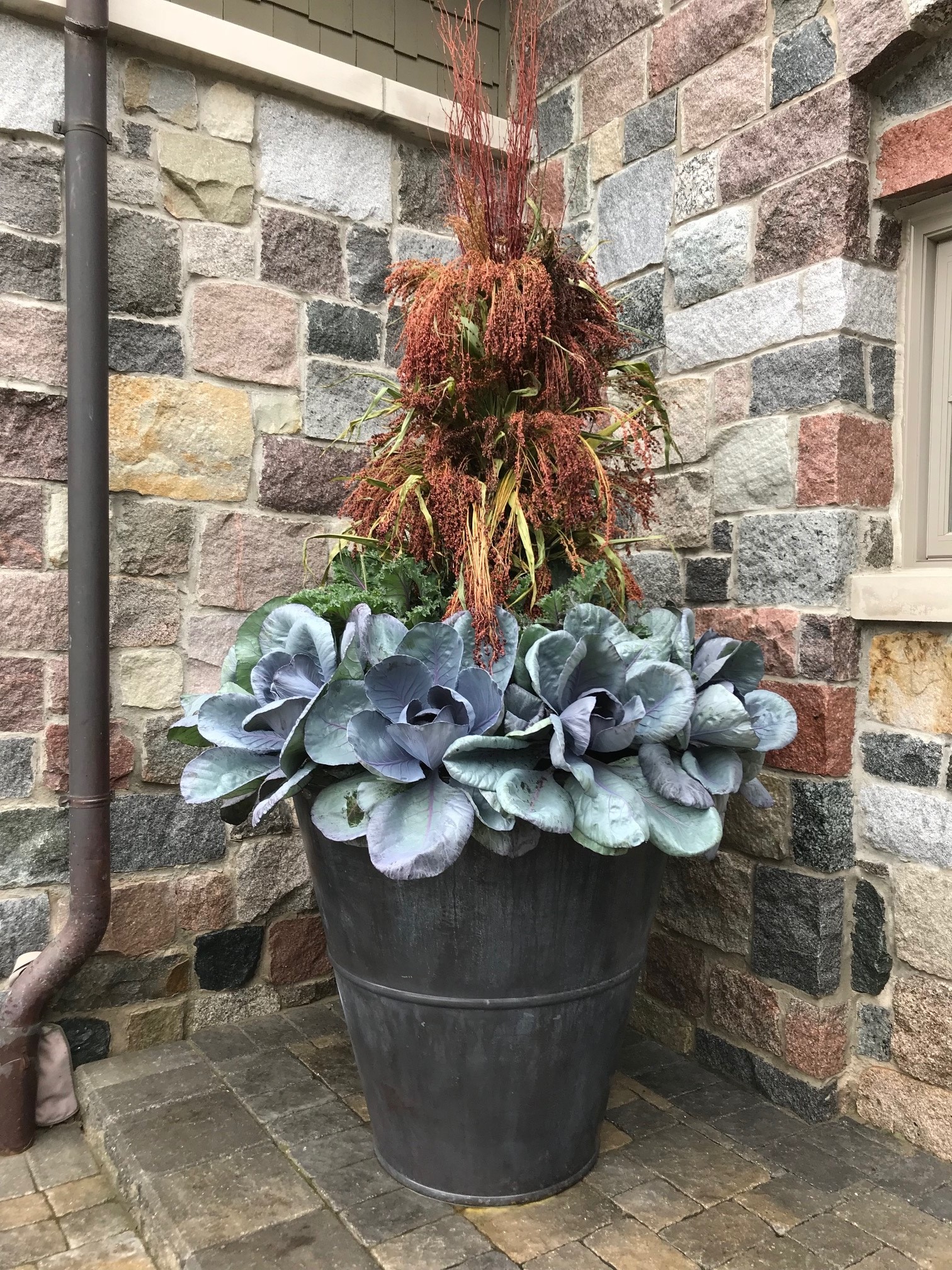 The Ruby Queen cabbage, the kale “Pinstripe”, and broom corn are all looking good.