Archives for 2010

Sunday Opinion: Safe To Come Home

Sometimes Buck will call and say he has taken care of some problem or another.  He will say, “I have already watered the pots; it is safe to come home”, or “I have cleared the fallen branches from the drive; it is safe to come home”.  Once he called to say  “They got the guy who was breaking into cars on the street; it’s safe to come home”.  I was thinking about this yesterday, on the occasion of the 4th of July holiday.  I like this holiday, as I think it is important to celebrate the qualities that made Americans go to to war to be free,  and the day that independence was secured 234 years ago. Americans are intelligent, imaginiative and hard working. They lend a hand, when a hand is needed.  I would not want to live any where else than exactly where I live.  Americans that came long before me made it possible for me to grow up safe, and be free from oppression.  I went to school, I worked, I pursued a career-you know, life, liberty and the pursuit of happiness.  I own a small urban property and a small house-that ownership is very important to me.  I may only own one zillionith of all the land covering the face of the earth, but it is mine.  Mine to be responsible for, but also mine to do with what I please. 

I live in a neighborhood where lots of other people own their own property.  They may paint their front door a color I find unappealing, or grow roses and lilies in the most vulgar colors I have ever seen, but I put little time to my disapproval beyond wrinkling my nose.  Why is that? I was raised to value my freedom, and the freedom of others.  Everyone in my neighborhood is free to decorate their property, raise their kids, attend the church or their choice, or not-in short, they are free from me, and anything or anyone else that threatens to oppress them.  I am old enough to have recited the Pledge of Allegiance every morning in grade school.  Having recited “one nation, under God,  indivisible, with liberty and justice for all” thousands of times, it is safe to assume that as an adult American I still believe in it.

My favorite part of the 4th of July weekend was actually Saturday night.  Buck and I were home, in the garden. We had our own quiet plans for the evening.  The neighbors to the south and the west were celebrating the holiday with big parties.  The street was jammed with cars.  My yard is completely enclosed from any views to my neighbors, but I could hear them.  The laughter, the music, the kids, the dogs-the sound of celebrations going on. It all seemed amiable, and lively.  I enjoyed hearing it all;  I liked being exposed to something I was not party to.  I like that I live in a community-we all mow our lawns, pay our taxes, and wave to our neighbors.  We live our own individual lives, but we are a group.  We get our street plowed in the winter, the mail comes every day, we share access to help from police and fire, we support the schools, the parks, and the library.  In return for fulfilling our obligations as citizens, we are free.  This is a situation I feel safe to come home to.

I suppose this has much to do with why I have done contemporary landscapes, revised and updated mid century modern landscapes, planted perennial gardens stuffed with every perennial that thrives in Michigan, designed all green gardens.  People have very different views about what constitutes a beautiful landscape, and they are free to express that. I have no interest in my landscape being anything other than what I come home to.  Part of the challenge of the shop is insuring that no matter your taste or period, you will find something to like.  This means buying with an eye not just your own, but with the eyes of others in mind.  It is not tough to appreciate a beautiful garden-even one you would not want to own.  My neighbor’s freedom is as important as my own. The real music behind the 4th of July celebration?  Let freedom ring.
The Garden Hose

My most intimate conversations with my garden take place over the watering. Proper watering takes patience, and even more time. Time to really see what is going on. Time to shed the babble of the day, and concentrate on what is in front of my face. What I see while I am watering, and make note to attend to-makes my garden better. I resent being tied down to one spot and one task-but once I get over that resentment, I relax and tune in. I have an irrigation system, but it does not handle every watering issue I have. Were I able to design an irrigation system that could sense on its own when each individual plant needed water, deliver that water, and regroup for tomorrow or next month-I would be able to retire, afford houses with gardens all over southeastern Michigan and have a life casually looking after all of them in turn. Should I ever devise a method by which to intelligently install and maintain such a superior watering system, I would be able buy every photograph that Lynn Geesaman ever took of a landscape or garden. Since the chances of either of these scenarios coming to fruition are poor to none-I am left holding the hose. The garden hose. Since hand watering is a job, a good tool helps.

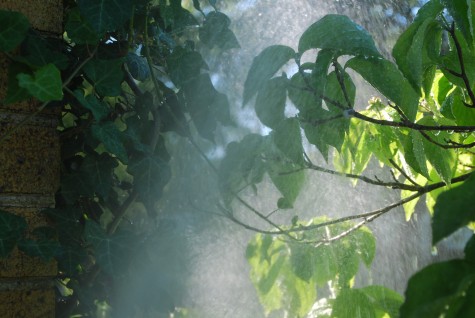
Michigan is surrounded by the Great Lakes-Lake Michigan, and Lake Huron are the biggest. Michigan is furthermore laced with inland lakes. We have an embarassment of treasure in water. I have been watering a bed of newly transplanted ferns by hand with the hose every other day this week-watching those drops drip off the fern fronds and into the soil says everything about the life that clean water affords all living things. Keeping all that water clean, a matter of pride and concern to everyone. The challenge lies in the delivery of that water. New cities, new neighborhoods, expanding populations-this is as much about the delivery of water as anything. It would be interesting to see a map showing where my water comes from, and how it is delivered and ready for me to use. Once in in the garden, my delivery system is the hose.

Does it not seem that given the long history of gardening, and the necessity of easily transporting water from a source to a plant, that a perfectly designed and executed hose would be available to me? My shop, and my home have no end of spigots, to which are attached 75 foot hoses. I hate each and every one of them. These heavy duty commercial grade rubber hoses weigh a ton-before they are full of water. They need to be long to reach the outlying districts needing water; dragging them, rolling them back up, and storing them is a colossal pain. They do not coil up easily; Buck says new hoses are directional hoses- meaning they roll up one way, and one way only. You must twist as you roll. The lightweight hoses (my preference) twist, kink, tangle and are otherwise unsatisfactory. They fail in the blink of an eye; the material splits if you look at it too long. A truck tire will crush the fittings. Dropping the hose on the pavement will put a fitting out of round just enough to leak all over you. New hoses-who chose that nuclear green for a hose color? All I want is a hose in an unobtrusive color that winds up effortlessly in the twinkle of an eye, that weighs next to nothing, dwith strong well made fittings that do not leak-am I asking too much?

I am not particularly adept given a discussion of mechanics. Clients who cannot sleep at night unless they have a licensed landscape architect on their project-I try to explain that engineering is vastly different than design. The design and manufacture of durable and serviceable hose fittings-who does this? Like a hairdresser needing the perfect scissors, the chef that needs a perfect knife-I need good hose fittings. Most I have tried leak instantly, or within a week or month. The hose stop valves are the devil to turn on and off. Even if I were to forgo any fitting with a plastic part, the metal ones perform poorly too. I despise having water leak all over me when I am trying to get water to a plant. A great hose-I have been after this Grail my entire gardening life.

Plants need water; no gardener disputes this. When the shop is busy, and I have a little less than an acre to water, the design of the hoses matter to me, and more so to Rob. The watering cannot be left to an amateur-there is too much at stake. A little less than an acre to keep watered is a big job; knowing when and how to water is a skill, and an art. Rob doesn’t mind the fire hoses, as they deliver lots of water in a short time. He is able to drag them, and he knows at what pressure to deliver the drink. Clients ask me-why do your gardens look so good? Rob waters. Would that we could find a better hose, with excellent fittings-and a proper wand.

Every season I try the new watering wands. In my dreams, I would want a wand that delivers an enormous amount of water, gently. Watering wands-I fall prey to all of them. This one has so many plastic parts, I am sure something will go wrong soon. For the moment, I like being able to turn the pressure up and down with my thumb-as I am watering. I am able to turn the water off with this feature-no need for a leaking stop valve. I’ll give it a try. Buck lectures me regularly about proper fittings. Fittings-who knew that a serious discussion of landscape work would involve little parts.

A hose reel is a big part. This one-our second, as the first version came apart and fell of the wall, holds 150 feet of hose. I have no need of such an apparatus at home, but at work, it is a necessity. Rolling up the hose is a workout, as the mechanism is not particularly smooth or well balanced.

My 2010 attempt to find a hose and wand suitable for my home garden is pictured above. I can hold all 75 feet of it with 2 fingers-this I like. The narrow diameter means it takes more time to water thoroughly; I am happy to put up with that, given that I don’t perspire heavily getting it from one place to another. It seems like the wand will be good-the metal fittings are substantial. This hose must have a giant metal spring inside-it has a life of its own. I am twisting as I roll it up. We’ll see if I fall for it-our hot and dry season is just about here.

At A Glance: The End Of Buck Week

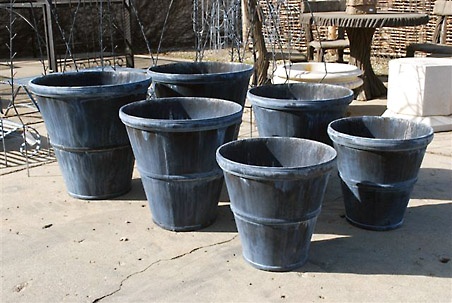
the tapered Hudson planters

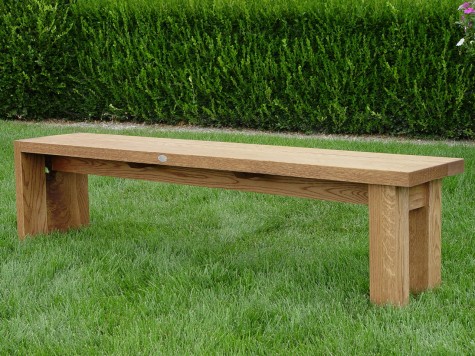
oak garden bench

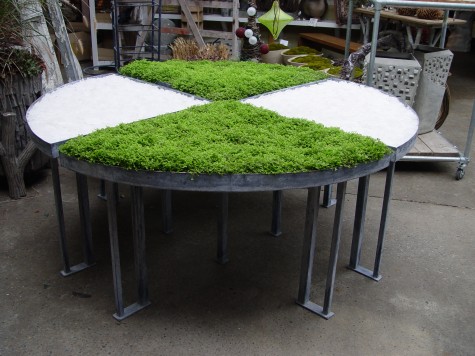
Steel table in four sections

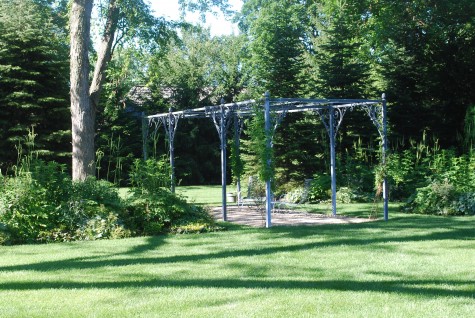
Pergola

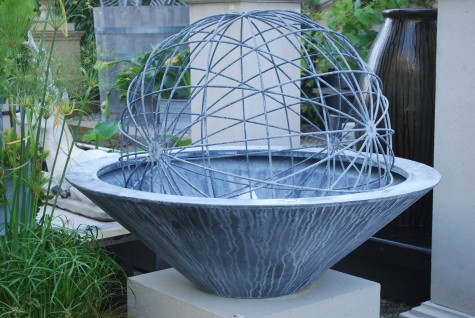
Breakform V-pot and sphere

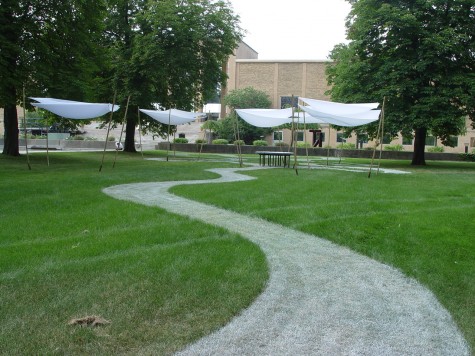
event tents

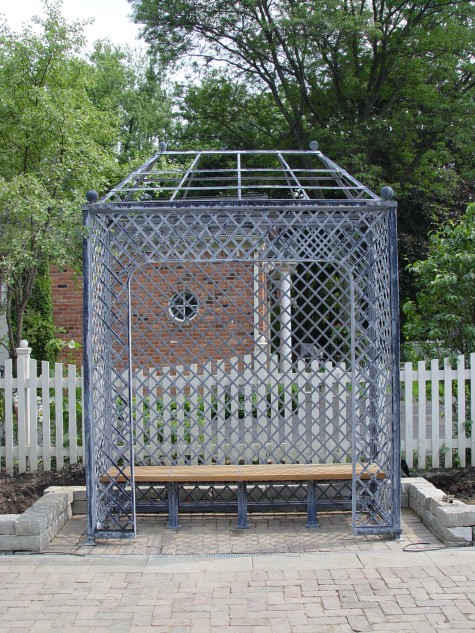
bus stop pergola with oak bench

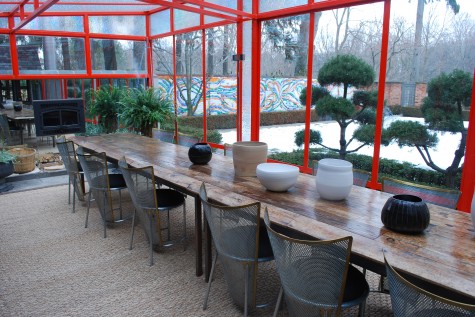
conservatory table

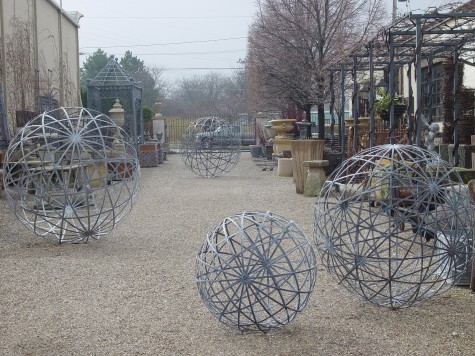
spheres

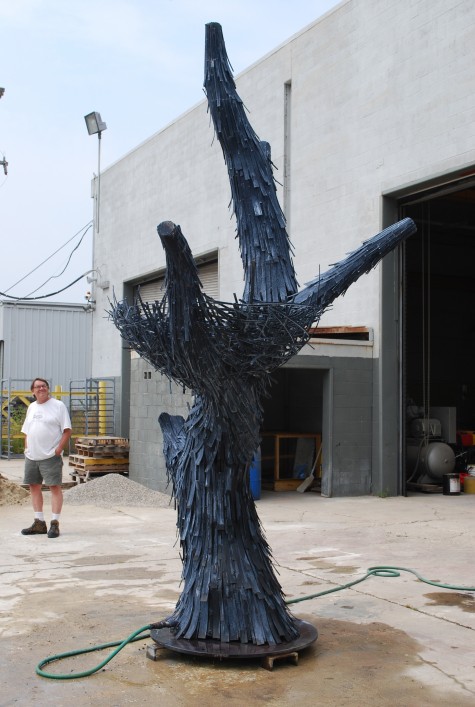
sculpture/fountain

steel and concrete bench

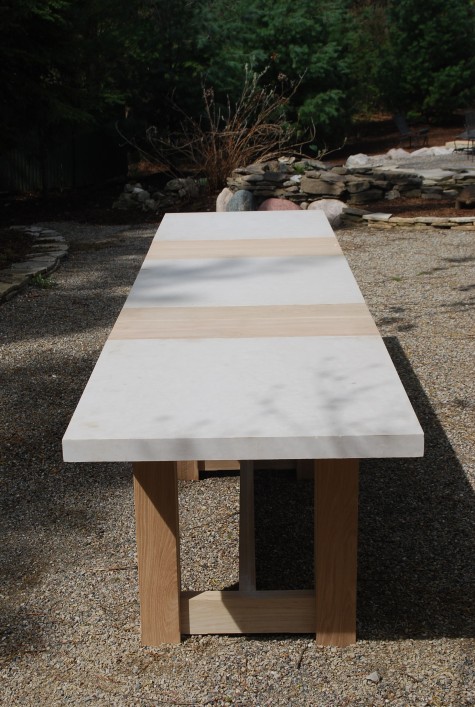
oak and Valders stone garden table

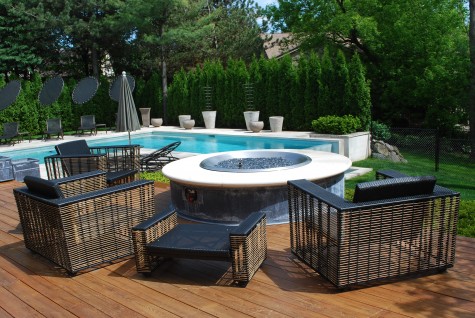
firebowl

The Solver Boxes

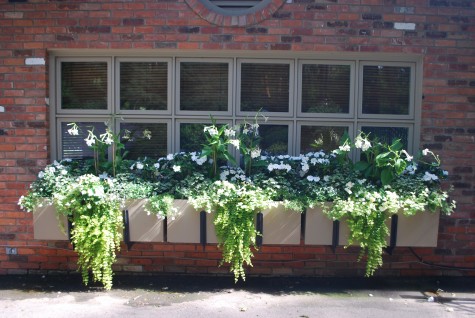
I have no idea whether you are enjoying the Buck week posts-but I know he is.  It is tough when you make things, and never see what becomes of them. The finish of a box is not really the finish.  The placement in a garden, the plants-there is a whole other melody to come once they leave Branch.  Any garden box asks for planted material-he is seeing that relationship in some cases for the first time.  Some boxes are one of a kind, but have no name-as they are much more about what gets planted inside, than their aesthetic appeal as objects.  These galvanized and painted sheet metal boxes are a vehicle for a planted expression.  Sturdily made, and held by substantial steel brackets, they are a forum for a planted discussion on a garage wall. The garage wall-not so prominent now. 

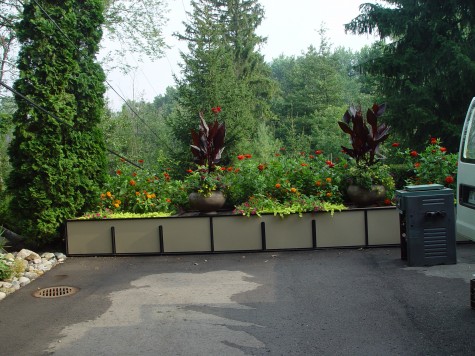
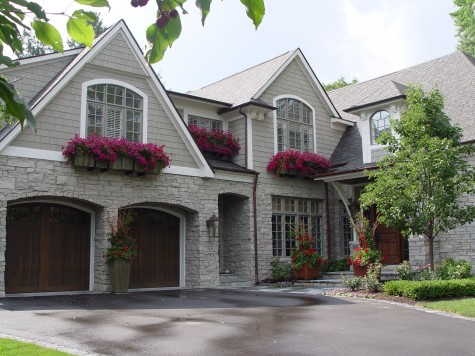
This giant box at the end of this driveway has a purpose.  Drive an additional three feet-you and your car would be presented with the prospect of a steep ravine.  This box is a not only a stop sign, it will stop you should you be coming down the drive on icy pavement. The boxes and plants are so much window dressing-who would guess they are more importantly a substantial safety feature.    This home is paved right up to the front of the garage and house-not much opportunity for landscape to soften all this hard surface. These boxes on the second story are galvanized sheet metal-with a sanded and painted finish antique like finish.  The color is much more punchy up close-at a distance the color is soft and unobtrusive.  This makes the view much more about plants, than about boxes.  They also make the house look warm.

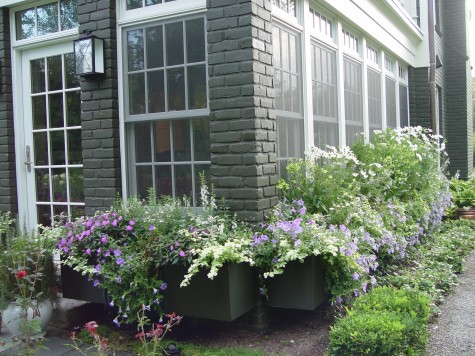
A corner sun porch just 3 feet from the lot line makes an in ground garden all but impossible.  The wall hung boxes permit a garden to be viewed from inside, and do not obstruct traffic from the front yard to the back. The square footage of soil is considerable; my first complaint about most boxes like this is that they are too small.  It is not long before the planting virtually obscures any mention of the word box.

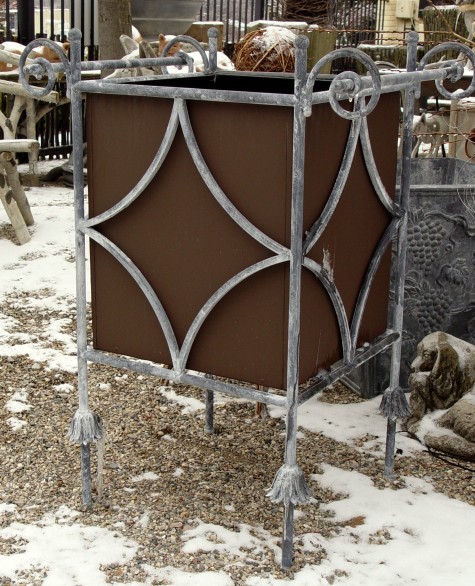
This box I did name-but Buck only made four, and they are gone now.  I call this the Charisse box, as in Cyd Charisse.  A dancer whose long legs were a legend in the entertainment business; this box has legs I like.  The flared bell flower shapes on those legs-a beautifully decorative detail.  The scroll arms and handles were time consuming to make; I never hear Buck ask when we are making them again.  But I  have not forgotten them.  They went to homes not known to me-I have never seen them planted. They do indeed make me smile-they are so light on their feet.  Not every space asks for a handsome box-some spaces call for pretty. 

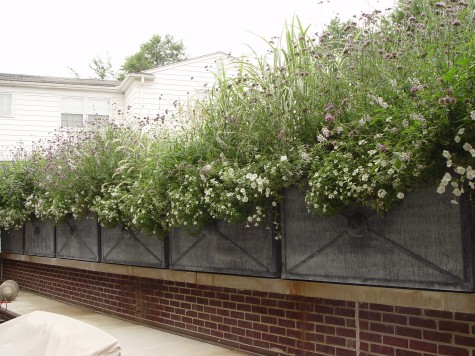
These massive boxes are also contructed of galvanized sheet metal-this is a much less expensive material than 18 inch or 1/4 inch steel.  A second story balcony terrace was completely exposed to view from neighboring buildings; this client needed big boxes, and lots of them.  The first year, we planted them as a meadow.  In recent years, they have done a good job of providing a permanent home to a hedge of arborvitae.  The trick to maintaining evergreens year round, above ground-as big a soil mass as you can manage.  This minimizes the effects of freezing and thawing that ejects plants from pots, and exposing their roots to the air.  This client has a completely private outdoor terrace, thanks to this wall of boxes.

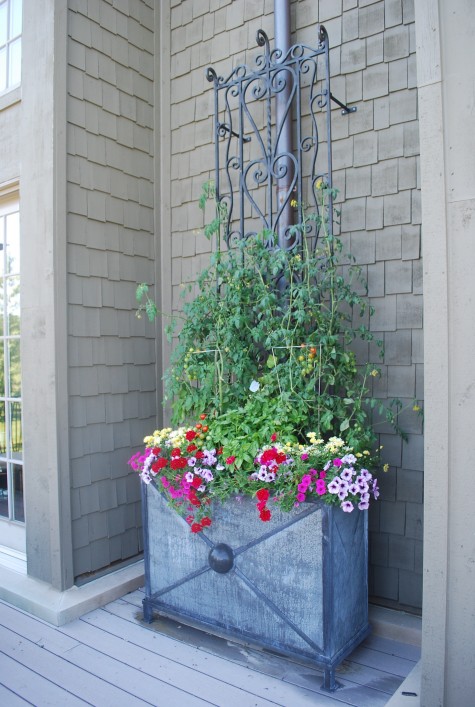
Some less than visually thoughtful builder installed a giant downspout dead center in an alcove on this client’s rear balcony terrace-unsightly. One of our two extra balcony boxes was modified and placed here.  Buck made a steel stand for the box, which includes an armature on the back which bears most of the burden of supporting this substantial decorative iron panel.  A morning glory, and a pair of cherry tomatoes will help to obscure the drain pipe from view.   

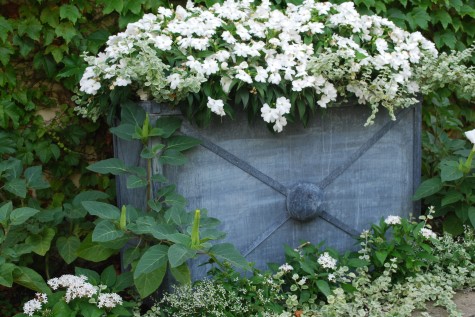
The last of the balcony boxes landed on the ground-in a bed.  I like this unexpected treatment; flowers at the bottom of the box look great.  The bed is too narrow for any garden of size; the wall behind it is very tall.  A little change of level provides some interest in a tight space. In retrospect,  I probably should call these boxes the Solver boxes.