Archives for 2010

What’s Possible.

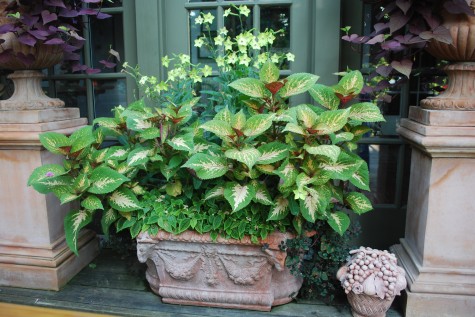
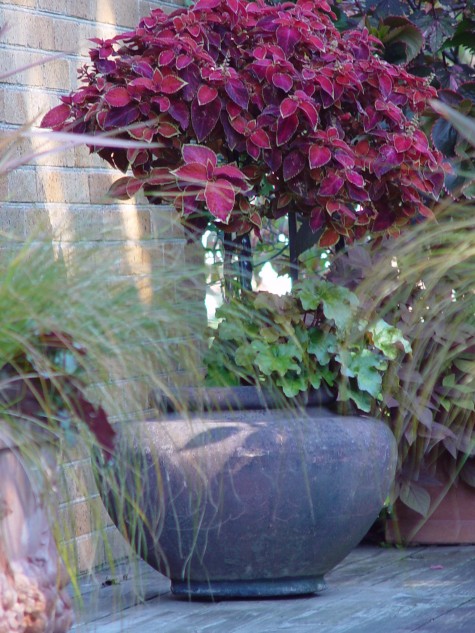
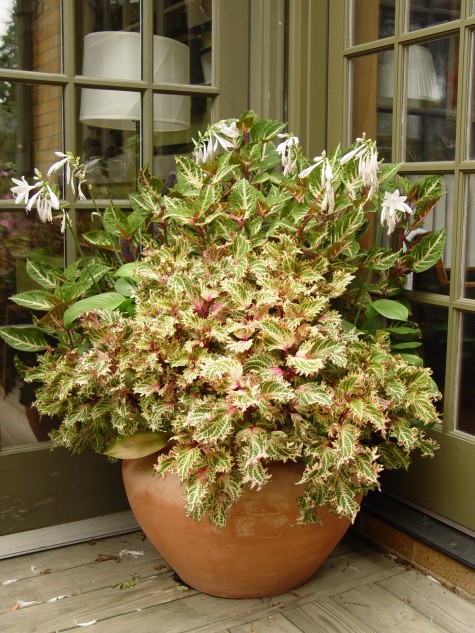
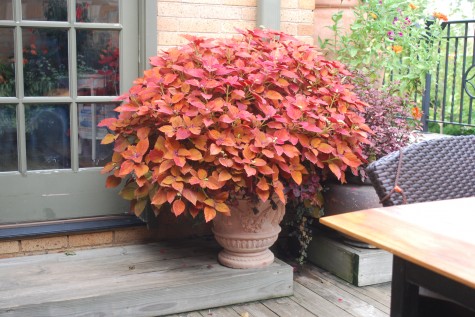
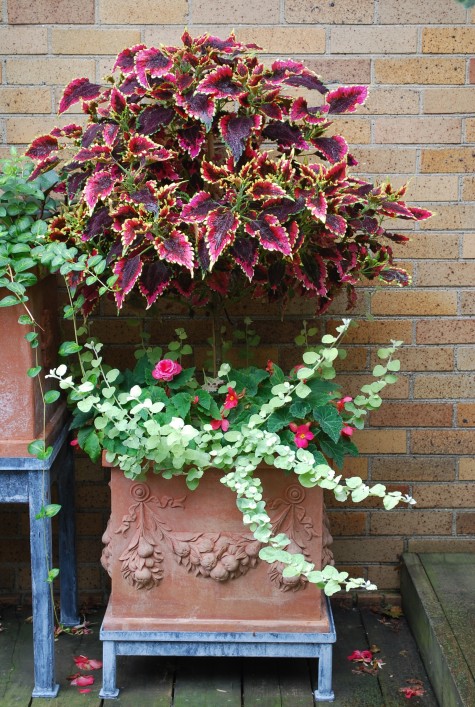
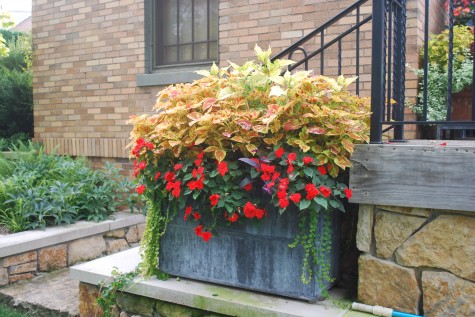
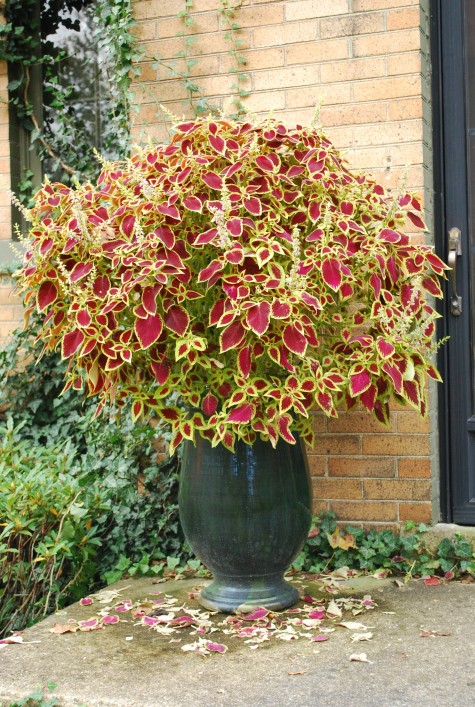
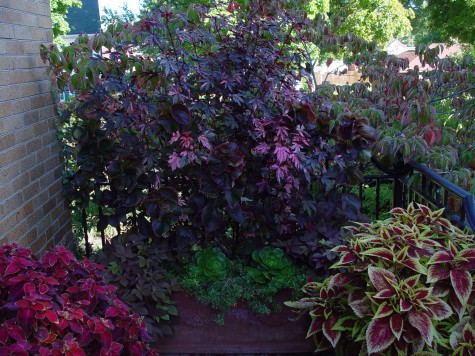
Some things happen very slowly in a garden.  I once scarified some gingko tree seeds, stratified them in my refrigerator for 10 weeks, and planted them out in pots in the spring-with the help of a parent. I probably was 11. Who knows how long it was before I could plant the seedling in the ground-it could be my Mom did that part for me.  5 years ago I went to see the house where I grew up-that gingko tree had become a substantial tree.  Last year I made another visit-the gingko had been cut down.  45 years to grow a substantial and handsome tree from seed.  Other things happen very fast in a garden; I am sure it took less that four hours to get that gingko down and hauled away.  A vision of a climbing rose redolent and weighted down with thousands of blooms in June takes years to realize.  It takes plenty of additional time to feed and prune, deal with the blackspot and the Japanese beetles, encouraging a plant to stay the course long enough to make that vision a reality.  A tomato seed can become a ten foot tall rangy plant loaded with fruit in the blink of a season.  For a gardener, a season is a measure of time.  Not short, but not very long either.  It seems like my coleus just got good when it started dropping leaves from cold.

A landscape or garden plan can slowly consume what seems like an endless amount of time. Any amount of time accompanied by the wringing of hands and indecision can becomes an interminably long slow time. One can stubbornly hold out for the perfect plan, and suddenly find themselves out of time-I am a guilty party in this regard.  I had the good sense to plant some small evergreens, thinking it would buy me some time to get the rest of a scheme together.  At fifty I awoke from my working every waking moment stupor to maturing evergreens and weeds in their early twenties; obviously my time to make the garden of my dreams was running out. I needed to step on the gas.

When I design for a client, my first act is to stew.  I stew over what a client has told me about what they would like to see happen.  I stew even more over the site plan or mortgage survey.  The stewing takes a lot more time, compared to the drawing.  Once I sit down to draw, I have an idea in mind-a concept.  The drawing has to work within the confines of a lot of givens.  The lot lines.  The physical distance from the home to the street.  The location of the driveway may or may not be a given.  In the drawing stage, I see how much more time it will take to make what I conceptualize work. The drawing goes slow at first. Maybe the concept doesn’t work very well at all; it takes strength to ignore the clock and start over.  Should everything be working, the drawing goes fast.

Once a design is in place and set to go, slow sets in like the project is coming down with a cold.  Projects need to be organized, and staged.  Plant material needs to be located and shipped.  The stone mason needs to see the job and quote the work, and set a tentative date to start. There is a chain of events which is bound to get tangled up.  A client approaching me in September about a project needing to be finished the following June-one would think that would be enough time for just about anything.  The project will finally get underway Monday October 18, some 48 days post the decision to proceed.  Who knows what lies ahead that could slow things down even further.

Pine Knot Farms is one of my favorite sources for hellebores.  I was looking at the plants I bought from them two years ago just the other day.  I am hoping this coming spring I will see my first flowers.  Nothing happens very fast with baby hellebores.  I have a fruiting olive tree in a pot which spends the winter in the green house; it has not grown an inch in the past two years-well maybe, an inch.  What the hold up is, I have no idea.  Neither a garden nor a landscape happens overnight.

But plenty can happen overnight.  A client may have a garden that needs a new dress and a good hair do in time for an unexpected event.  A tree can be blown over, or struck by lightening; I have had both of these things happen. Some people fall in love with gardening very fast, and fall out of love even faster.  Some warm up to the idea very slowly, and then presto- the warm feeling becomes a fire burning.  All manner of circumstances can change in an instant.  It is easy to recognize an instant when it happens.  It is harder to keep that possibility in mind every day, and garden accordingly.
At A Glance: A Last Look

Fall Plantings

My fall is in full swing; it was cold and blustery all day today.  I come to work sporting at least 3 layers.  My office door at home is open all evening so the corgis can come and go as they please-not tonight.  Too cold.  The leaves are starting to turn color in earnest; the lindens at the shop are so beautiful this time of year, dressed all in that intense citron shade of yellow.

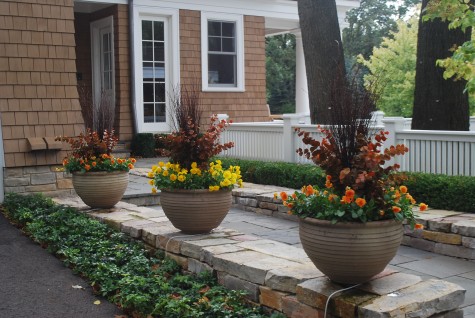
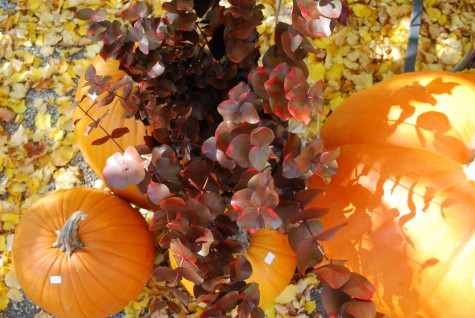
I have written before about how limited a fall plant palette can be.  But in fact, limitations can spark some some imaginative solutions.  There are times when I have so many choices that all the time I spend so much time considering the options makes what I eventually choose looks exhausted-this would be a spring scenario.  These fall pots have the expected yellow and orange pansies, but get their volume from birch twigs and preserved eucalyptus. Not all natural materials have roots, and need water.        

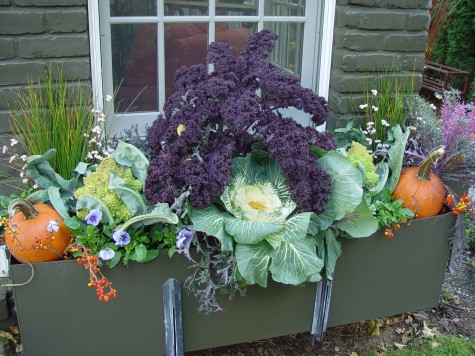
Ornamental cabbage and kale, and pansies are fall staples.  But who wants to look at staples? My farmer’s market has no end of natural materials-the bittersweet and pumpkins in this window box add so much to the cabbage and pansies.  One of my most favorite fall materials-romanesco broccoli.  The lime green florets are of an astonishing configuration; the swirling leaves add a little sass to any staple fare. I have placed these broccoli heads in pots, and used then as finials on fence posts.  What is your idea?   


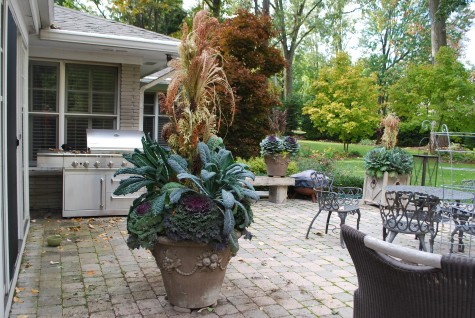
Broom corn is just that-a plant which when harvested can provide material for brooms.  The fresh stems at market are beautiful and colorful, and you can be assured they will last the entire fall. I am crazy for tuscan kale and ornamental cabbage, but this fountain of broom corn in the center makes the whole arrangement look like a substantial celebration of fall.  

Dusty miller is an underused plant for fall pots.  It regularly survives the winter in my zone.  The silver color is great in the fall-but should you not have access to tall plants, your pots could get a big leg up from some preserved  spiral eucalyptus. Though not one bit hardy in my zone, eucalyptus takes well to preserving, and color.  The dusty miller and pansies in these pots get a big dose of emphasis from a central mass of eucalyptus preserved and dusted with white.     

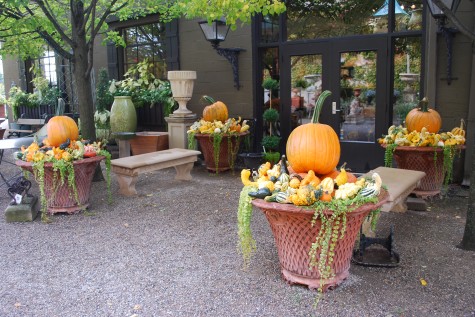
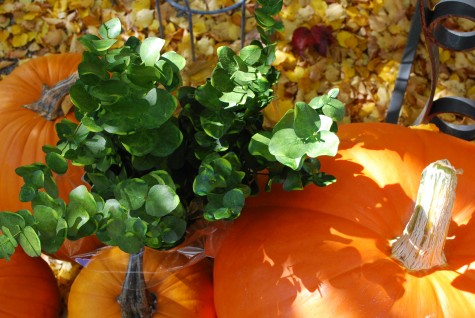
I have no objection to a fall planting that makes much of the fruits of the harvest, or other natural materials.  My fall season is short, and brusque.  This means that I do not object to materials for fall pots that do not have roots-I actually welcome the diversity they represent. The creeping jenny in these pumpkin pots had beeen there all seaason-I saved  them.  Creating a fall planting from 4 great pumpkins with outstanding stems, and loads of mini pumpkins and gourds was great fun. A container whose surface is planted flat with mixed pansies does not entertain my eye nearly as much as this does.  

Gardeners need some entertainment in the fall.  The closing of the season is not my favorite time.  I am cutting back, cleaning out, and cleaning up. Some fall containers with great color and texture can make the changing of the seasons a little less distressing. 

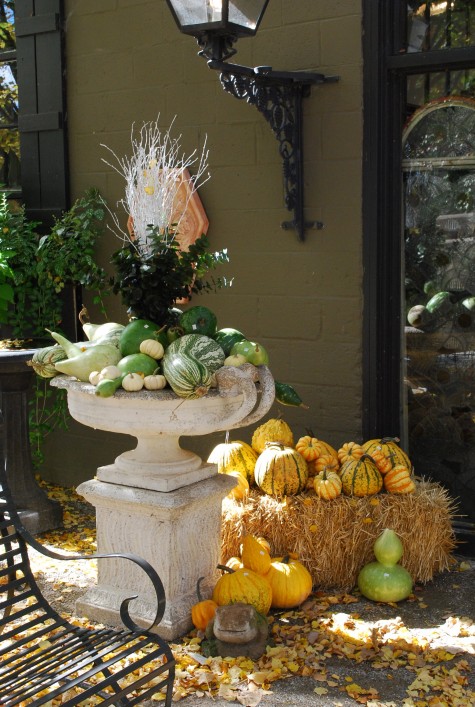
These antique urns flanking the front door of the shop have not one thing in them with roots. White glazed birch branches and preserved green eucalyptus are a centerpiece for a collection of green and white gourds. This “planting” celebrates the end of the season.  I hate to give air time to my disappointment that the season is changing, and moving towards winter.  I would rather do my best to create a little excitement about the moment.  


Those of you who live in temperate climates-I do not envy you.  I truly like the end of a season as much as I like the beginning.  I like being limited, and challenged. This is part of what is the great fun-should you decide to be a northern gardener.

Pastoral Landscapes

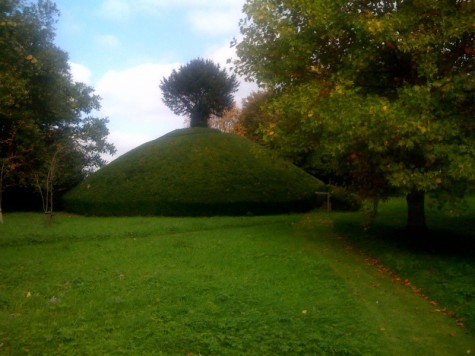
Rob’s shopping trip abroad for Detroit Garden Works is well into its second week.  He has attended some antique faires, as well as visiting dealers specializing in vintage or antique garden ornament.  His route from this country faire to that rural dealer has been dreamy to say the least.  I have gotten scads of pictures.  Many of them have a very painterly quality about them.  Boxwood Hill, with its path to the top looks like a scene from a Tolkien novel-a pastoral landscape fraught with history.  This photograph of surely trimmed boxwood, and a path up to the tree on top set in rough grass is heart stopping-can you imagine seeing this in person?     

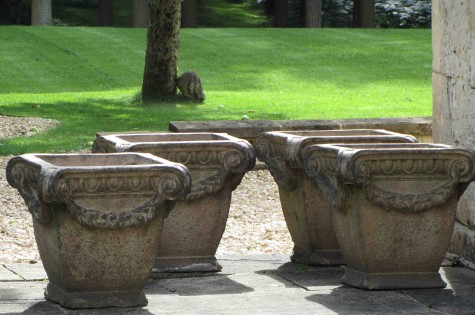
These four terra cotta squares, made at the the Liberty Company in London at the turn of the century, look particularly beautiful displayed against the park like landscape.  These rare signed and stamped pots have a quietly classical and architectural presence that suits me just fine.  They have that chunky and solid English aura about them that rings true.  Any genuine expression I admire.      

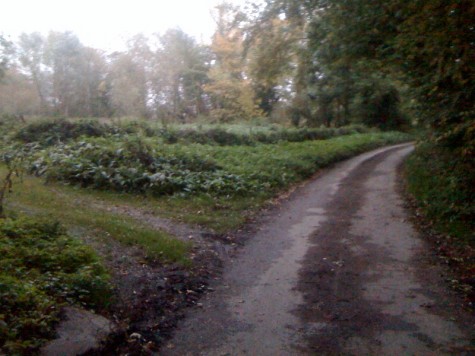
Where Rob was when he took this photograph, I have no idea.  It looks to me like the junction of the road, and the road not taken- made famous by the poem by Robert Frost.  I will have to ask Rob which road he eventually took, as his camera recorded that moment seconds before he made his decision.  There is not a building nor a sign to be seen-striking, that.  This pair of two-tracks; each one holds promise. 


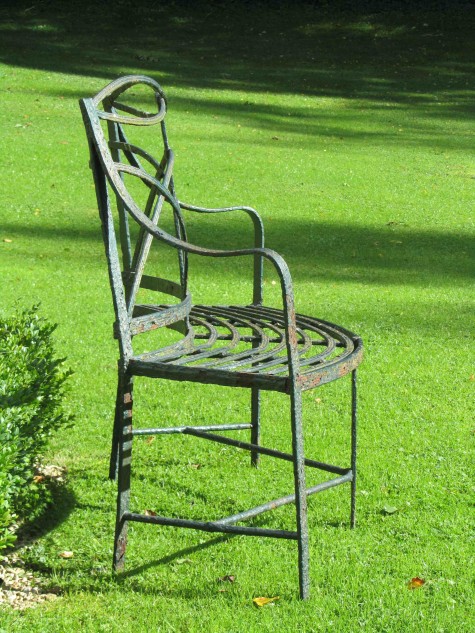
Like this antique curved iron bench or not, the combination of bench, lawn and light is beautiful.   

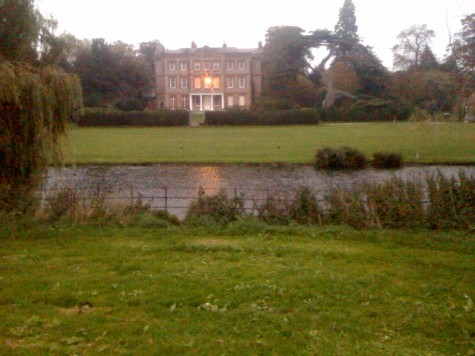
This country house is of a grand scale, but the attendant landscape is seems barely touched by human hands.  Field grass like this-full of all sorts of plants and infrequently cut or grazed is completely unlike what I would call lawn.   The grass adjacent to a wild garden I once had was overrun in the spring with every color of violet imagineable.  I don’t think I knew how good it was until it was gone.  A lawn overrun with violets;  what could be better? 

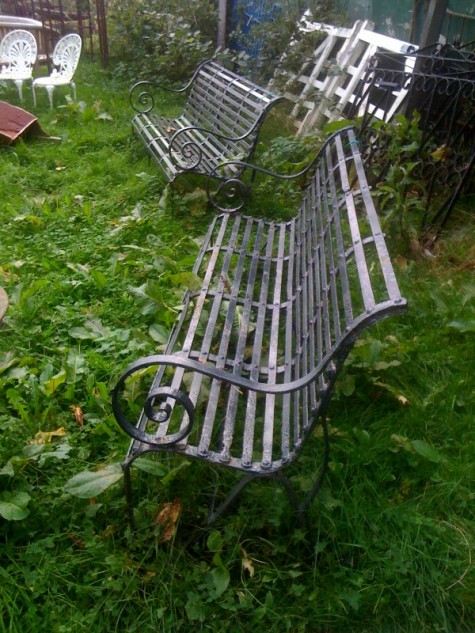
Many of the places that Rob shops have deconstructed landscapes such as this.  The look is lovely, natural and soft. In charming disarray, this landscape has a life of its own, with a minimum of interference from a human hand.  Though some may say this is evidence of neglect or poor housekeeping, I like how this space has been colonized. The natural landscape fringes and grows up onto the benches, gates, chairs, and ironwork-a natural, and beautiful relationship.   


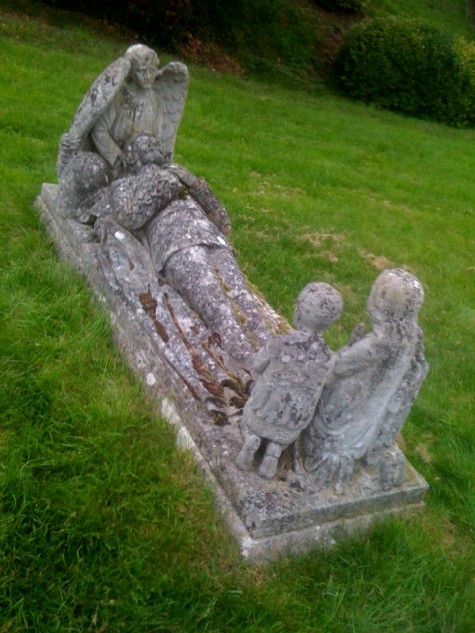
This ancient limestone sculpture in a church yard cemetery is amazing.  The children seem to be praying for the immortal soul of the deceased-already firmly in the hands of an angel.  The expression on the face of the angel-no doubt he takes his job seriously.  Many lichens have grown up and over this old sculpture-not to mention the rough grass.    


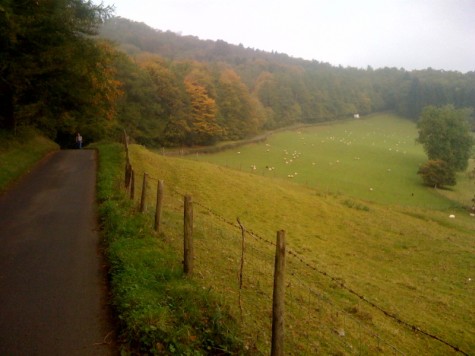
A winding and narrow country lane high on a ridge provides Rob a great view of a herd of sheep, placidly grazing. This is a landscape of a time and place unbeknownst to me. There is eveything to be learned from landscapes that have evolved from agricultural, commerce, country, and community. There are no strident notes.  Nothing contrived, or trying too hard. What is hard- the work of a life. What gets done-a sign of a life well lived.     

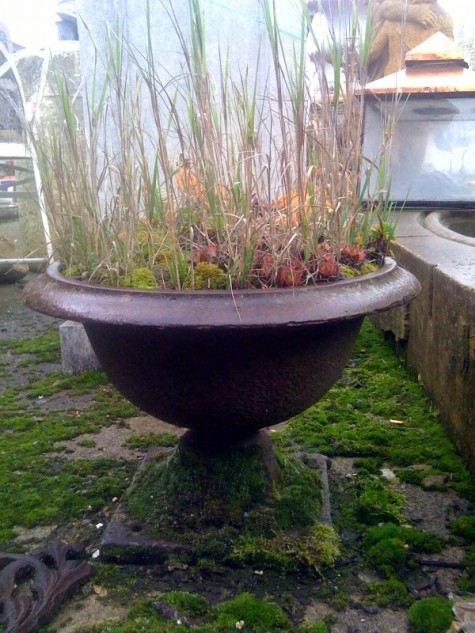
This container may have had some hens and chicks planted in it a long time ago, but what you see here is a container planting gone wild,  and a moss lawn establishing itself-the handiwork of a hand far greater than mine. I cannot really explain why this photograph appeals so much to me, but I doubt I need to.