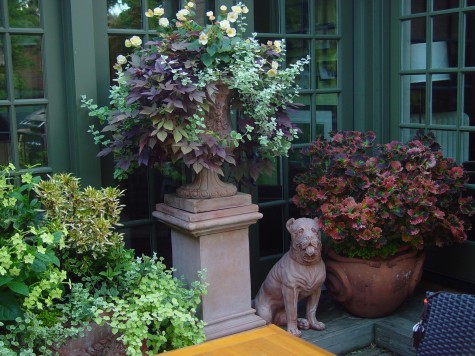
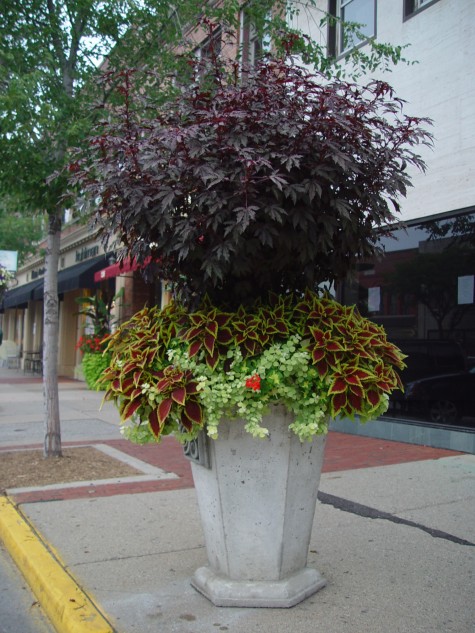
 The history of figurative sculpture in the landscape is long, varied, and certainly well documented. That history is part of the attraction for me; any object in any garden has the potential to organize a planted space, create a mood, or strike a chord. Antique garden ornament makes much of the aura that comes from age; what is preserved from one generation speaks to its value. My house is eighty years old-I like that, and I like that I am doing my part to maintain it properly. However figures in the landscape need not be old to strongly resonate with a viewer. Any human face, whether from another time, that place, or right next door, engages me. It seems a lot like preaching to the choir to say that what comes from contact with people is personal, but bear with me. �
 To my mind, a landscape or garden that does not personally engage the viewer, or provide opportunities for people to engage each other, lacks soul. A figurative sculpture or bust in a garden will immediately attract and hold the eye. When I buy them, I am first and foremost interested in the expression on the face. An assessment of the condition, the surface, the material, size and price are all secondary considerations. I like faces with complicated, mysterious, or striking expressions-some signs of life. This is easy-what face do you know that is not full of contradictions?
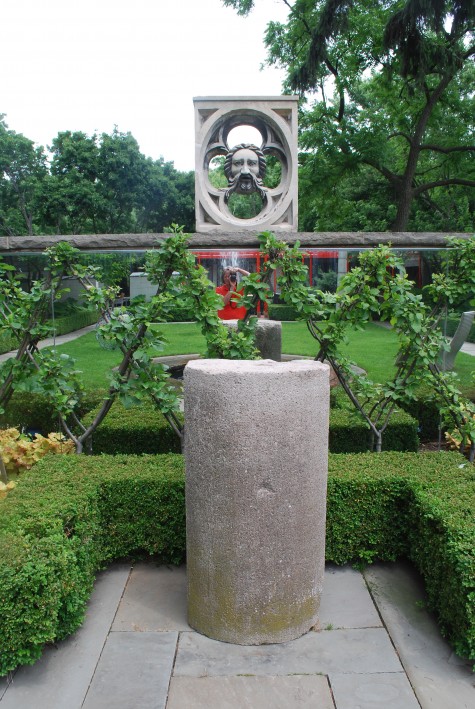 Though I see lots figurative sculpture whose faces I find beautiful and interesting, there are not so many I would want to live with – nothing surprising here. Any face in my garden needs be a face I would want to see every day-whatever my reasons. I have lots of objects in my shop that appeal to numbers of different people. The faces are different; the purchase very personal. Some people look many times, before making a decision. This antique French carved stone face has a very strong and compelling expression. Though not so many expressed interest in it, the person to whom it now belongs likes it a lot.
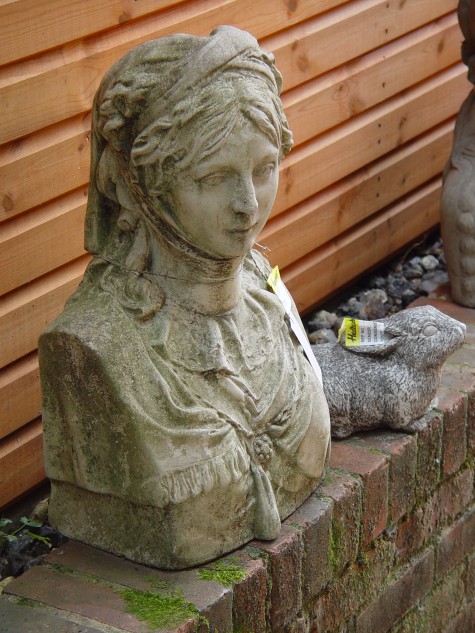 I have some clients who come to the shop multiple times; they say they miss seeing things in a single visit. But it is easy to spot a face, no matter how busy the background. From a design standpoint, placing a figure in a landscape will guarantee visual attention. A very shady garden spot, an area requiring a very strong focal point, an unexpected placement that rewards a viewer with surprise or delight can be vastly more effective given the right sculpture.
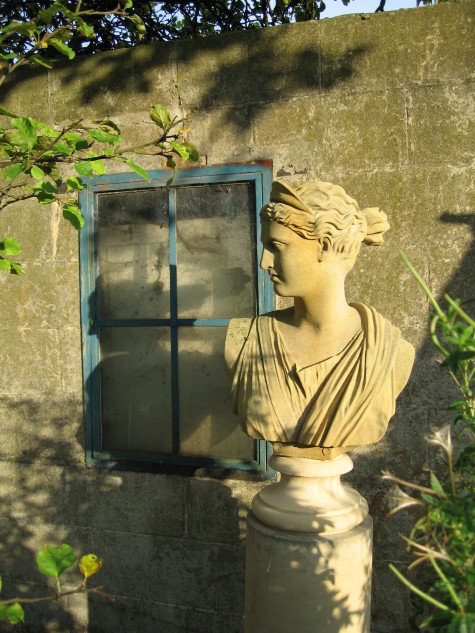
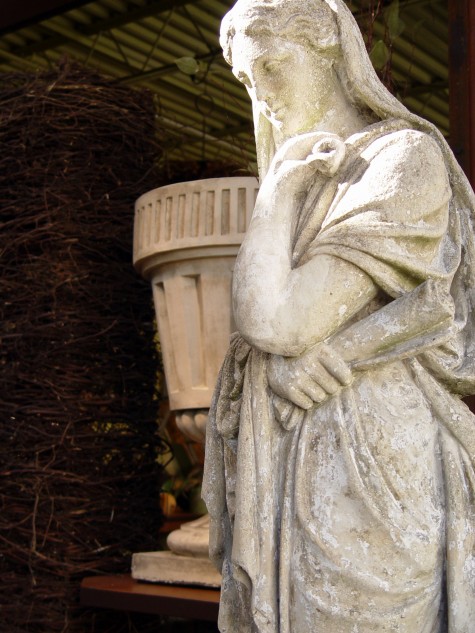 This very fine Austin and Healy sculpture dates from the late nineteenth century in England. Her expression is serene, the sculpting is fluid, the age of the piece greatly adds to its cache. I would read her expression differently any time I took the trouble to really look. Though for obvious reasons I would call this a classical sculpture, I would bet the person who purchased this piece sees her very differently than I. This is why I encourage my clients to consider sculpture in a garden. Sculpture makes a landscape a personal landscape.
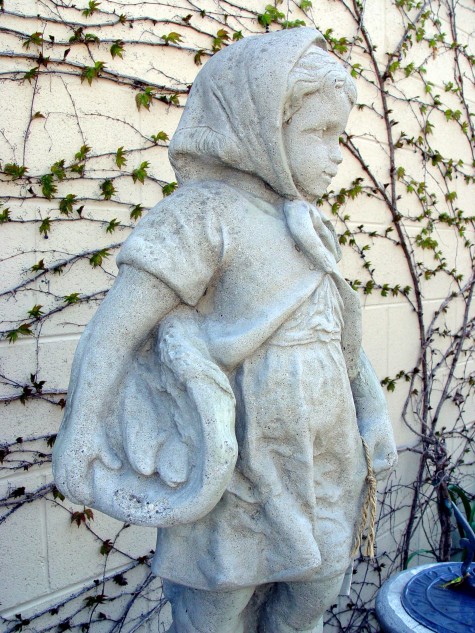 This concrete reproduction of the classic fisher girl was not expensive. The casting was not detailed-but the expression was good. I have a very strong memory of the garden in which she was placed. The client spent more than a few moments talking to me about her garden, where she hoped to go with it, and how this sculpture was going to help her get there.
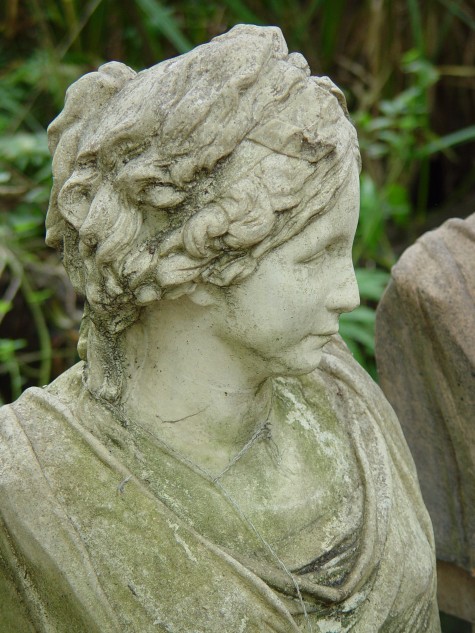
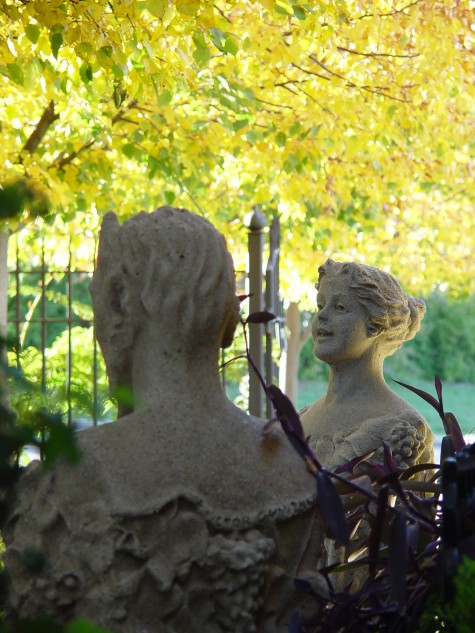 This fresh face belongs to one of a pair of nineteenth century American hermes I purchased some years ago. Hermes, sometimes known as terms, were commonly placed to mark the end, or terminus in a garden. Who is she? This figure of a young woman, who recalls the vitality that is nature, or spring, or youth, has such a strong and engaging expression. I doubt I would ever tire of wondering.
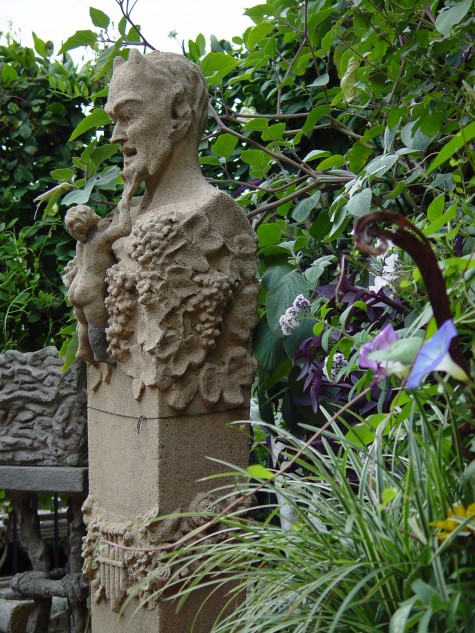
Her counterpart-who is he? An aging and world weary faun or bacchus, pained by the assault on his beard by a baby? His wordly expression is in great contrast to hers.
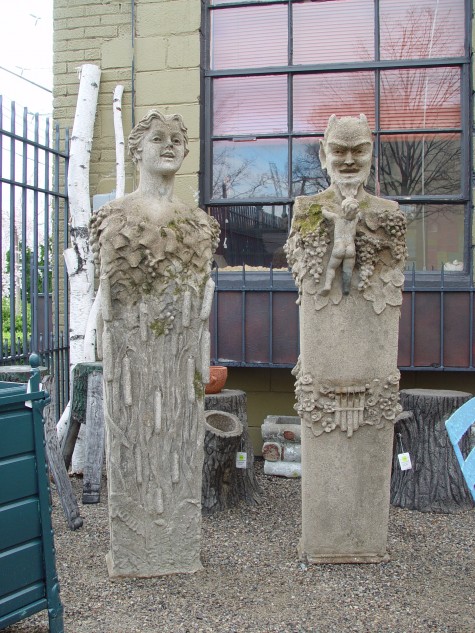
I imagine these two figures once faced each other, at opposite ends of a garden. From her eyes to his, and his eyes to her- I would never tire of these people in my garden-would you?
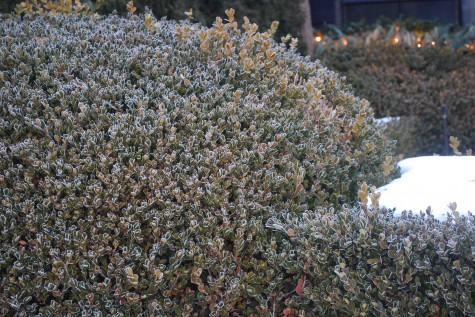
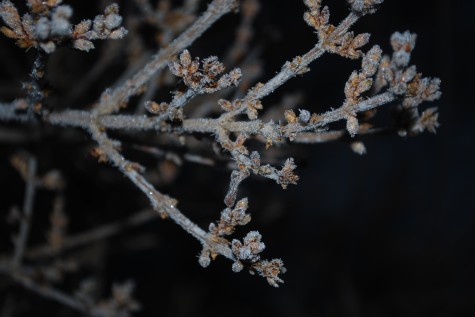 Hoarfrost is simply frozen dew. Though this form has none of the romance of a dewy June morning, it is lovely. If we are going to get hoarfrost, it usually appears in January, after a rain. We have had intermittent rain for several days, with freezing temperatures overnight; this morning was 24 degrees. As a result, everything was coated in fine white ice crystals barely visible in the fog. This made for a beautiful January morning.
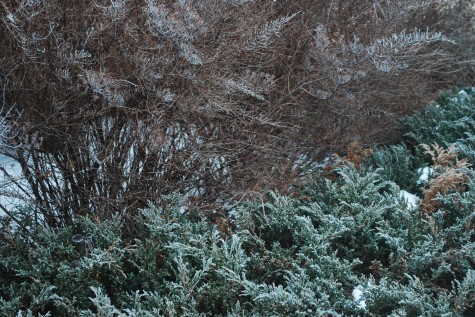
 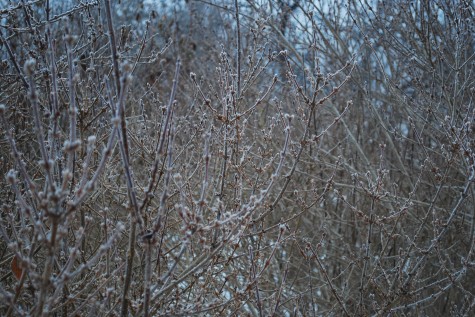 The frost on these forsythia branches was very subtle-just enough to greatly soften their appearance. Deciduous shrubs in winter have a quiet beauty all their own. The winter is one of the best times to evaluate shrubs for your garden; their winter appearance should be as important a factor in your selection as their summer dress. The frost in particular makes their shape and habit clear.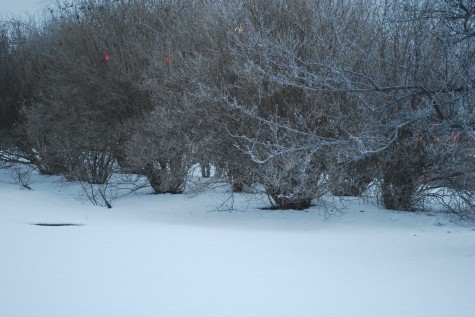
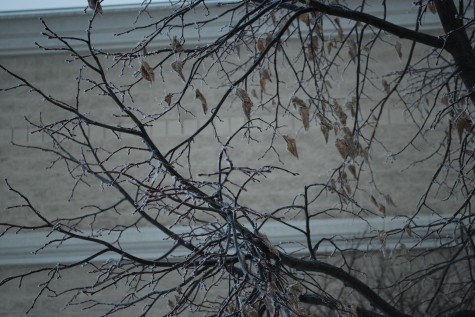 Trees can be a nuisance to prune, as most of the activity is a long way from the ground. But the winter silhouette will make clear where a branch could be cleaned up, or headed back, in a good and beautiful way. The stub pruned branch in the middle of this picture-I would take it all the back to the big branch. Whatever shape you are trying to encourage makes itself known now.
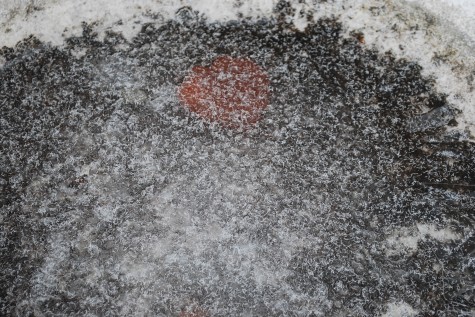 The hoarfrost sticks to ice as well as any other surface. A single fall leaf frozen in the ice may be a melancholy reminder of the dormant garden, but the colors, textures and shapes here are quite beautiful.
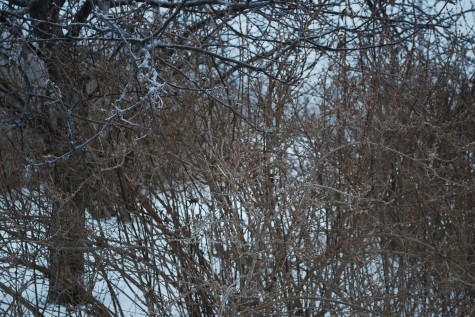 Every bark has its own brown. The crabapples are grey and black, the forsythias a warm yellow brown. Choosing shrubs and trees for their bark has its winter rewards. Now is the perfect time to look at bark; is a dominant feature of the winter landscape. With every bit as much variation as leaves or flowers, there is actually a lot to see.
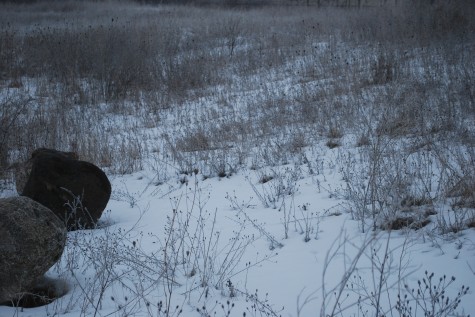 The field next door was breathtaking this morning. The white frost, the blue white snow, and the dark rock may lack the romance of May, but there is this alternate garden universe which is worth seeing. Though not in active grown, woody plants, and the remains of perennial plants have a lot to say, even in the winter.