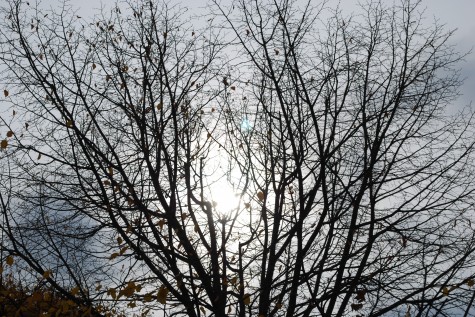
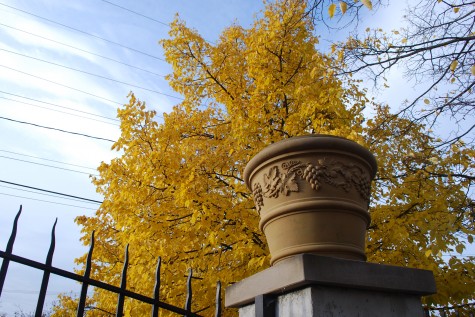
 Tilia Cordata
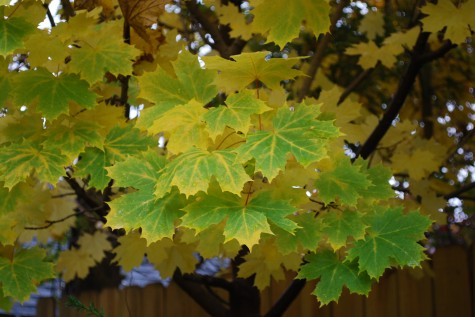 Acer Platanoides “Princeton Gold”
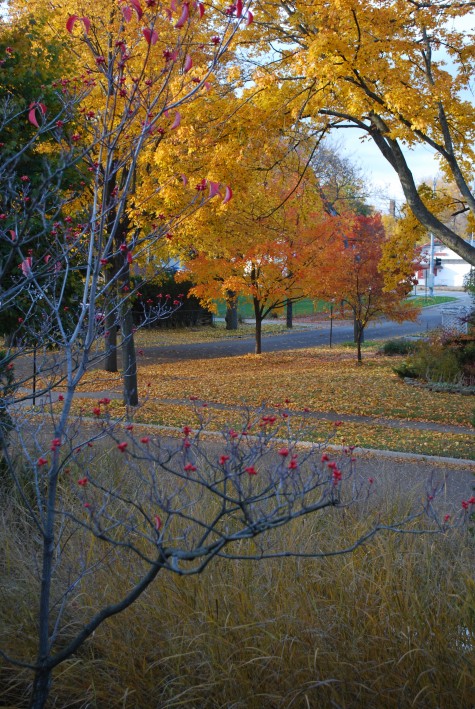 seeds Cornus Kousa
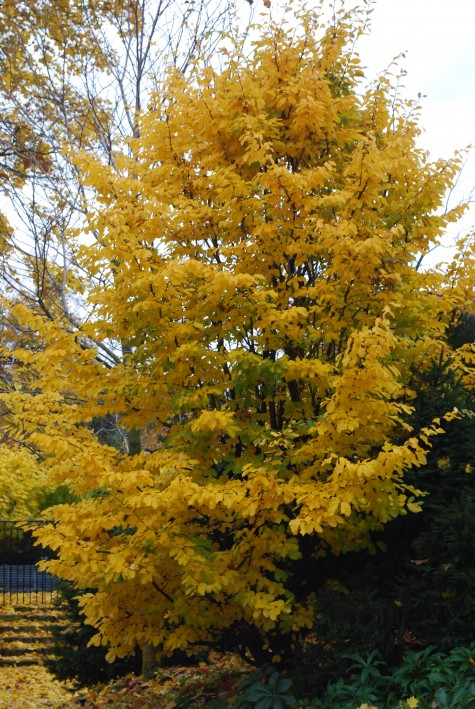 Parrotia Persica
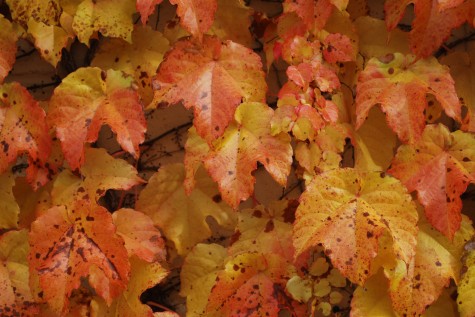
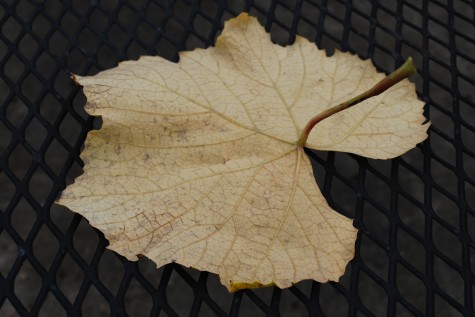 Vitis
Vitis
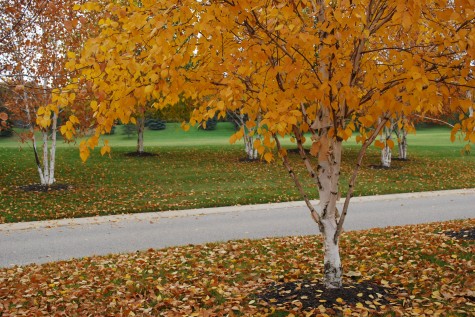 Betula Utilis var. Jacquemontii
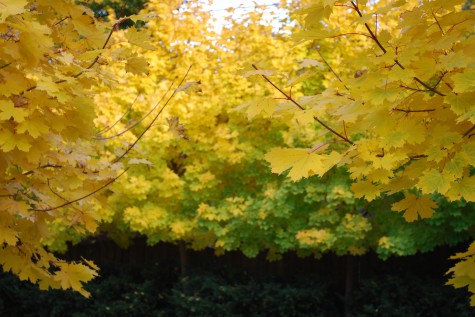 Acer Platanoides “Princeton Gold”
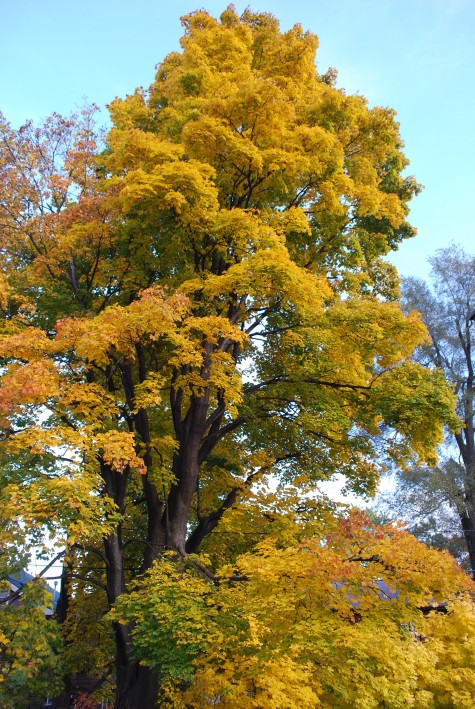 Acer Platanoides
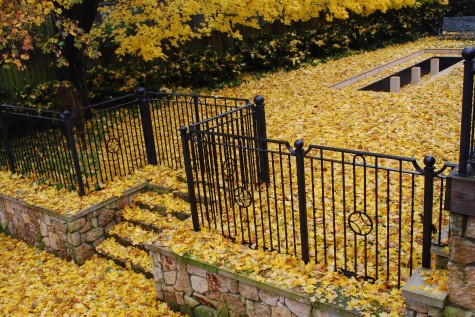 Acer Platanoides
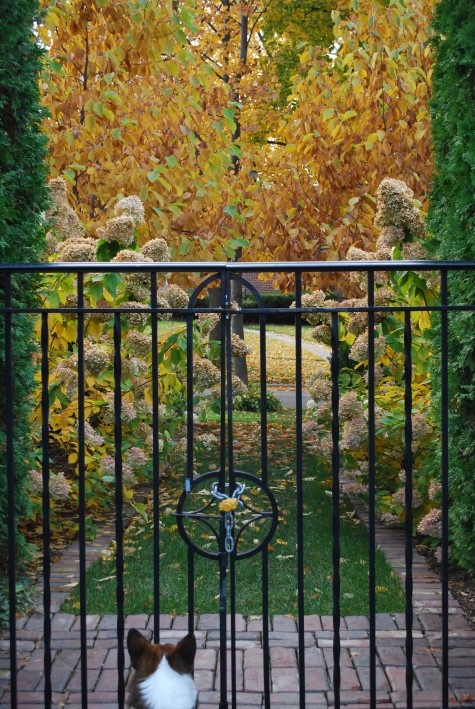 Magnolia x “Yellow Butterflies”
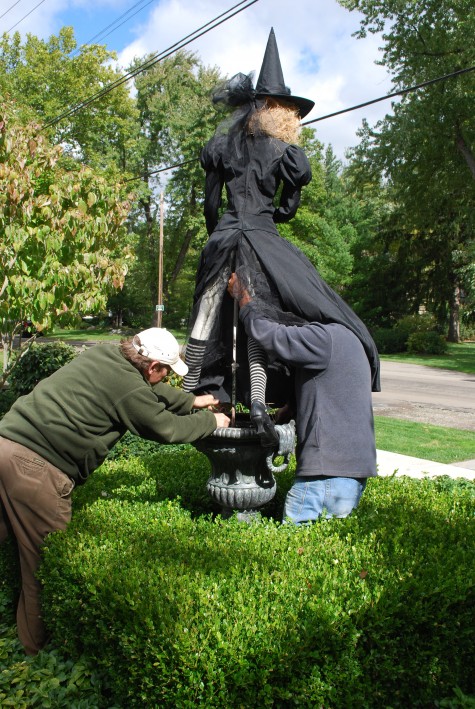 Outfitting an antique iron urn with a life size Halloween sculpture of the wicked witch of the west was my client’s idea. I think she is as wild about Halloween as her kids; she has a whimsically good spirit about her. So why not? Lauren, who is young enough to be able to locate and shop on line with lightening speed, found me a a posable standing aluminum mannekin covered in foam, with a polyester stretch knit covering. This figure was just waiting for an identity. The adjustable aluminum pole enabled us to set the height of the sculpture properly in the urn. The base plate went into the urn, and was stablilized with granite setts piled over top of it.
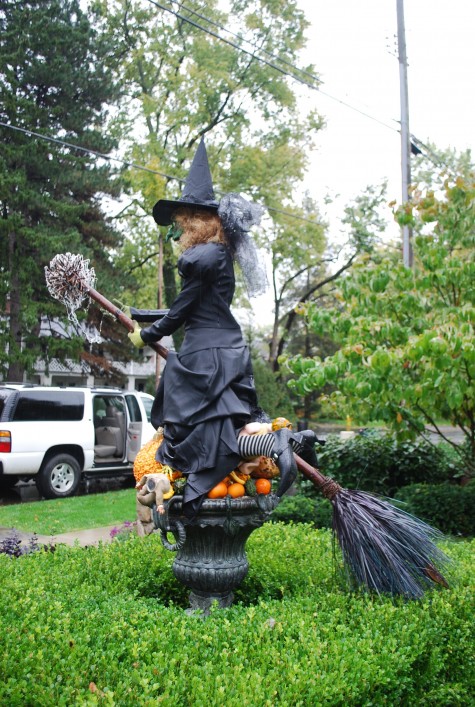 Her vehicle was fashioned from a sharpened hickory fence pole, to which we attached black plastic grass; voila, a a suitably creepy broomstick. The gearshift knob is a stick ball, which I loaded with threads of industrial strength hot melt glue. For all the world it looks like she just flew through an industrial strength spider web. Or perhaps she has pet spiders that like go everywhere with her.
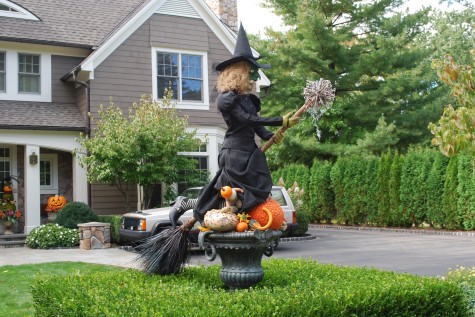 Apparently you can buy Halloween costumes in adult sizes. The outfit came complete with a suitably pointy hat with a tulle band, and the most fabulous pair of witchy shoes with flared heels and buckles. The striped socks and dirty chartreuse garden gloves came from Lauren. This girl is dressed to kill.
 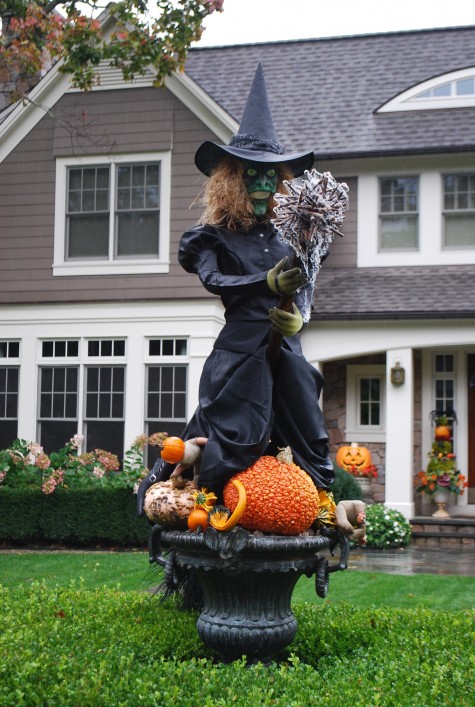 Her face is ghoulishly green perfection. We mechanically fastened the mask to the head of the mannequin; any part of the sculpture going askew as a result of our unpredictable October weather would not be good. One ping pong ball split in two is the basis for the eyes. They bulge out of the vinyl eye sockets in a terrifying way; Lauren painted on the chartreuse eyeballs, and exploded capillaries. Warty pumpkins and gourds cover the base plate. The decapitated fabric dolls-some with mini-pumpkin heads, are an especially gruesome touch.
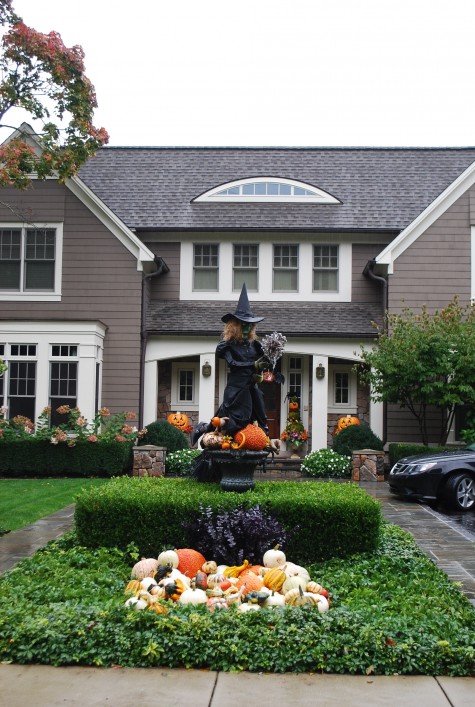 A few finishing touches to the surrounding landscape, and our witch was ready for Halloween. This yard is decked out in spectacular anticipation of Halloween night. The whole process of the installation stopped traffic; lots of people like the fun that is Halloween.
 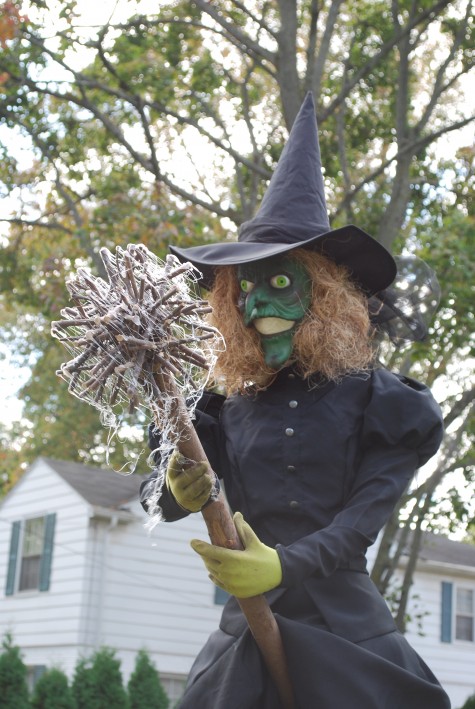 Her hemp fiber hairdo befits her; hemp stuffed into her hat makes the most of that pointed shape. Though I have not devoted too much time here to the construction, I chose all of the materials to start with the idea that rain and wind would not disturb them. Of course we had both the day after the installation. That polyester outfit shed the water, the tulle hat band held with water droplets to good effect. She has been flying across the yard for the better part of three weeks-looking good.
 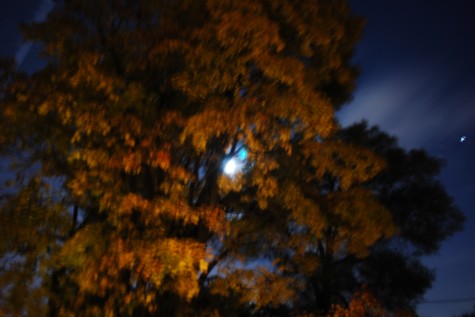 The night sky changes the appearance of everything. As is evident in the above picture taken last night, there will be a prominent moon tomorrow; I am always appreciative whenever nature cooperates.
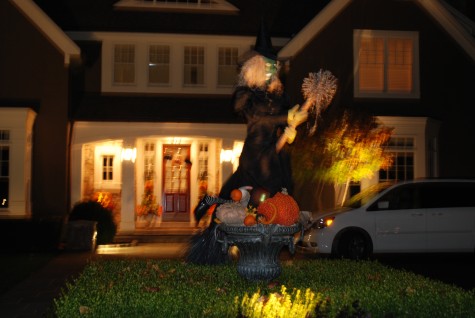 The night light makes her appear all the more scary and threatening. Uplighting is the most garish and unattractive light possible in a landscape; this is working to great advantage here.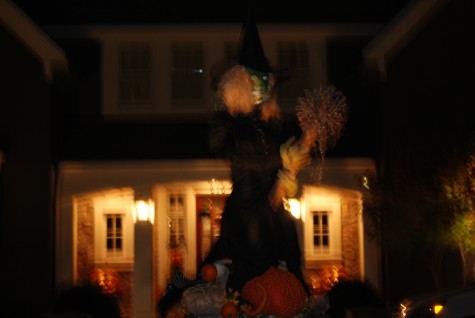
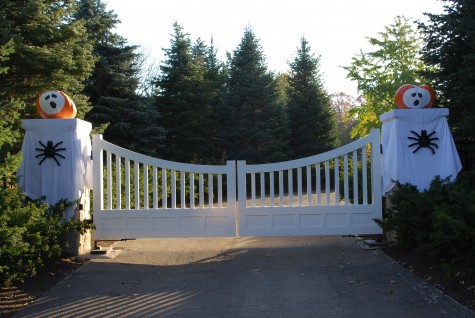
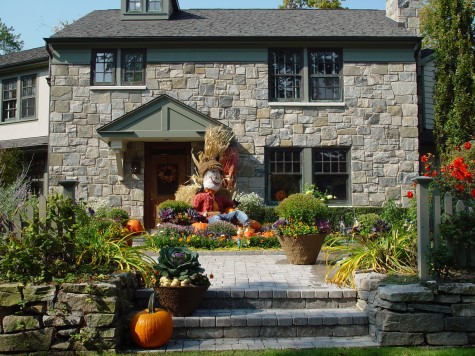
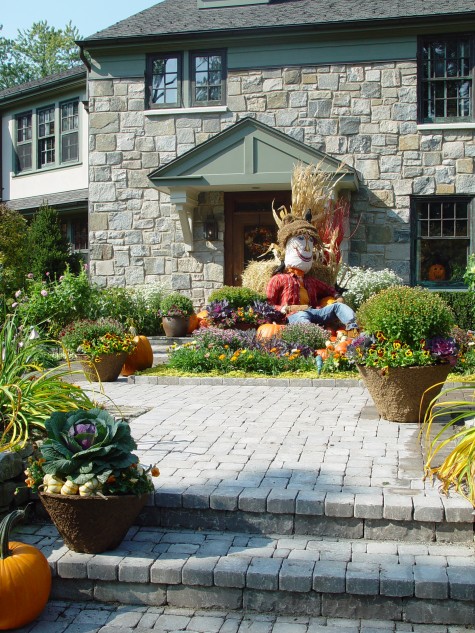
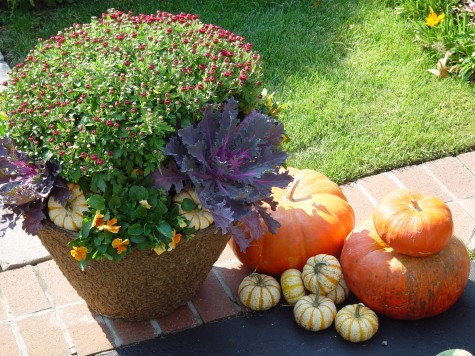
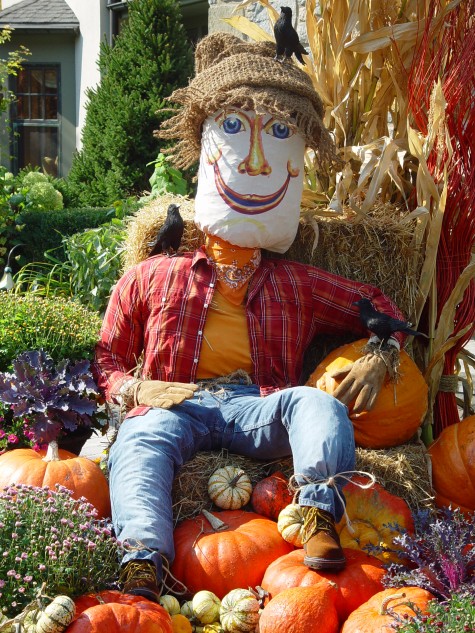
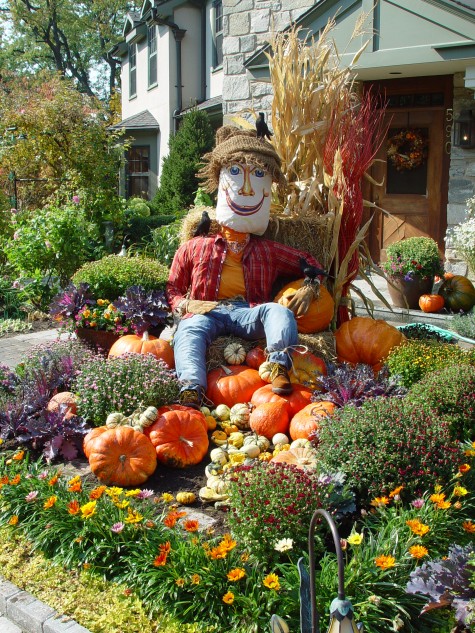 The centerpiece of my vignette-a straw scarecrow. He is not very scary-the crows are perched all over him. The clothes and boots were contributed from the lot of us; the face got painted on a pillowcase. His hat-some left over erosion mat from a hydroseeding job on a slope. He is one hundred percent straw stuffed-as he should be. The corn shocks add height, and set our fall figure down-he looks pleased to be settled in where he is. A hedge of gazanias knits everything together.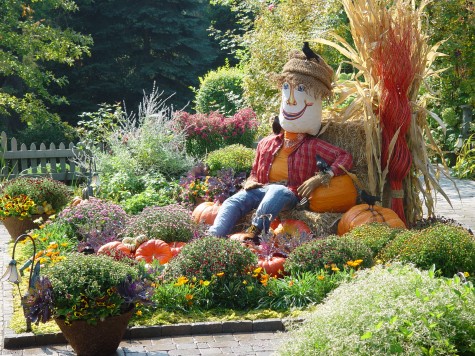
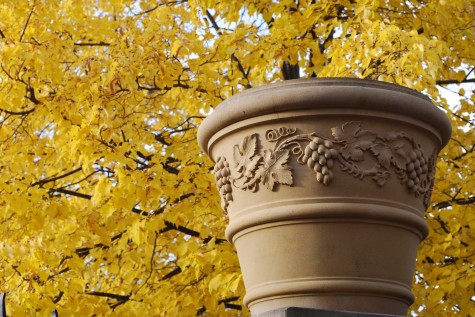 The fall is the perfect time to talk about light as an element of design in the landscape. How, when and where the sun shines, dramatically influences the visual impact of any landscape or garden. October light in Michigan is cold and low in the sky. Uneven or carved surfaces are cast in sharp relief. Any shadows cast will be dramatically elongated. A client choosing a smooth surfaced ornament for their garden should be happy for a subtle light rendering; if not, choosing ornament with some more graphic surface variation might be in order.
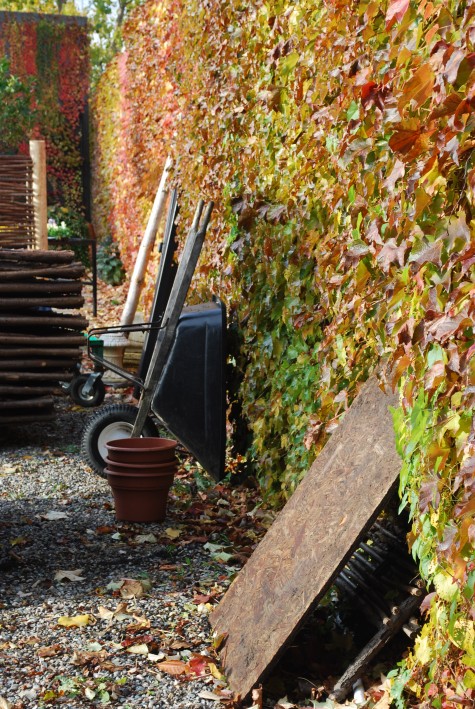 I could write on into the next decade about how light is the engine that gets any outdoor space moving. One of my favorite parts of my Michigan gardening life is how the light can make the appearance of everything change, from hour to hour, and day to day, and season to season. The contrast of light and dark in a garden is its heartbeat. In October, the trees coloring up are all the more dramatic for the ignition supplied by that intensely pale light. Its worth thinking about the degree of shade a tree or shrub will cast in a landscape. A densely shady area is all the more dramatic with a pocket pool of light behind it. Plan for dark spaces close to your view, with light spaces in the distance.
 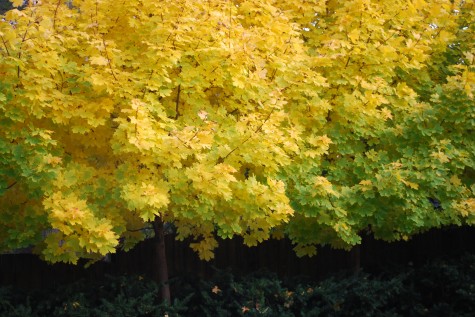 The spring leaves emerging on my Princeton gold maples cannot hold a candle to their yellow fall fire. I am a photographer whose lack of understanding about the mechanics of photography is considerable. So I watch the light. When it suffuses every element in a garden such that the color in my pictures, or the feeling of my pictures, will be saturated-that is the time I photograph. I record; I do not have the skills to generate. It is hard to believe this collection of these maple yellow leaves produces such dense shade underneath; the grey cedar fence appears black by way of contrast, and almost disappears.
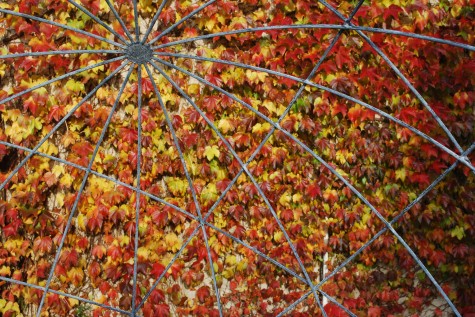 Our thin rod steel spheres permit the view of your choice through to the landscape. How they interact with a garden is the best part about them. Imagine this view in the winter, the early spring, the early summer, the high summer, the fall; you get the idea. Add light to the mix, and your possible visual combinations increase considerably. Garden ornament interests me greatly, given how it offers me a sense of solidity, and steadfast longevity, against the ever changing landscape.
 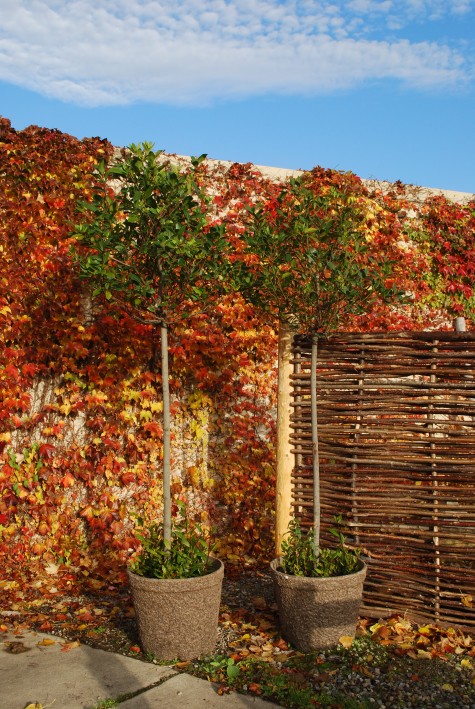 The bright flat October sun sets all it touches on fire. The greens are all that much more electrically green; the reds glow red. If you are looking to see the rhythm established by the masses of light and dark in your landscape, look quick now before the leaves fall. There is instruction coming from the natural world every day, should you care to tune in.
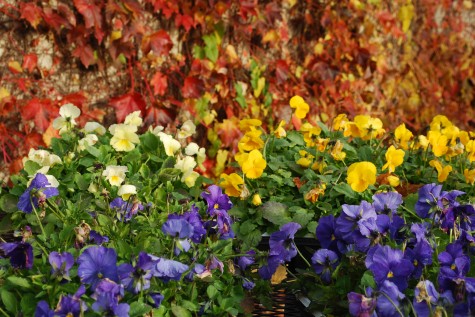 The color of these pansies speaks softly in the spring. The fall light intensifies and electrifies the appearance of their color. On my best days, I think about how the light will fall on a landscape in every season, as this should influence how I place every plant or object.