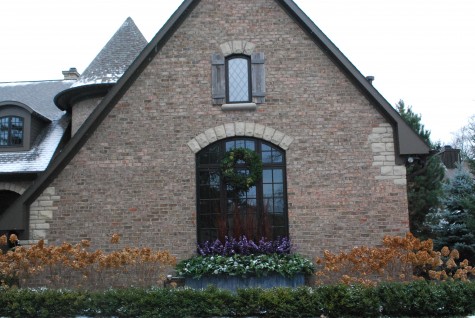
 Though my own house is an amalgamation of arts and crafts and Mediterranean style, it could simply be described as a ranch. One story and longer than wide, it has a low profile. I do however have clients with very tall houses. Multiple stories and tall ceilings can make for a home that rises very tall out of the ground. Pictured is such a house-even the windows are very tall. Whether I am designing a landscape or a winter display, the elevation of a house should inform the design. The landscape and window box makes a very strong horizontal statement-counter to, and in contrast to the height of this window.
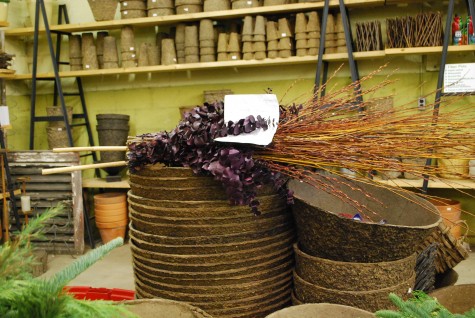
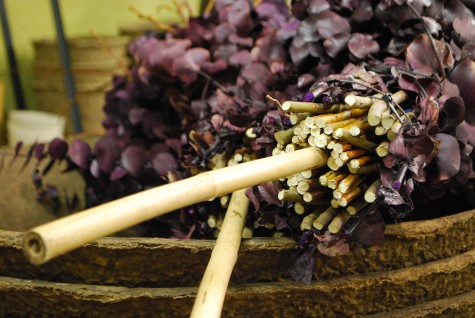
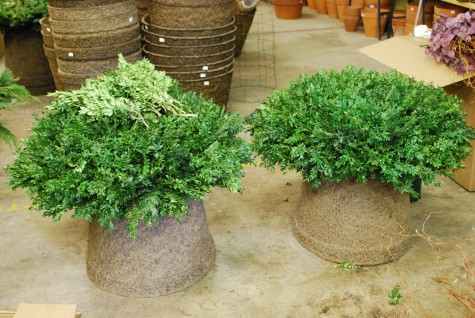
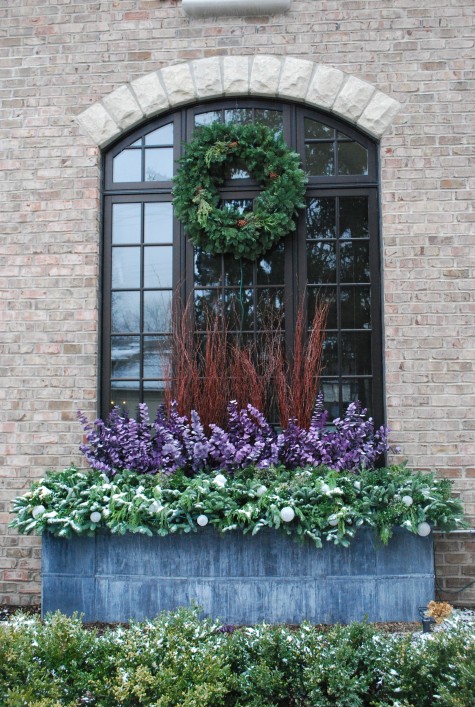 The irony of windows? That transparent material which transmits light to the interior of a house reads dark, or black from the outside during the day. This large window reads especially dark, given the pale brick. The winter display in this large box needs to address the window-not just the box. My client liked the combination of lilac eucalyptus and varnished birch twigs; I think the color combination is especially pleasing. I did the birch twigs densely-so they would read aginst the dark glass. The mixed greens in the box are a fine texture that contrasts well with the snowball light covers. A big box needs to have a lot going on-no one wants to make their audience sleepy. Repeating those mixed greens in a wreath secured within visual distance of the arch of this window makes for a complete thought.
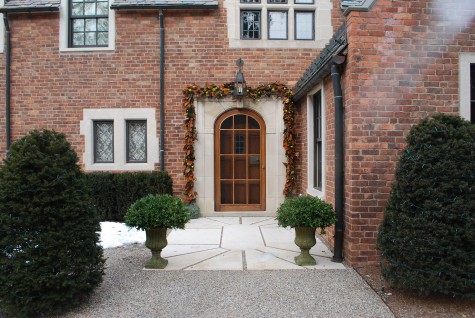
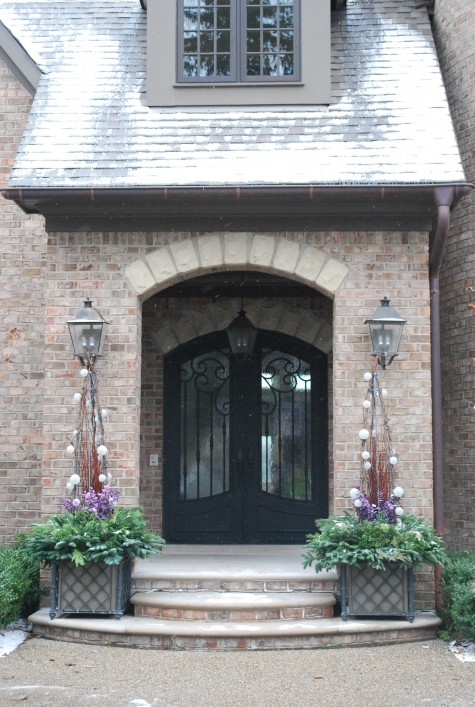 The entrance and front door are equally as imposing-the winter pots need to be the right height. The steel tuteurs covering in grapevine and lights add a good deal of height to the boxes flanking the door. This height is all to the good-every element in any given view needs to work in concert. Working in concert-this sounds so simple. I find it anything but. I fiddle, fume, add, subtract, redo, reconsider-a willingness for this kind of activity benefits the design of any landscape-summer and winter.
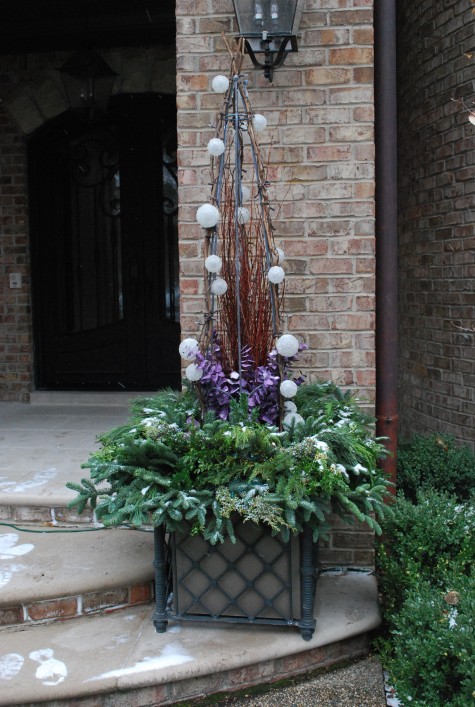 These tall plant tuteurs overlap the base of the iron light fixtures. My favorite part of this picture-the relationship, the juxtaposition of the rolled iron fixture to the rough cut natural grapevine. The lilac eucalyptus-I need more. The brown cords on the lights-thank heavens someone makes these.
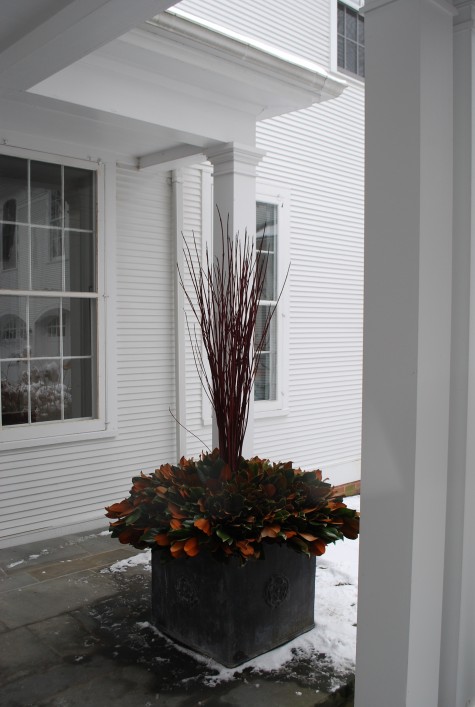
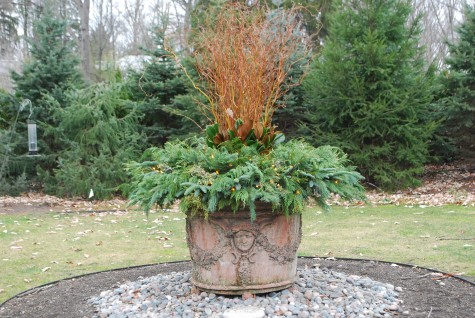
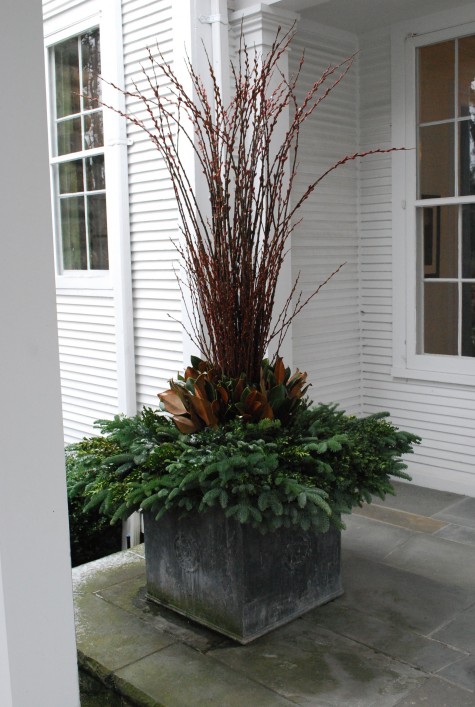 A substantial English lead box from Crowther’s is a very serious garden ornament. I am not really talking about the material here-I am talking about size. A wicker basket of this size would demand the same-a very tall centerpiece, an intermediary and generous level of magnolia-and a low wide blanket of noble fir and boxwood. The relationship of vertical elements to the horizontal elements makes for great visual interest. As much as I garden, I know when I go beyond a palette of materials to that stage when everything is cooking.
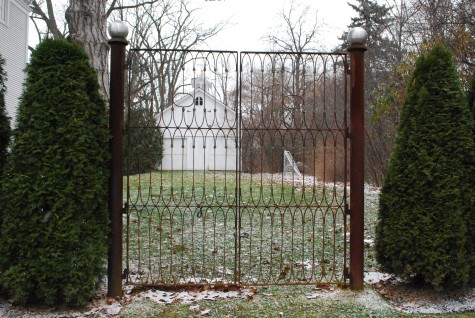 These tall Moroccan steel gates with lead dots-I cannot remember where Rob found them. Attached to steel posts with stainless steel finials-my addition. The height of these gates suits the property. The barn is in plain view, beyond. Given a few more years, the arborvitae fence will fill in-stay tuned.
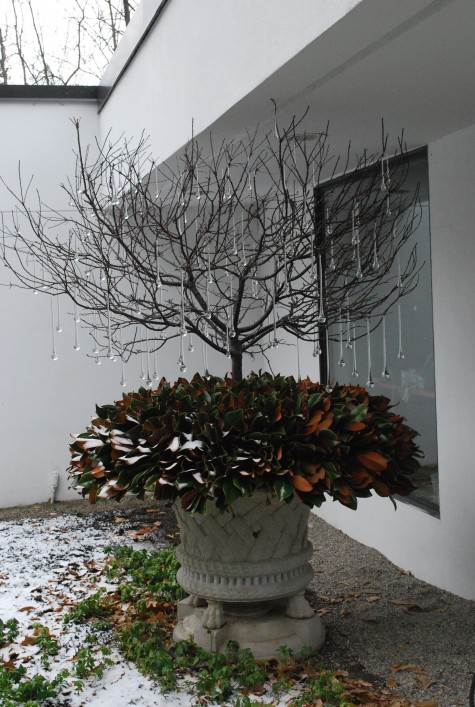
Mid century modern homes seem to be much more about low than tall. This client bought and chose to place a decidedly traditional limestone urn-half in, and half out of a long and sculpturally low underhang. I am impressed with her decision. The placement of this topiary tree skeleton hung with glass drops hovering inches above a blanket of magnolia branches-pressurized.
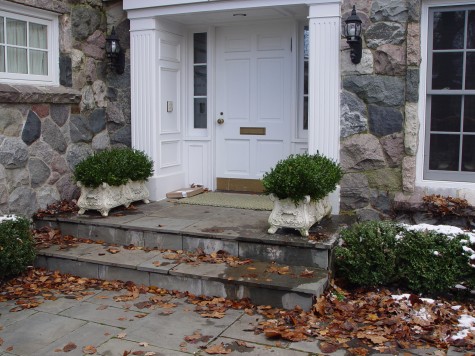 Short can make just as much impact as tall. These limestone planters stuffed with boxwood work here. The planters have lots of curves, and lots of detail-there is no need to challenge that. Simple, volumetric, and friendly-a concert.
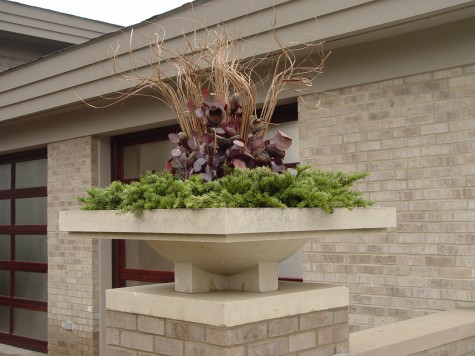 I do have clients with reproductions of planters designed by Frank Lloyd Wright. I respect their choice. I restrict my materials, and I plan always to make the architecture of the planters the central metaphor. Low and simple seems to work.
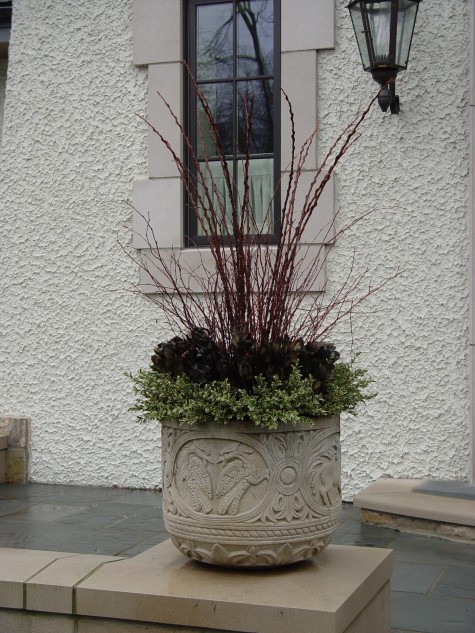
These cast limestone pots are so beautiful. It was my idea to fill them for the winter in a way that did not in any way obstruct a view of the pots. The twig height-medium. Not tall, not short. The big idea here-no matter any rules, your good judgment-stick with that.
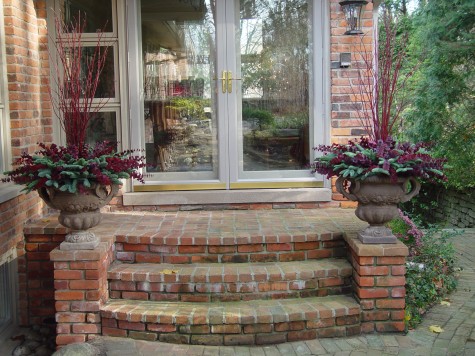
The tall and short of the matter-every individual situation asks for an individual solution. Your home, your garden, your landscape-it is uniquely yours. Trust your take. It really is good fun to construct the winter pots. Any composition can be exactly as tall and wide as what suits you. The moment you are done, you are ready for company.
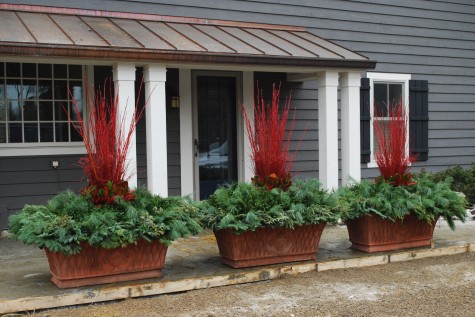
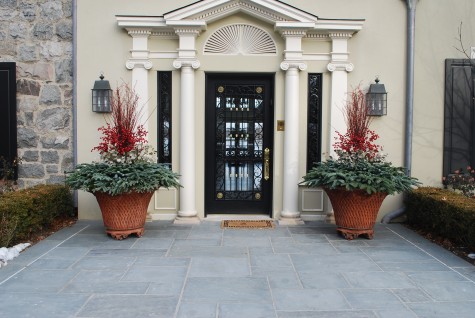
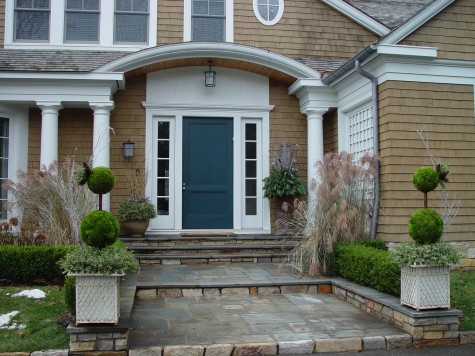
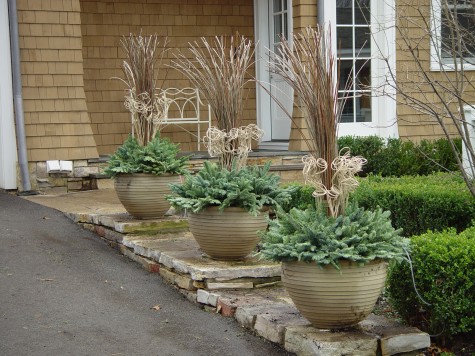
 Were someone to ask me to name my most favorite winter pots ever, no doubt this pair would immediately come to mind. These varnished Belgian oak boxes put together with precisely spaced countersunk screws quietly remind me of a double breasted band uniform replete with brass buttons; dignified and all put together. The noble fir and douglas fir greens are generous and wide. The pale bleached willow sticks have a collar of natural stick stacks that have absorbed moisture from the air, and arched over-naturally. These pots have the most fabulously artless hairdos. Bottlebrush snowflakes hang here and there. Just enough structure meets weathering natural material. The good proportions of top to bottom please me.
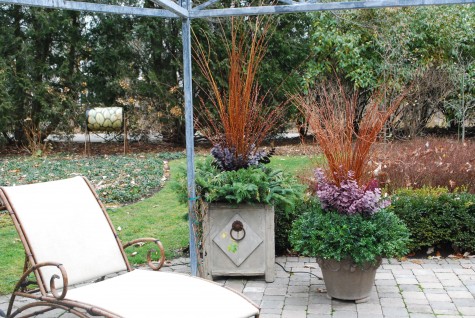
 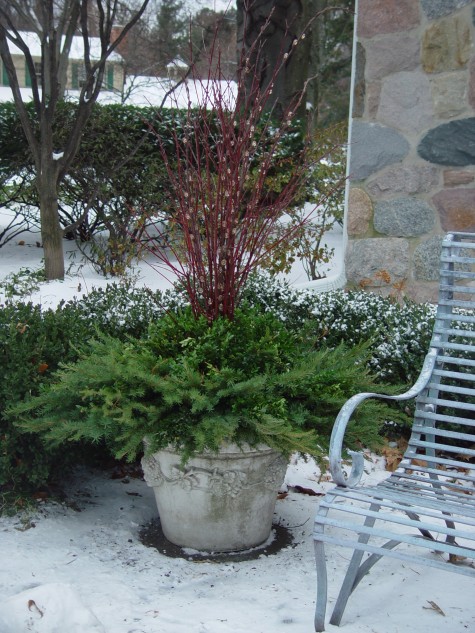 Though I personally have a mind to fend off the winter vigorously, I am lucky to have clients who do not mind the stillness of the winter season. They tell me: quiet, please. Represent me softly-naturally. Douglas fir and boxwood make such a great mix. A few stems of acrylic pussy willow adds just a little sparkle to the red twig.
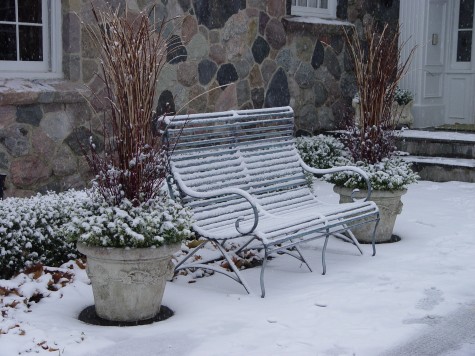
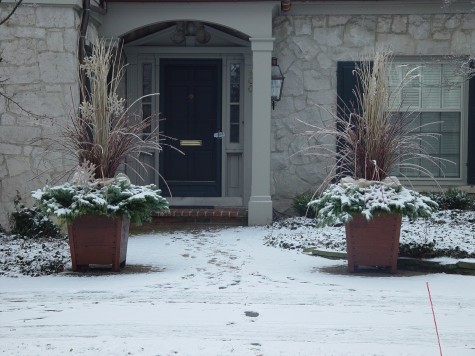
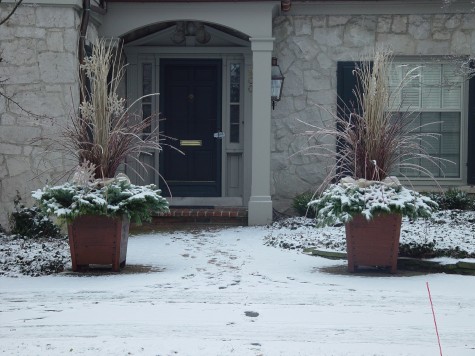
 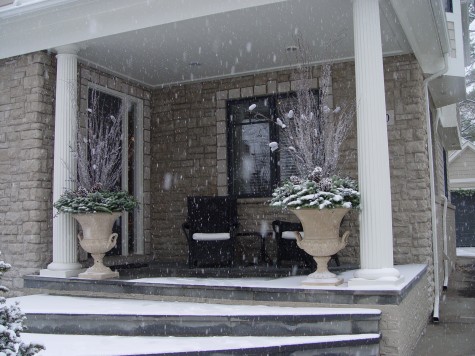 Intermittent snow in December dusts everything with white. This is beautiful winter weather-not the hit you over the head winter that is to come. The winter sculpture in this pair of pots demands nothing and expresses everything of a world gone silent.
 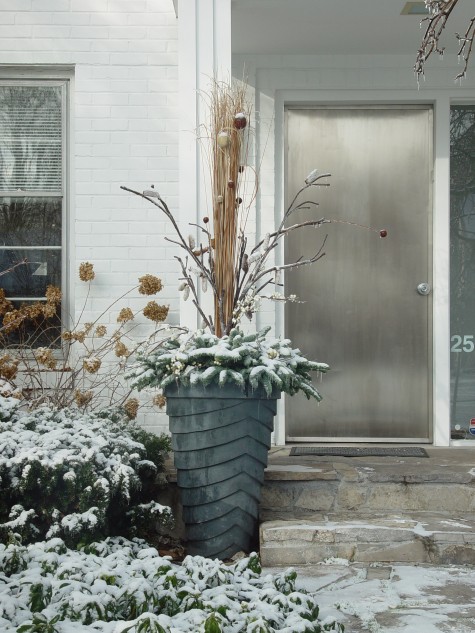 This client refurbished her front door in brushed stainless steel at my recommendation. This very contemporary Francesca del Re pot, and its winter dress, simply expresses the colors and shapes of her season. The color echoes what already exists in her hydrangeas and yews.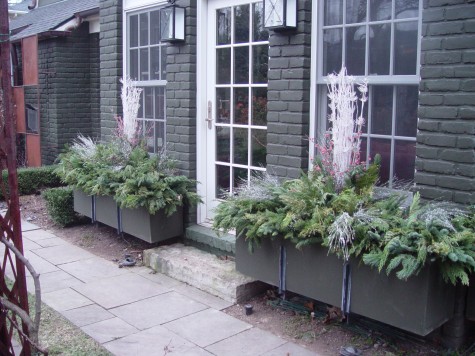
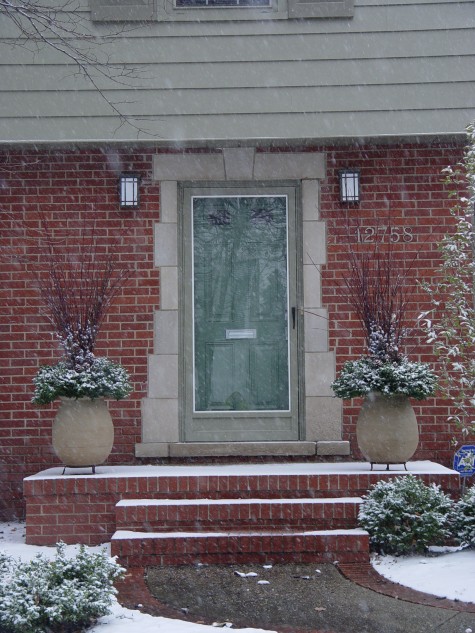 This pair of English stoneware pots from the Hode Pottery are frostproof-no need to bring them in. The simple trivet stands reveal the shape of the pots from top to bottom. A pot with a base larger than its opening benefits from a treatment like this. Twigs, cones and boxwood make for a dressy, not noisy display.