If I had to, I could live on artichokes, good bread and butter (with enough butter for the artichokes), and sandwiches from ham, asparagus, and hard boiled eggs. Peanut butter would be good, too-and liverwurst. In matters of living, I like the slightly mildewed taste of water from the hose, an occasional whopper and fries from a certain east side location that serves them fresh, hot, and with a hello, and how are you, my garden, and a clean house after a long dirty day-not too fancy.
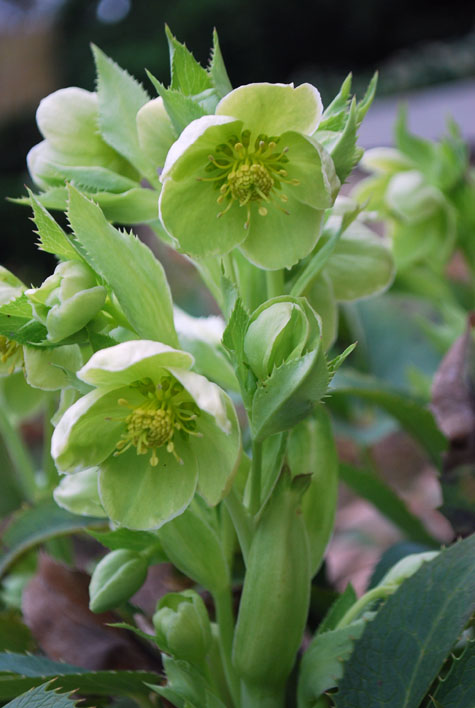
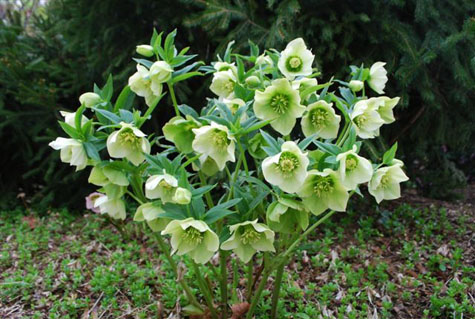
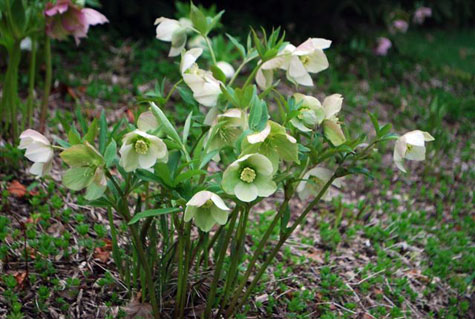
But I can be very particular about the plants I love. My hellebores are holding court right now-HOW I love them. I am especially wild for the big species, helleborus argutifolius. Then helleborus corsicus. Then Helleborus lividus-you may get from this that I have a big love for green flowers. Then the white and green versions of Helleborus orientalis-I could go on. Being a zone 5-6, some hellebores are dicey; I make the time to baby them. On my small city lot and one half, I give space to the striking argutifolius, paired with beech ferns. What a happy combination-under my Princeton Gold maples. Every day, at the end of the day, I look at this combination over a cocktail, and celebrate my good life. My good life is my good garden-I am sure you know this about me by now.
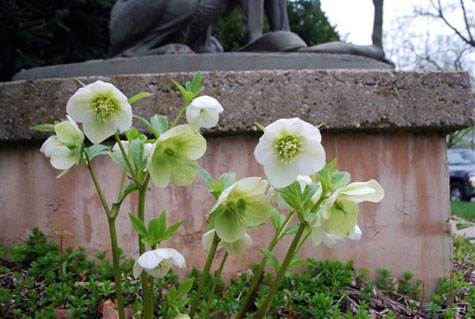
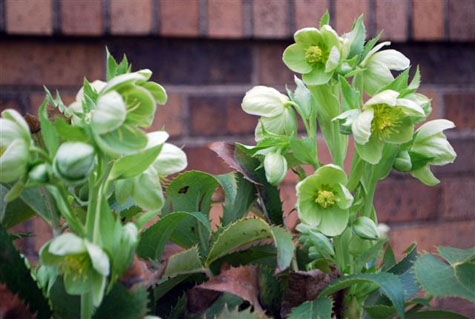 Its important to figure out what you really love, and what you can do without. This is expressing your voice. Its also the engine that powers your design. Add hellebores to your dictionary if they enchant you-if they don’t, what would go in your dictionary?
Its the season for hellebores-give a look see.




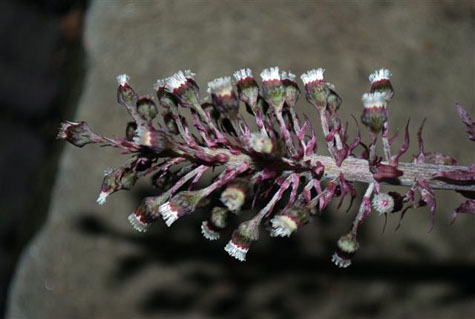
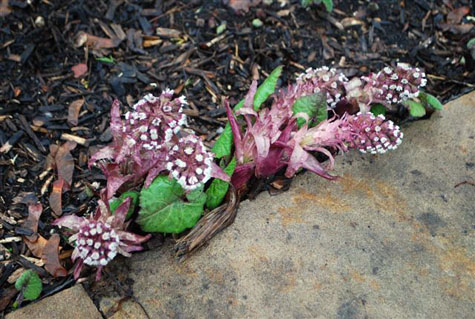 The temperatures still hover at or below the freezing mark here-typical for the Midwest. But there are signs of life. The butterburr flowers are stirring. They are preceded by huge cracks in the earth. Ungainly and ill-proportioned, they look dead as they emerge from the ground, and grow downwards back to the earth-astonishing. However unappetizing, these flowers are quickly replaced by giant, faintly prehistoric, leafy plants of equally astonishing scale. They form large colonies overnight-the kind that would spread into your house via the bedroom window-if you are not the vigilant sort.