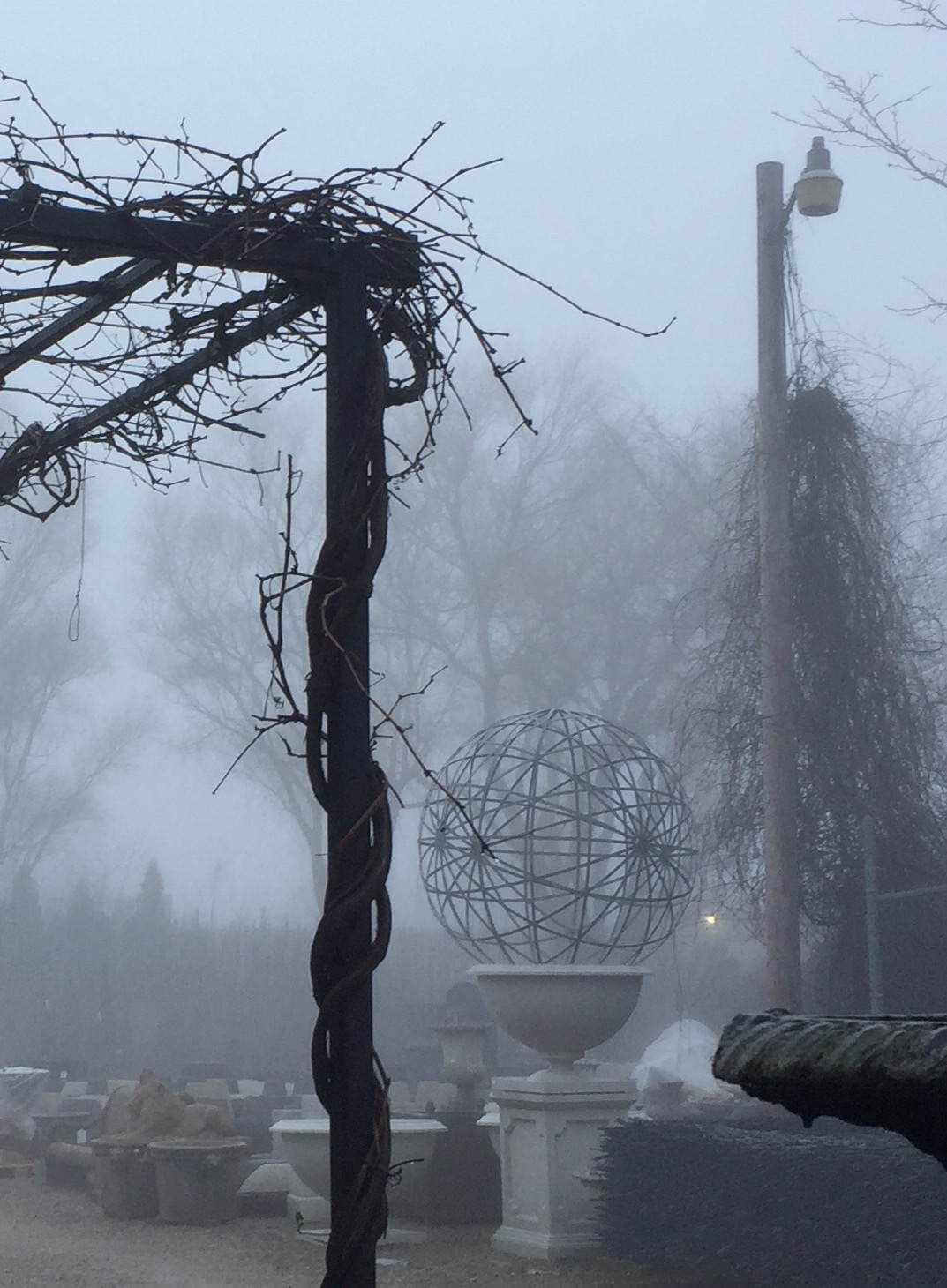
 Michigan winter weather can be fiercely inhospitable and miserably cold, but the vast majority of the days will be some listless shade of gray. As in garden variety gray, moody gray, or good and plenty dreary gray. Giving a name to the gray of the day is where we are at. For the past week, we have had warmer than usual air temperatures and lots of rain. That warm wet air passing over the cold and frozen earth has produced some spectacular ground level clouds collectively known as fog. Dense fog is so saturated with water that tiny droplets condense, and are suspended in mid air. That fog throws every object at a distance into a watery unfocused blur. The further away the object, the less distinct its shape. Any object up close has a clearly defined outline, but not much detail. The rim of the fountain at the lower right of the picture above is close enough to the camera lens that the surface has some detail. The grapevine on the pergola is back lit by the blue gray fog. There is little differentiation between the vine and the pergola. It is seen in silhouette, meaning all that is seen is a flat two dimensional outline of a shape made black by a pale background.In this composition, the fountain edge is closest to the eye. The vine and pole are some distance away. The pot with a sphere, and the grapevine on the phone pole occupy the mid ground. The distance they are away is described by their lack of detail and contrast. The sphere is a precisely geometric shape made from a hard material. Its appearance is somewhat sharper, but uniformly gray. The phone pole is further back, and less distinct. As the eye moves further and further the back, objects lose their individuality, and read as tonal masses. The fence line and willow trees in the background have very soft shapes. This is a too long paragraph about a picture I took at the shop on a foggy morning, but it does illustrate the concept of depth and spatial relationships can be described in a landscape composition. Though the picture is a two dimensional flat object, there is the illusion of distance, depth, and spatial relationships.
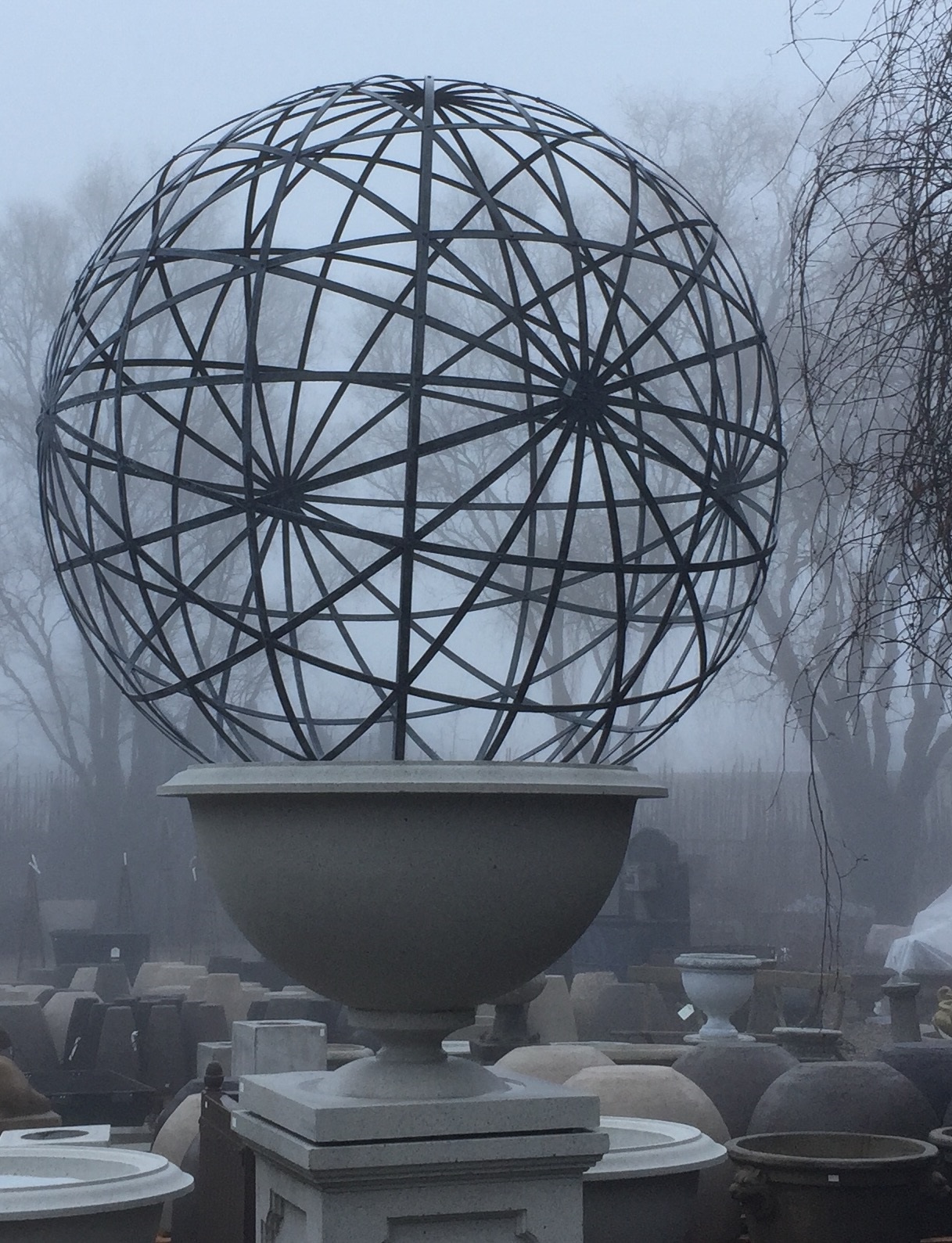 The winter landscape can be austere. Our foggy days have made everything in sight appear to be black or some shade or another of blue gray, and a dash of near white here and there. But the lack of color and lush form from the plants enables the eye to appreciate other relationships. The contrast of the deliberate geometry of this sphere, and the mass of the limestone urn, set against the tangle of grapevine and the bare branches of the trees – visually satisfying in a haunting sort of way.
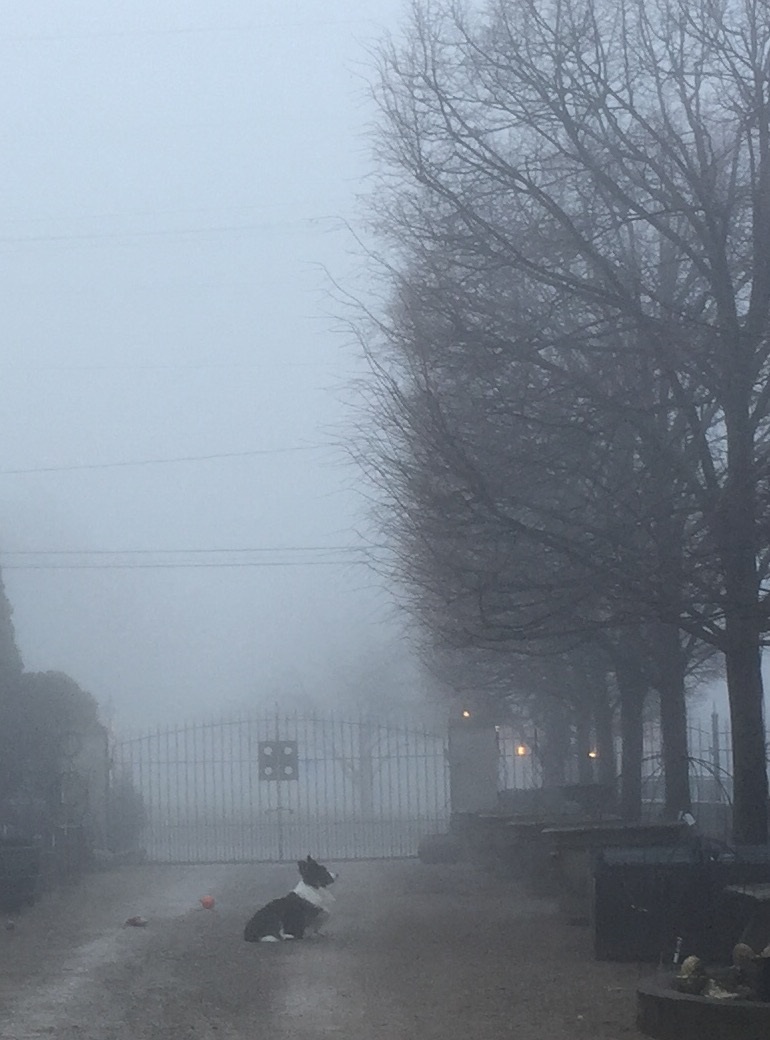 I do enjoy the lindens on the driveway in every season of the year. In the spring, the buds breaking and new leaves is a sign of life on a big scale. The dense head of leaves provides shade in the summer. The yellow leaves in fall may be their most dramatic moment. But the silhouettes of their trunks and branches against a somber winter sky makes me appreciate their structure and stature. I also see that some 20 years after they were planted, the part they play in the landscape at the shop still interests and satisfies me.
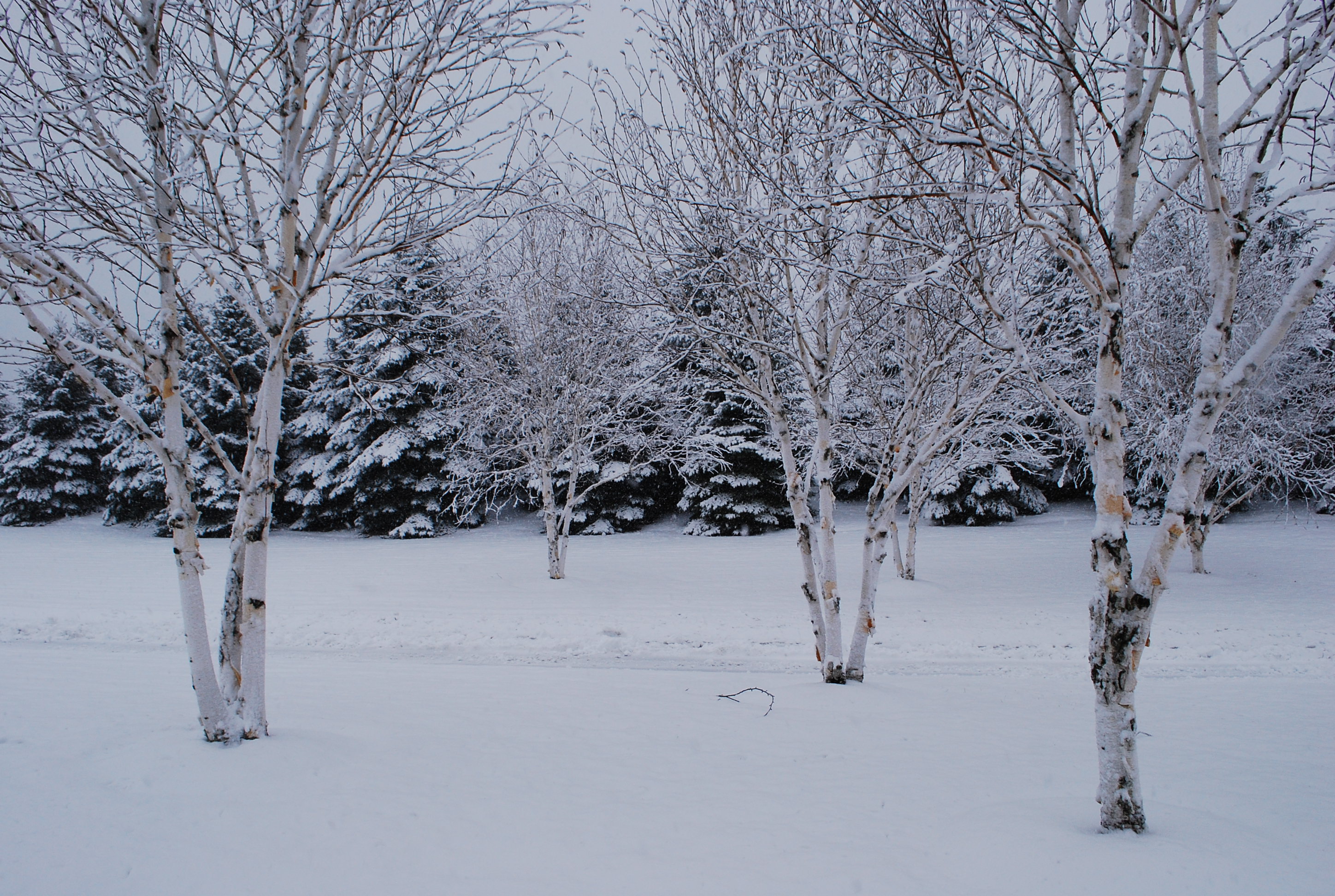 Snow drags that winter gray down the ground plane. On this day, the sky and the ground were just about the same color. The snow on the evergreens accentuates their texture in a strongly graphic way. Those evergreens are indeed supremely green in the summer, but on a winter day they go black. The shape and texture of Himalayan white barked birch is subtle on a snowy gray day. This detailed view of their structure cannot be appreciated in any other season. Any plant still standing once the winter comes will provide interest. If you live in a gardening zone like mine, it is worth planning for some sort of structure that will persist over the winter.
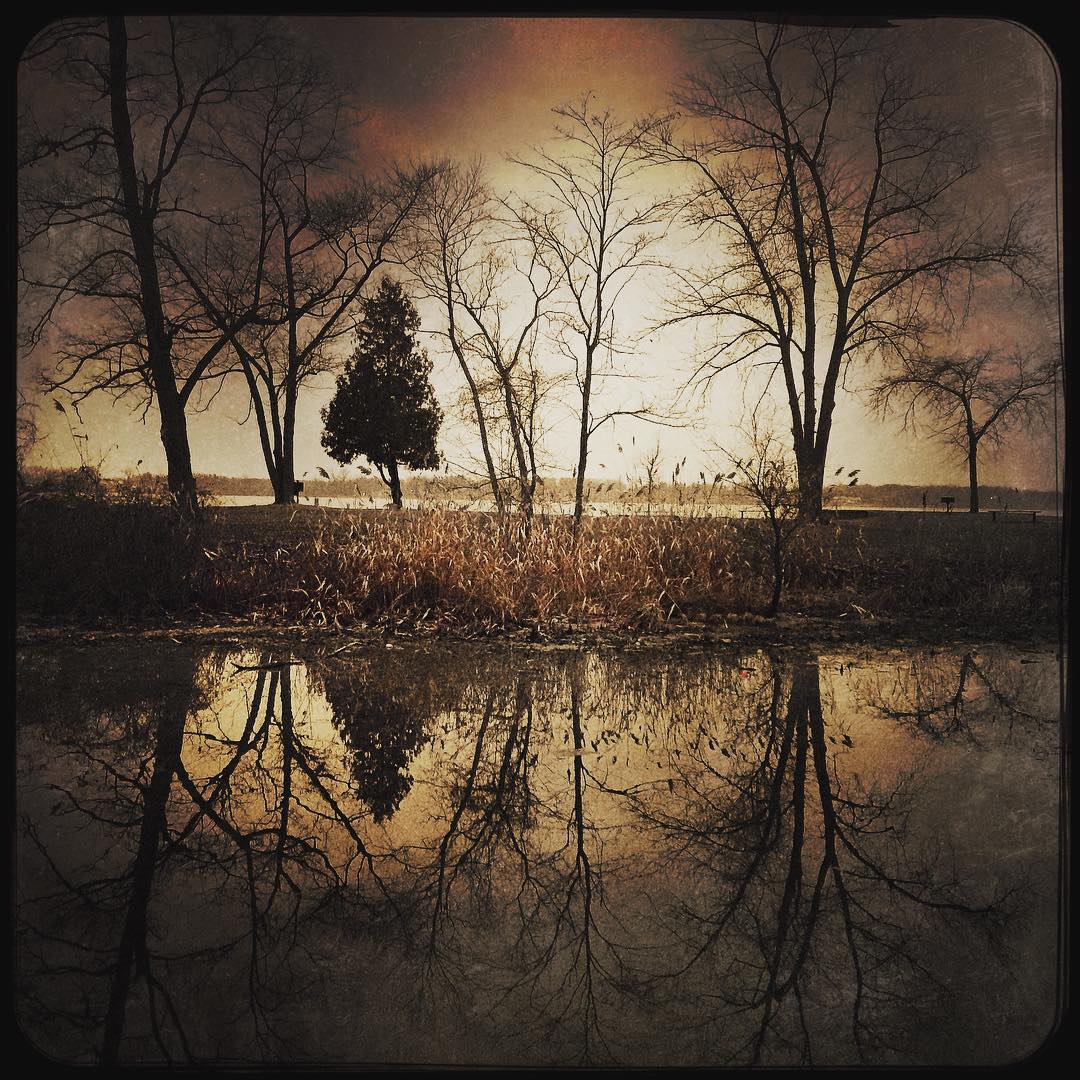
 Rob took this photograph, and posted it to his detroitgarden instagram account. The silhouettes of the trees reflected in the rain water sitting on top of the ice on the lake perfectly illustrates the effect of fog on the landscape.
 Another of Rob’s photographs is composed in such a way to make clear that there can be much to see of great beauty in a winter landscape.
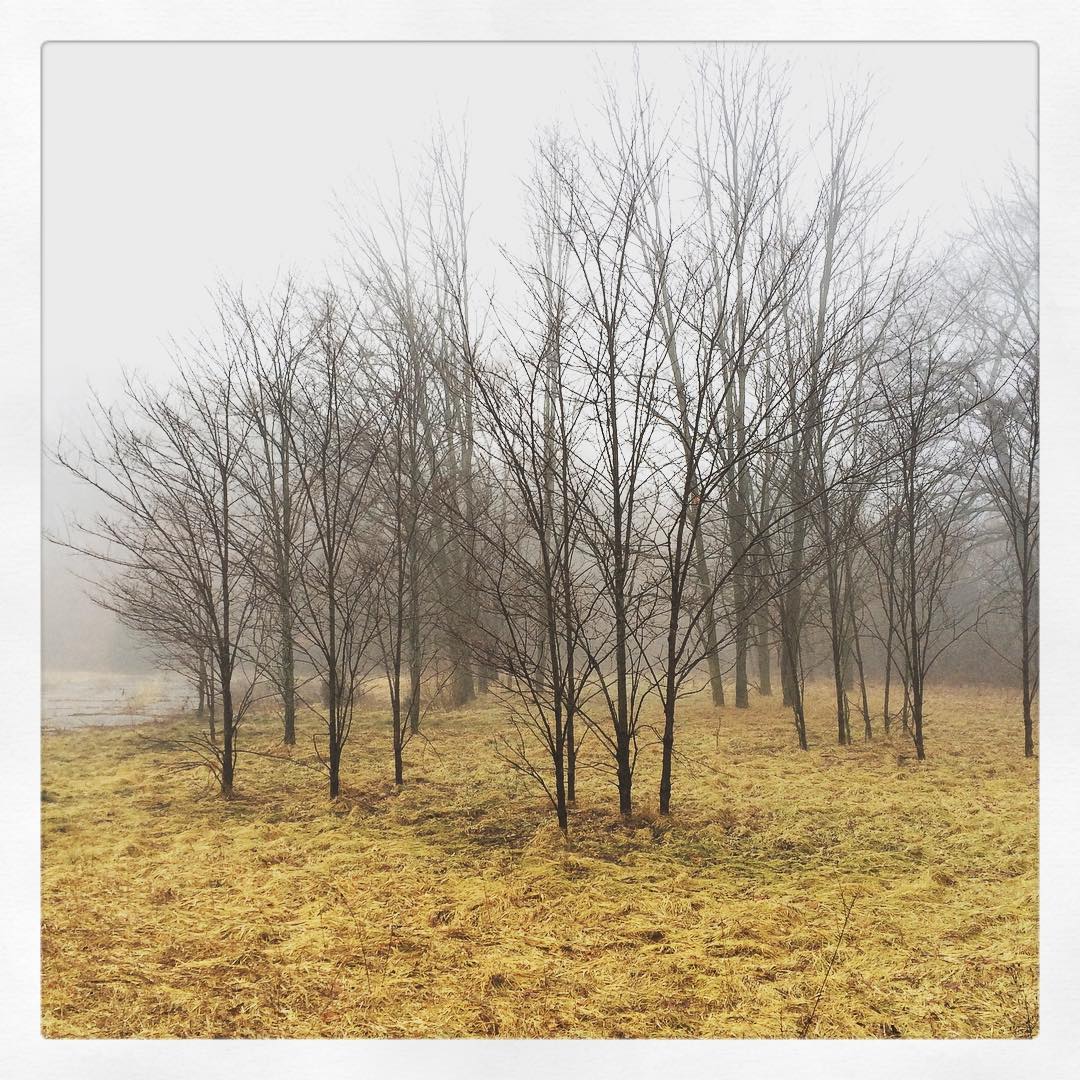 Of course both the season and the weather are extremely important factors in landscape design. Mother nature would not have it any other way.
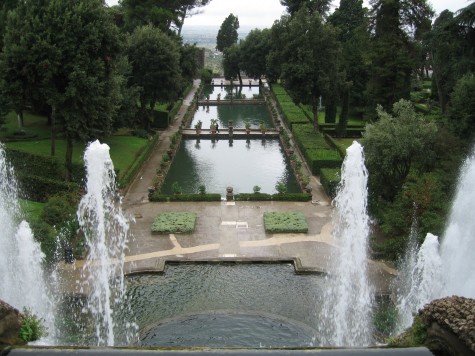
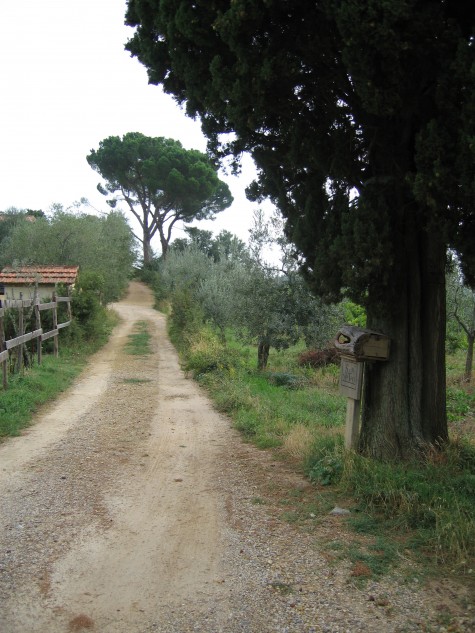
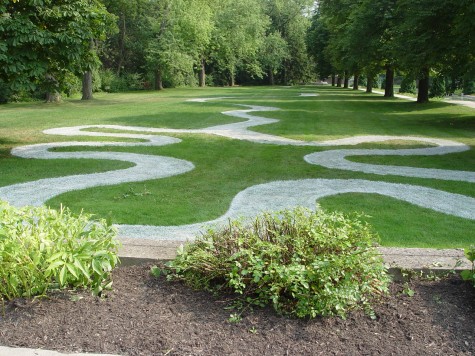
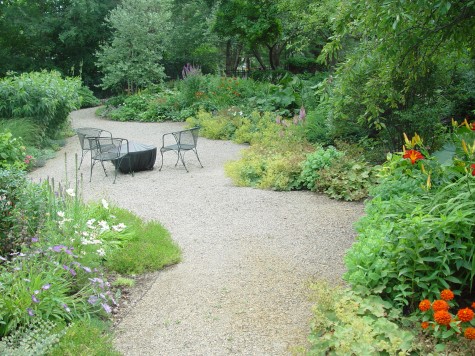
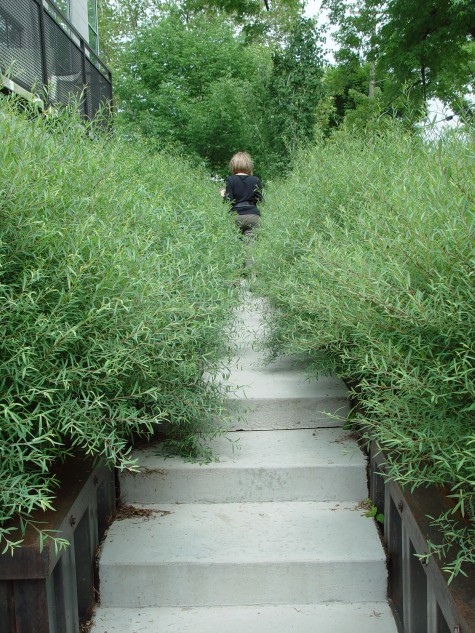
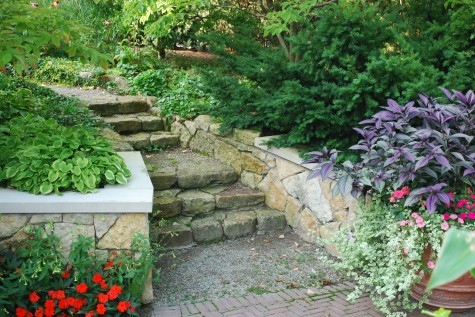
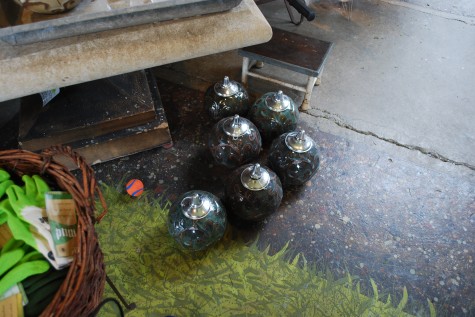 Some landscapes appear and feel spacious for no more complicated a reason than they exist on large properties. The Chicago Botanic Garden has many beautiful long views, as it physically sits on 360 some odd acres. How I visually process space has to do with what is called perspective. If I walk in the Botanic garden, and Daffodil Island is in bloom, the daffodils appear to my eye like tiny yellow dots-and lots of them. Daffodils physically measure up at a fairly decent size, but they appear smaller and smaller, the further away they are from my eye. The position of the eye, relative to an object-perspective. The most dramatic illustration of perspective? Picture yourself 5 feet from the KLM 747 Anna Pavlova; the size is overwhelming. A city with wings. 230 feet long, and wings 200 feet wide-my entire property would hold a quarter of this plane. Only moments after that plane is aloft, it appears as a black speck streaking towards the horizon. Once a black speck, I know it is miles from my eye. These Anamese oil lamps pictured above are on the floor beneath me-I know this, as I am looking at their tops. They are also 10 feet away from my eye.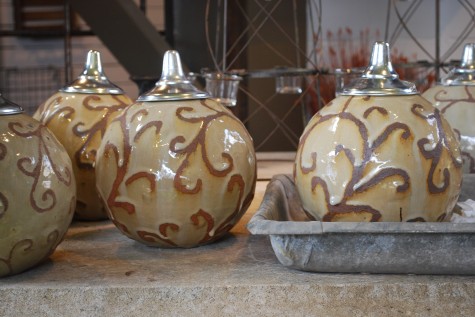
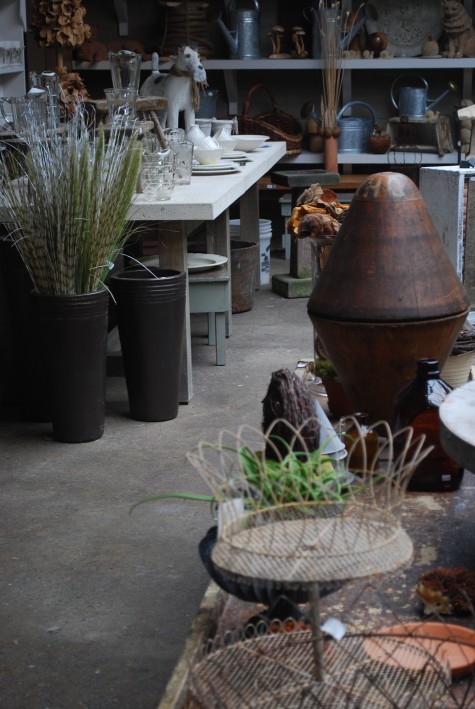
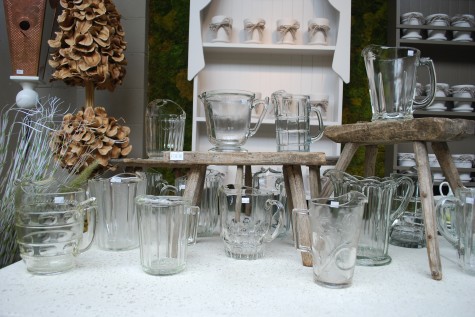 I am in the process of putting the shop back together, as we reopen for the 2010 season next week. The logistics of this has been a little daunting, as my on my feet time is somewhat limited yet. Luckily my four wheeler has a seat-so I can take a break. This puts my eye at dining table height. The table and pitchers loom large in the foreground space. The exaggeration of the size of the foreground elements moves the background even further back.
 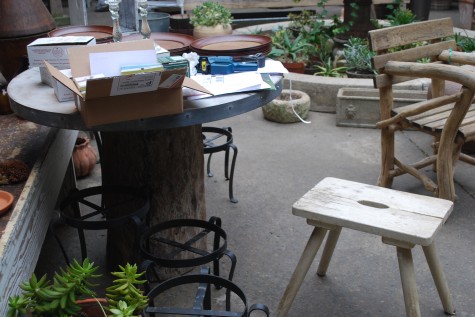 Varying the heights and sizes of the foreground elements helps to give the foreground itself dimension. The visual path your eye takes from one object to the next reveals that each object is in a different plane. A recognition of multiple planes makes for the illusion of space. This is after all, a flat object we call a photograph. But visual space is represented here.
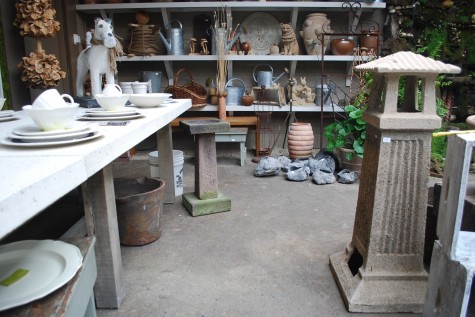 The position and direction of the concrete table in this composition moves the eye into the deep space of the photograph. The table is so wide in the foreground, it runs off the edge of the page. The table width appears much smaller, as the table appears to move back in space. The large masses of table, and lighthouse contrast with the objects on the back wall that appear so small.
 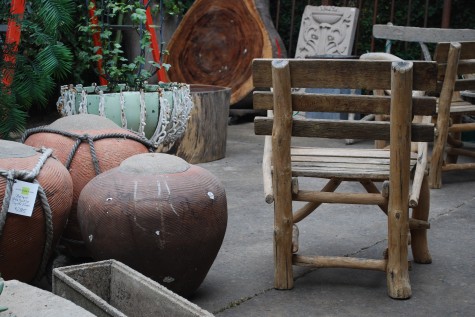 Not every bench in a landscape needs to be placed at the end of a garden. Placed at the beginning, with its back to your eye, the sense of space from front to back is exaggerated. The bench back is like a fence-enclosing the space beyond.
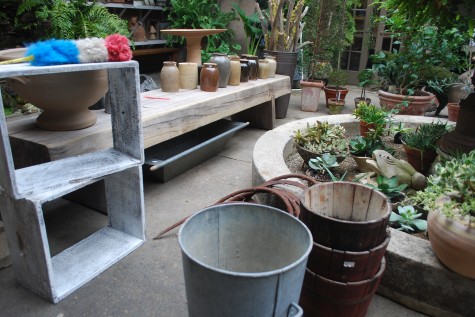 It is important in any composition to direct the eye of the viewer from the front to the back-and out again. The white wood rectangle in this picture frames a view of the foreground appearance of this bench. The frame invites the viewer to focus on what is within the frame. The bench then appears to go back in space-quickly. In the far background-a pair of doors suggesting another space beyond.