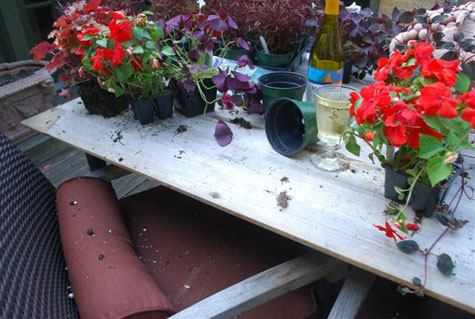
 My crew hates when I come to the job. I get dirt all over the furniture, at best, and at worst I am tinkering with the design when they want to get on with business. But when I am home, I can be the Miss Dirtiness I have always been.
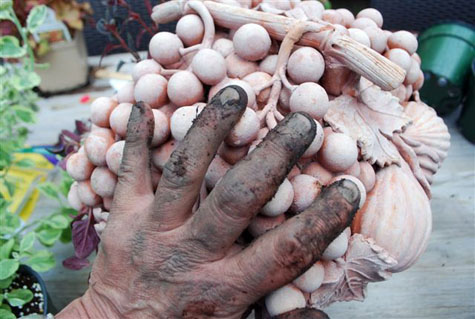 I cannot abide gloves of any description. Even if I could stand to have them on, I invariably loose them, or pitch them out with the trash. Diana never plants for me without gloves-everyone has their own way of doing, which makes for an interesting gardening world. I like to plant with my hands whenever possible. As you can see, I have no fear of dirt. I have no fear of it in my wine, down my socks,. or in my hair. I have on occasion fallen into bed, dirty. After all, the table can be cleaned, and the sheets washed.
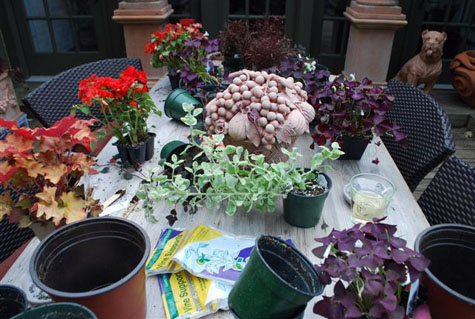 I like everything I am working with right there in front of me. Buck was horrified the first time he saw me put dirt on the dinner table, but he is mostly over that. Its a good thing people cannot see the organisms on every surface, and in the air. It would make the Alfred Hitchcock movie The Birds seem boring. Most organisms are friendly, even necessary-that’s the scientist in me. I like giant tropical bugs, worms, and toads. However, I could never bring myself to eat a snail; I can barely look at Buck when he eats them. Go figure.
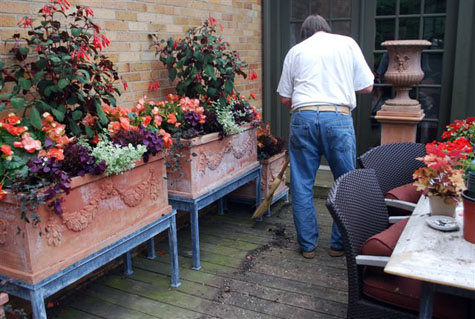 In spite of his tolerance for my habits with plants and dirt, he is always relieved to get to the cleanup part. Pretty soon, we will be over the dirtiness phase.
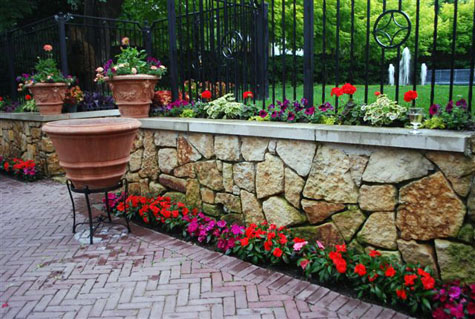 I know I posted however many days ago, that I was planting my pots purple and orange. Sounds hideous, doesn’t it? I was cringing as much as I was looking forward to it. I got the first sonic orange New Guinea impatiens in the ground, and thought I would throw up. Someone years ago told me orange was the color of hysteria-and I was starting to believe it. Could I come home and be charmed by hysteria generated by my own hand?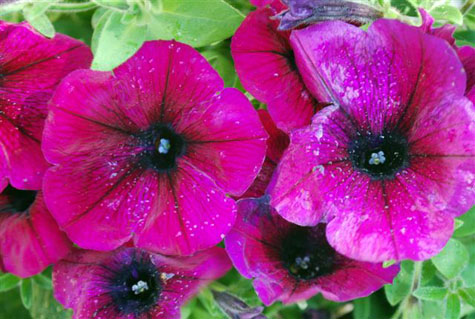
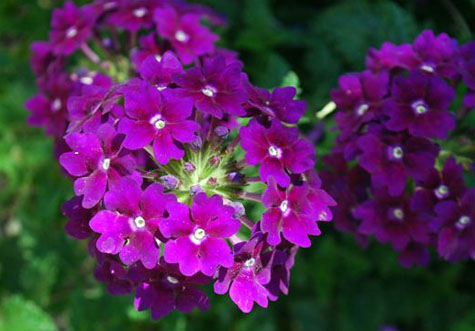
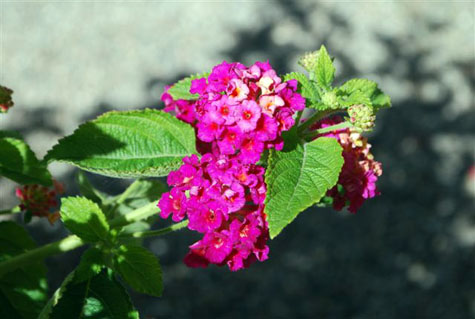
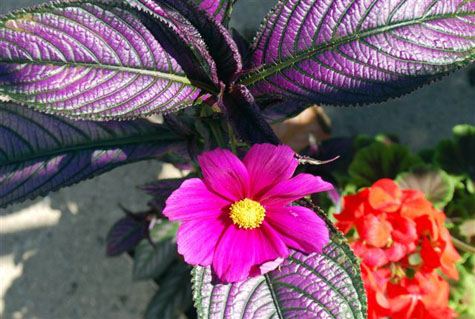
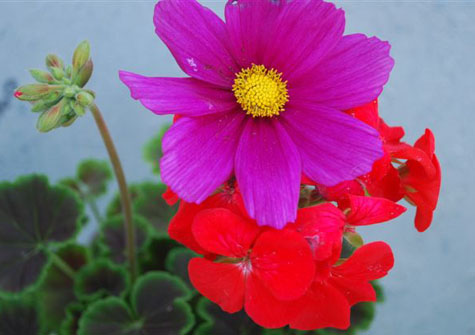
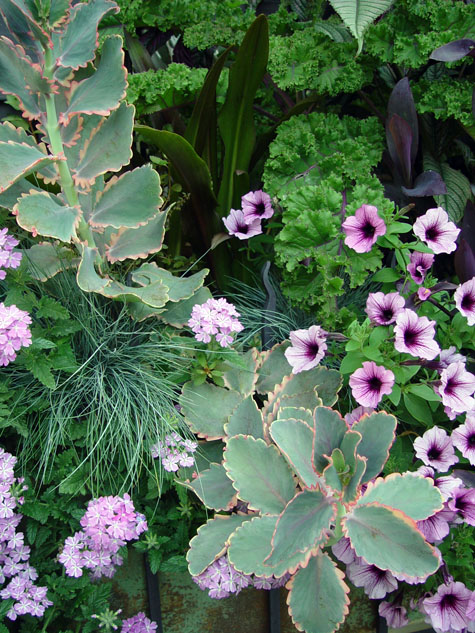 Texture is such an exciting element in plants-and plantings. Defined by Wikipedia as “an identifying quality”, or the “appearance and feel of a surface”, the texture of a plant can be about its appearance. Some plants are shiny leaved; some have felted leaves. Some leaves and flowers are thin (sometimes referred to as “substance”) and some are thick and juicy looking. Some leaves are wisy and airy looking-others are big and broad-and look as though even a big wind wouldn’t disturb them. This kale is ultra-crinkled-beautiful.
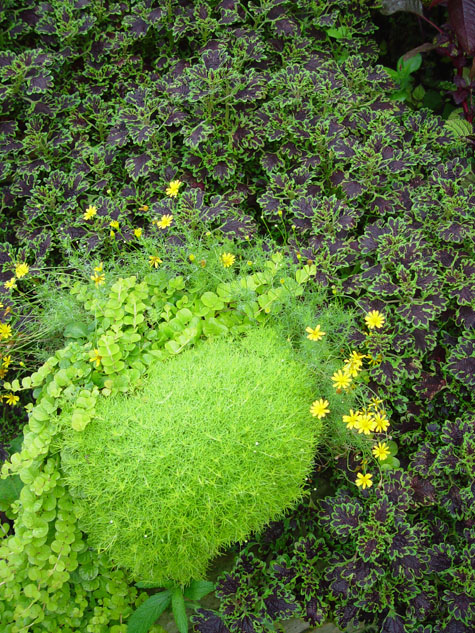 Texture can also refer to how a plant feels to the touch-who could resist touching this scotch moss? Contrasting textures can make for a lot of excitement in a planting-but even the relationship of one small texture to another can be interesting.
 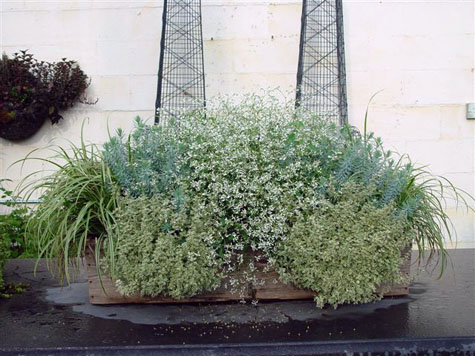 Some plantings where all the textures read similarly encourage focus on color, or mass. The choice of plants very much dictates what about a plant or planting becomes the dominant element. This box of grass, euphorbia Diamond Frost, thyme and sedum has that casual roadside weed look to it. You notice the blue of the sedum first off, as the textures of all the plants are so similar. There is a whole story here about little leaves.
 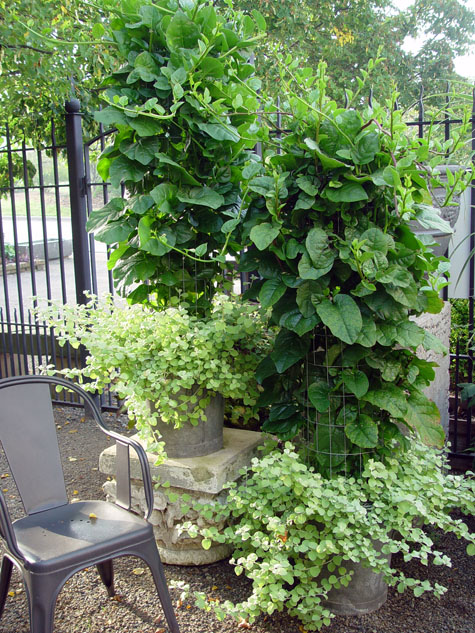 Malabar spinach has thick, substantial leaves that are glossy and wrinkled. This texture reads all the more strongly for its pairing with the diminuitive felted stems and leaves of lime licorice.
 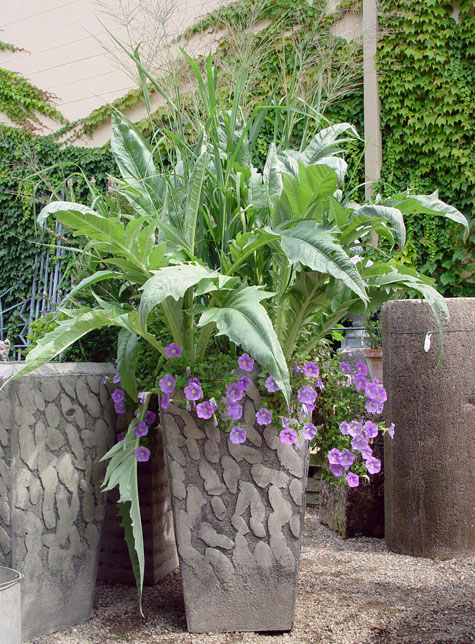 The hunky, toothy, slighting menacing leaves of this cardoon are softened by the much less architectural “Dallas Blues” panicum grass-and the so sweet blue petunias. The cardoon has a felted leaf-the panic grass is smooth and shiny. Those blue petunias are along for the ride-and soften much the architecture of the cardoon-and the pot.
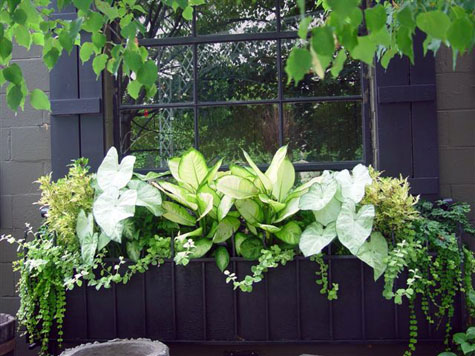
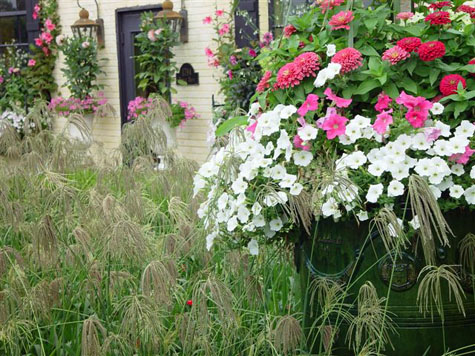 Large flowers like zinnias and petunias have a simple texture, while its companion grass has a complex, texture-like fireworks. Diametrically opposed to this delicately textured grass, caladiums and this lime dieffenbachia have leaves so thin and so wide the sun shines through them; it looks like the lights are on in this very shady spot. Identifying what about a particular plant you like will help a lot to inform your design with them. Everyone knows texture. Its the process of being conscious of it that can help make for inspired plantings .