 My crew hates when I come to the job. I get dirt all over the furniture, at best, and at worst I am tinkering with the design when they want to get on with business. But when I am home, I can be the Miss Dirtiness I have always been.
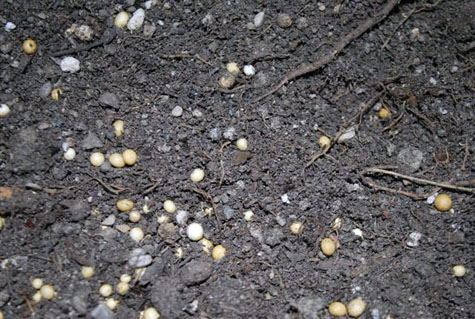
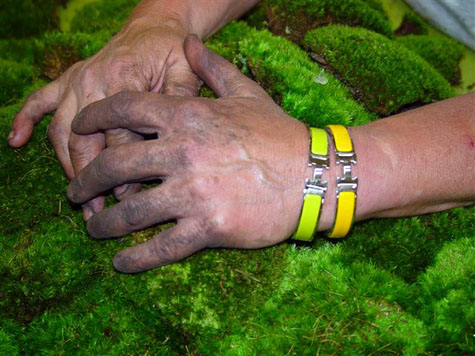
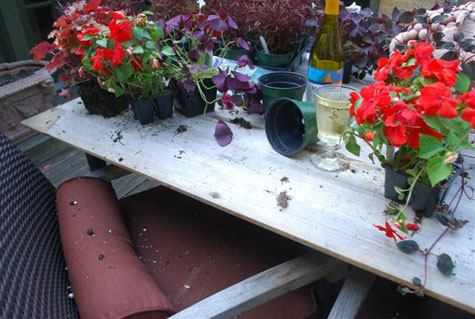
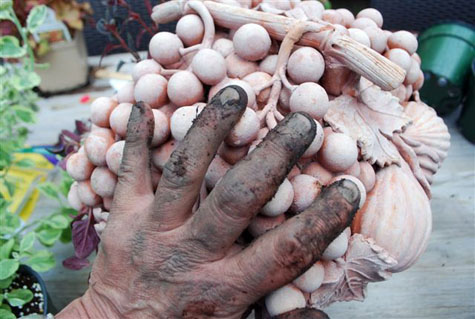 I cannot abide gloves of any description. Even if I could stand to have them on, I invariably loose them, or pitch them out with the trash. Diana never plants for me without gloves-everyone has their own way of doing, which makes for an interesting gardening world. I like to plant with my hands whenever possible. As you can see, I have no fear of dirt. I have no fear of it in my wine, down my socks,. or in my hair. I have on occasion fallen into bed, dirty. After all, the table can be cleaned, and the sheets washed.
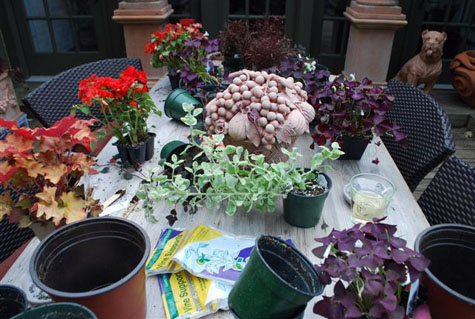 I like everything I am working with right there in front of me. Buck was horrified the first time he saw me put dirt on the dinner table, but he is mostly over that. Its a good thing people cannot see the organisms on every surface, and in the air. It would make the Alfred Hitchcock movie The Birds seem boring. Most organisms are friendly, even necessary-that’s the scientist in me. I like giant tropical bugs, worms, and toads. However, I could never bring myself to eat a snail; I can barely look at Buck when he eats them. Go figure.
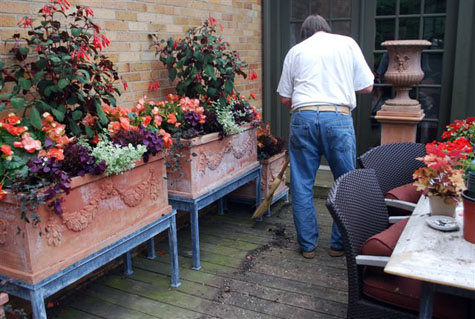 In spite of his tolerance for my habits with plants and dirt, he is always relieved to get to the cleanup part. Pretty soon, we will be over the dirtiness phase.
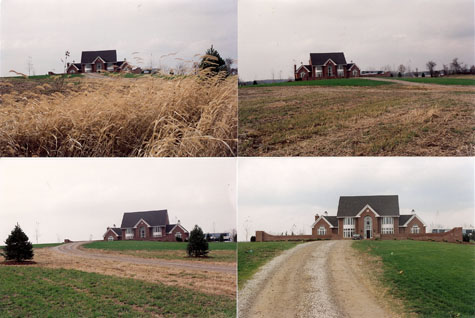 I did the project pictured many years ago in central Indiana. My client built this house in the middle of 80 acres of farmland. He and his wife tithed the use of this land, to grow corn, to their church. The landscape became a farm, and the farm was a landscape. All of the woody material was planted in rows, as if they were crops. I designed a pattern of the planting of the corn perpendicular to the woody planting of the landscape, so as to connect this very large house to a large piece of ground. This many years before I ever learned about crop circles.
 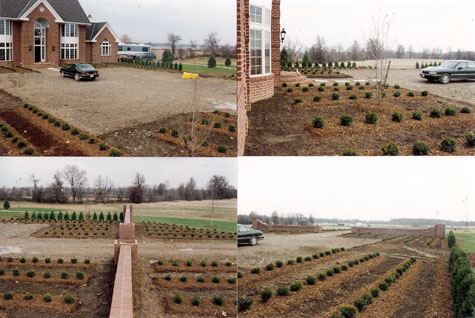 I was especially happy with this landscape, as I was able to persuade my client to commit to a big idea, and use smaller material, so as to keep within their budget. Big houses need big ideas as much as small houses do. I have never been back to see the project, but I hope that it is all still there, sturdy and strong.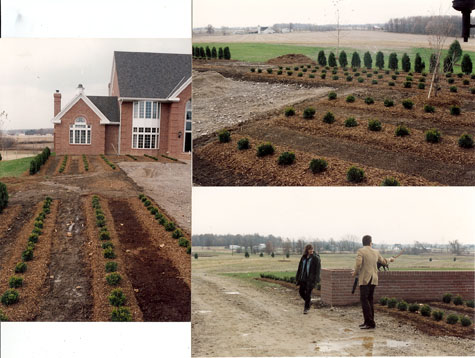
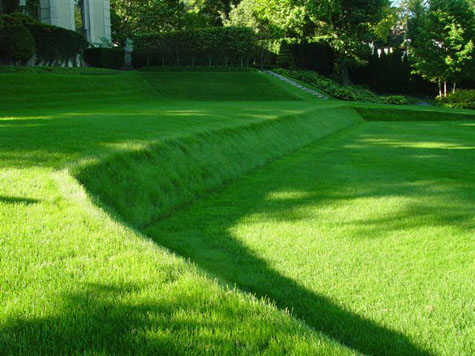
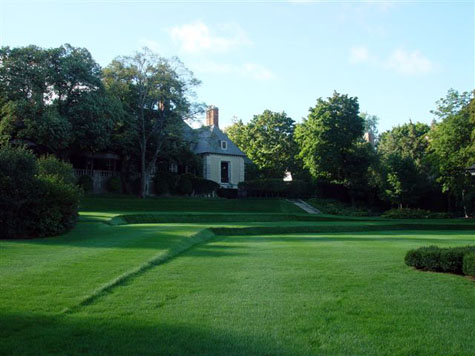
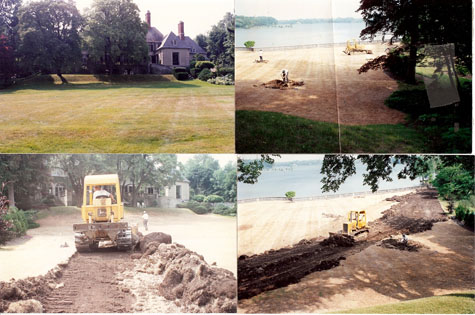 OK, I have spent days detailing my childhood exposure and love of dirt-how does this pertain to you? Sculpting ground-this is a fancy definition for “grading”. Grading dirt, simply stated, it is the process of moving dirt around, so water drains, there are flat places to be, and the sculpture of the ground which will become your landscape, looks interesting, and beautiful. We can lower the dirt here; we can raise the dirt here. We can feather that area into this one. How the house sits on the land is a big issue for new homes-thus many cities require grading plans. The project pictured tried to address a specific landscape issue. A giant bumpy lawn on a considerable slope was not hospitable to either my client, or her guests. The space needed some flat ground, and a sense of some intimacy. The lawn was greatly over scaled for people. Nor was the shape of the lawn beautiful. With an earthmover, and rakes, the ground became sculptural and beautiful-but also useable. I call this a grass amphitheater.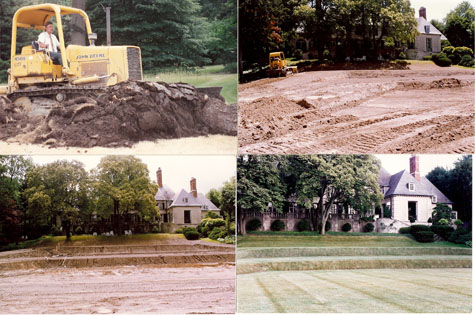
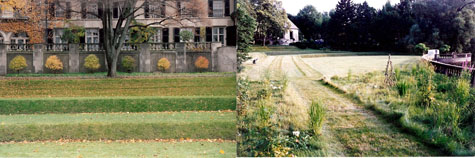 As I have said before, I have loved moving dirt my whole life. How this helps you is as follows. You have a life you are dealt, and a life you make. Look at what you were dealt, and imagine it better; imagine it beautiful, then move some dirt around.