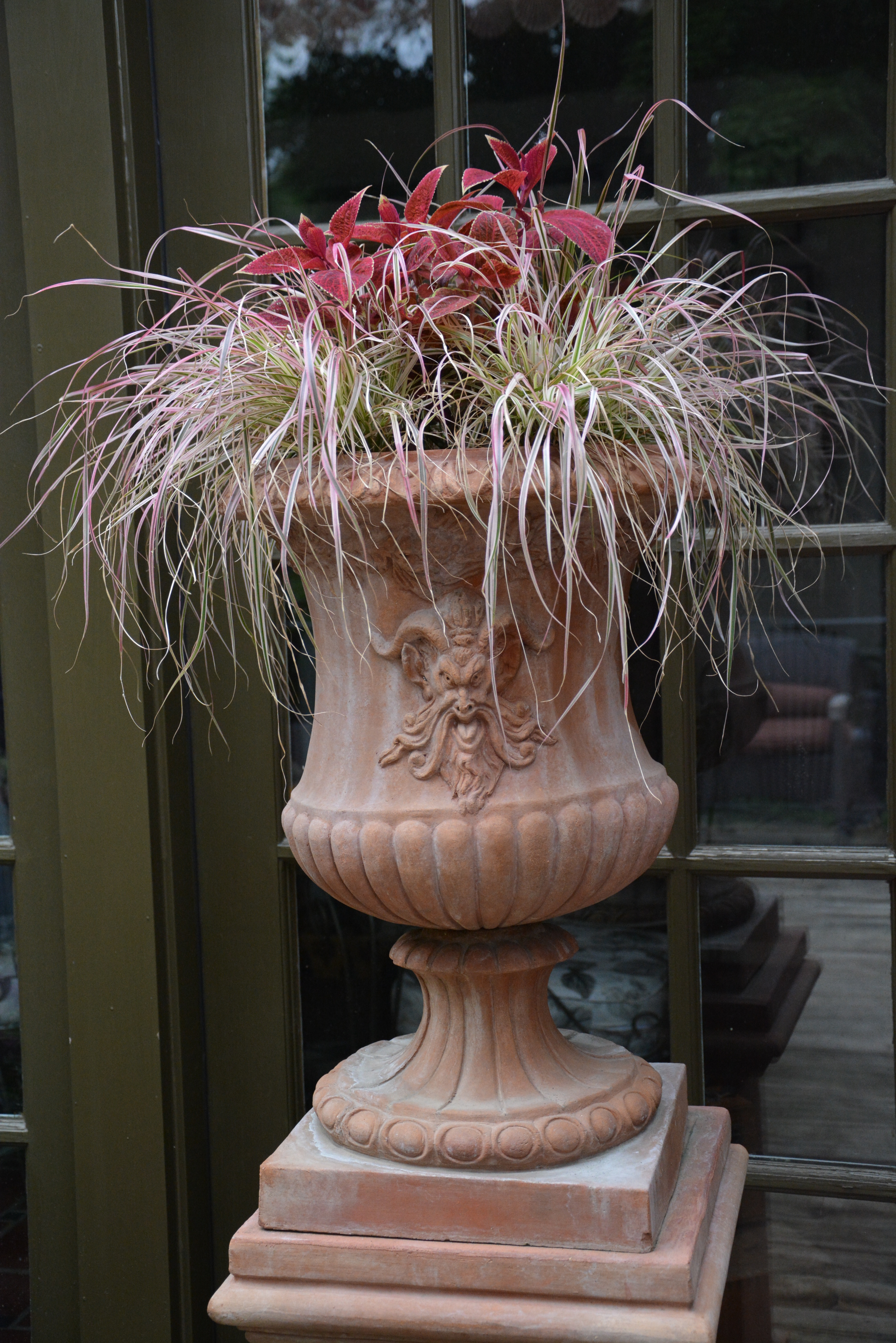
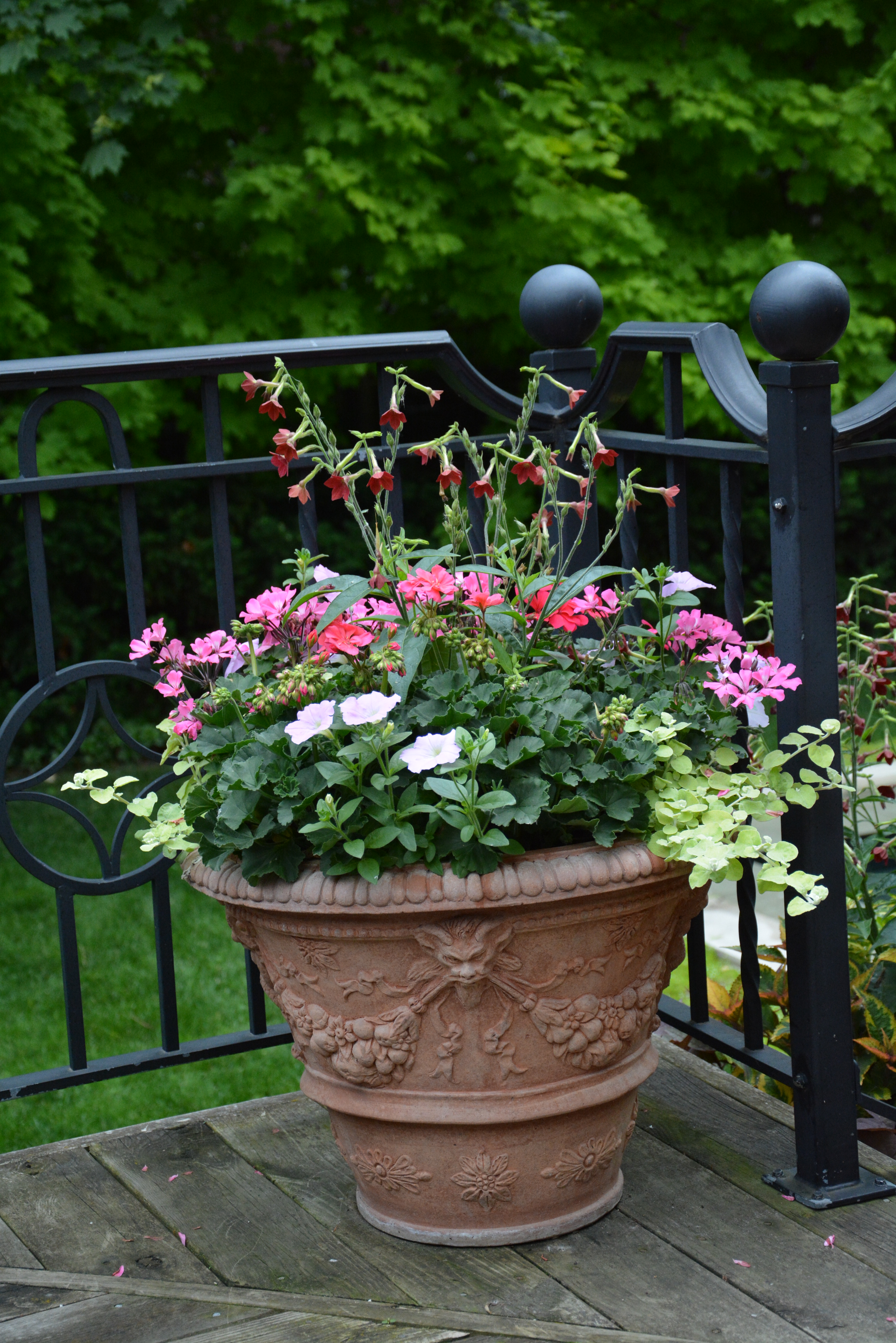
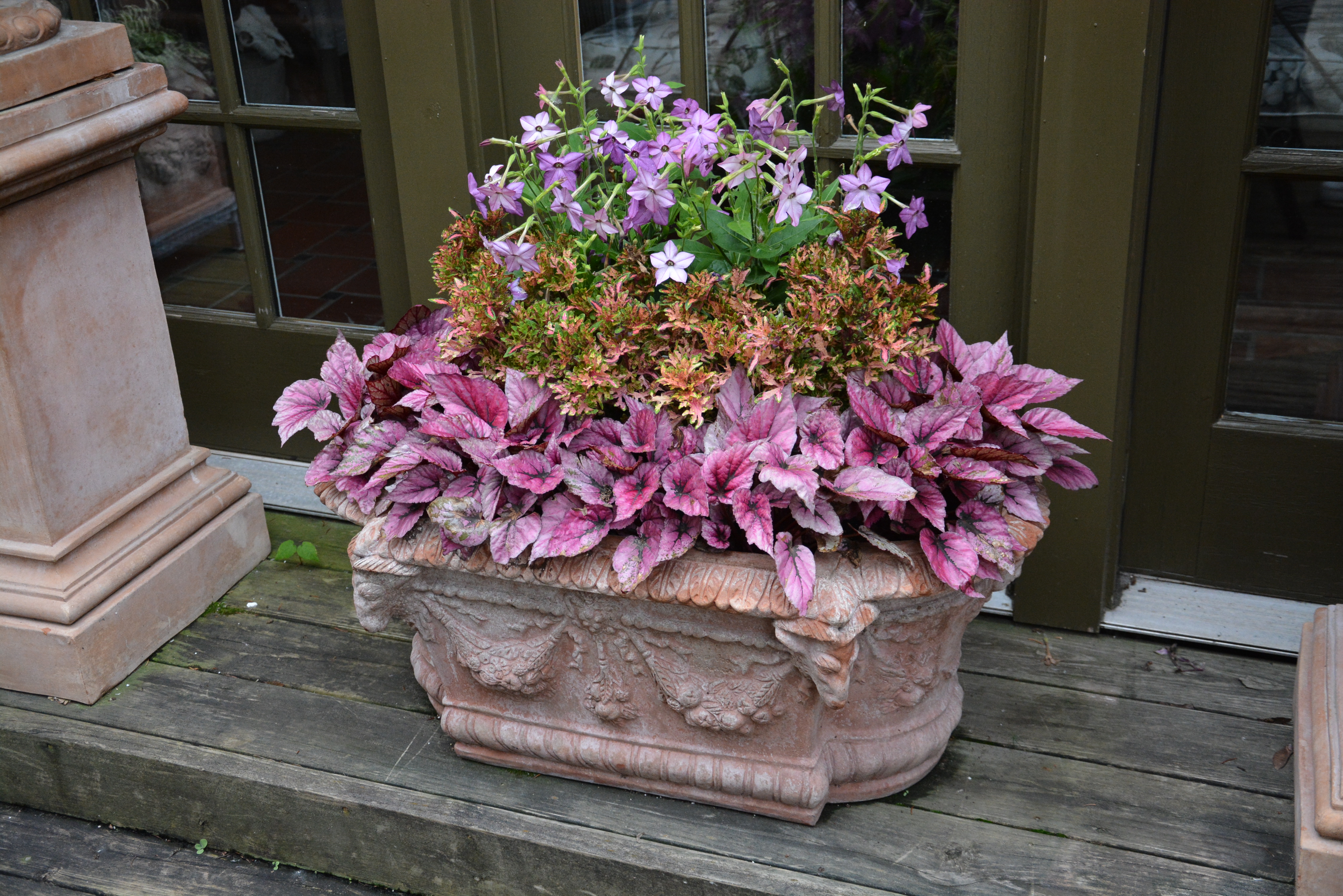
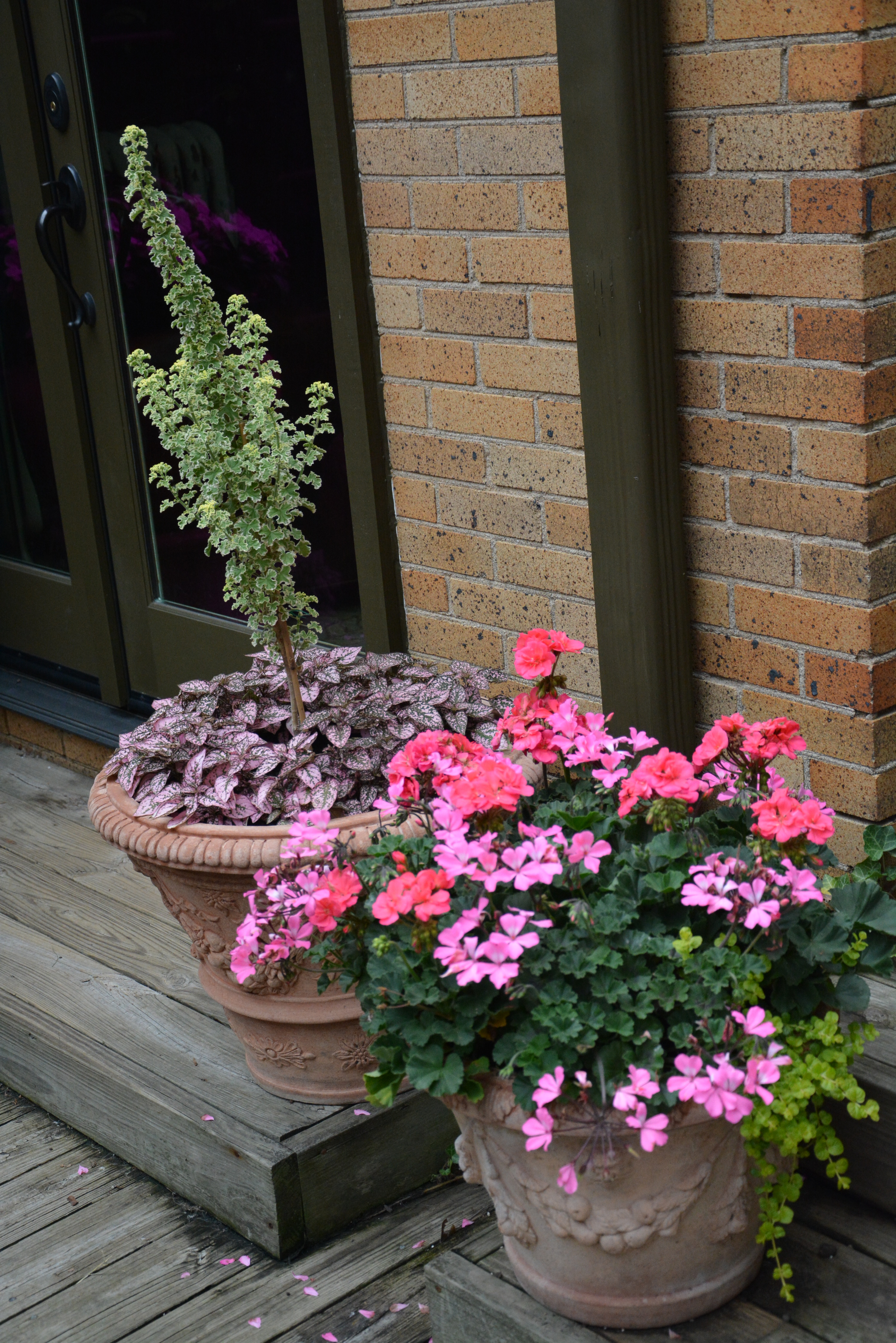
 I am usually done planting containers by the 4th of July. This year, a very late cold spring meant my container plantings have gone late. Thankfully most of these late plantings are for clients who had containers planted for spring. Today we planted 21 very large containers for a commercial client. As much as I like the idea of having acreage available in which to thoroughly express a container planting idea, big pots can be a challenge. The plants have to grow to sufficient size to balance, offset, and compliment the size of the container. The late call for planting means I am shopping everywhere for plants in their prime that can answer the call.
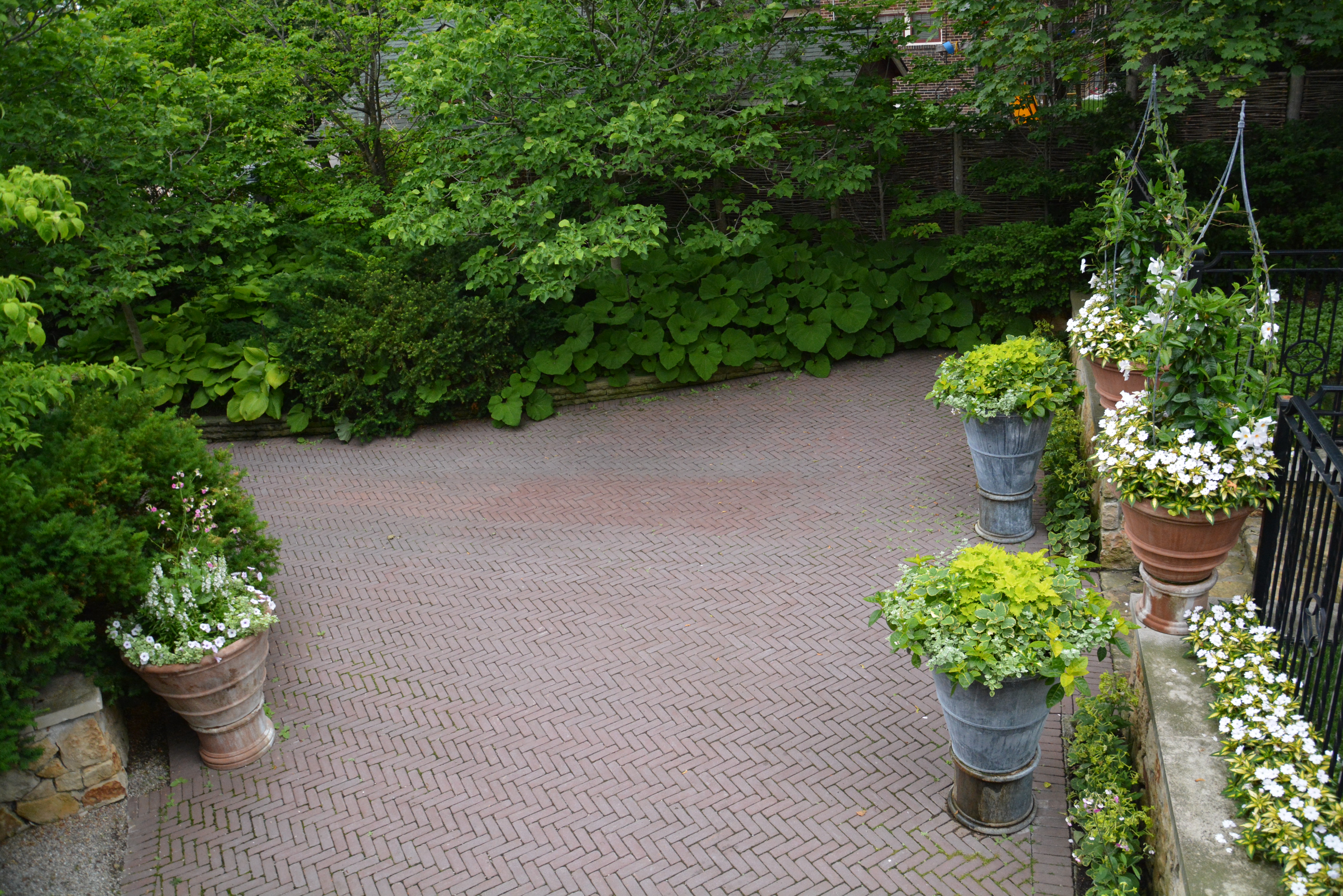
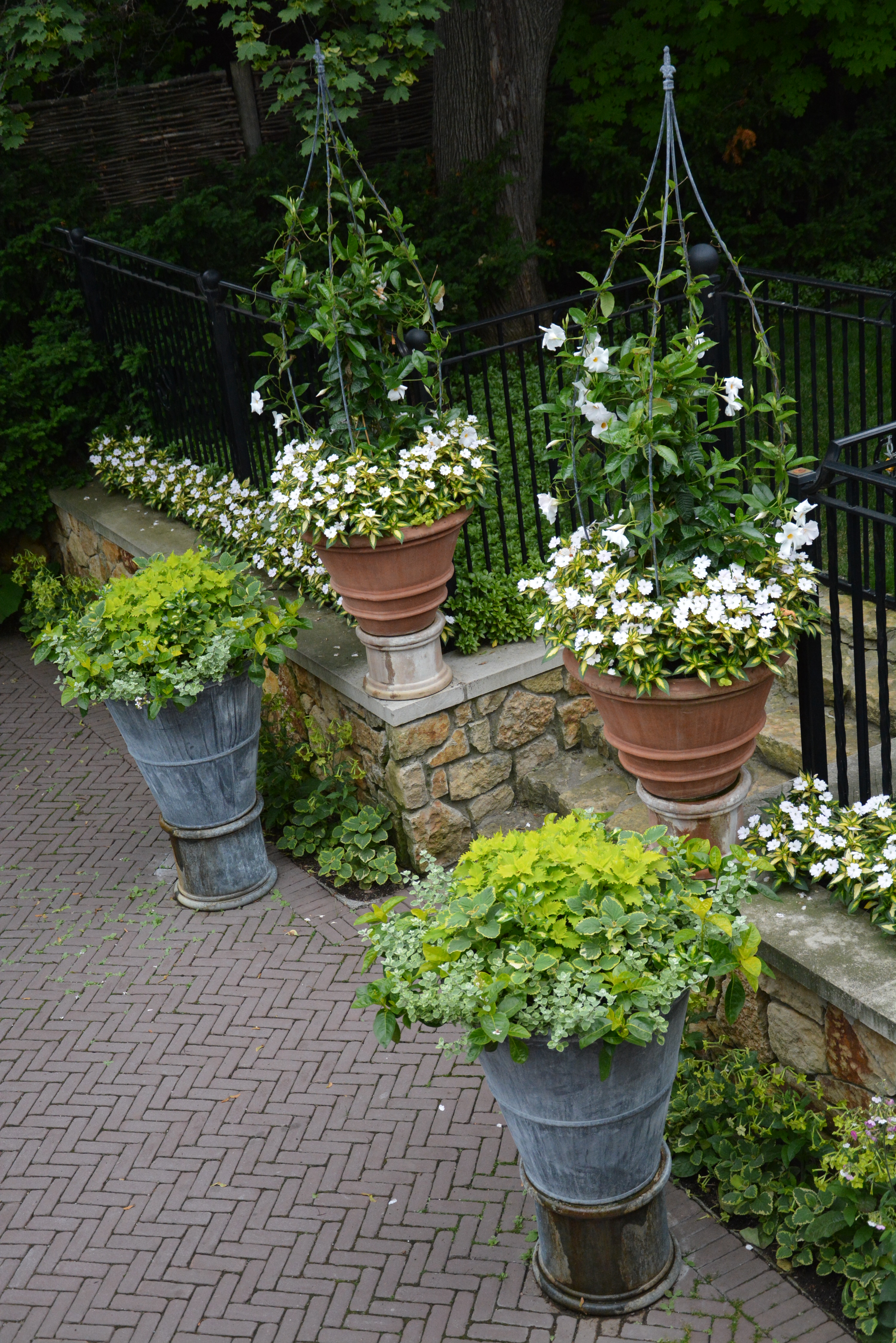
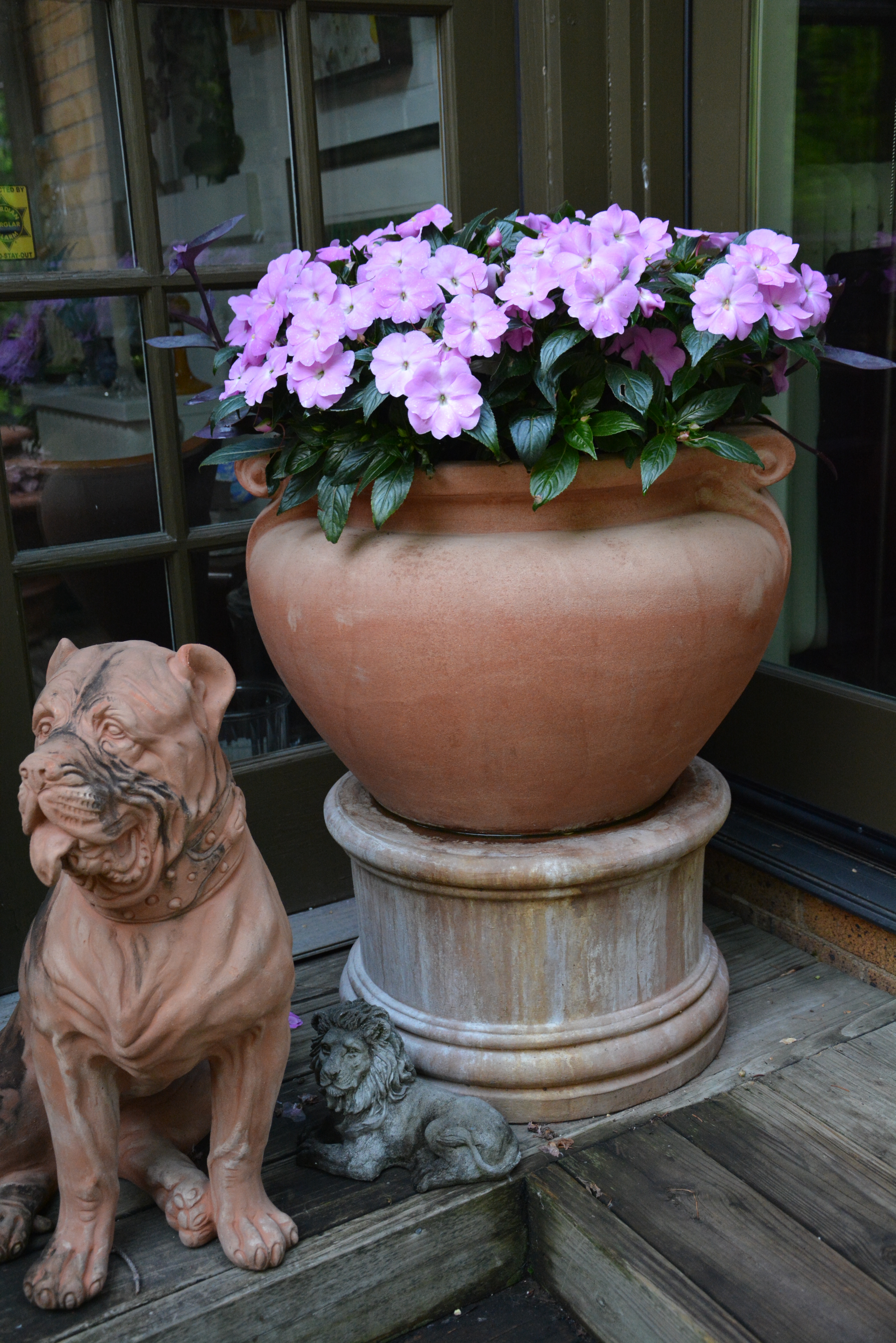
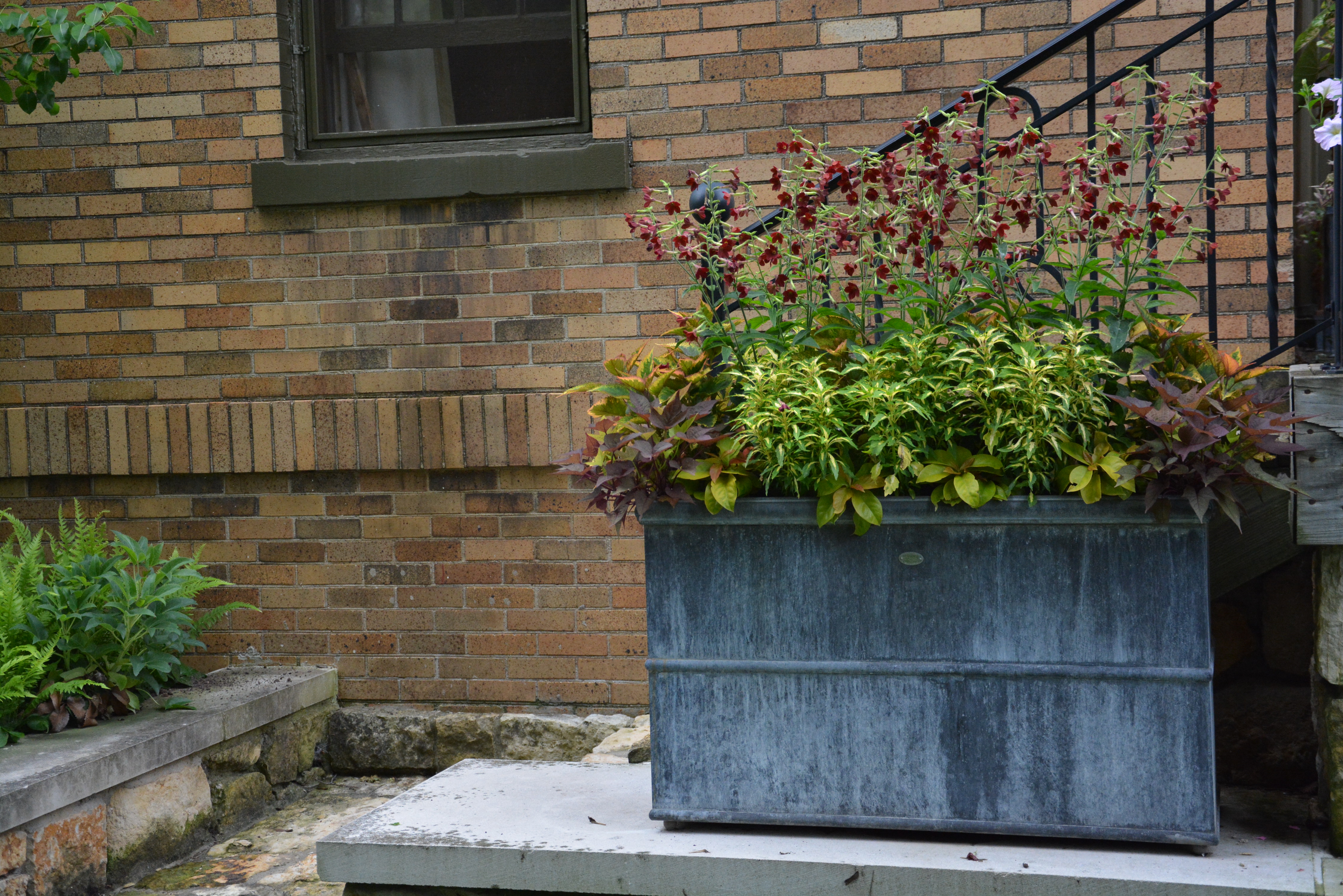
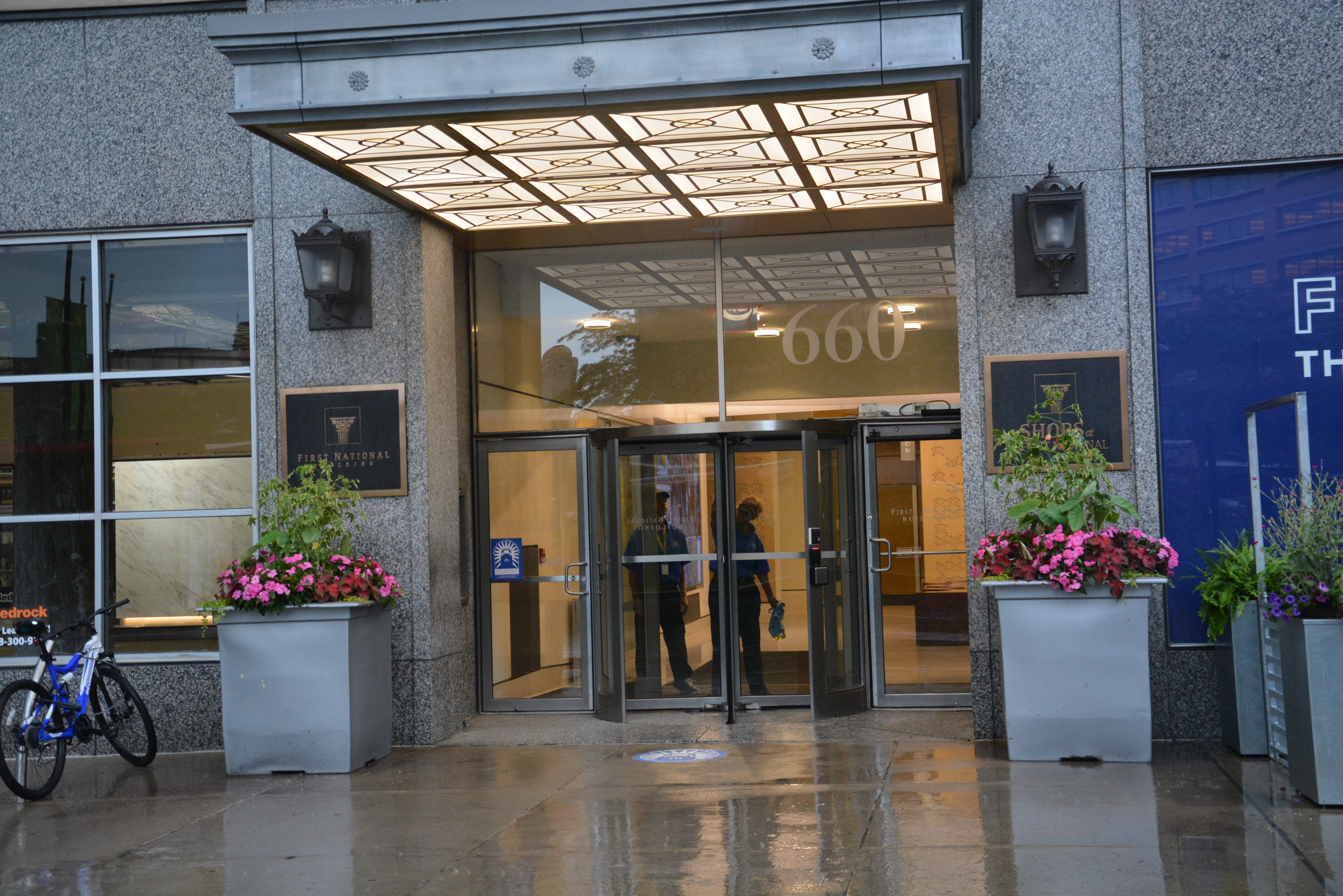
 This container is large enough to hold the both of us, and then some. The size of the building entrance, and the building obviously asks for containers of this size. Proper proportion is a very important element of good design. Big places need big pots. Big pots need bigger plantings. A garden dining table may be perfectly dressed with a low container of much smaller dimensions. Every space comes with its own visual demands. Whatever the size of a space, I like to size up with a container. And further size up with a planting. Container plantings that go wider, or taller than a container helps keep all of the elements proportional. A bit more green than pot makes for a happy relationship. That said, a beautifully shaped or detailed pot might be better featured with an underscaled planting. The tenants of good design can be broken to great effect. The rule about rules is best summed up by the fact that there are no rules. Beautiful in the garden has everything to do with an eye that rules and the gardener in charge.
 A big city downtown is more hard surfaces than green spaces. Vast hard spaces. Businesses who own big buildings understand that the experience of the city is softened by generous sized plantings in containers. A big container in a city is an opportunity to make a statement about nature in a place that is anything but natural. When we plant downtown, it is a rare passerby who does not comment, or stop to talk. The natural world is a place that all of us respond to.
 I do think the plantings should appeal, interest, or provoke those people who come and go. They should be scaled such to provide a natural visual haven. Designing for containers in public places requires lots of thought, and a lot more shopping. The pots we planted today meant a previous busy week of scouting what material would be available the second week of July. Some plants I have to rule out. I was not interested in blooming plants that needed a lot of deadheading. Or a watering schedule that could not be quantified. Or plants that would not grow large. Plants for commercial projects need to grow vigorously. Fuss budget plants need not apply.
 Commercial plantings in the shade are the toughest to design. Urban shade is different than your shade. Cities with hard surfaces everywhere means that light gets reflected from cars and the street into the shadiest spaces. Planting shady commercial spaces with sun plants is a gamble that routinely pays off. The reflected light keeps those sun plants thriving. Plants that thrive in the sun also thrive with less than perfect watering. Some commercial spaces tucked underneath awnings or expansive overhangs-sun or shade? I went with the shade here. The alocasia and the abutilon should grow large and arch over this container, given enough water. This combination, properly watered, with thrive in the shade.
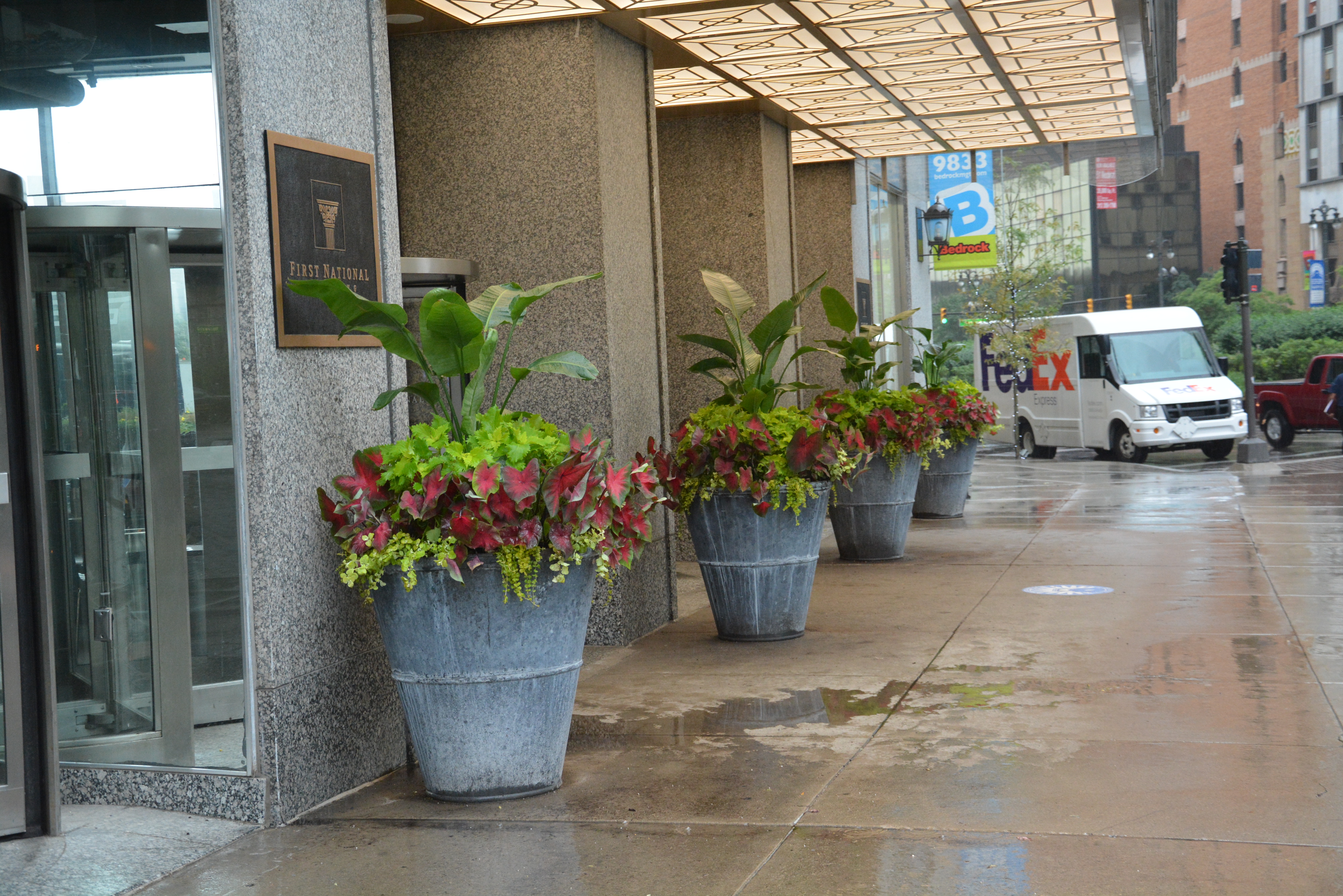
These pots are under a large awning. However, this is a very light shady spot. The glare in the window of the revolving door makes that obvious. There is no worry about a lack of light. There is a worry about the water though. Even in a pelting rainstorm that must have dropped between 1 and 2 inches of rain, none of that rain got into these pots. They will have to be hand watered.
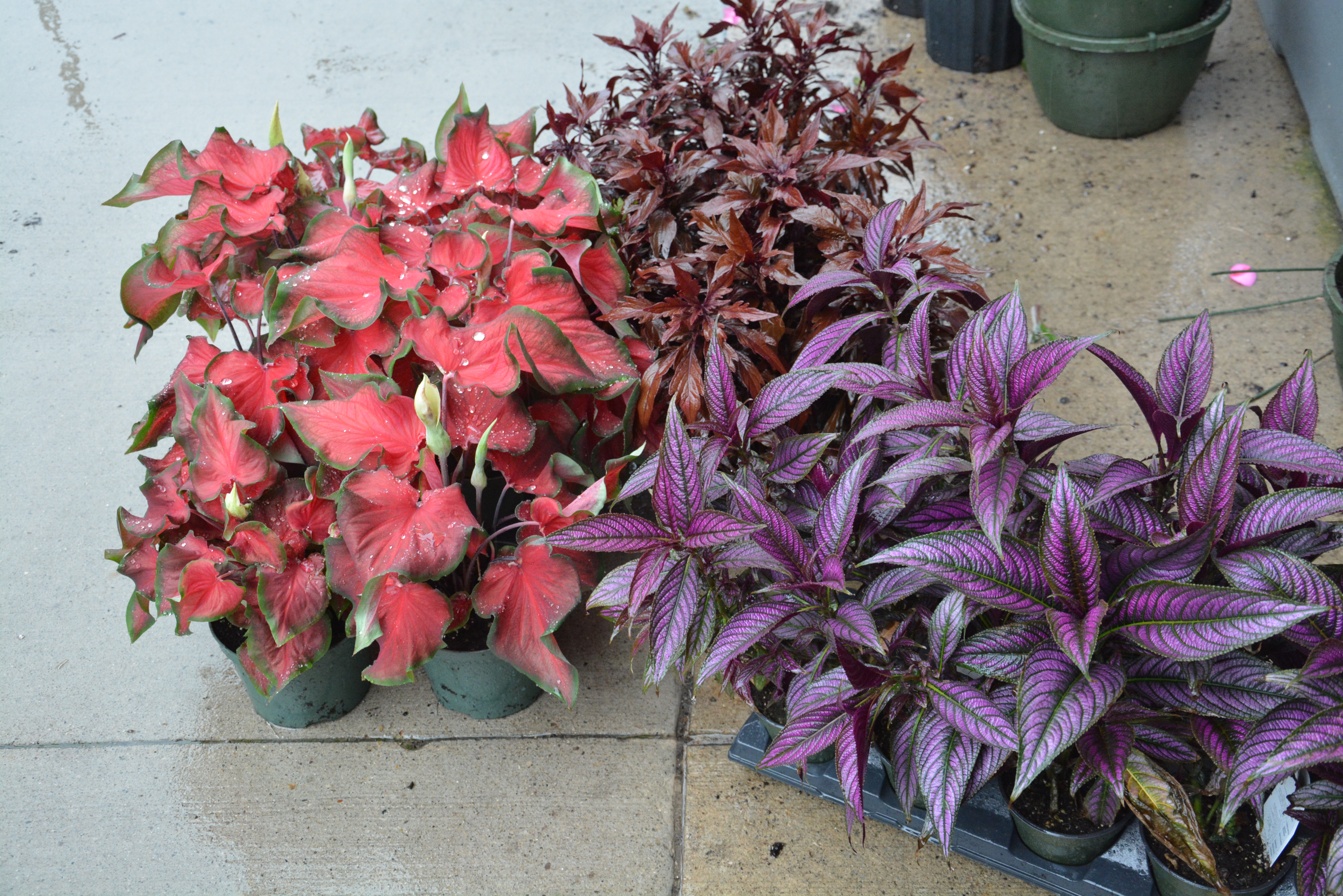
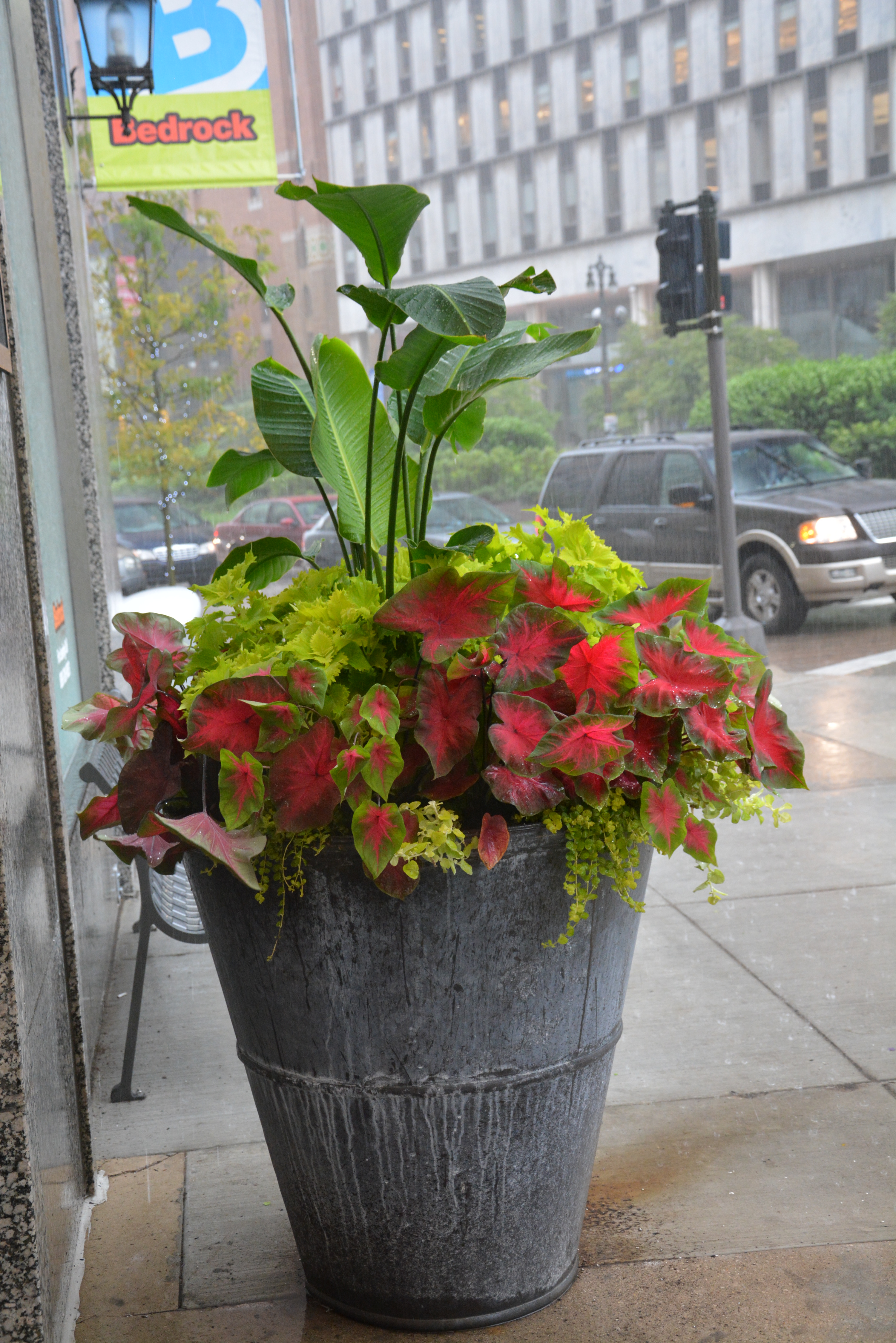 I am sure you have noticed by now that many of the plant choices for these shady pots are foliage plants. The centerpiece of this pot is a strelitzia-a bird of paradise. They can grow to an enormous size, and they are quite tolerant of shade. The wasabi coleus is a big grower too. I have seen it grow to better than 3 feet tall in a single season. The caladiums do a great job of representing the color red in a big way. The wasabi coleus above, and the lime licorice and creeping jenny below do a great job of making that red glow.
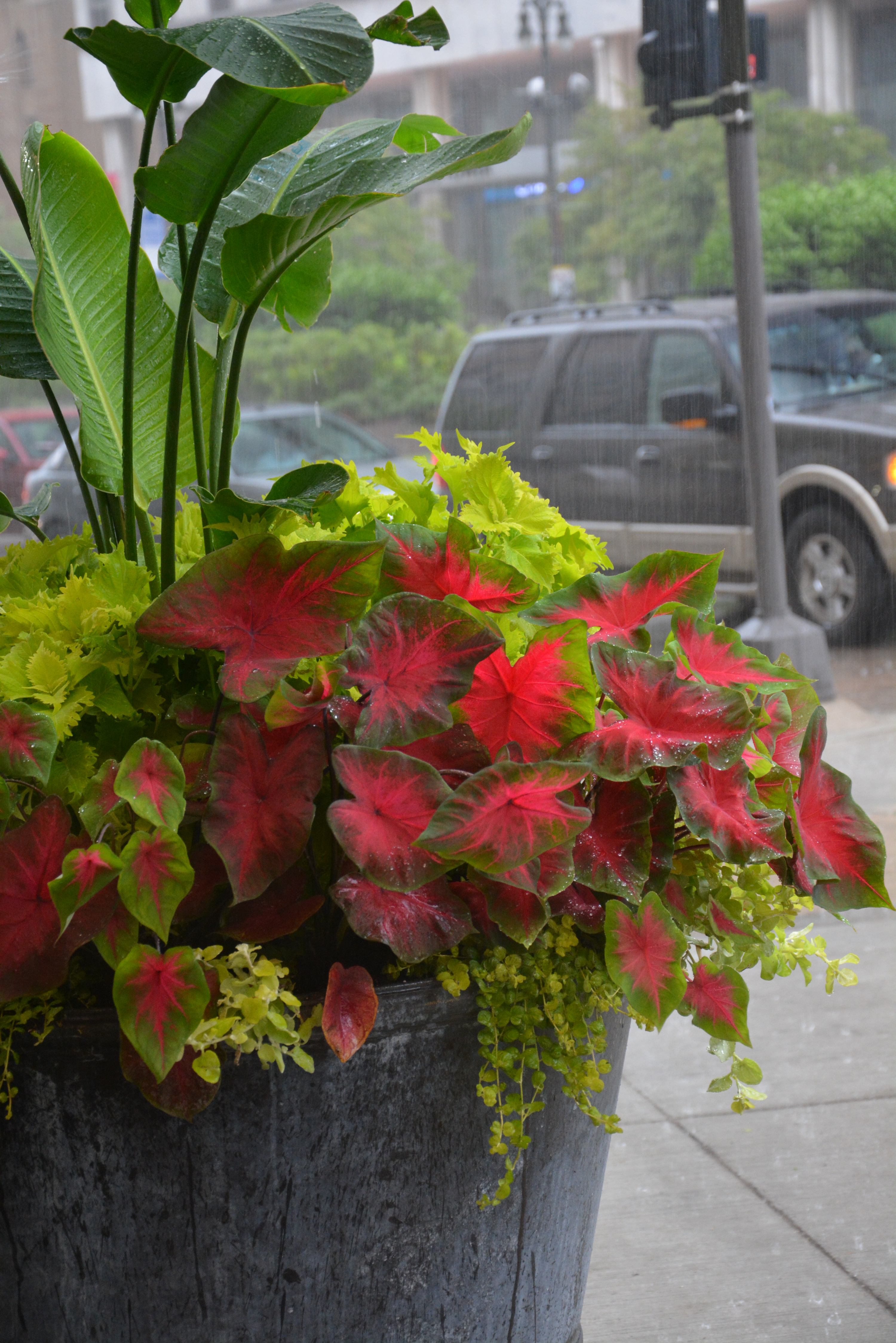 Big growing and large leaved foliage plants do a great job of stepping up to large containers. The light coming through the leaves-beautiful.