Part 2: The Drive Court

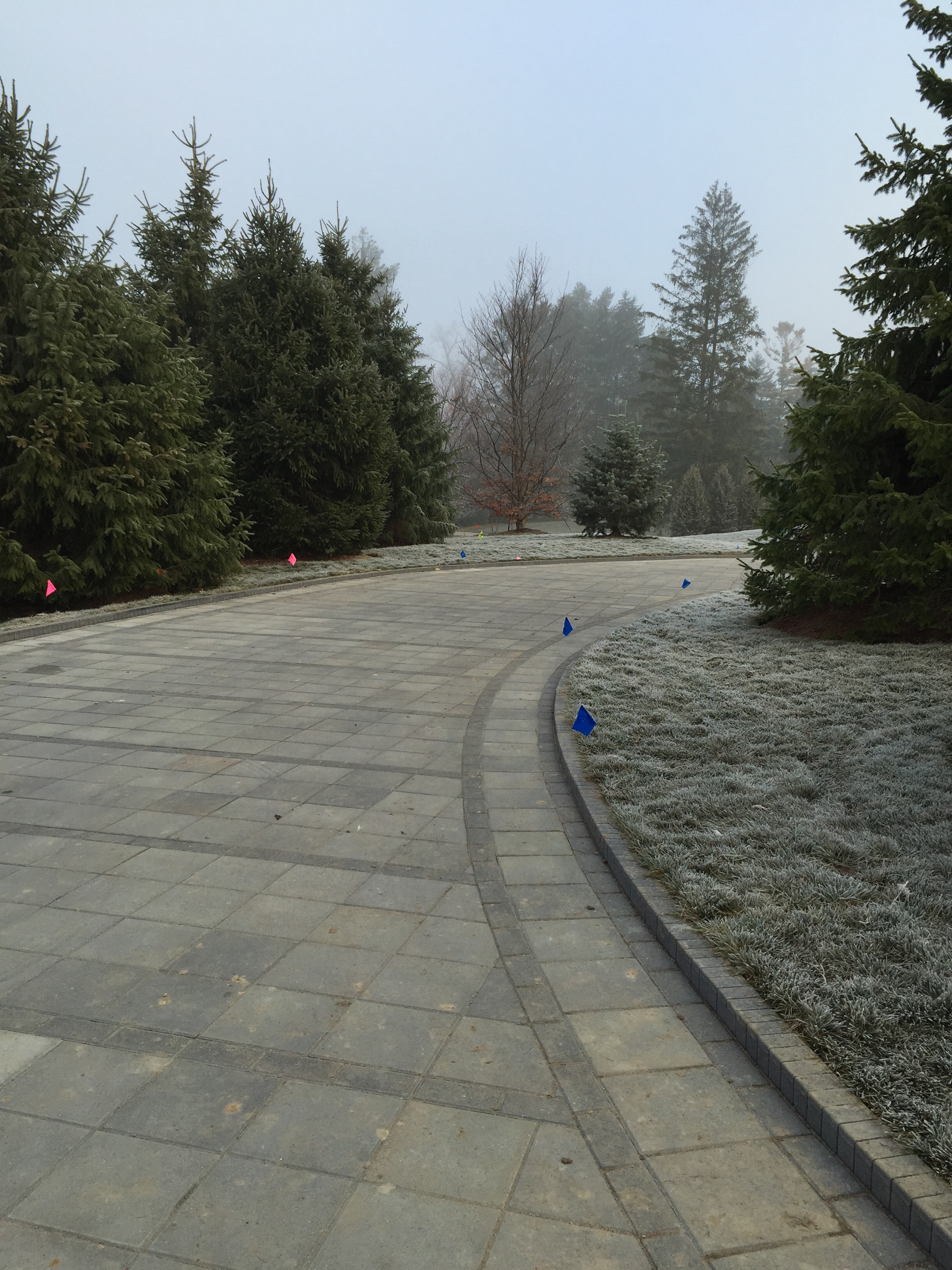
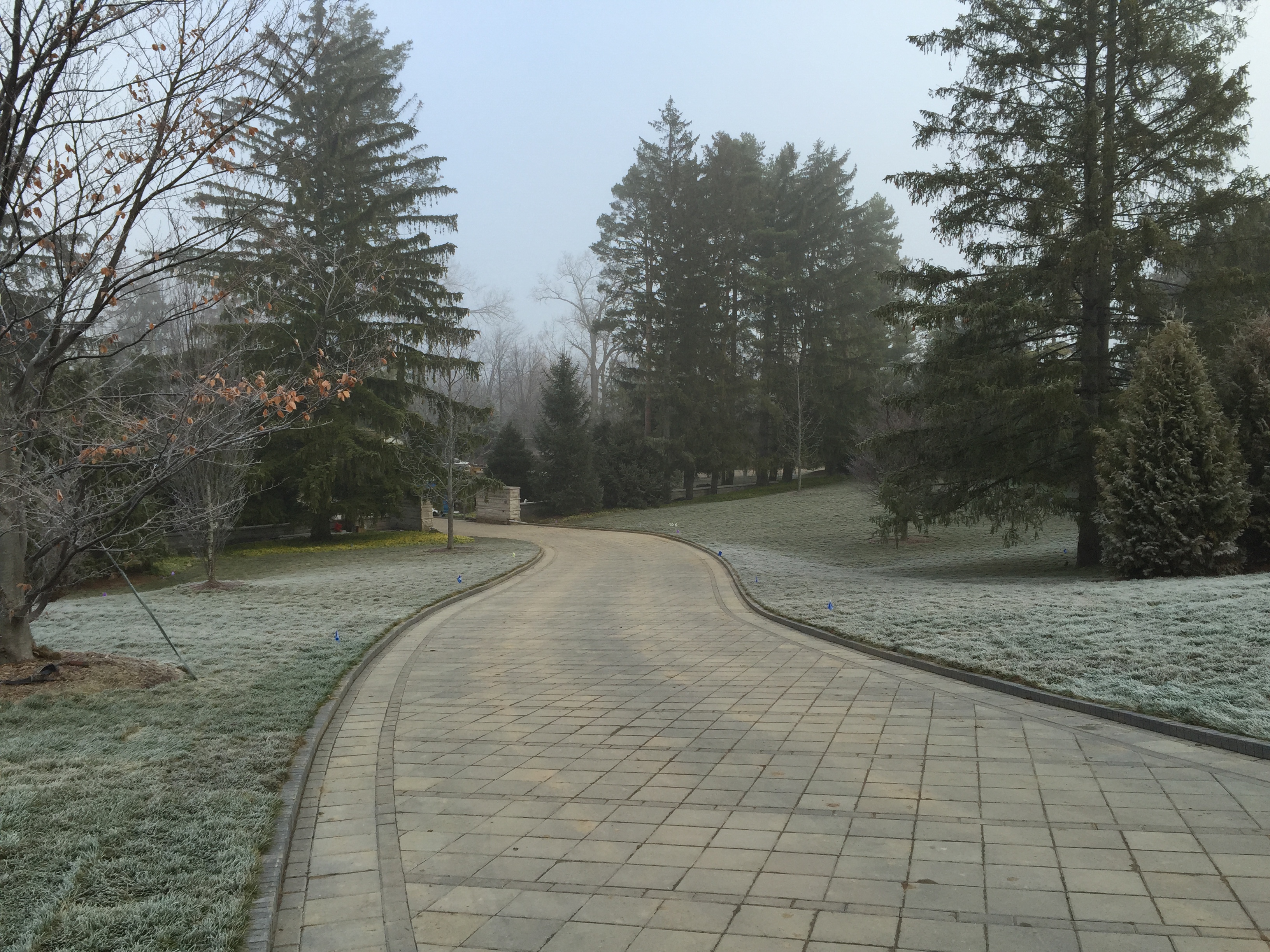
rainy-day-2016-7My last post about this project centered around a winding and and most beautifully curvy driveway, and the landscape views proposed by that drive. The major portion of the landscape, including this driveway, was designed with an informal and park like atmosphere in mind. It  features a collection of specimen trees, each one placed individually. It is a property with long views. The placement of the trees involved a lot of walking, and seeing.  The result, to my eye, is a landscape that is natural, and subtly polished. The following pictures are about the landscape immediately adjacent to the house. This part of the landscape dramatically contrasts to the rest of the property. It is as much formal as it is contemporary, in design.
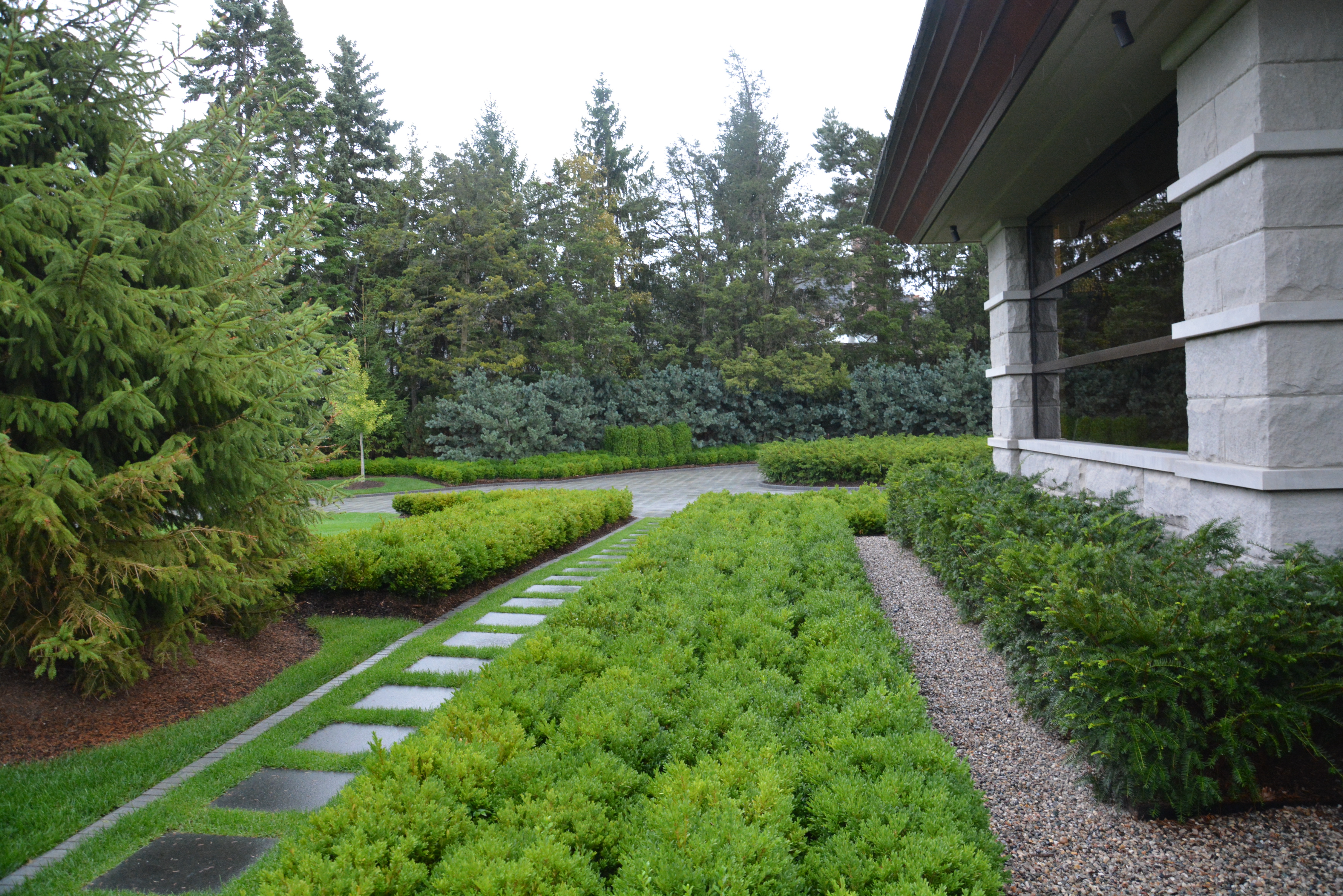
rainy-day-2016-8Formal landscapes are predicated on a series of geometric shapes generated by horizontal and vertical axes. Formal landscapes are usually symmetrical, as in equally representing on both sides of an axis. You may only see the axis as an imaginary line, a construction line drawn on a plan.  Contemporary landscapes can be quite formal, in a geometric sense.  They are not necessarily symmetrical. Both formal and contemporary gardens are more about spacial concepts, ideas or visual tension than they are about individual plants. Contemporary gardens are edited. The less said, the better. Some contemporary landscapes are so minimal that they make my mouth go dry. This landscape is not stark. The shapes of the plants, and the texture they create in numbers is lush.
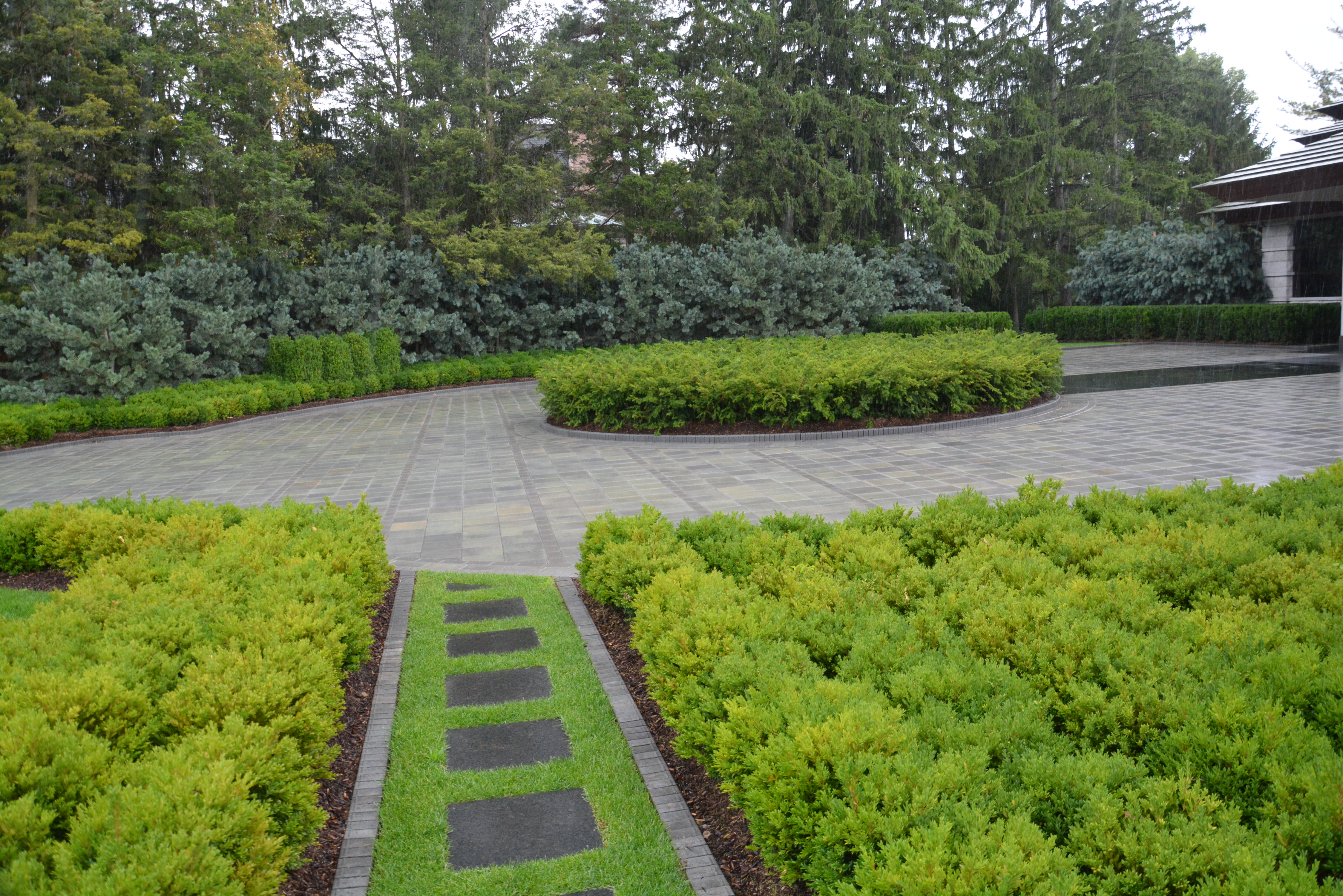
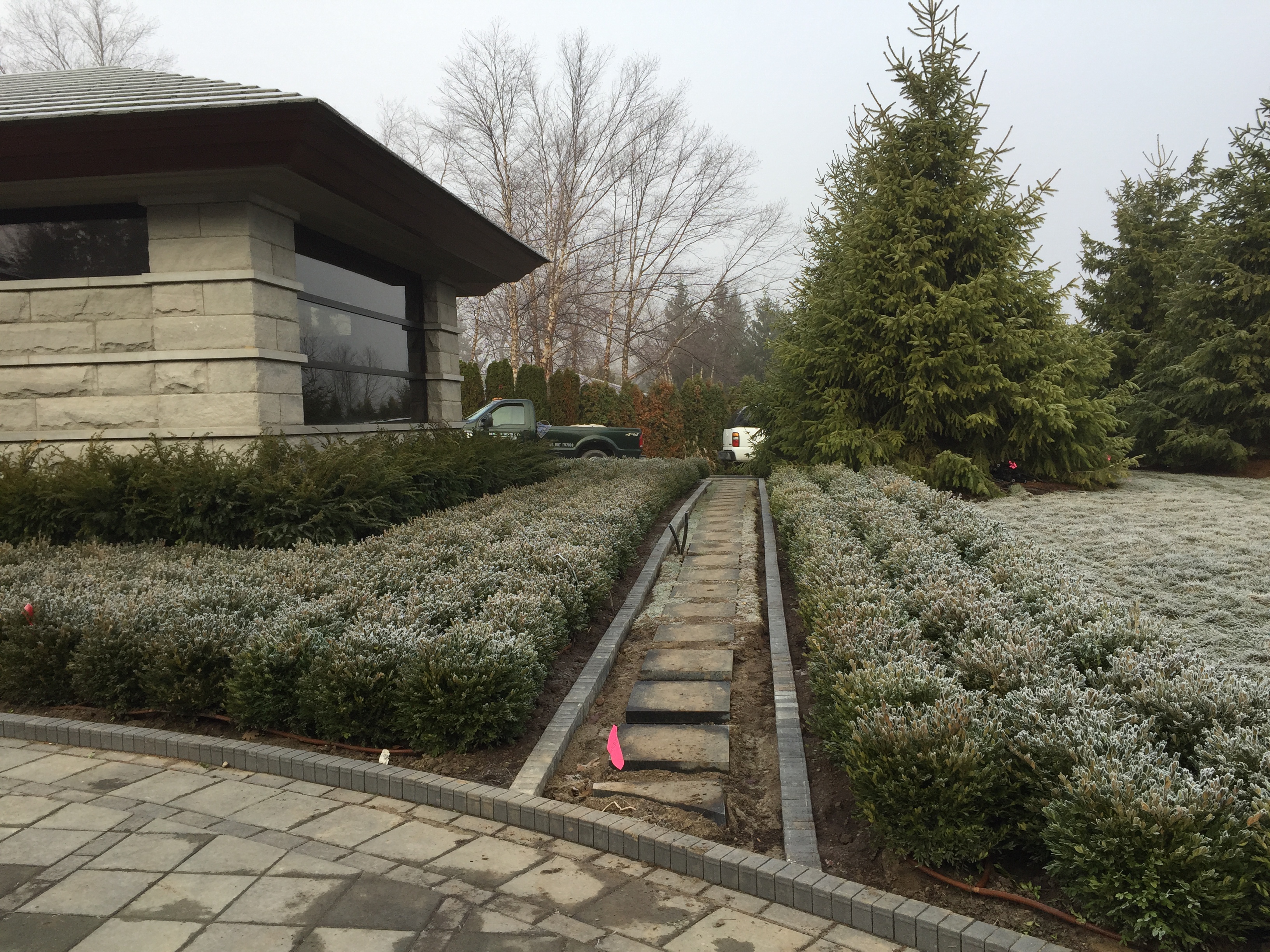
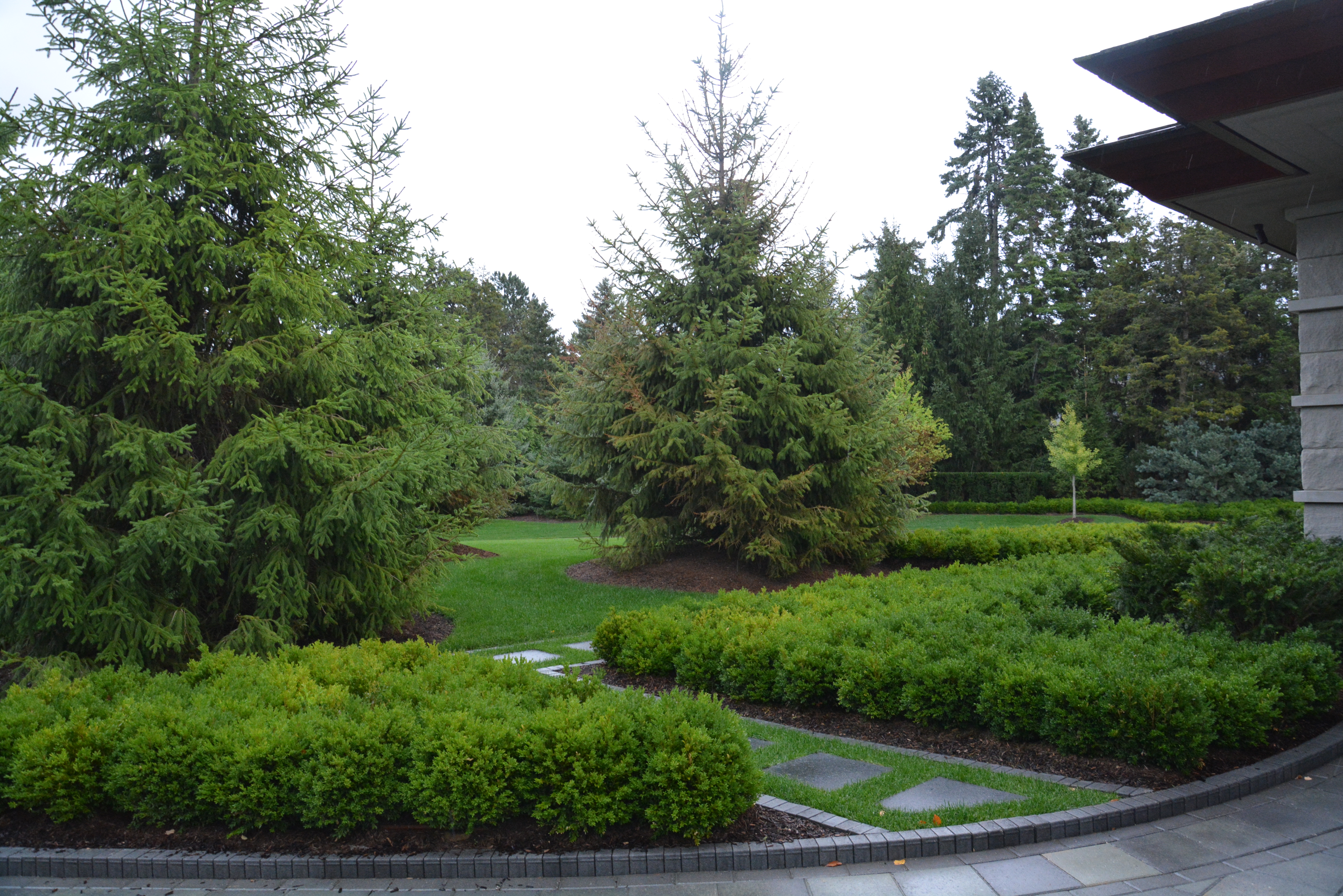
rainy-day-2016-1 This landscape needed to quietly describe the plane of ground in question, and cleanly describe the geometry of the drive court, and the shapes described by the house.The walk from the garage to the drive court is formally outlined in brick pavers set on end.  The stepping stones are square, and set in grass. This walk is set down in a mass of 18″ Green Gem boxwood on both sides. It is not part of the presentation of the landscape entering the drive court. A secondary walk calls for a secondary and circumspect placement.
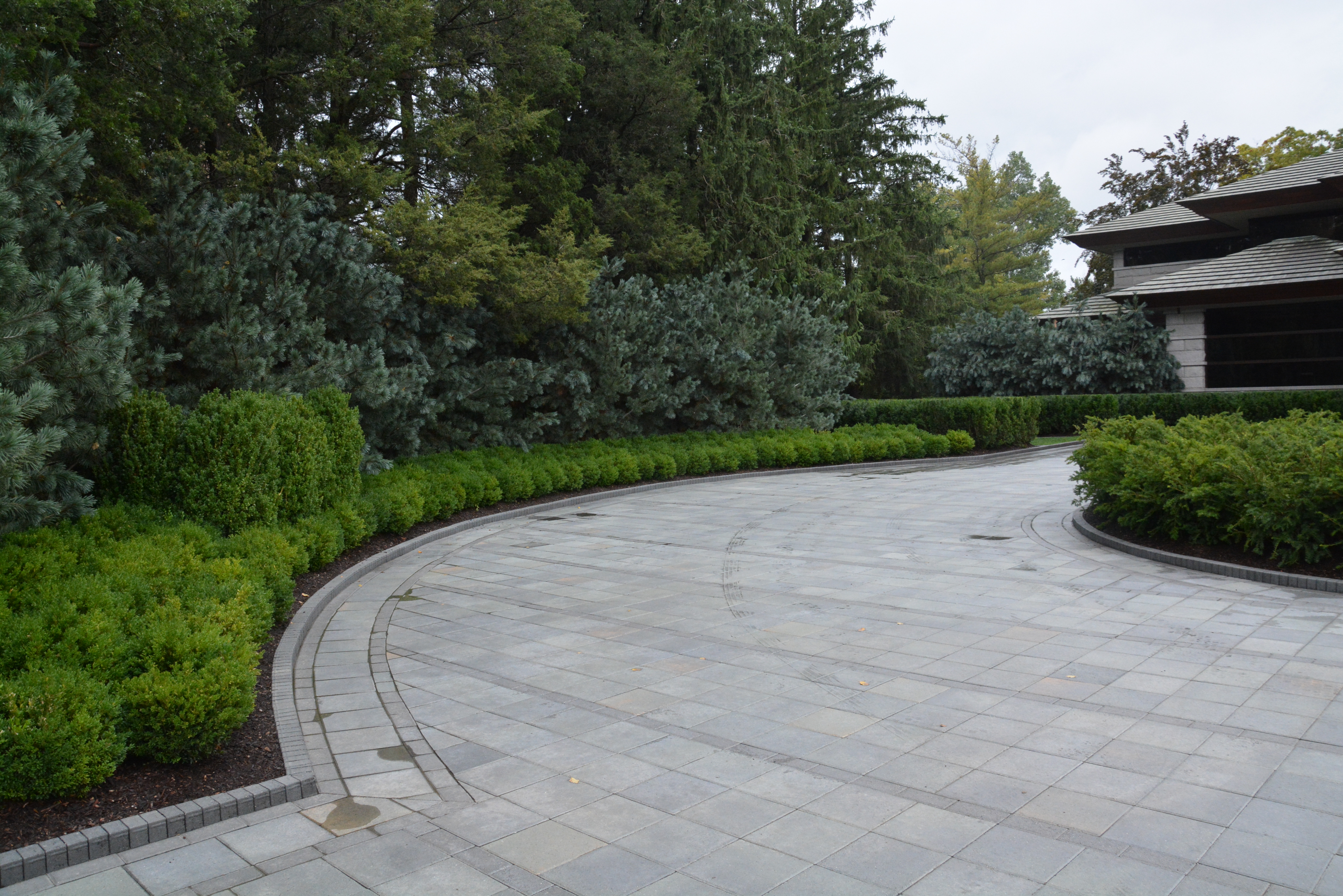
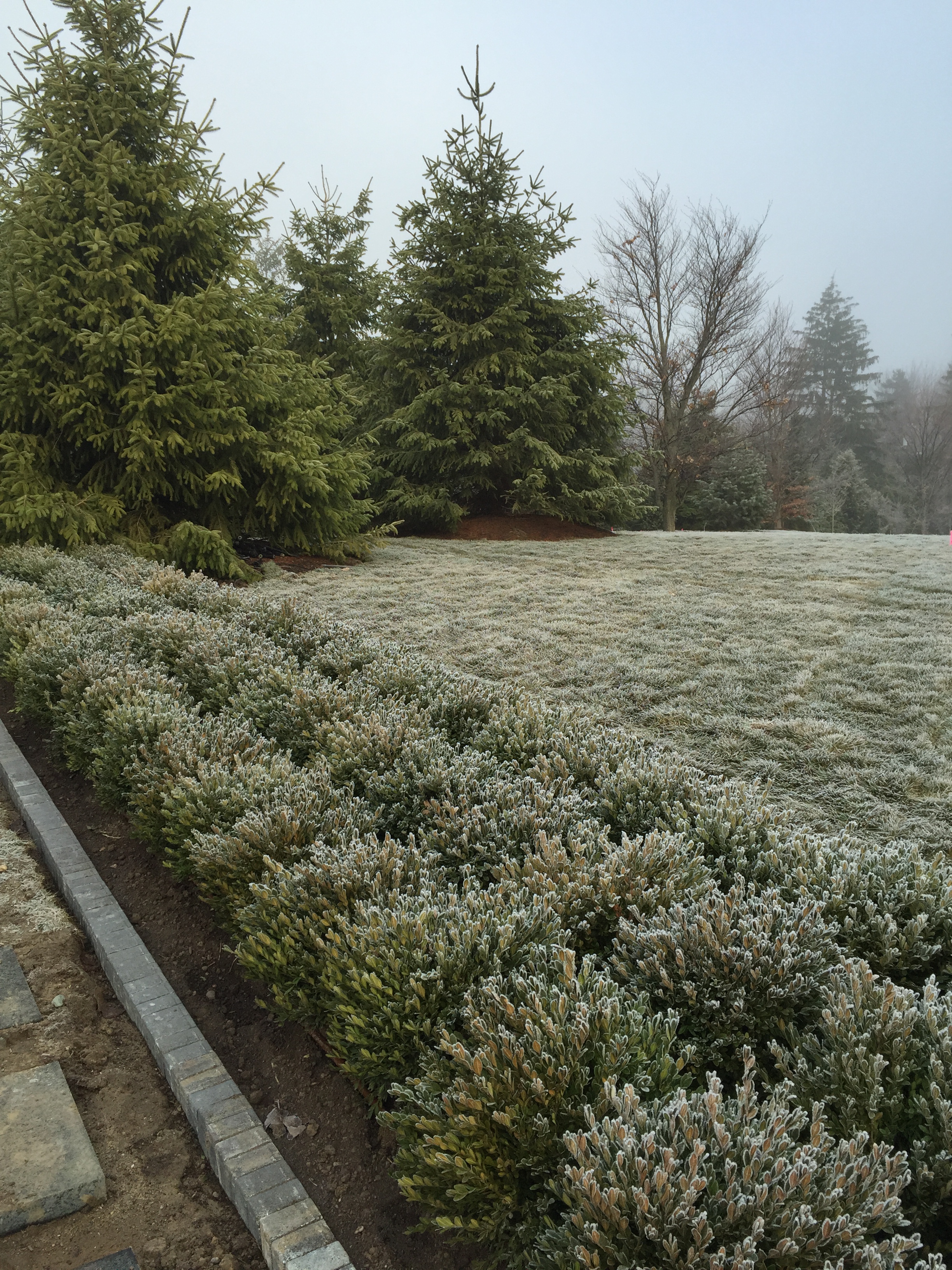
the-drive-court-11The widest portion of the east side of the drive court is but 6 feet from the property line. The neighbor graciously agreed to let us encroach on her property just enough to screen the houses from each other, and reiterate the very strong circular shape of the drive court. The boxwood facing down the Joe Burke flexible pines are set on a slight slope. That slope speaks to the rhythm established by the curve of the drive.
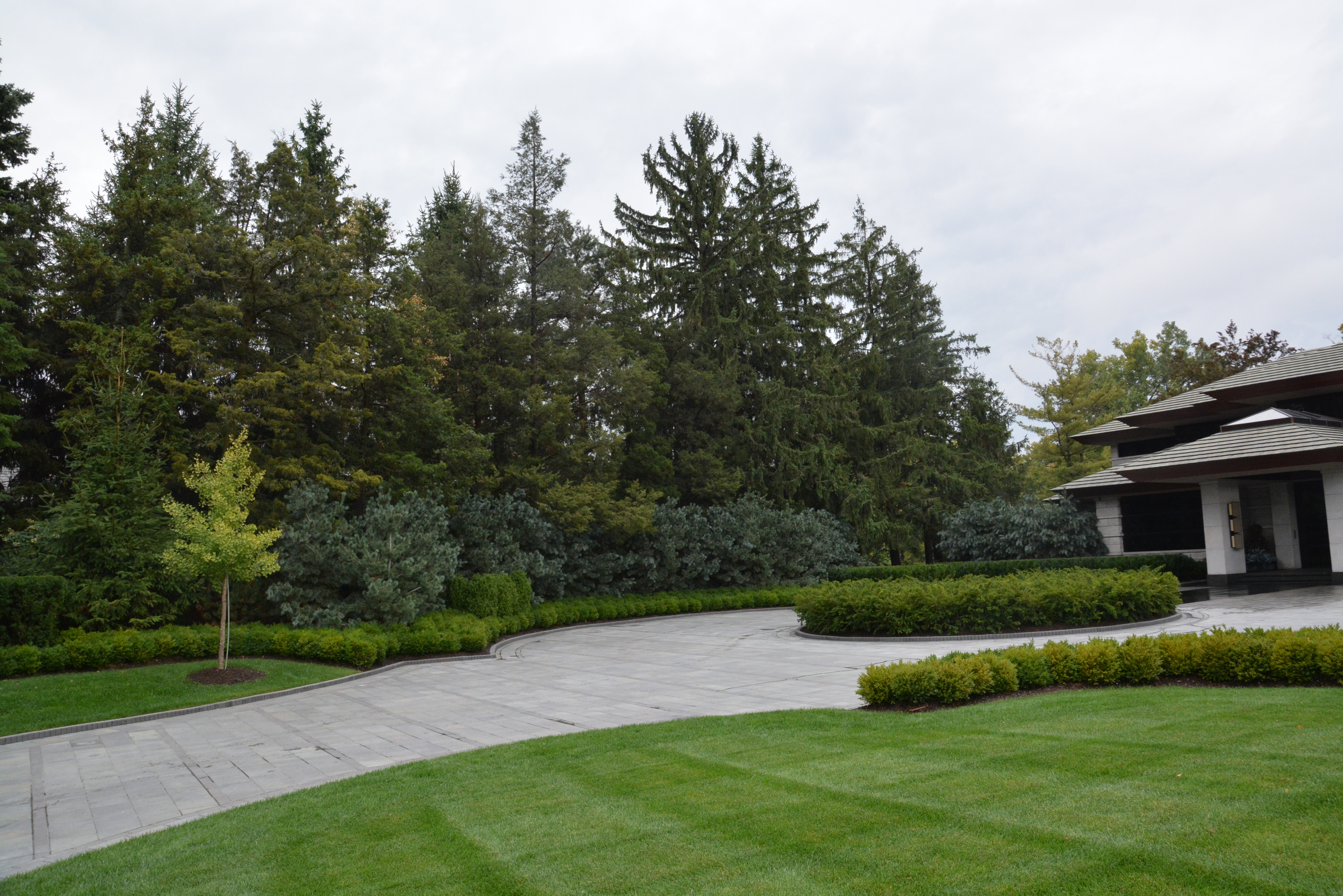
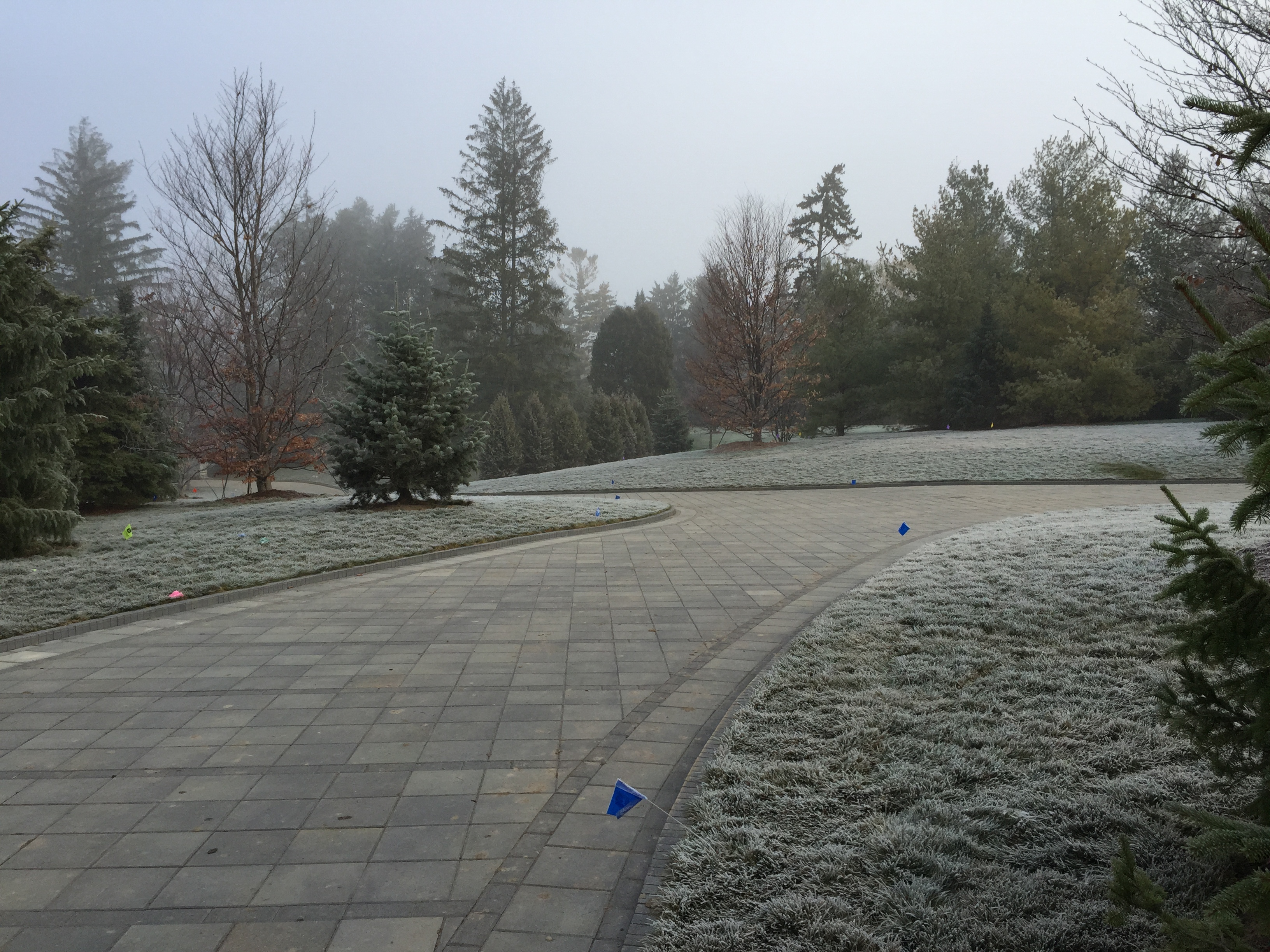
rainy-day-2016-4The old spruce in the background of this picture belong to the neighboring property. We did borrow this view. A small and solitary columnar ginkgo to the center left will provide a considerable and beautiful vertical element at the entry to the drive court, once it settles in, and grows.
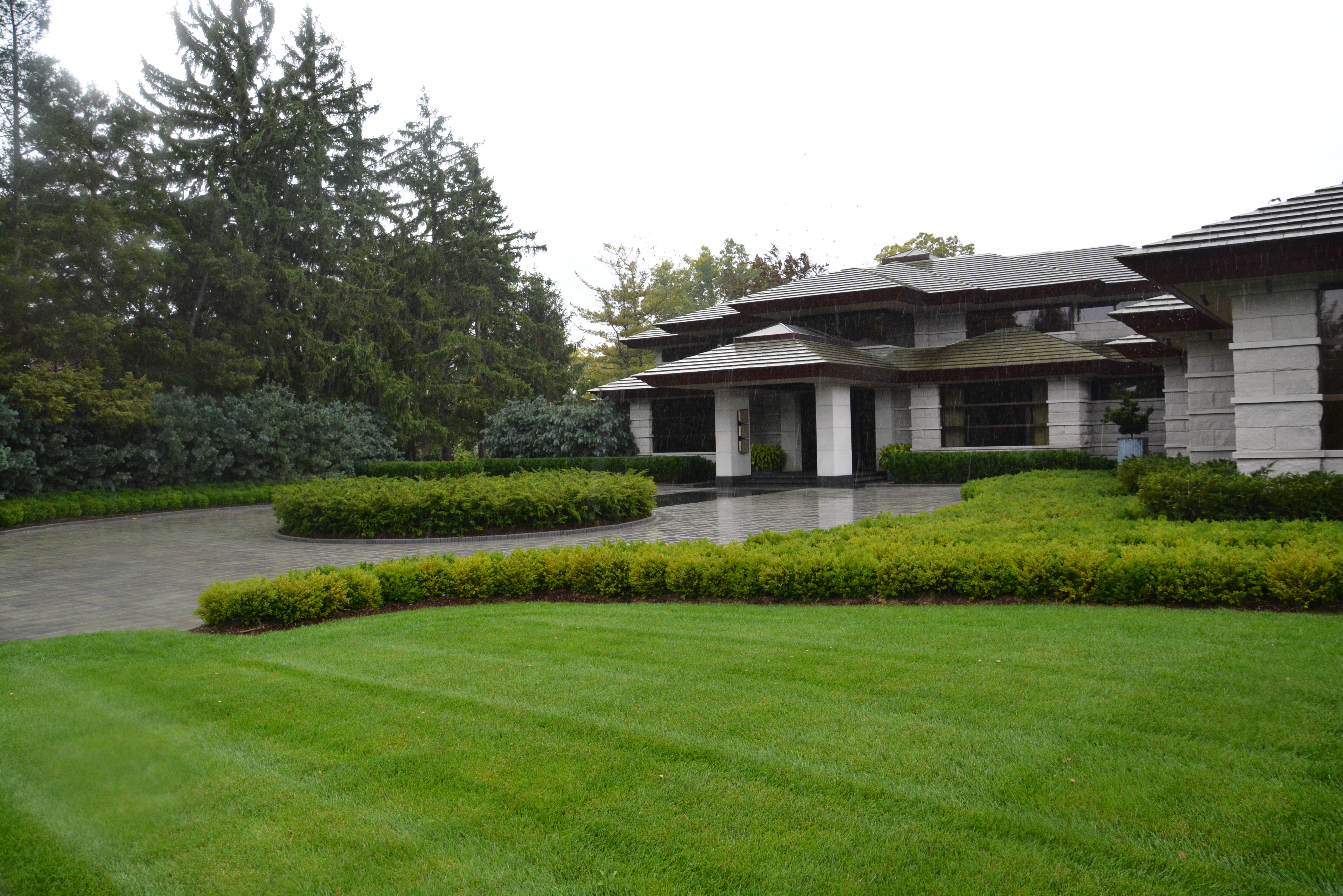
the-drive-court-10Every green gesture is in service of the long and low architecture of this contemporary home. The horizontal plane dominates the architecture, and the landscape.
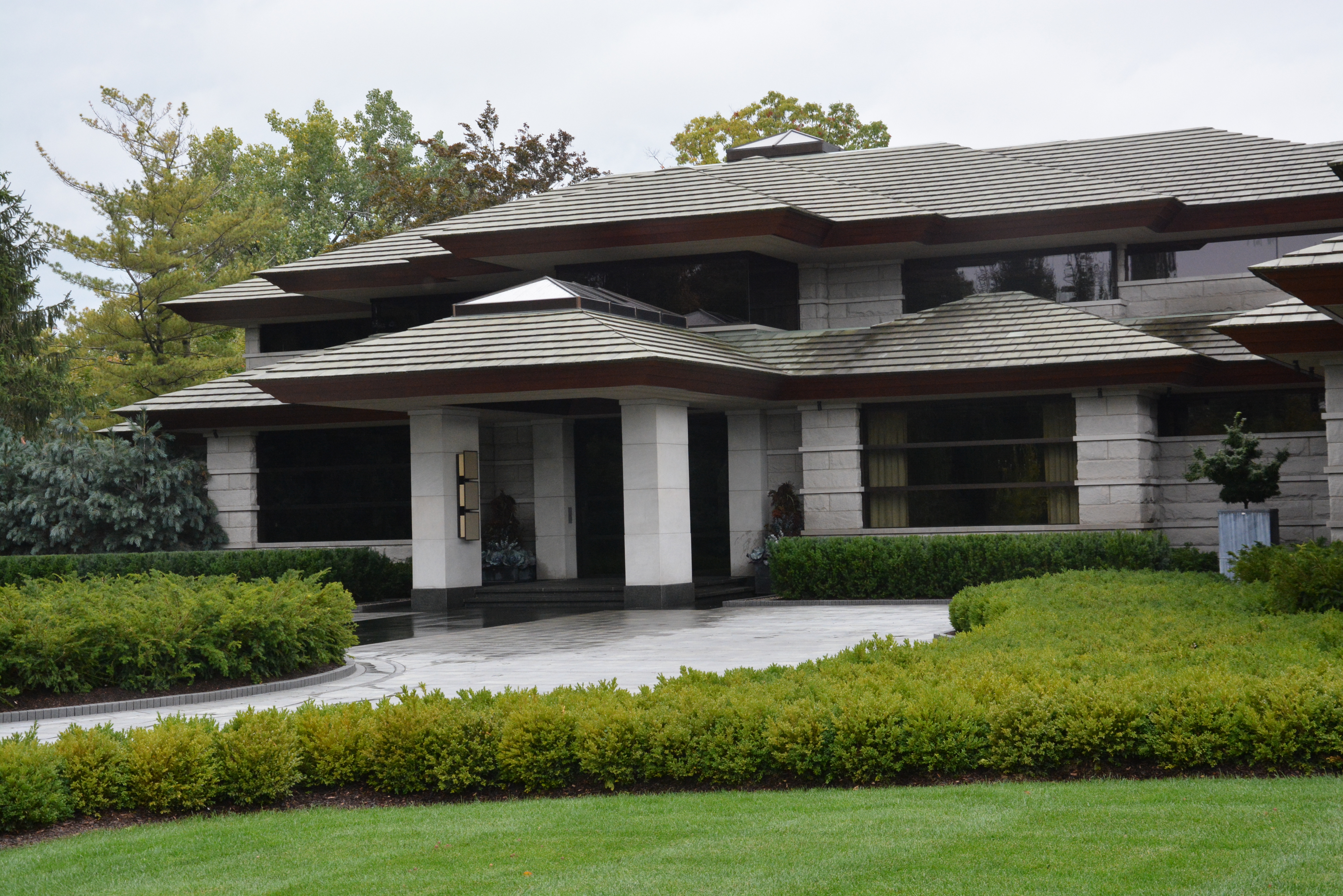
the-drive-court-8I believe the landscape respects the strong and compelling geometry of the house. Mind you, this is the first season of the landscape. I am pleased to say all of the plants seem to be making themselves at home. I am happy about that. The strength of the architecture greatly influenced my design, as it should.
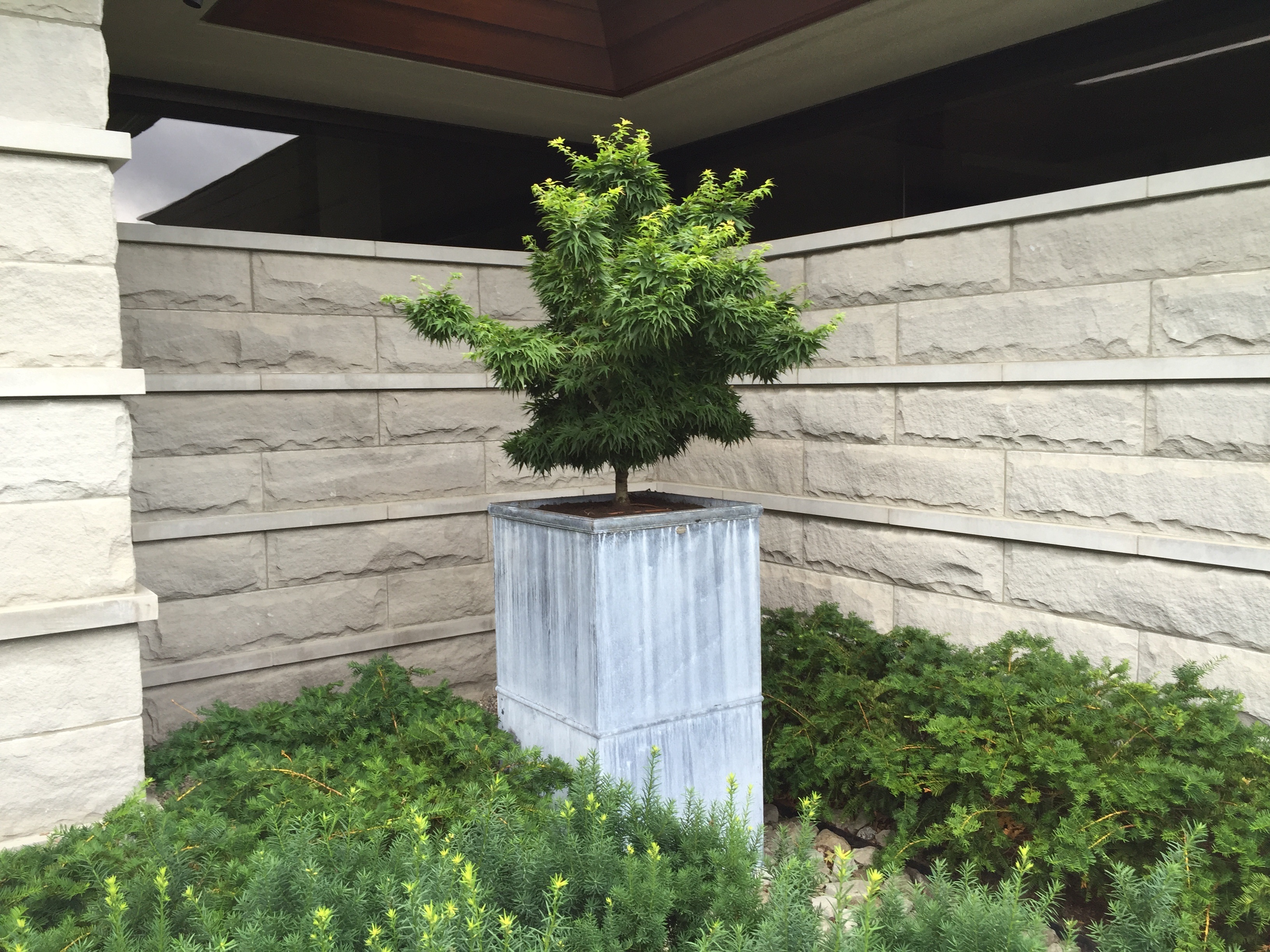
the-drive-court-9A custom made planter set in the corner between the house proper and the garage is planted with an incredibly beautiful Japanese maple. Yes, we will try to over winter this maple in the pot. The location is quite protected; this north side niche is stone on three sides, and is partially protected by a generous roof overhang.

the-drive-court-4The view from the opening of the circular drive court reveals a formal and contemporary landscape that quietly celebrates a beautiful example of contemporary architecture.
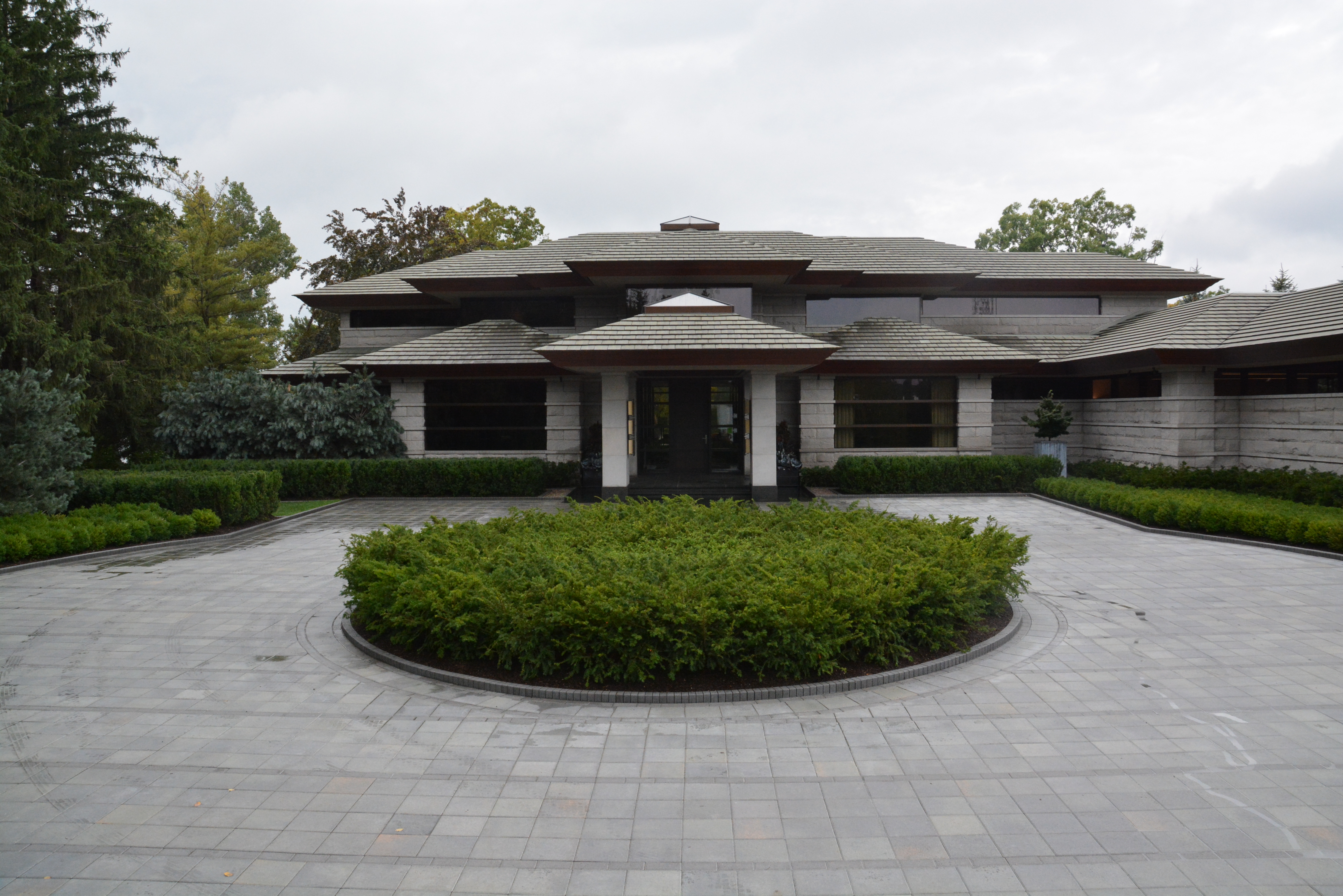
the-drive-court-5I persuaded the tallest member of my landscape crew to take this picture from inside our dump truck. I wanted to look down on the landscape, and have a view of the house skirted in a simple and low profile landscape.  I knew from the moment that I saw this house, that the landscape would not be able to ignore the architecture. I am fine with the outcome.
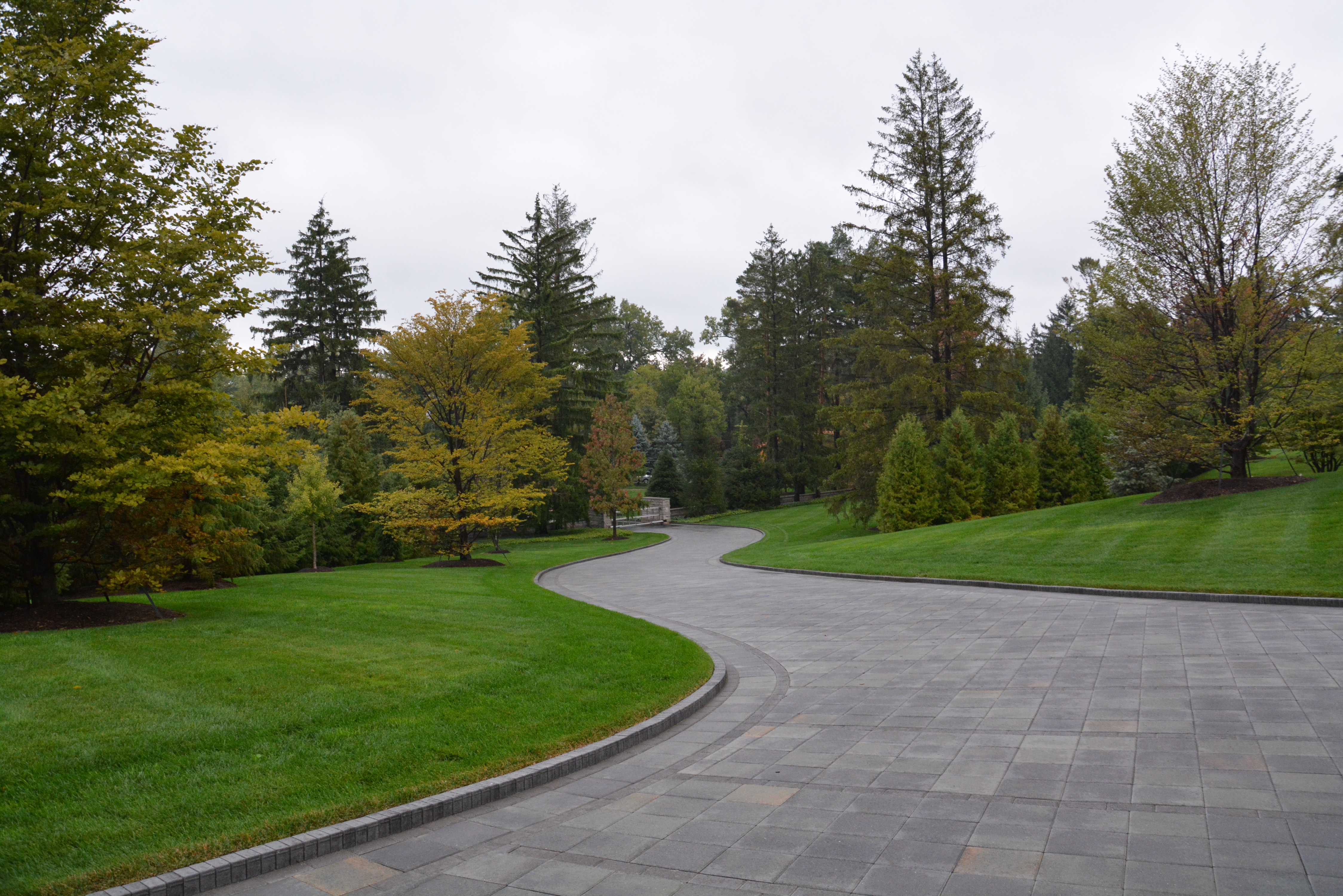
dsc_9437The trip back down the driveway on this mid October day, a year after the initial landscape installation, was a good trip indeed.


Save

Save

Save

Save

Save

Save

Save

Save

Save

Save

Save

Save

Save

Save

Save

Save

Save

Save

Save

Save

Up And Down The Driveway

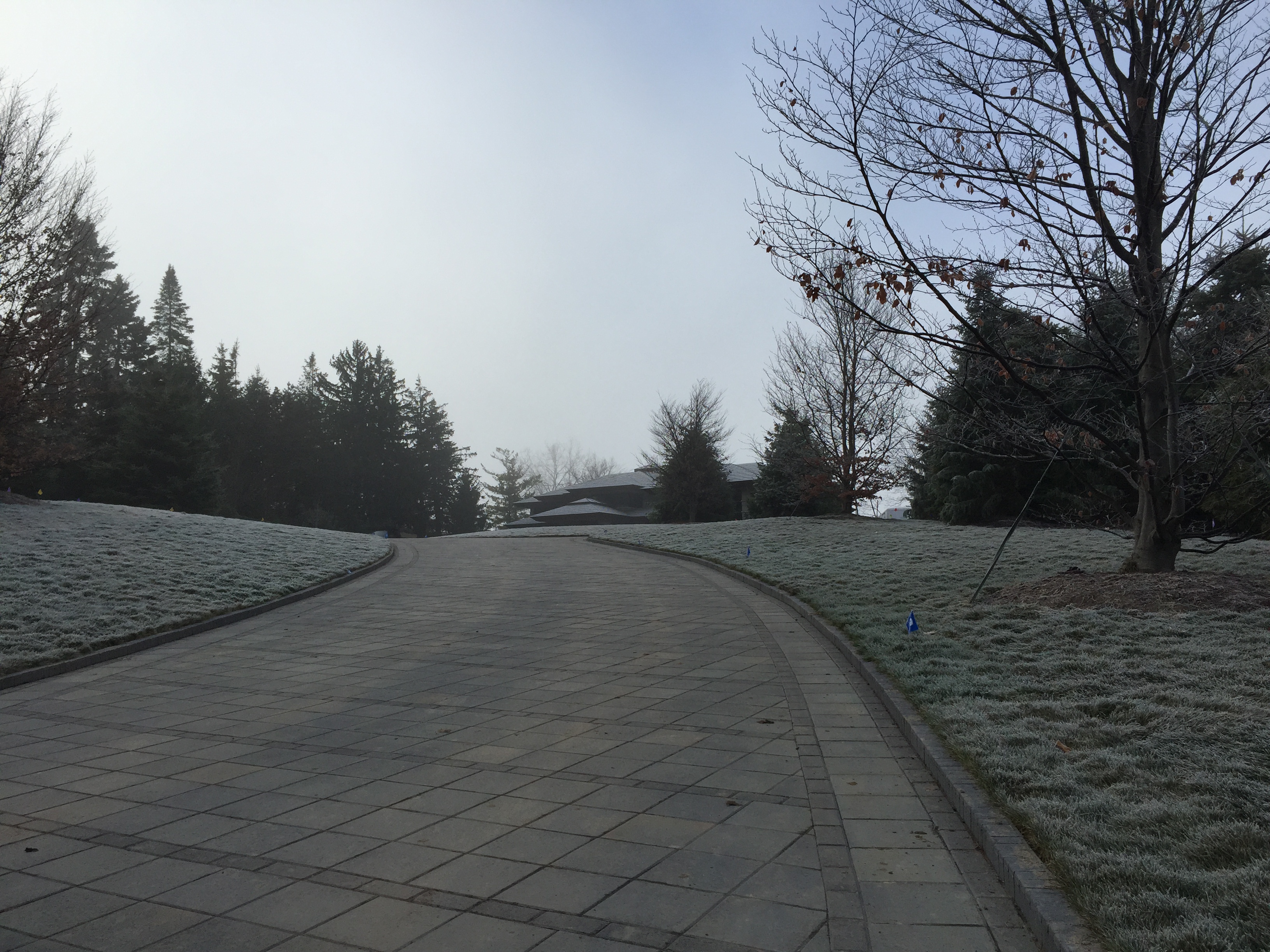
december-5-2015-062In November of last year, I wrote about the challenges posed by refurbishing a landscape while a new driveway was under construction. GP Enterprises managed to plant a number of big trees, including European green beech, tricolor beech, Norway spruce, fastigiate hornbeam and sweet gum, with a digger truck – as the old driveway was being torn out. This collection of specimen trees were placed mindful of the views established by the placement of the driveway. The property had previously been densely planted with Norway spruce on the east and west lot lines, for privacy.  The client was more interested in a more park like landscape which would make the trip up and down the driveway an interesting trip. Needless to say, they like trees. The rounded tree a little left of center in the above picture is a 10″ caliper tricolor beech. Behind and to the right of the beech is a very old, previously existing, weeping Norway spruce.  As the lower branches had lost needles with age, a semicircular wrap of American arborvitae was planted behind it.

december-2015-3The arborvitae added a lot of green weight to the old Norway, and to this entry view. On the right, a columnar sweet gum.  In the distance, to the left, a big beech. The new driveway was an enormous undertaking, and is quite wide.  Part of the beauty of it is a curb that defines the shape and direction of the drive. The adjacent ground was regraded so it rolls gracefully down to that curb.

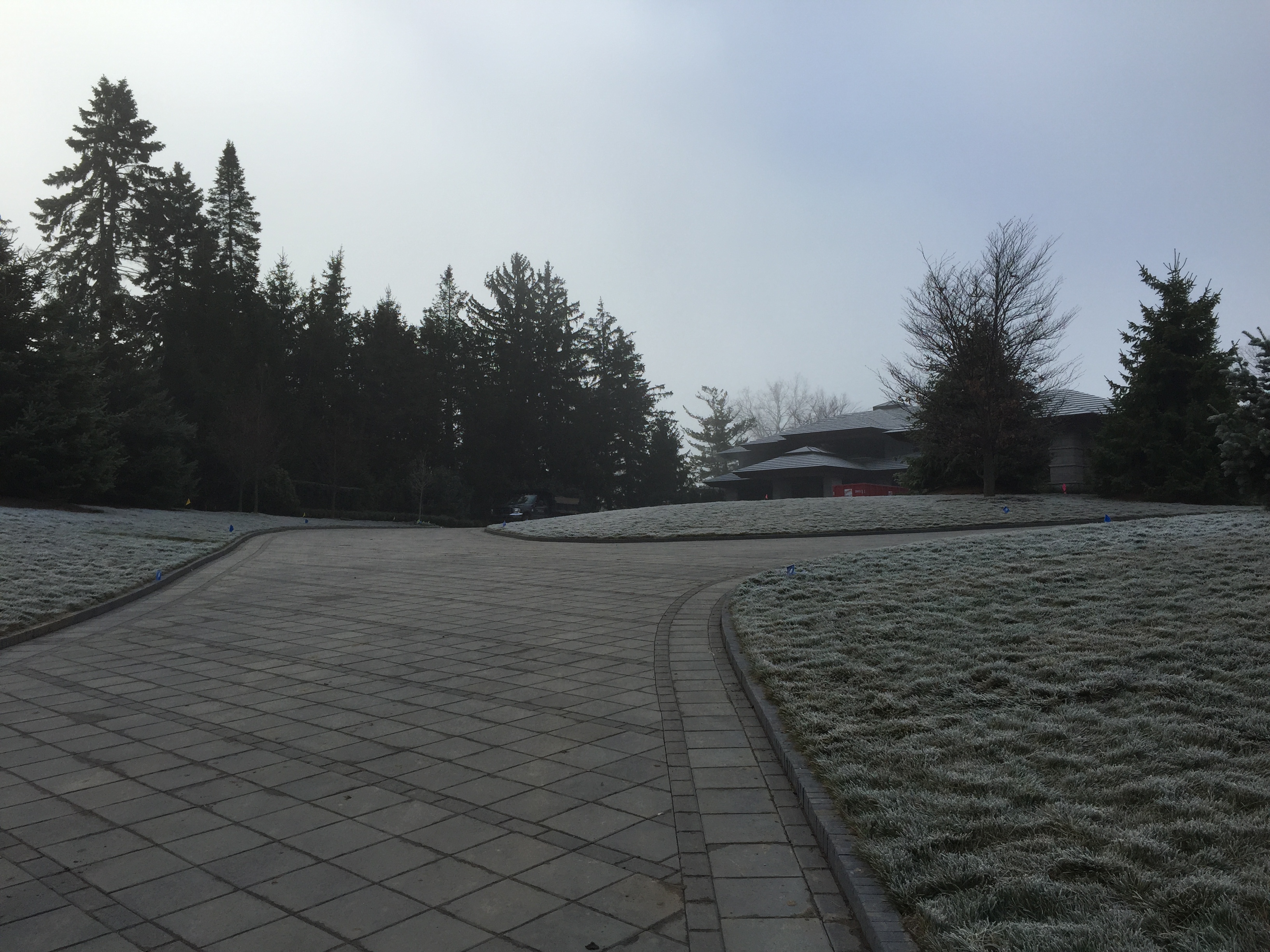
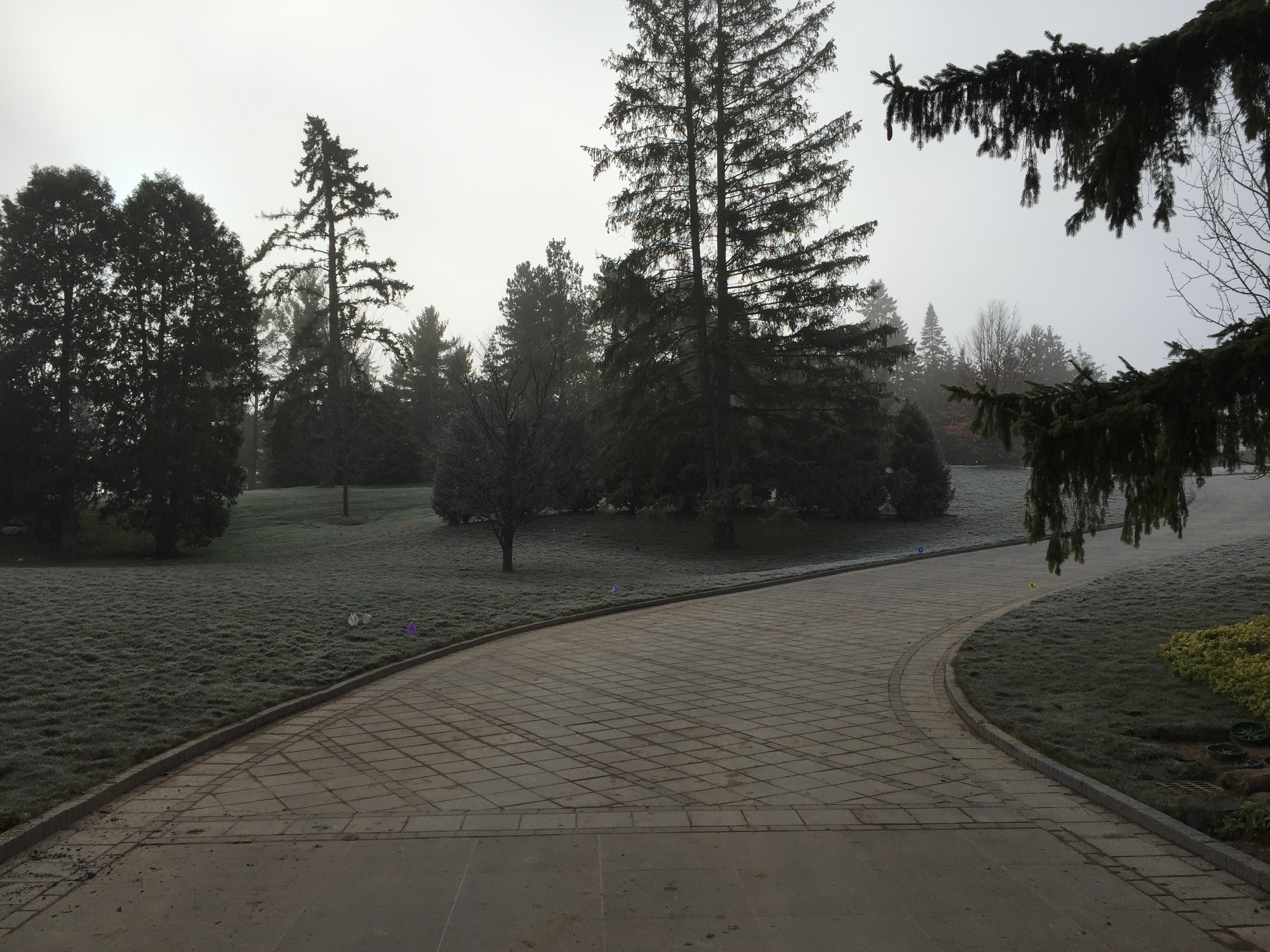
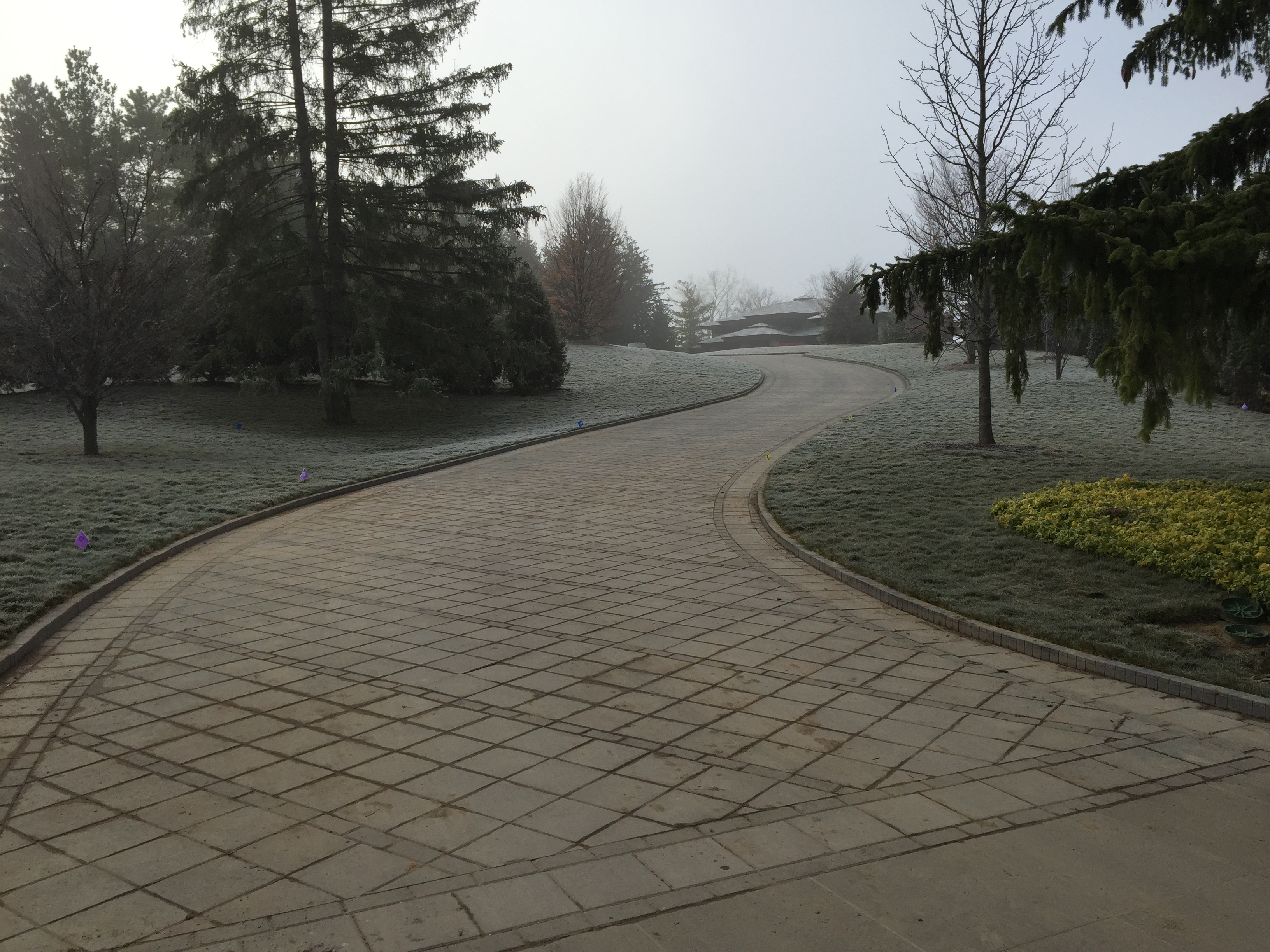
Deborah Silver And Company Landscape DesignThe drive up, and the drive back down does a great job of telling the landscape story. These pictures were taken very early on a cold morning in December, just after the project was finished. Seeing a landscape just after dawn permits the eye to focus on the composition and shapes, rather than color or texture.
december-2015-7The architect did such a great job of setting this contemporary house low, on the crest of a property that rises steadily from the road, and falls steeply to to a lake on the far side. The right fork in the drive goes to the garage, the left fork to the front door.  The low dome of ground that separates the two helps sink the driveway down, and delays the visual presentation of the house to the final approach of the drive. Whomever designed the location of the drive, and the grading adjacent to the house did a great job.

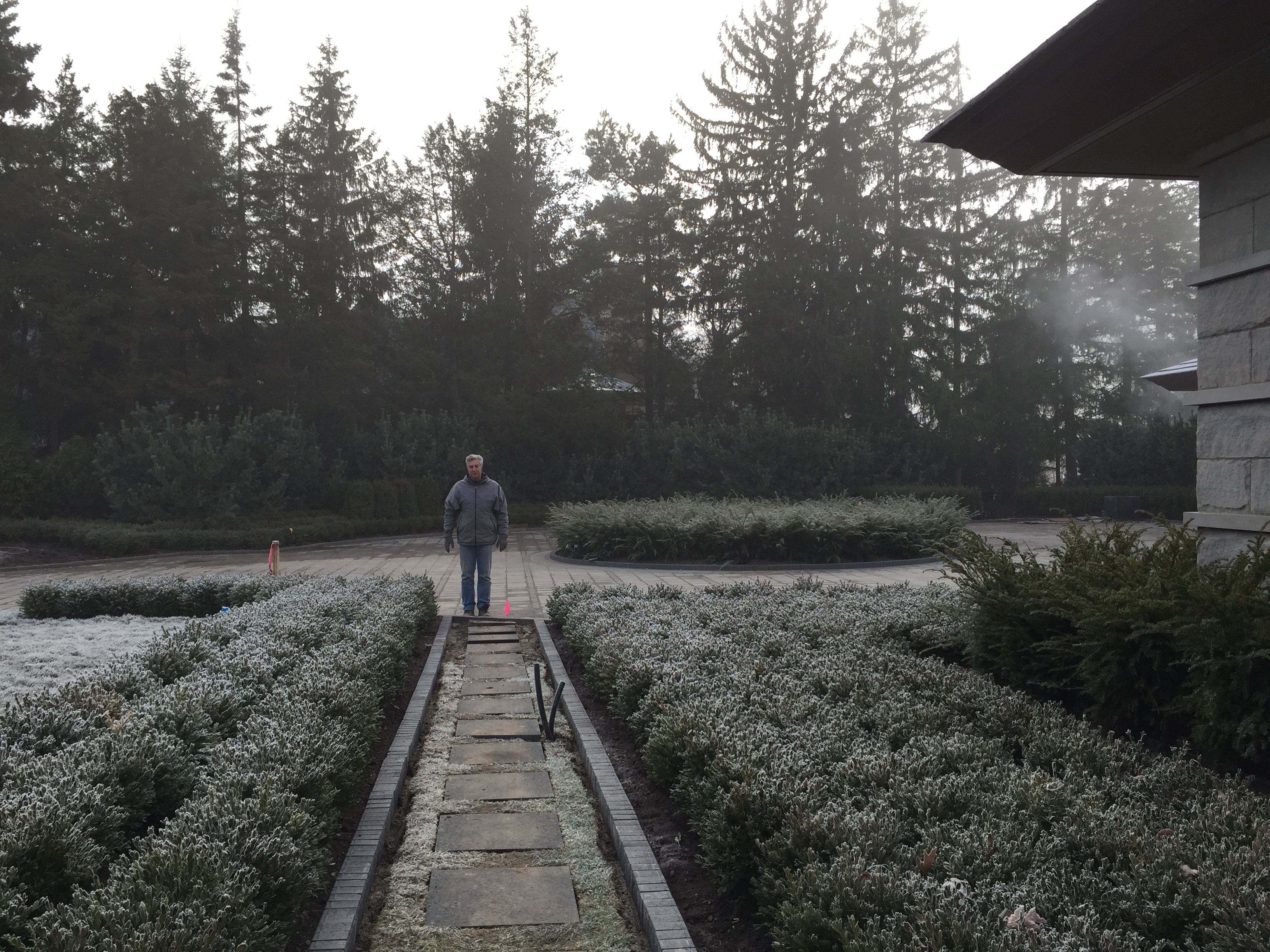
december-5-2015-044The landscape near the house is low, and simple, and entirely evergreen. If you live in a cold climate you know how important it is to have an evergreen presence in the landscape. The circular drive court was redone first. All of the landscape material for this area was delivered all at once, and staged on tarps on this drive court. Once the plants arrived, the old driveway disappeared. We could no longer drive trucks to this area. The planting was slow going until we have enough plants in the ground to relieve some of the congestion.  In the foreground are masses Green Gem boxwood, 12-15″ tall.  My landscape superintendent Dan, pictured above, did a beautiful job directing the installation.
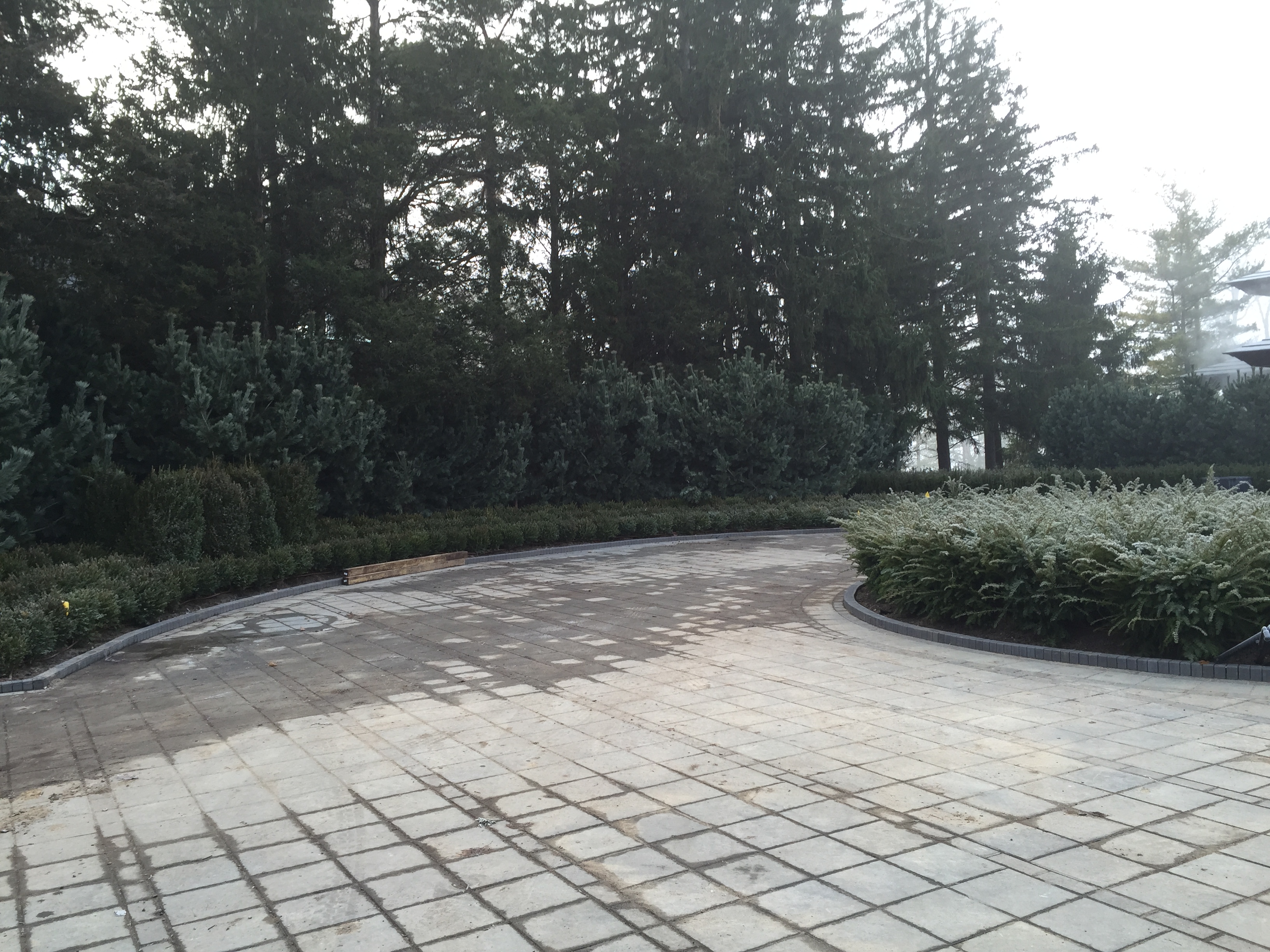
december-2015-9This circular bed of taxus capitata spreader yews features 24″ tall plants at the center, and 36″ tall plants at the outside edge.

december-2015-17The pinus flexilis “Joe Burke” that screen the neighboring property to the left are faced down by the same “Green Gem” that are planted elsewhere.

december-5-2015-028An existing hedge of upright yews was transplanted just outside the drive court, and is accompanied by a fastigiate mugho pine, and more of the Green Gem boxwood. An existing Katsura on the left has company in a fastigiate gingko on the right.

december-2015-1A path from the garage drive to the drive court was set inset in the ground cover boxwood, and is not visible from the drive until you reach this point.  Against the foundation is a hedge of the spreading cap yews. Separating the cap yews and boxwood is a ribbon of gravel.  This provides space for the plants to grow, and it provides access for maintenance.  All of these evergreens are on drip irrigation. Once the path was fionished, grass would be planted between the stepping stones.

december-2015-2The view out from the house is equally as circumspect as the view up to the house. The beautiful shape of the land here, and a trio of spruce are the feature of the mid ground space. The rows of boxwood provide contrast to the informal landscape in the background.

Deborah Siver and CDompany landscape design The grade of the return view down the drive is quite different than the approach views. On the left, a group of columnar Serbian spruce.  In the mid ground, a large green beech, and the blue needled abies candicans. In the distance, the semi-circle of American arborvitae.

december-2015-5Another beech was planted on the far side of the drive, and is the centerpiece of this view. To the right, a group of white pine. Behind the American arborvitae, a massive and old weeping Norway spruce.

december-2015-8We finished the last bit of the work in mid December 0f 2015. I drove up and down the drive more than just a few times. It was a quiet summer for this phase of the landscape.  Every tree was busy moving in to their new homes, and putting down roots.

Save

Save

Save

Save

Save

Save

Save

Save

Save

Save

Save

Save

Save

Save

Save

All About The Boxwood

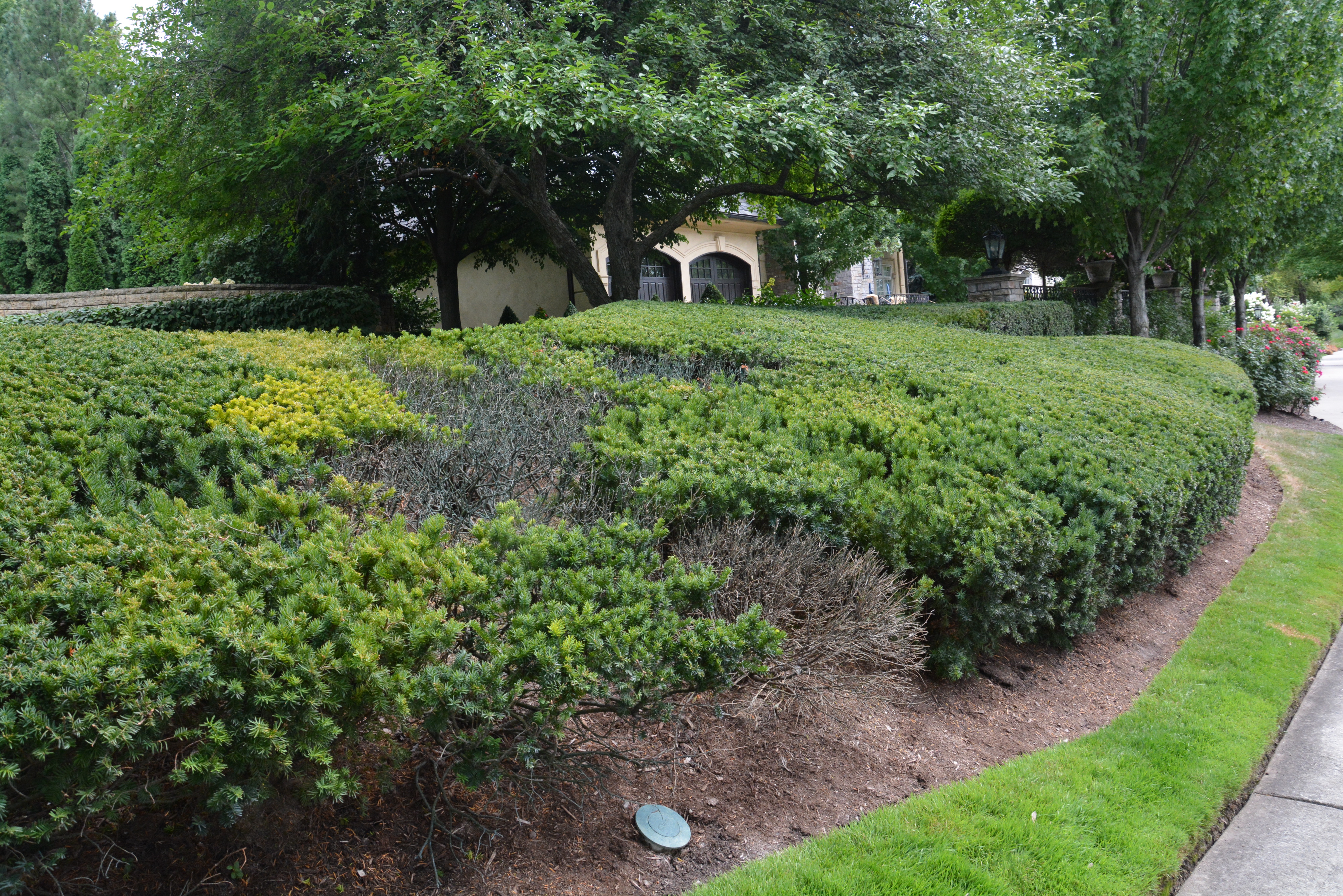
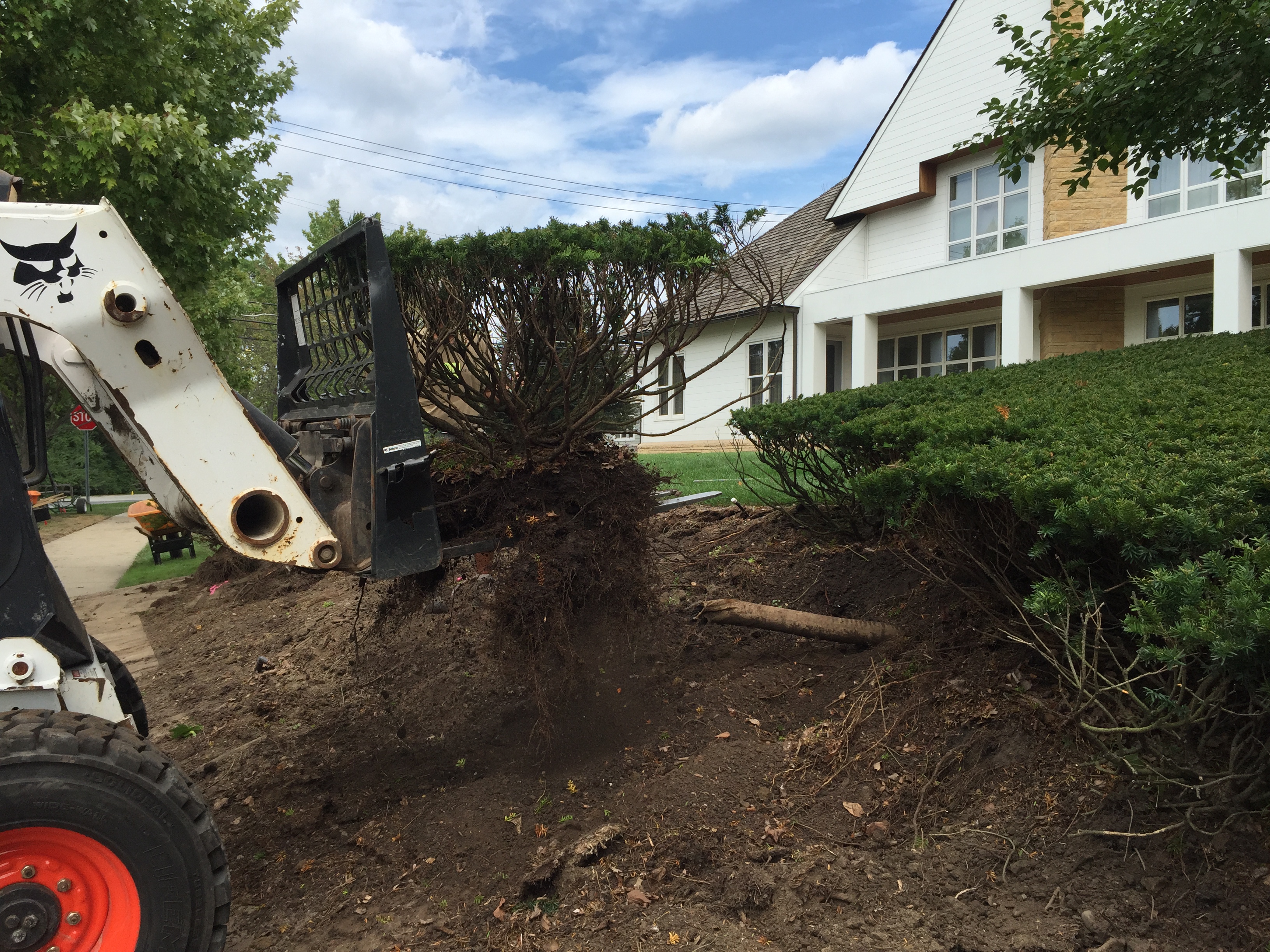
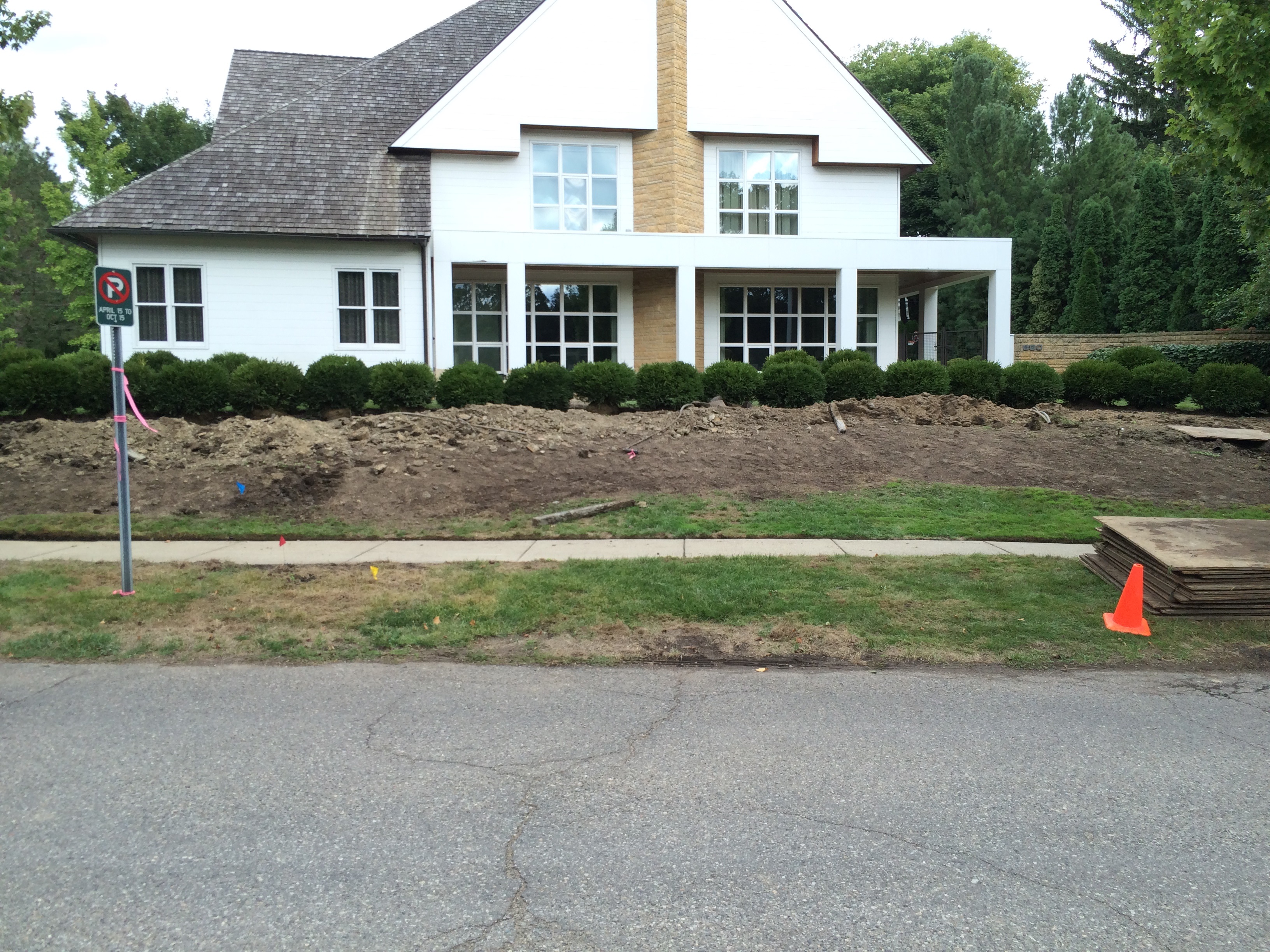
a-contemporary-landscape-13My clients own a contemporary home situated on a compact property in an urban neighborhood. The house (not visible in this picture) sits a good three feet above the sidewalk.  Though I had helped with the landscape design in immediate proximity to the front door, an L-shaped planting of yews mirroring the sidewalks of their corner property predated my work with them. The above picture shows part of a collection of yews planted on that slope, that had suffered from years of too much irrigation water, and poor pruning. Too much water can be deadly to evergreens – especially yews. The massed planting meant that I did not have a clear picture of the grade or the dimensions of the area to be landscaped. I told my clients that I would have to remove all of the yews prior to having a redesign of this part of their landscape. They agreed to the removal, with no clear idea of where we would go next. They indicated that they had trust in my eye, and that I should go ahead.

a-contemporary-landscape-5The yews that still had decent root systems had been pruned within an inch of their lives. The above picture is telling. Pruning spreading yews (taxus densiformis and its associated cultivars)  flat with a power operated pruning tool results in a shallow but dense layer of top growth that denies air, light, and water, to the branches below. Every pruning cut produces a multitude of breaks in any woody plant stem. This yew, like every other one we removed, had an uppermost skin of green supported by a thicket of bare branches. Yews need to be pruned casually, and irregularly. Like a shag haircut. If you are interested in an upright and formally growing yew, choose one that has a naturally formal habit that approximates what you need-as in taxus media “Moonii”. But I digress. Any yew branch, no matter how thick or old, will sprout needles given enough light. These lower branches lost their light a long time ago, and would take many years to re-needle.

a-contemporary-landscape-6 I understood my client’s interest that this slope be planted. Their property is across the street from a busy city park.  They loved overlooking the park, but they wanted some small measure of privacy. Once the yews were removed, I got a good look at the lay of the land.  The grass on the upper level had an irregular edge, and sloped downward to the corner. The slope itself sagged in the middle. The yews that had been planted next to the foundation of the house-we got rid of them. Those Hicks yews obscured the beautiful stone foundation of the house, and had grown up over the bottoms of the windows. Any element in a landscape that is overgrown says untended loud and clear. My clients were ready to redo. We did the best we could to level the upper lawn plane, with a plan to grass up to that stone foundation.

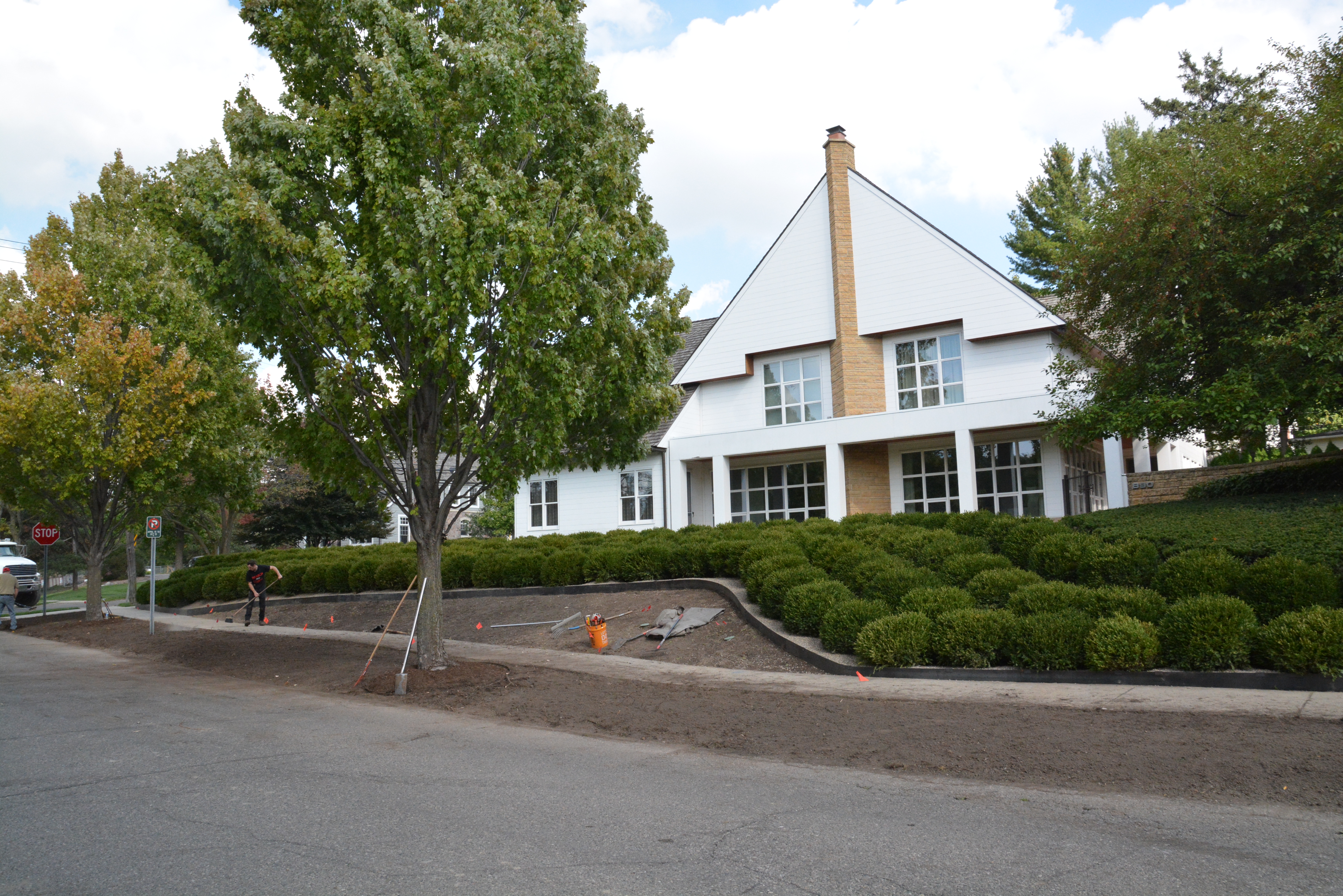
a-contemporary-landscape-16Just prior to my client’s call for a landscape renovation, I had a call from a supplier about a field of 40″ diameter Green Gem boxwood available for sale. I sent pictures to my clients.  They were indeed interested. All three of us could see that these beautiful plants could could go a long way towards a sculptural landscape for this property. I arranged to have the boxwood delivered.

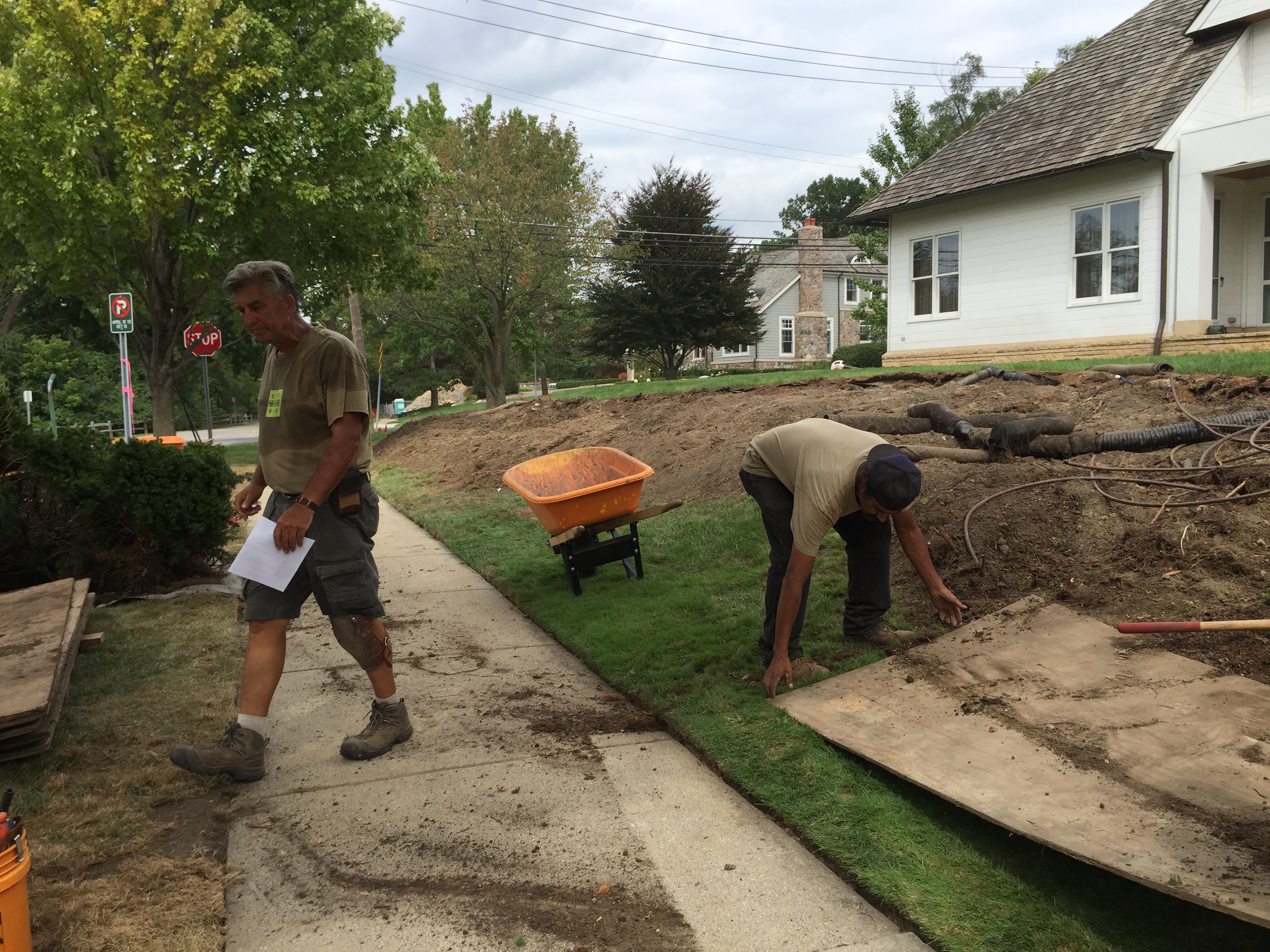
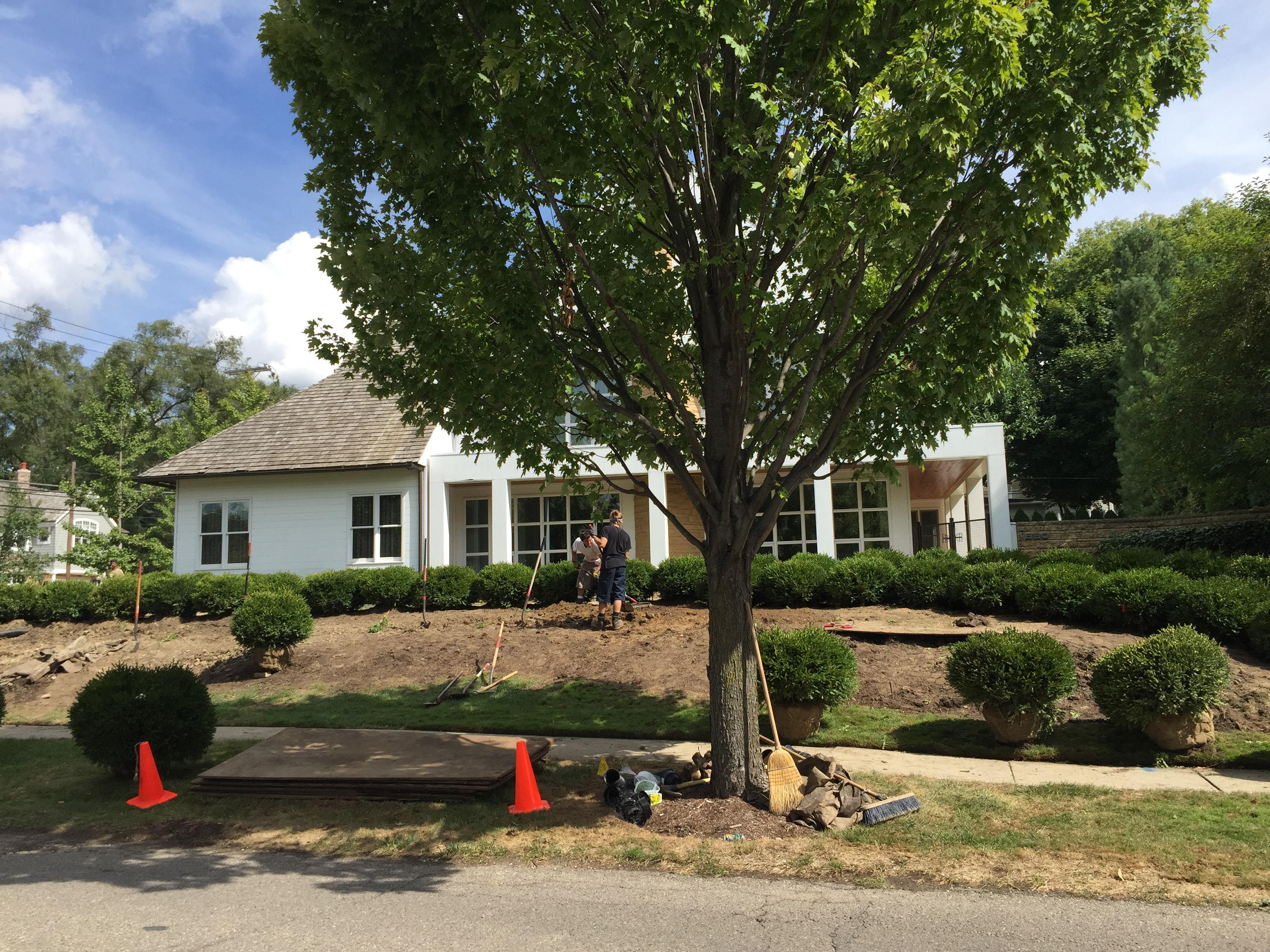
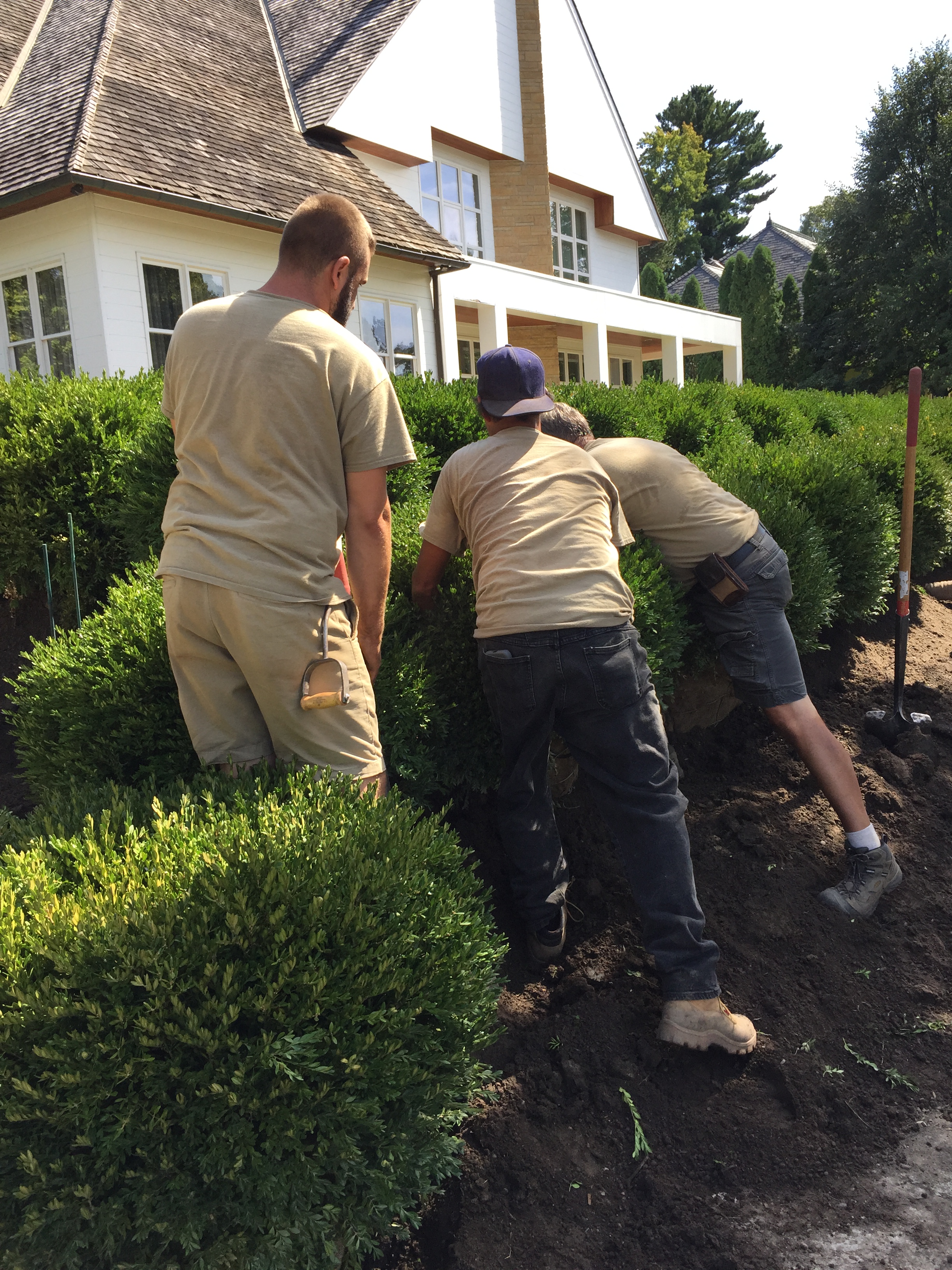
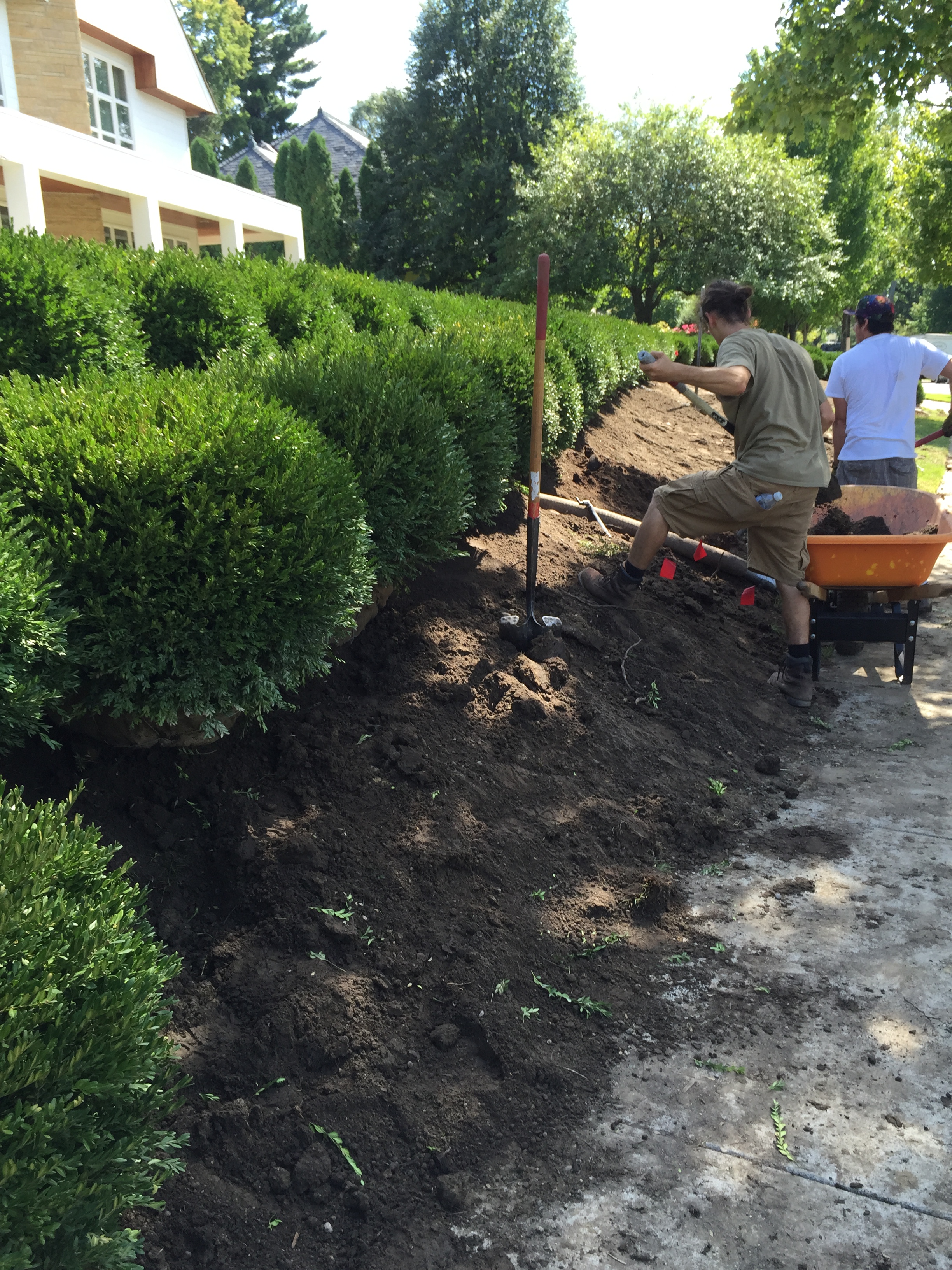
a-contemporary-landscape-8We did a lot of work to restore the upper level surrounding the house to a reasonably flat plane. That took in excess of 20 yards of soil. Many yards of that soil went to that low corner in the center far right of this picture. We laid down a roadway of plywood. We had no idea to damage that upper level grass, but we had heavy plants to move. The first row of these giant boxwood were planted with an eye to celebrating the newly leveled plane up top. Thought these boxwood were remarkably uniform, there were subtle differences. The arrangement of the plants in a row took a little time to get right.

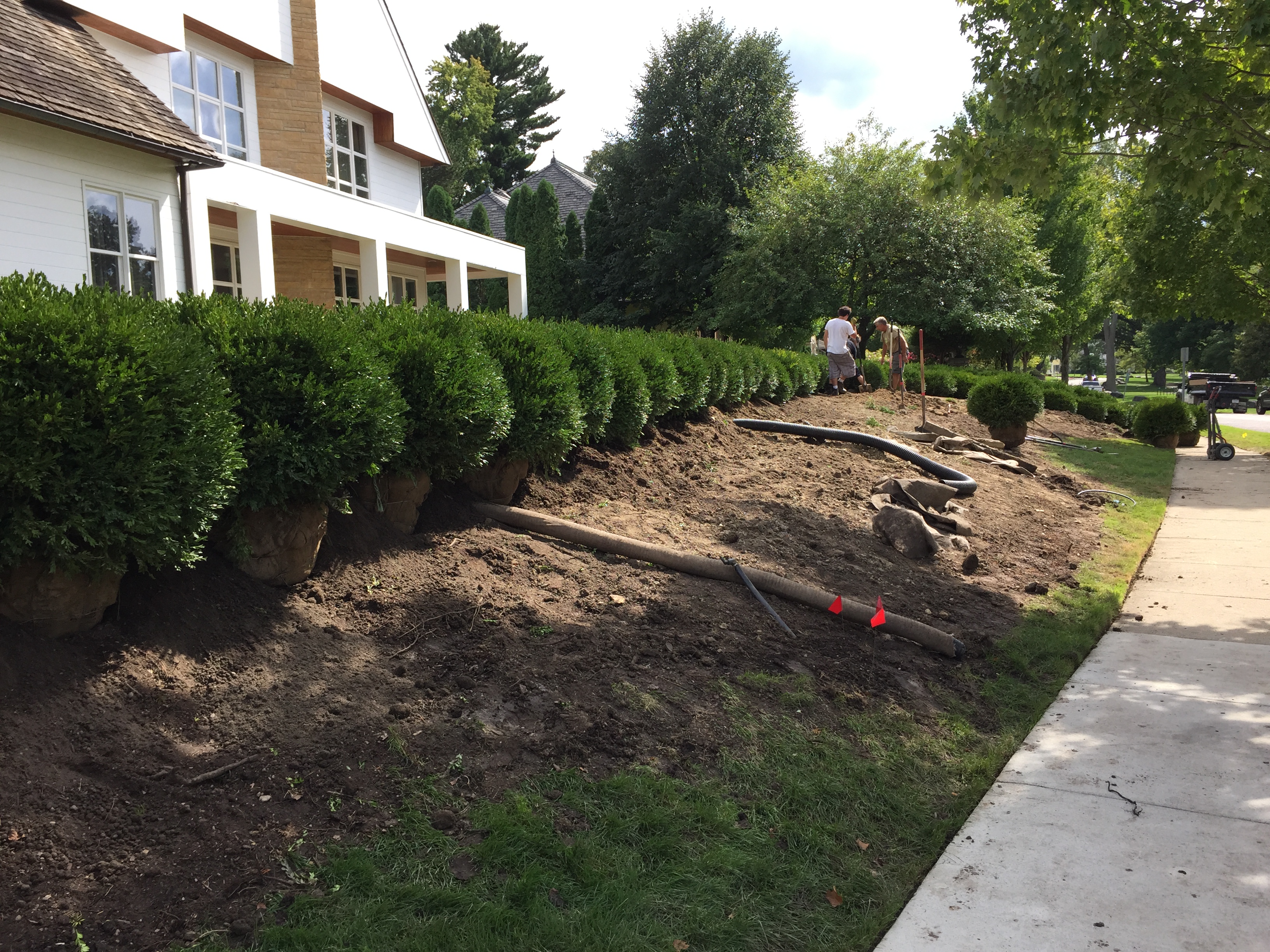
a-contemporary-landscape-7The early view from the street was chaotic. Several iterations of previous sprinkler systems, and a complex drainage field was hidden underground. Rearranging and adding to pipe and drainage stone was a tedious but necessary part of the project.

a-contemporary-landscape-14This first row of boxwood took the longest to set, as it would establish the direction and height for all of the other plants to come.

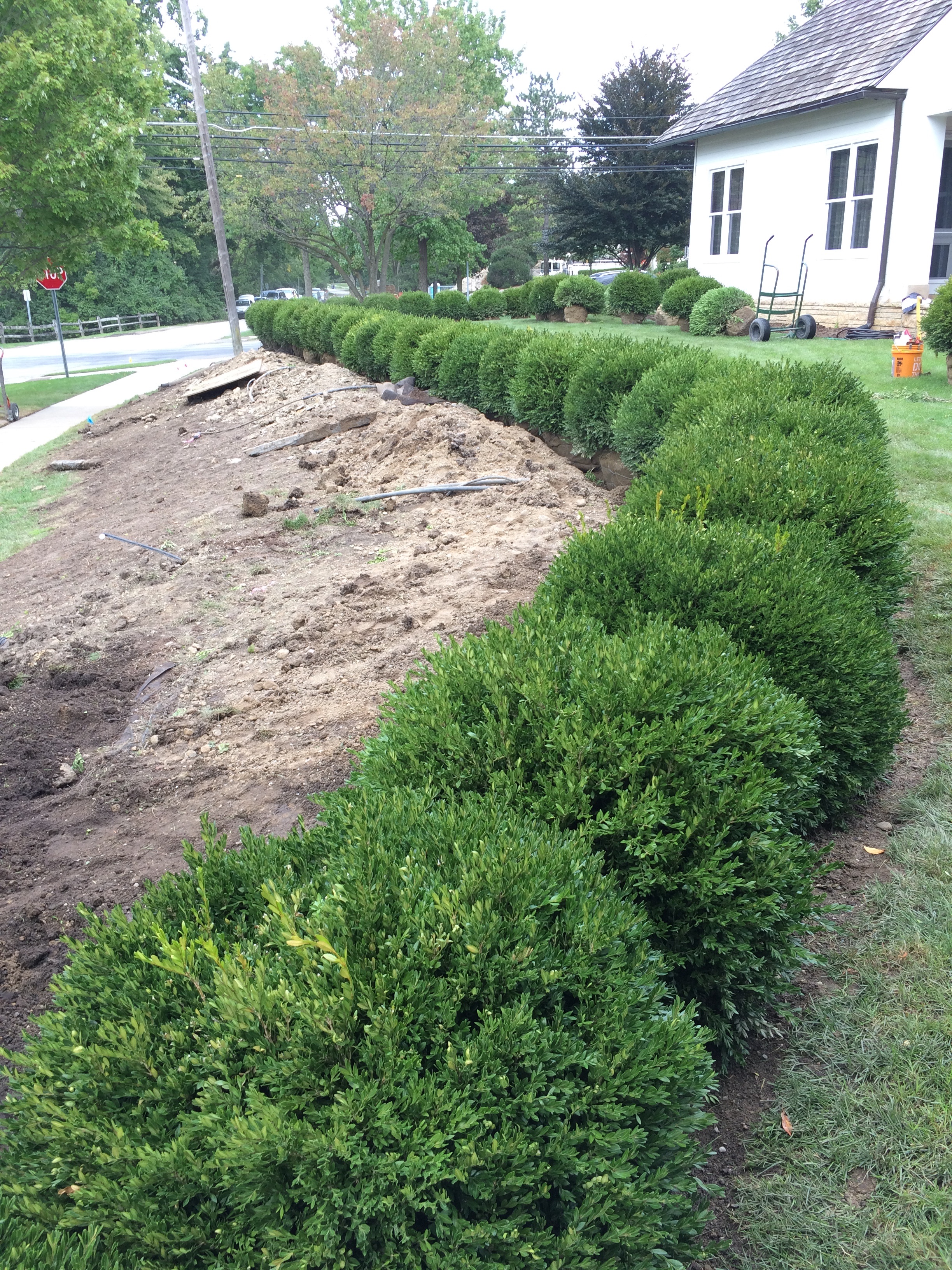
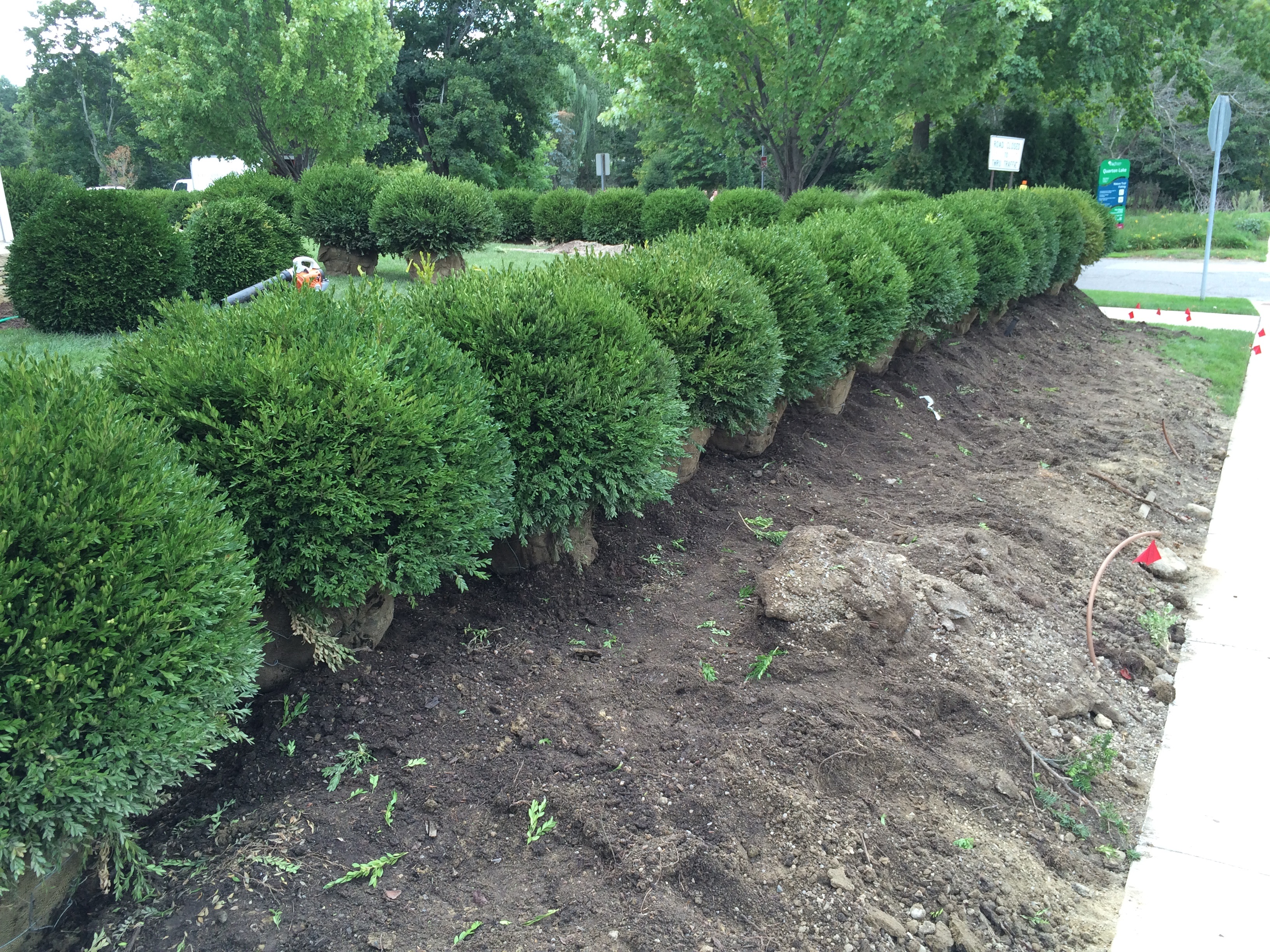
a-contemporary-landscape-15The boxwood placed on the opposite side were were set very high, to maintain the level established at the top. The root balls of the second row to come would act like a retaining wall that would permit back filling around the plants in the first row. Each of these boxwood has a root ball 28″ in diameter.  Those root balls would act like a wall, and would help prevent soil erosion.

a-contemporary-landscape-10It took the better part of an hour to face and plant each of the boxwood. The weight and the bulk of each plant made them difficult to handle.

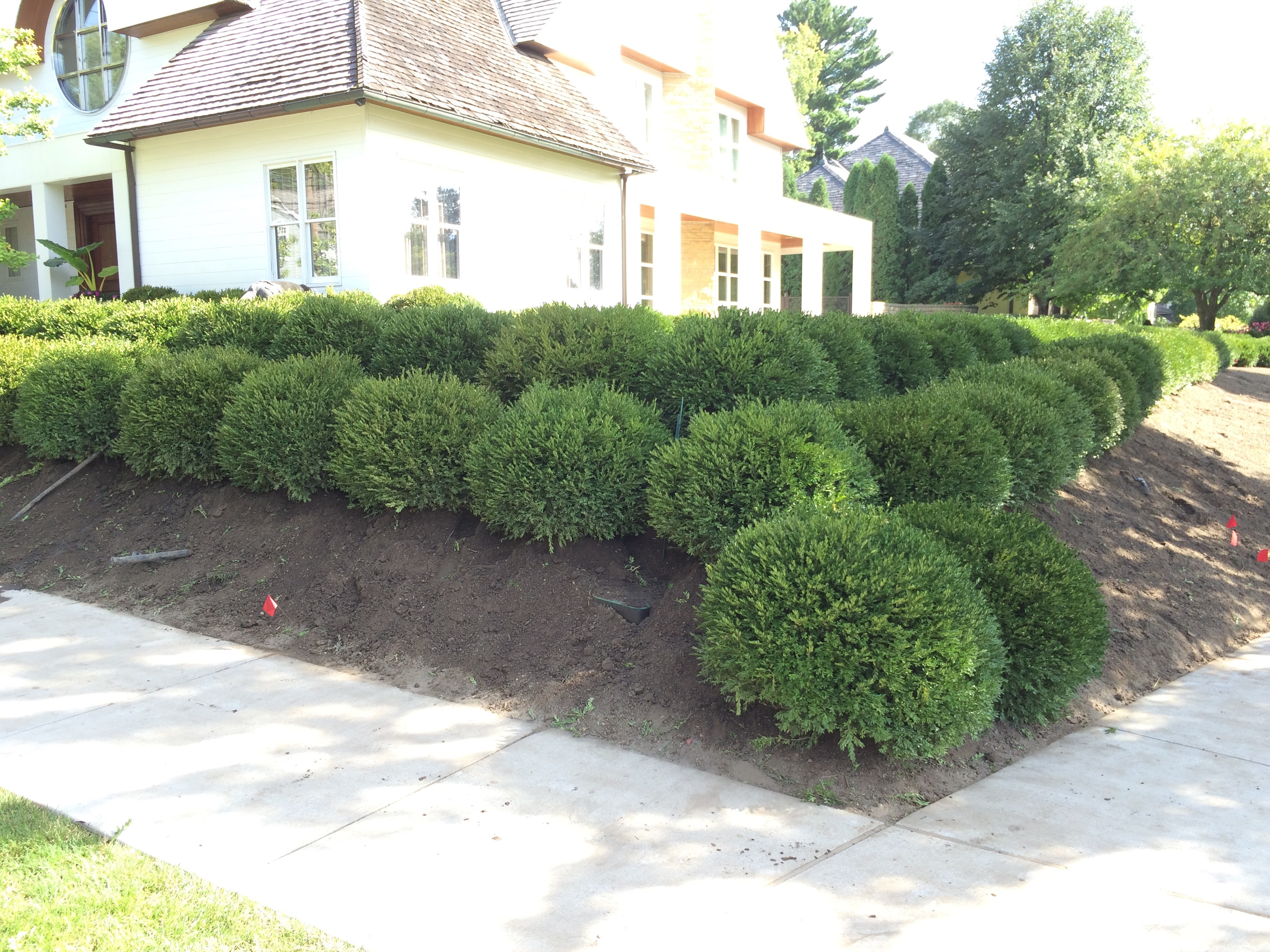
a-contemporary-landscape-9The original slope was dishy and rolling.  Prior to planting each row, we regraded the soil so it was dropping down towards the walk at a uniform rate. Each succeeding row of boxwood dropped down a corresponding amount. Or as least as close to a uniformly corresponding as was possible with boxwood of this size.

contemporary-landscapeThe yews on the far south side were not only healthy, they were beautiful. They occupied a very large area on both the upper and the lower level. We kept them.  We would snug the south side of the rows of boxwood up tight to to these existing yews.

a-contemporary-landscape-17Once the first two rows were planted, it was time to set the corner. The flow of the rows depended on establishing the corner plants. My rough sketch to my client is not my usual presentation. In lieu of accurate drawings, we talked.  One row at a time.

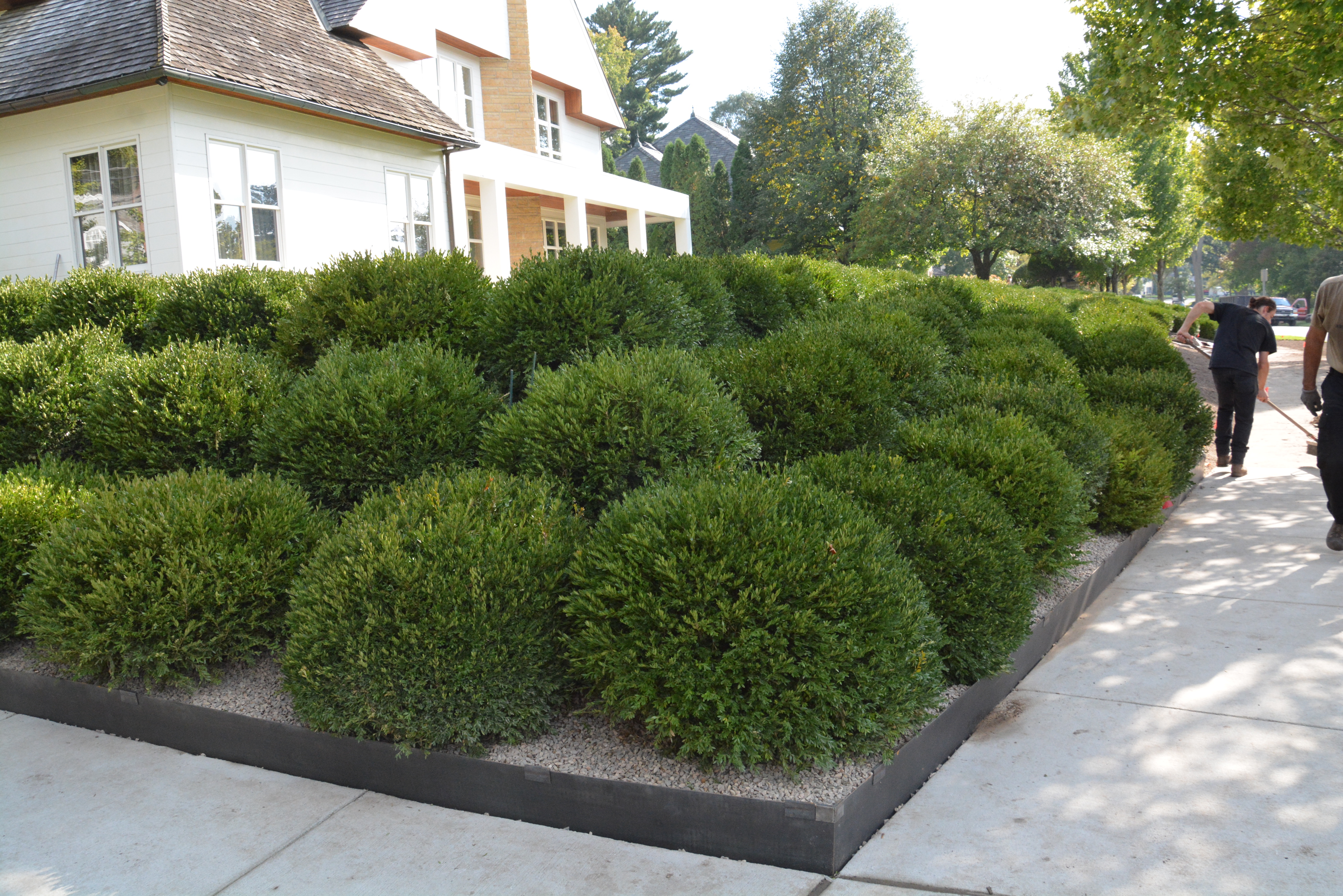
a-contemporary-landscape-11Each arm of row three began at the corner, and radiated out. Once we had four rows planted on the west side, and three rows planted on the north, we were ready for edger strip. A drip irrigation system was installed by Ian Edmunds Irrigation to insure that each boxwood would get water directly to the roots. He is the most thoughtful and thorough irrigation contractor it has ever been my pleasure to work with. The edger strip?

a-contemporary-landscape-22This oversized steel edging would allow us to back fill the bottom row of boxwood with soil, and mulch the front row of boxwood with gravel.

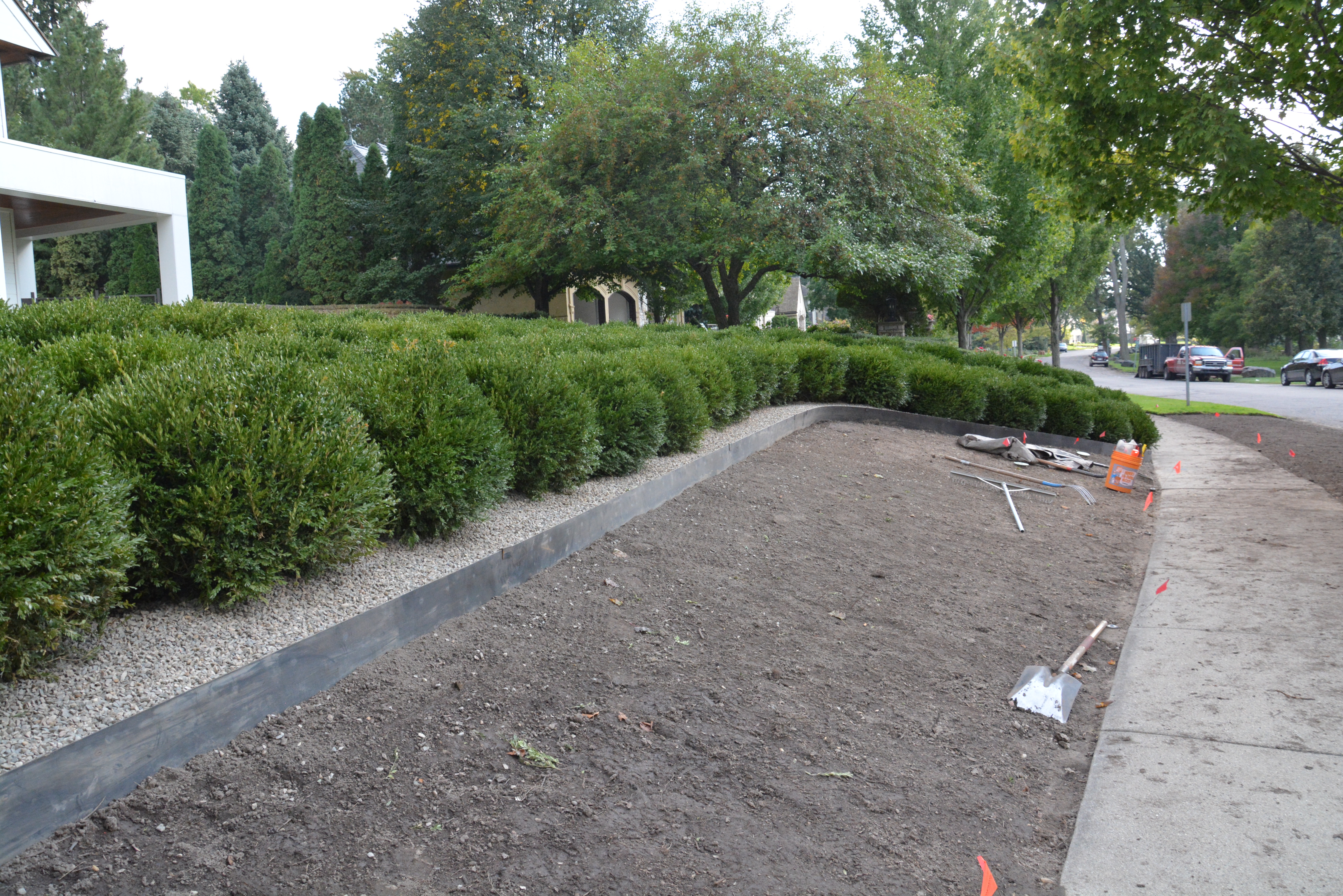
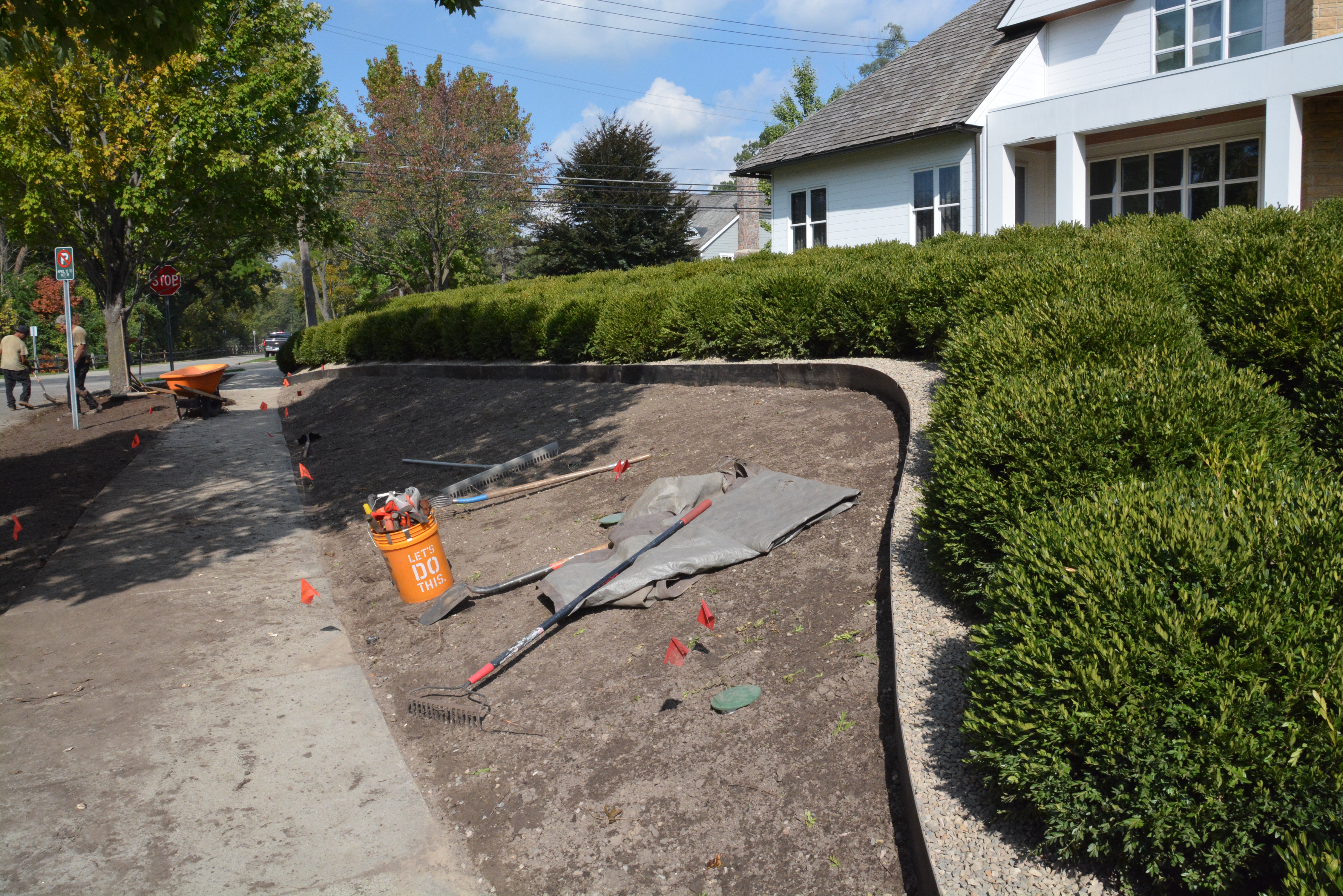
a-contemporary-landscape-1The tall steel edger strip solved a multitude of problems that were presented by this steep slope.

a-contemporary-landscape-21The grass to come on this slope would connect visually with the grass in the tree lawn.

contemporary-landscape-1the view from the park

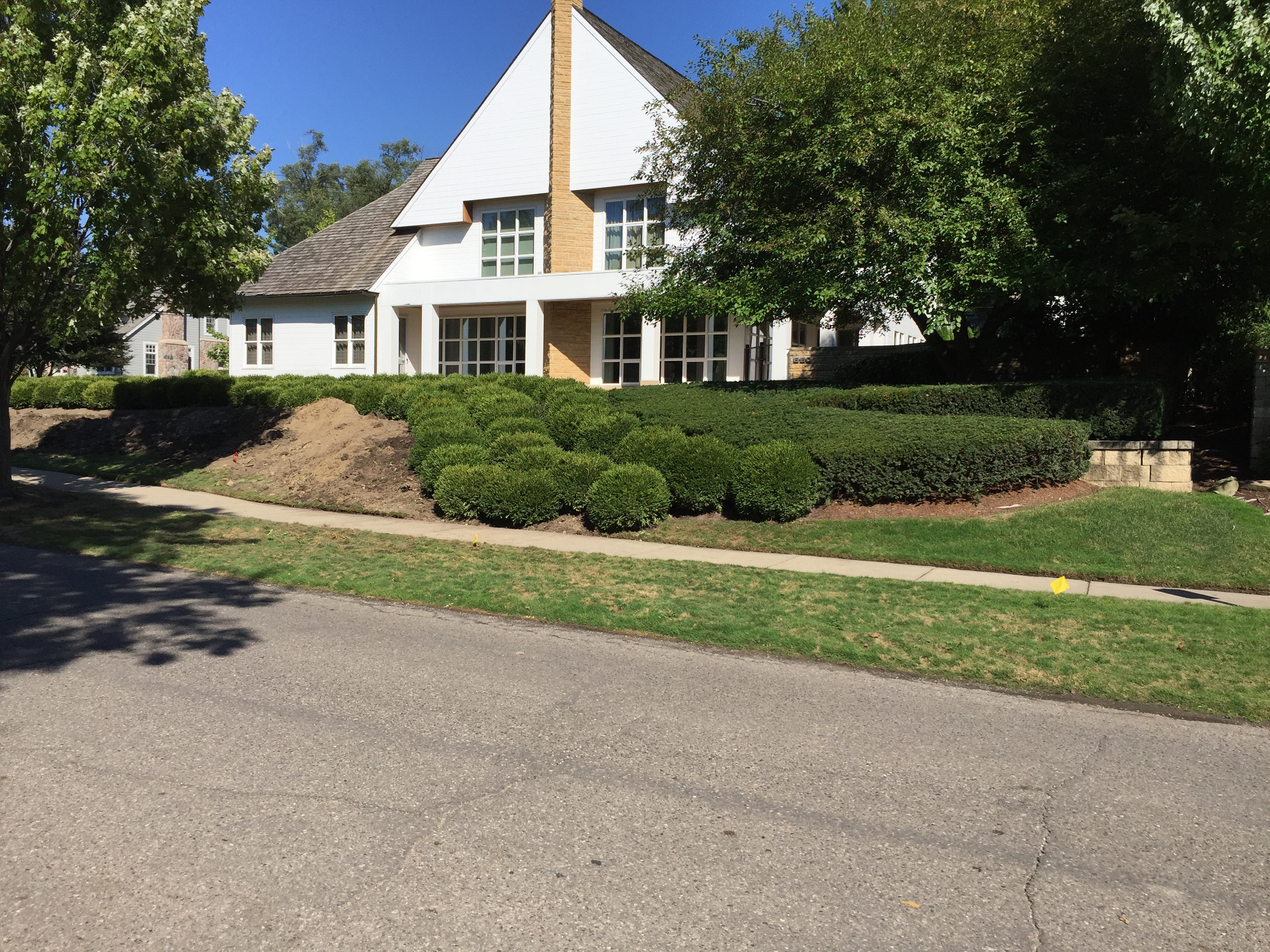
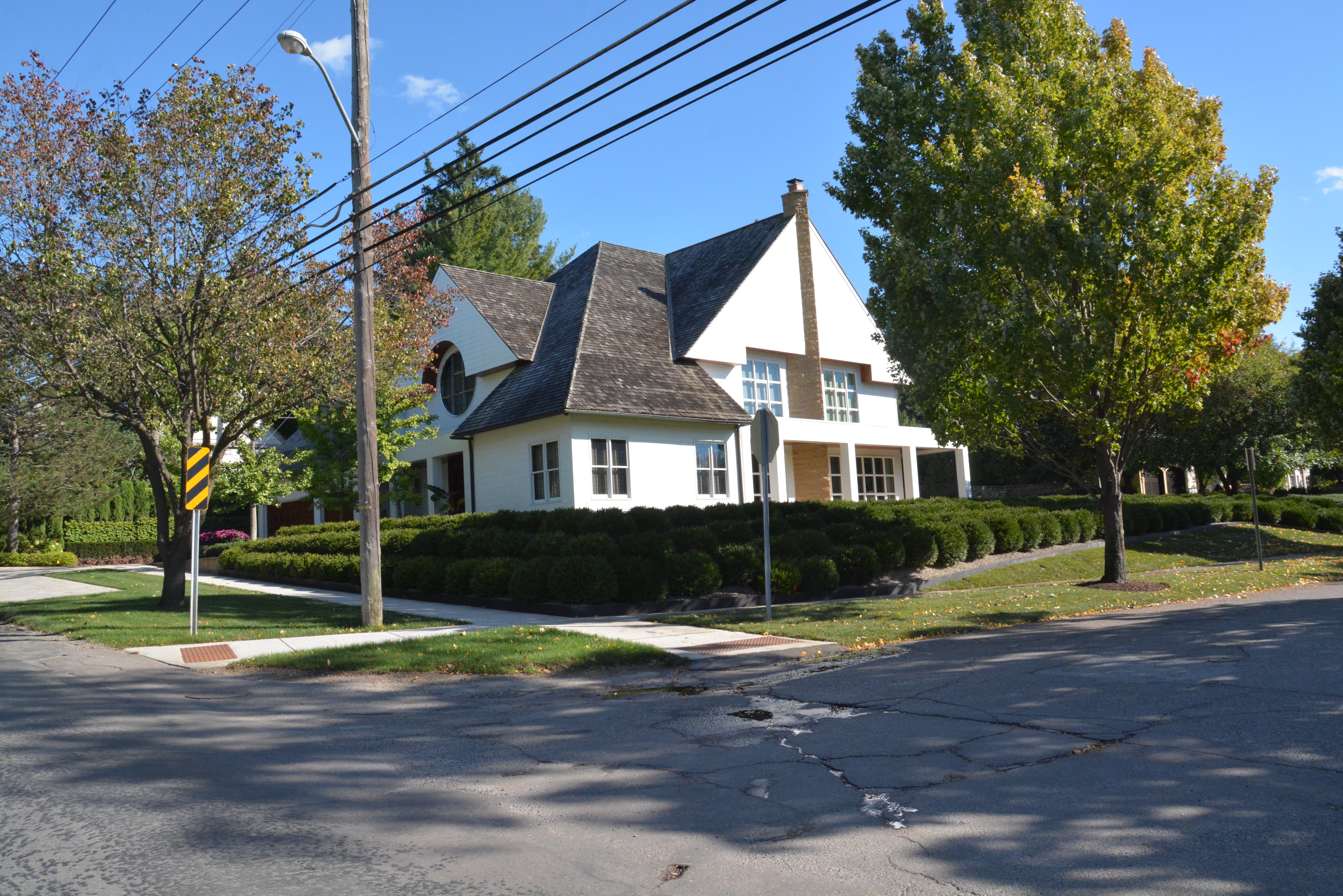
dsc_9634the finished project from the intersection

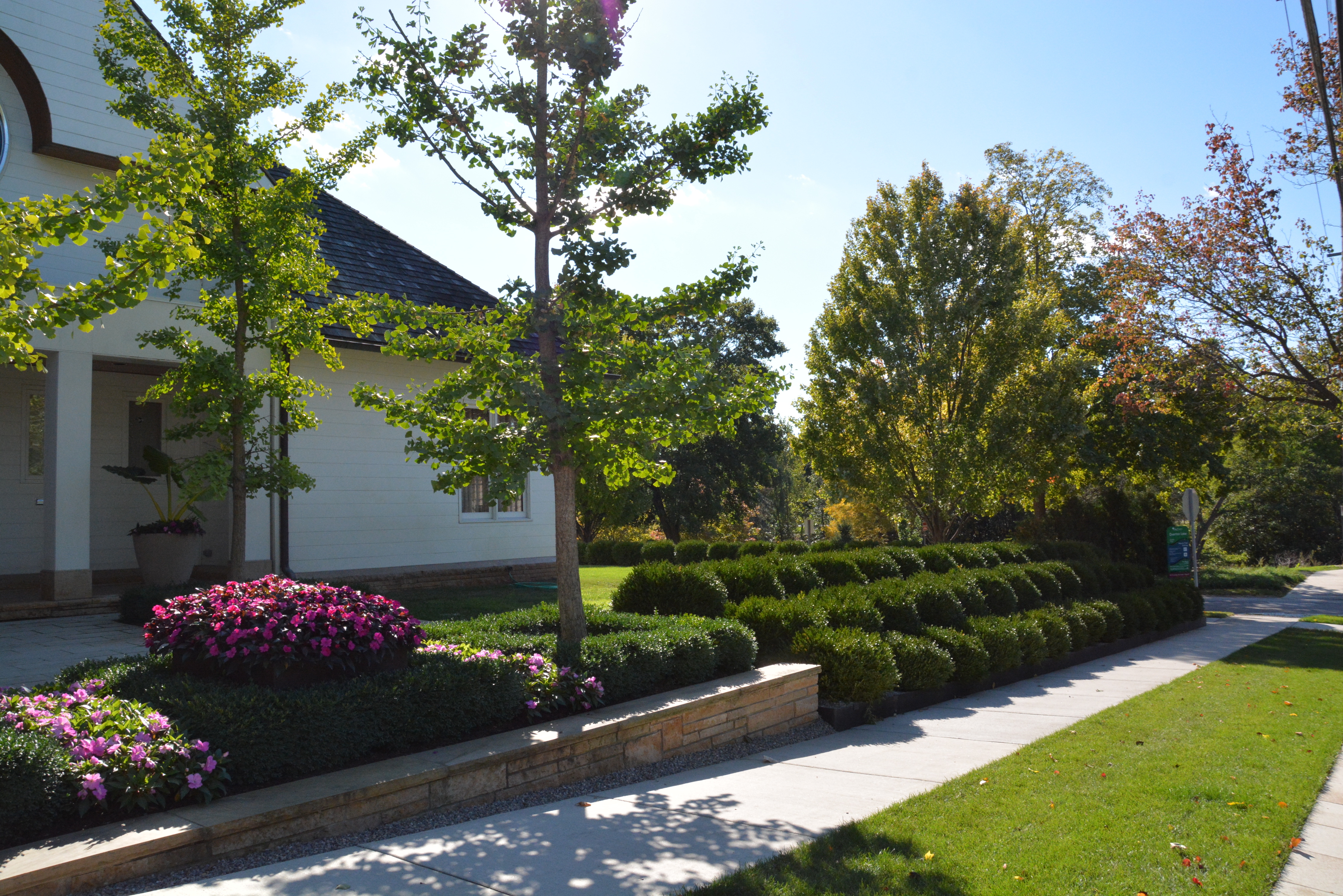
dsc_9641The north side part of this landscape renovation looks good to me, and my clients. This very sculptural landscape is all about an incredibly beautiful collection of boxwood. Sometimes the plants drive the design.


Save

Save

Save

Save

Save

Save

Save

Save

Save

Save

A Different Direction

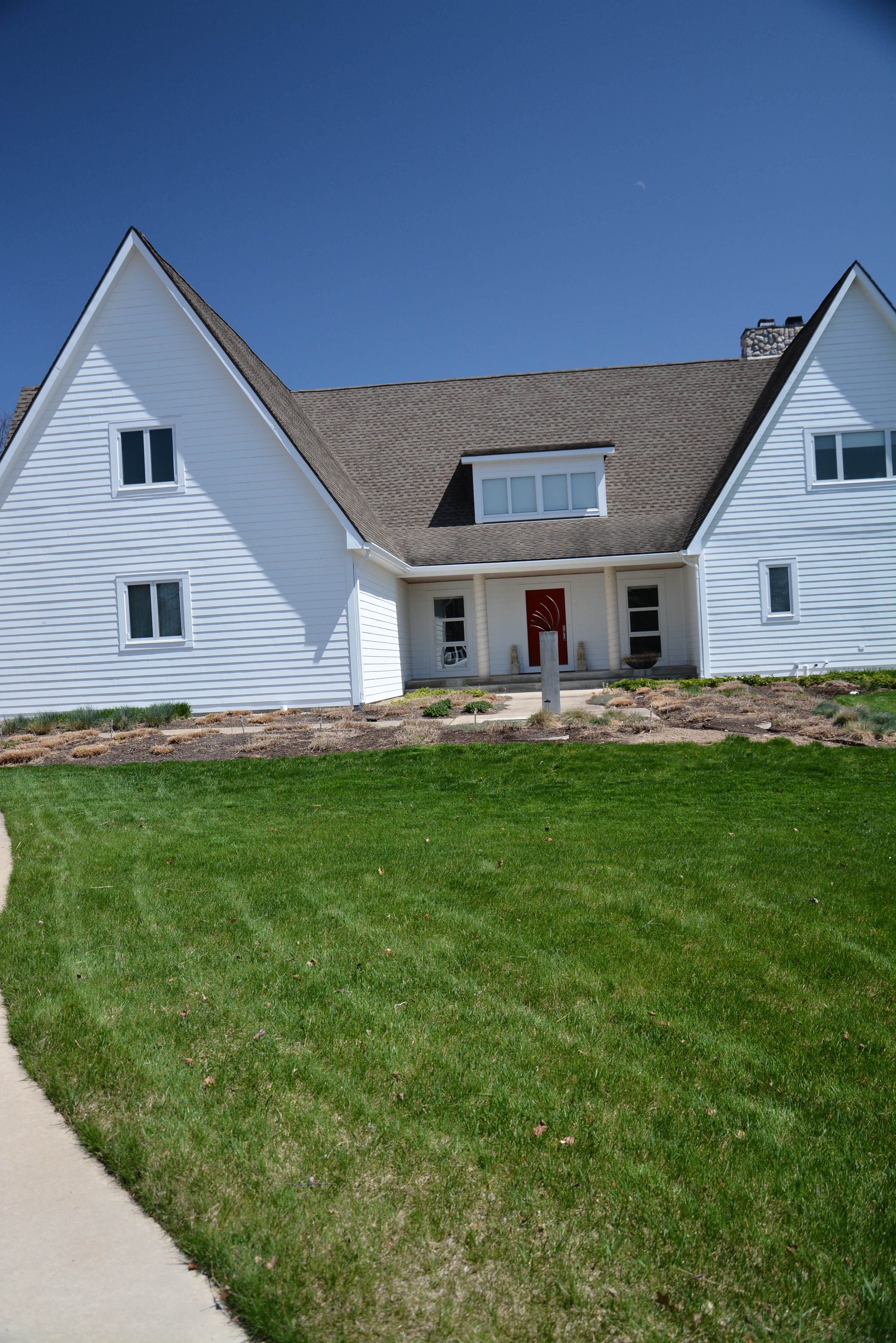
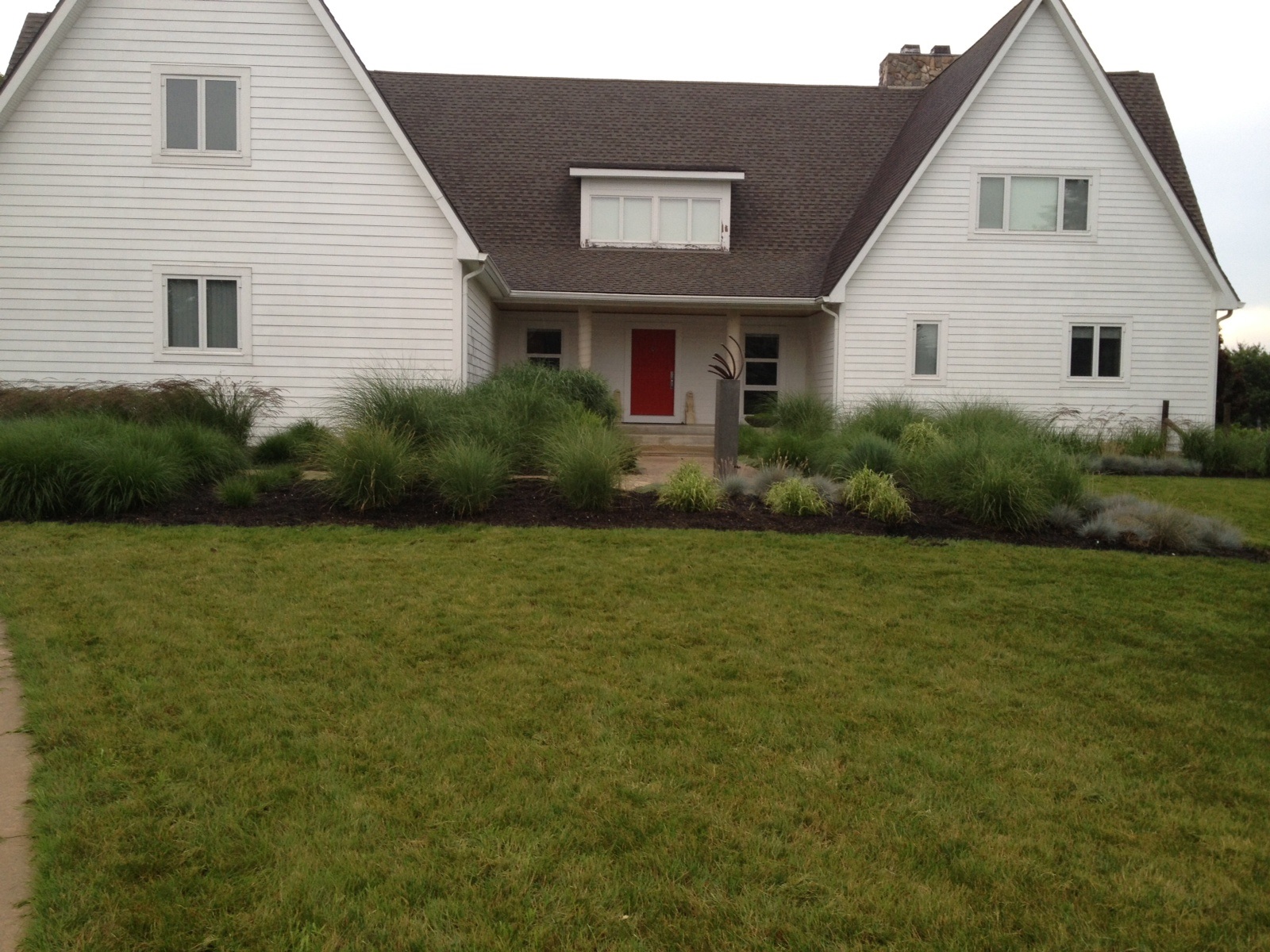
dsc_9650A few years ago I made my first visit to a large rural property outside Ann Arbor. It was very early in the spring. My clients had built a house very much of their own design. My first impression? An American farmhouse with a decidedly contemporary twist. Plain, but plain in a visually strong way. Their property is especially large, given that they had also purchased the house and property next door when it became available. They do the lion’s share of the work it takes to keep up that landscape, spread out over a number of acres. The landscape of their outlying areas is graceful, generous, and unstudied. There is nothing self conscious about the placement of all of the trees, both evergreen and deciduous, that they have planted.  They are good stewards of their land.  They called to ask if I could sketch out a master plan for them. A design that would help make better sense of their love of their property, and their love of plants. They were particularly uncertain about how to handle the landscape near the house. My impression, driving up on this early April day? The front of the house featured the winter remains of ornamental grasses, and mulch-a still dormant garden. A landscape friendly to the architecture would provide this view of their house with some year round interest.

a-different-direction-8R. sent me this picture of the house in the summer. The front yard grade rose from the street, and rolled until it reached the grade of the house. Though the house was set crisply square and level, perfectly matching the horizon, the ground rolled right, dropped off. Rolling ground can be beautiful, but in this case, the ground falling away from left to right made the landscape fall off. A house needs to sit squarely and securely on level ground. One of my favorite places in my landscape is that spot where I might lie down, and feel the earth supporting me. The word foundation has numerous meanings, but that base upon which all else is imagined and constructed comes to mind. As a designer, I am very interested that a house have a flat and spacious ground plane that supports its mass. Right away I knew I would advise my clients to regrade, and add a retaining wall. Their collection of ornamental grasses is lovely, but they do not constitute a landscape. The texture and mass was beautiful in spots, and sparse in others. The tall and the short of it was that neither the grade nor the planting celebrated the geometry of the house.

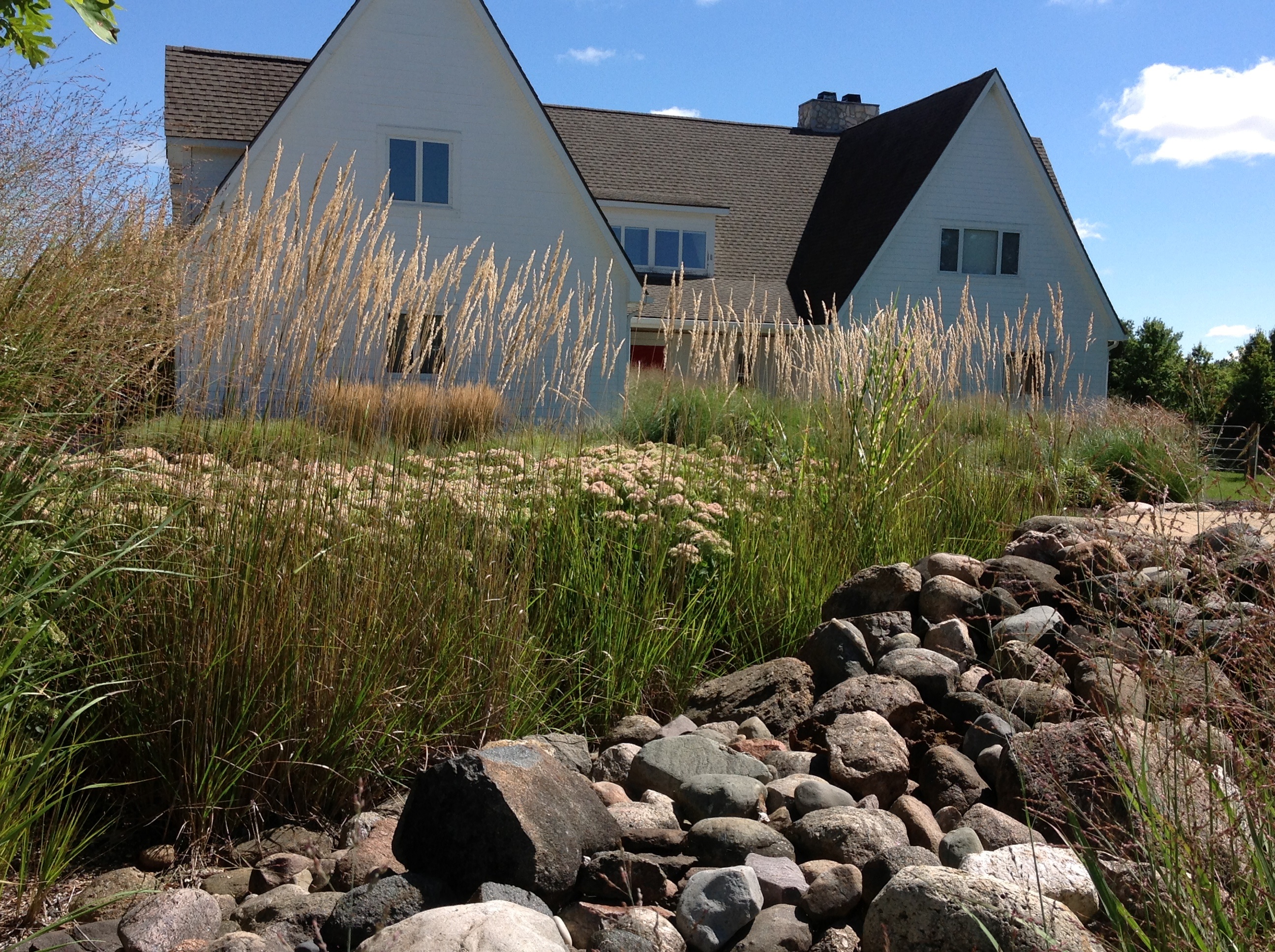
a-different-direction-11There were other places where those grasses shone. Further down and on the other side of the driveway, they softened the architecture. The interplay between the grasses and the rocks was quite lovely. But this view of the house is not part of the presentation of the house from the road. Ornamental grasses do not sprout until fairly late in the spring-sometimes as late as June in my zone. The house was without a landscape for too many months of the year.

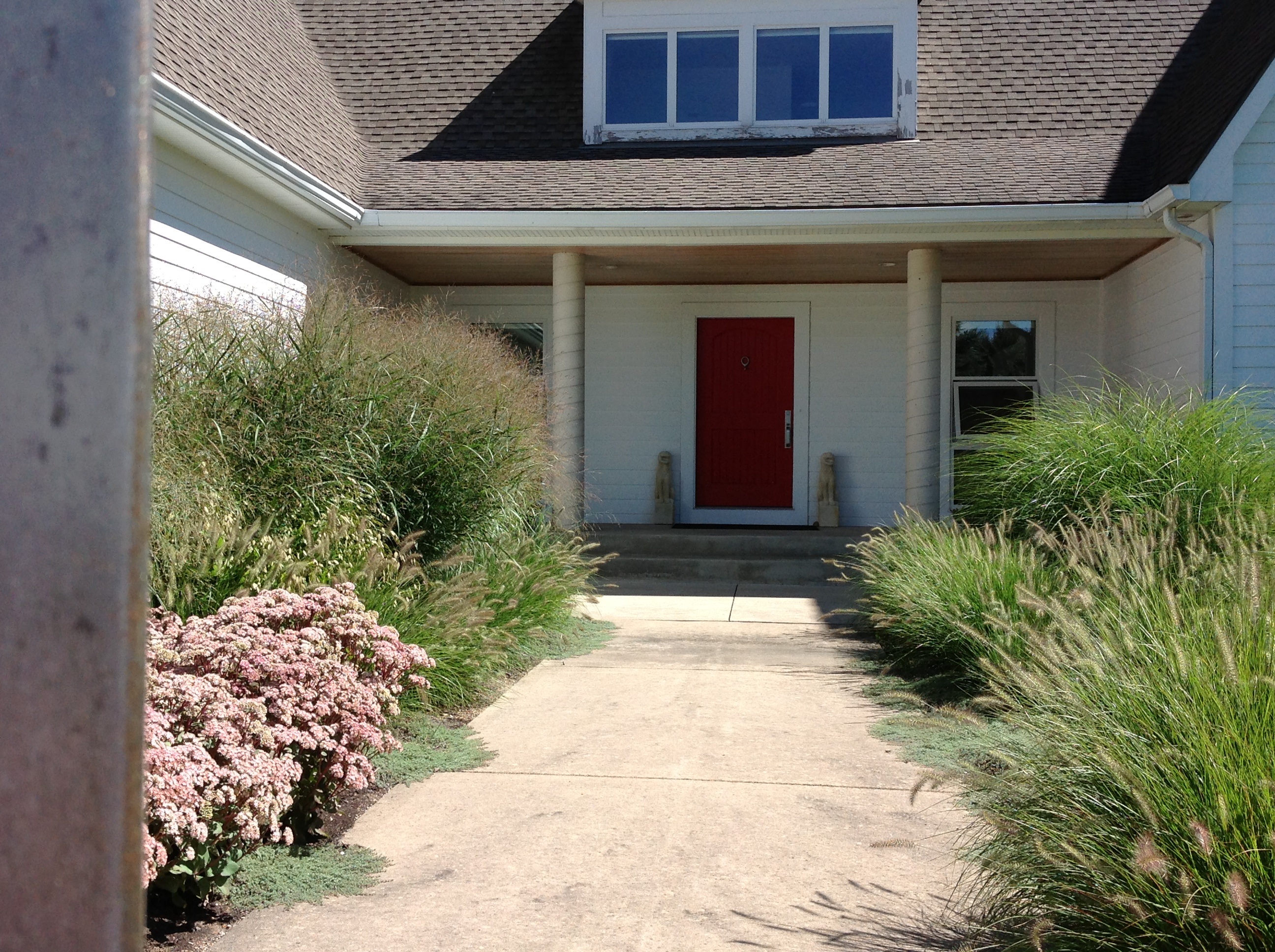
a-different-direction-10The garden attending the walk to the front door was chaotic, and overwhelming to the porch. This picture tells that story. My clients have a big love for ornamental grasses, but I feel they are best in masses of the same kind, and in open areas where they can get big, and wave in the breeze. A pond on another part of the property would be the perfect spot to transplant them.

a-different-direction-9The walk from the front door back to the driveway was equally grassy. They obstructed the view out, and did not relate to the landscape on the far side of the drive.

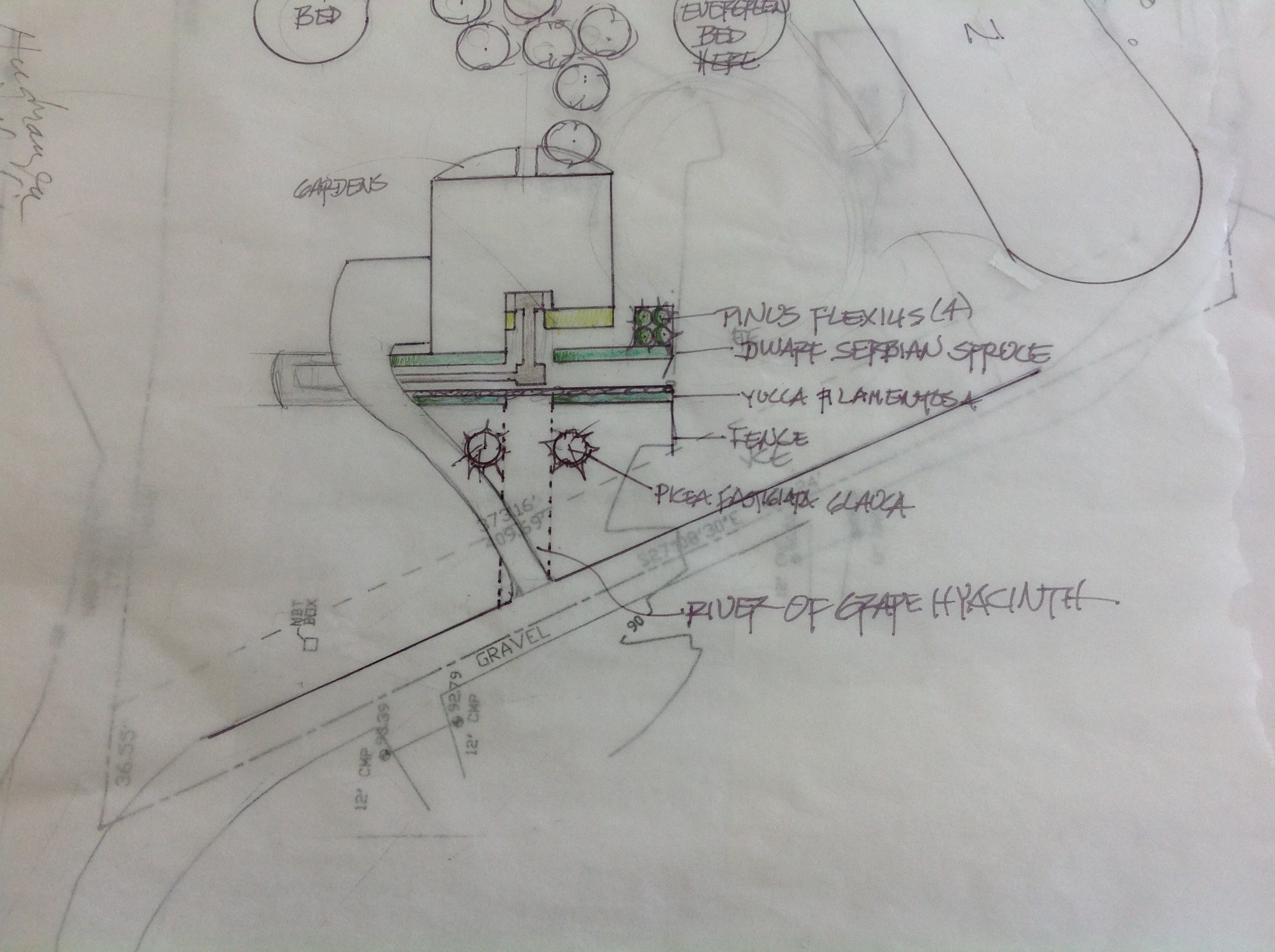
a-different-direction-15I did a sketch for them for a landscape that would keep the landscape at the front of the house green – all year round. It should be clear from this drawing that their driveway was centered on the house at the road, but angled sharply to the left on its way to the garage. This placement of the drive was of necessity.  A raised septic field on left side of the drive made that area off limits for a drive. That angle made me think a landscape design featuring the horizontal dimension would be good. Sketched in pencil on the left side of the drive near the garage was an unspecified landscape feature, cut into the steep slope and boulder retaining wall constructed for the septic field. My clients like blue green foliage. The block of pinus flexilis “Joe Burke” to the far right would help to visually counter the steep slope away from the house.  A hedge of dwarf Serbian spruce would traverse the entire front of the house, and continue to the drive. A rock retaining wall to level the ground in front would have a hedge of yucca filamentosa in front. Hydrangea Little Lime would provide a little relief to all of the evergreen elements. Given that my clients are hands on, and very involved in the design process, a rough sketch was all they needed.

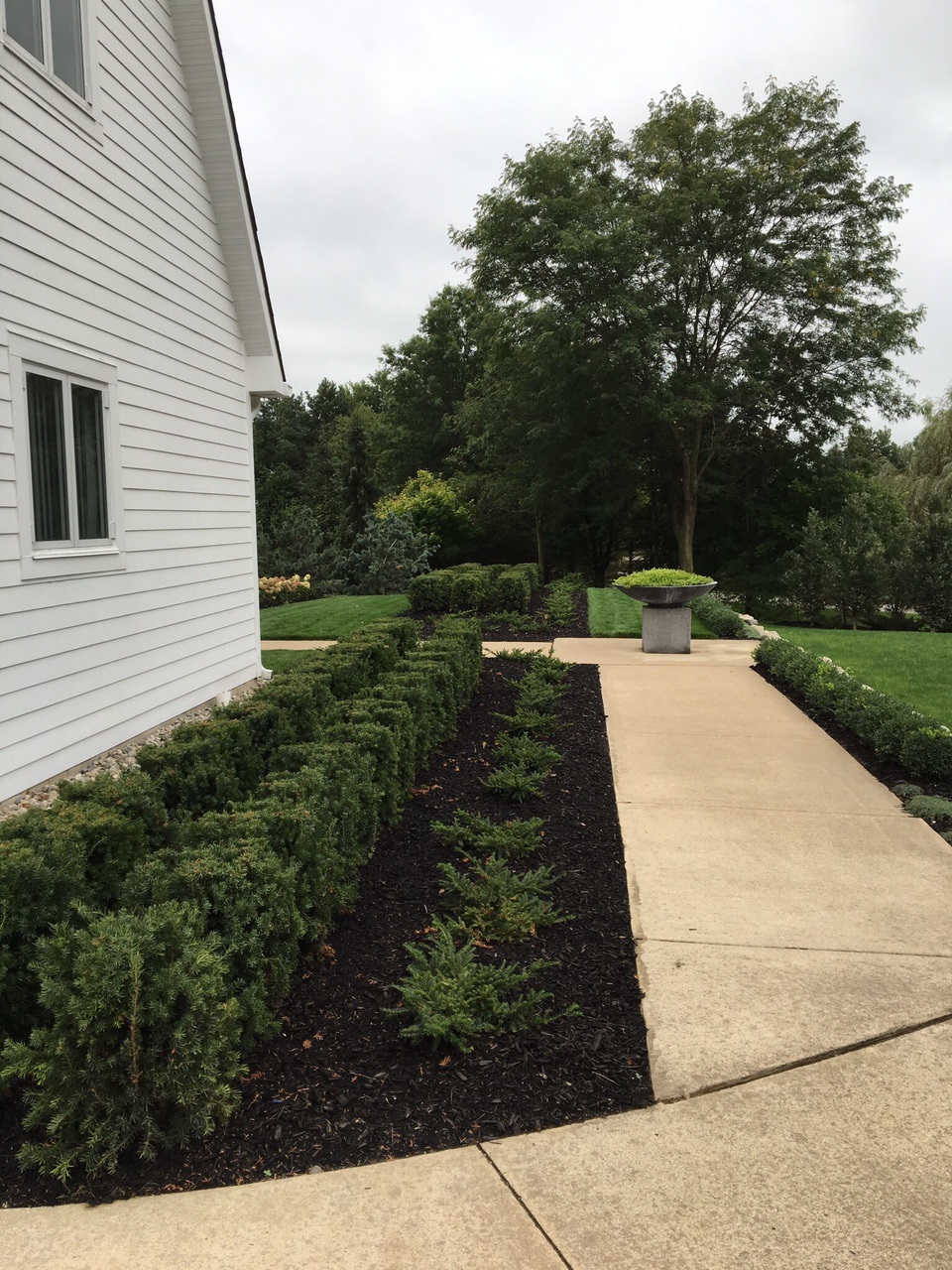
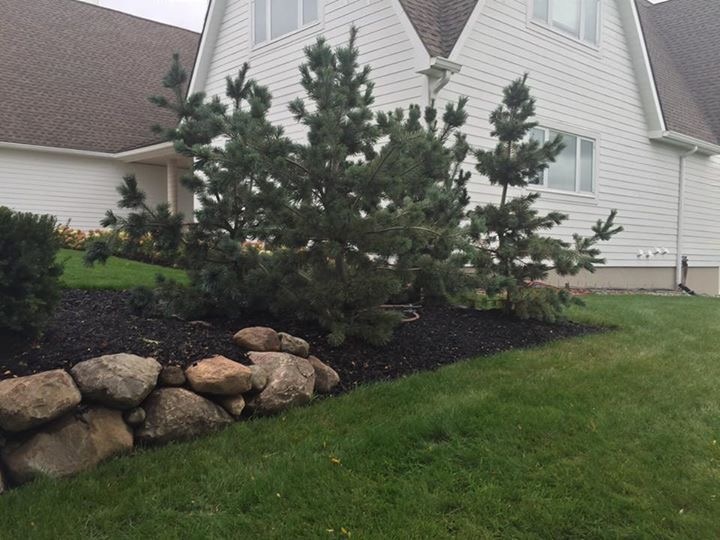
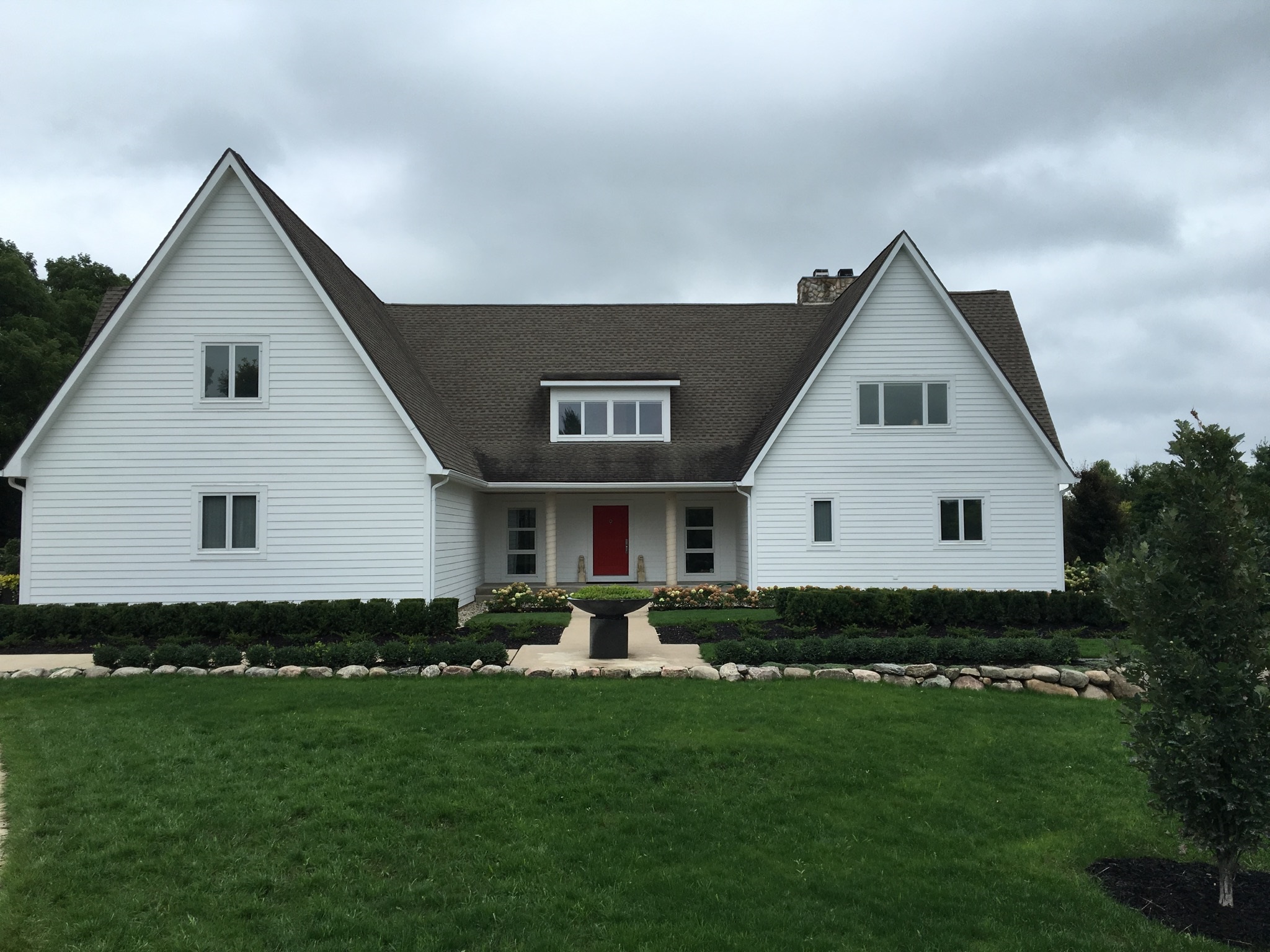
a-different-direction-21It proved very difficult to locate any dwarf Serbian spruce, so my clients substituted  several rows of Hicks yews, faced down by a spreading yew  “Everlow”. Their rock wall was constructed as a border until the ground dropped off sharply at the end. Planted above that rock wall, as a transition to the grass, is a hedge of Winter Gem boxwood. Just last weekend they came in and purchased a low and very wide steel bowl from Branch, set on top of a volcanic rock pillar.

a-different-direction-20It will take some time for the plants to grow, but it is clear where this layered landscape is going.  I especially like how the lawn panels have such a sculptural quality.

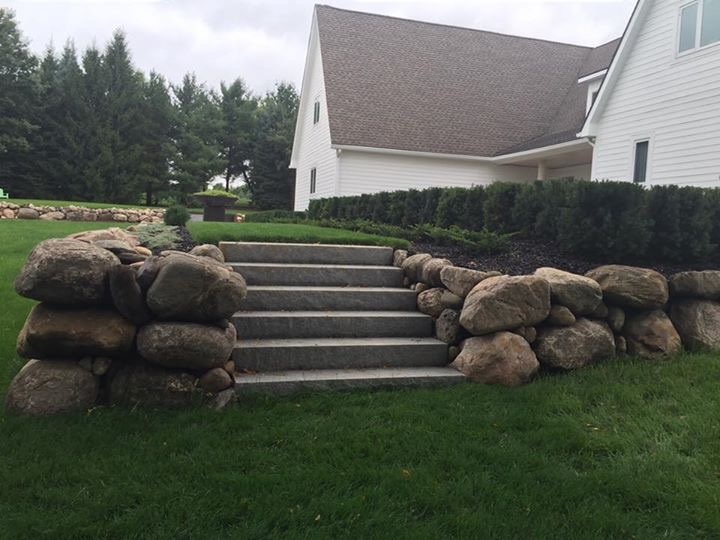
a-different-direction-13This view furthest from the driveway explains how dramatically the ground dropped away. A set of concrete stairs makes the side yard accessible from the front of the house.

a-different-direction-14The flexible pines are planted as a block off the corner of the house.  Eventually they will present as a single organism. They are doing a great job of visually holding up this corner of the house. The exposed foundation of the house is another clue as to how steep the drop in the grade truly is.

a-different-direction-4The Little Lime hydrangeas will greatly soften the architecture of the house.

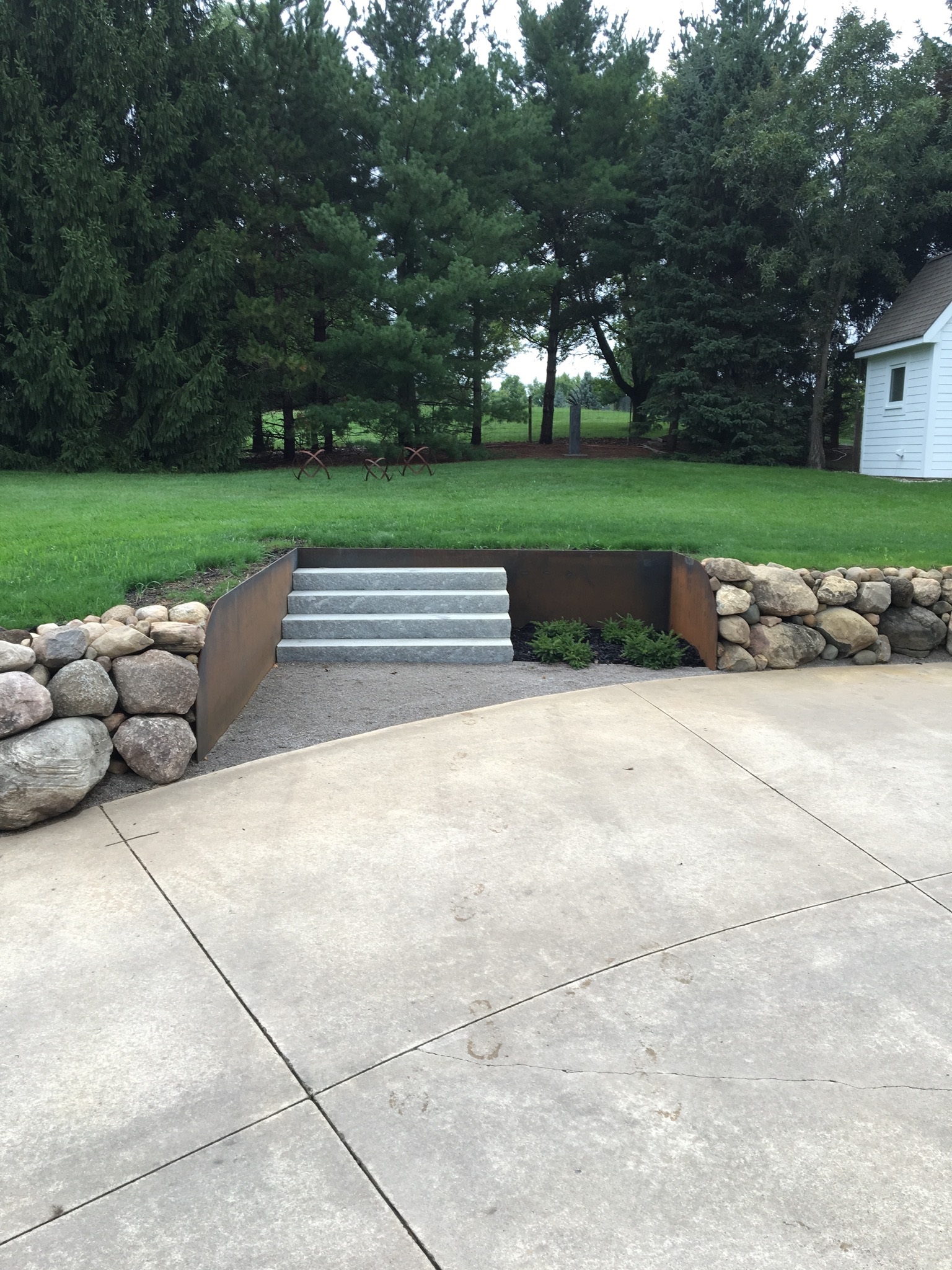
a-different-direction-1My clients did a great job of creating a landscape feature on the far side of the drive.  It made such great sense to put a staircase in that permits access to that upper level. The steel retaining wall is an interesting contrast to the massive boulder wall. I see they have some sculpture set on that upper level. Someday they might break through the evergreen hedge that separates their property from the property they just purchased. That view has a lot of possibilities. It is particularly satisfying when a client takes a sketch and turns it into a landscape all their own.


Save

Save

Save

Save

Save

Save

Save

Save

Save

Save