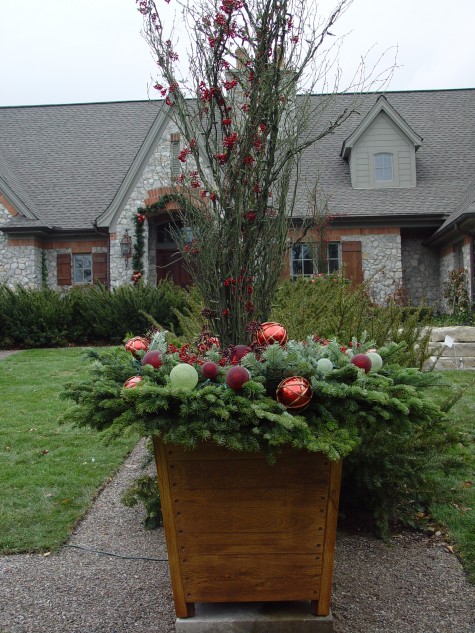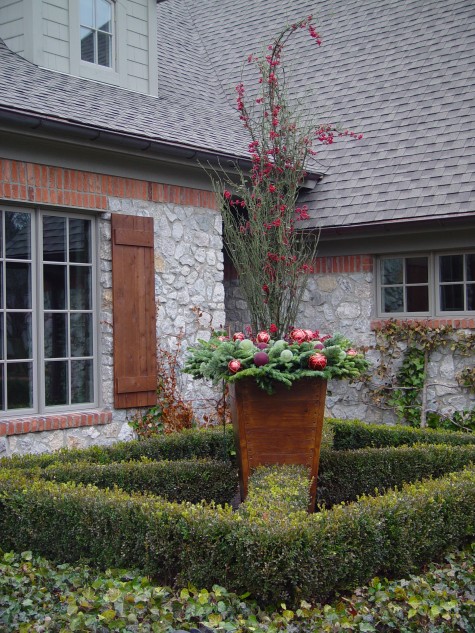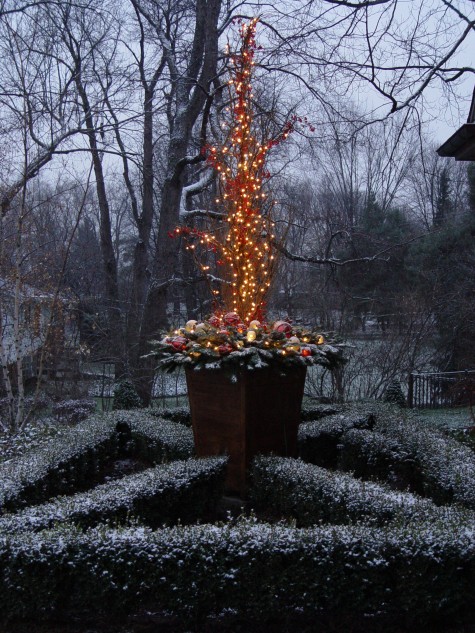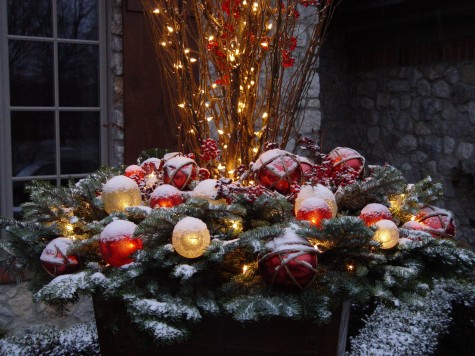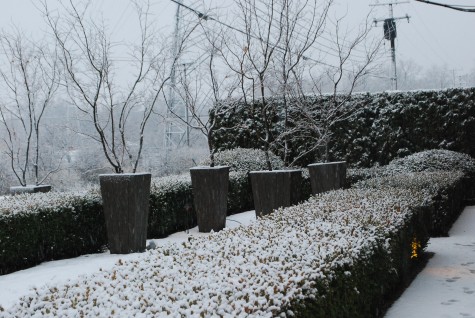
There is nothing like a snowfall to make patterns and textures in the landscape stand out. Boxwood provides a small and fine texture and a uniform pattern; this picture makes that very clear. The branching on trees stands out dramatically when those branches are coated with snow. These brown concrete pots have very smooth surfaces; only the rims catch the snow. The pots read as a homogeneous shape. Given the somber colors of a winter landscape, the interest here is all about line, pattern, texture, and mass. Winter greatly restricts the color palette in the landscape-that change is not all bad. It makes the other elements of design easier to see.
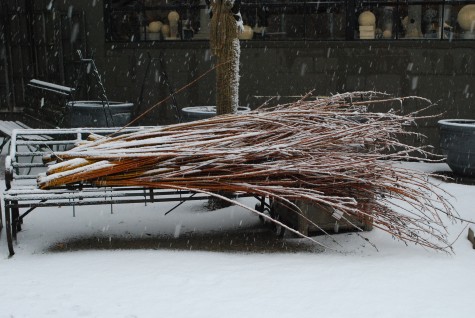 A dusting of snow has collected on the exposed surfaces of these bundles of copper willow. The bunches provide quite a hairdo for this bench. Individually, the sticks are quite linear. The mass of sticks have a curved pattern. The snow makes clear that anything in a mass reads quite diferently than it does as an individual. A single plant might be distinguished in its flower or leaf, or stature; a mass of that plant is more about an overall shape, sweep, or drift.
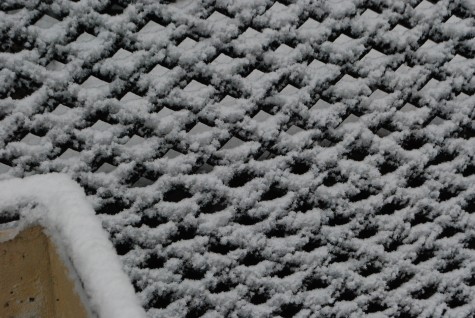 This cast iron grate has a distinctive pattern and a densely complex texture. Snow makes all the more of that. How snow softens the outlines of hard structures and surfaces is one of the pleasures of the winter landscape. A snowfall can make the most ordinary landscape look spectacularly beautiful. It would be more accurate to say that most natural phenomena are spectacularly beautiful-even if I neglect to see it. The snow turns on the lights.
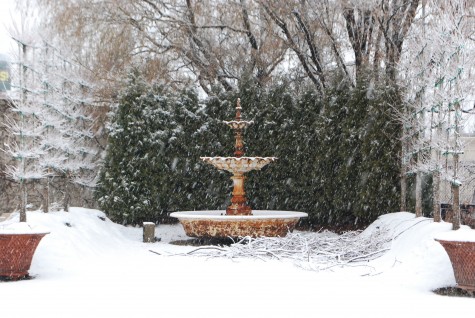 We are not buried in snow like other parts of the country, but we did get 6-8 inches. The snow fell fast, and stuck to everything. Why does it sometime snow when the temperature is above freezing? It was 35 degrees here at one point yesterday and snowing like mad; it was 7 degrees when I got to work this morning. All the wet snow is now frozen in place, so I have had plenty of time to look around. The pruning pattern on the katsura espaliers can be readily seen; branches that were cut back hard responded by sprouting a number of stick straight branches from a single cut. The pattern I see on these trees is a very clear explanation of how a branch responds to pruning. A pruning cut issues an invitation to grow.
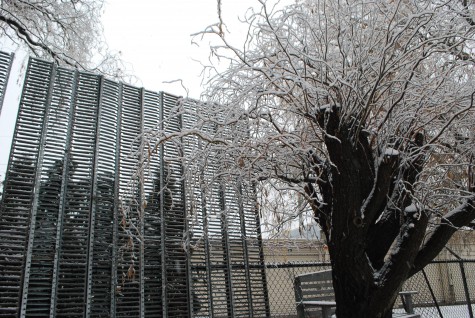 These vintage trench drains have a repetitive and very geometric pattern. They are most clearly a human-generated form. The wildly curving branches of the pollarded willow are anything human. This idea shocks me some, and interests me a lot. The snow outlines the massive main trunks of the tree. I will loose this pollarded tree sooner rather than later. A high wind several years ago uprooted it. My efforts to replant it were in vain; the bark is shedding in giant strips, and bracket fungus fruiting bodies have appeared.
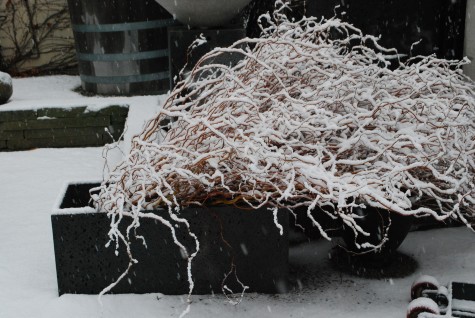 The copper curly willow is very curly. This branching is obscured in the summer by leaves. I have to admit that this tree looks better in the winter than the summer, and that the pattern is outstanding in the snow. The most difficult thing about choosing plants for their winter interest is that when that idea strikes home, as in today, nothing can be done about it. I keep files of photographs of my own garden organized by the month. I photograph certain key spots from the same angle 12 times a year. I wish I had started doing this 14 years ago, instead of four. Nonetheless, these pictures tell me a lot about whether the design and planting is working as well as it could.
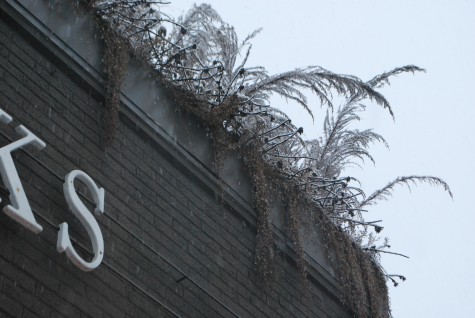 I did not clean out the boxes on the roof this year-the first time ever for that. The fall and very late fall was a beautiful season for the boxes. I am not surprised that the elegant feather persisted in its skeletal state, but I am surprised to see so much of the dichondra and plectranthus still holding on. The pattern and texture provides something moody and textural to see. The empty box alternative seems much less interesting.
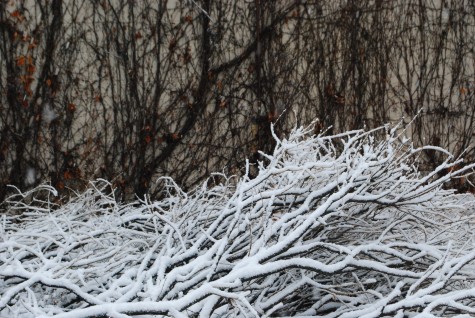 This pile of cut burning bush branches is dramatic covered with snow. They are all the more dramatic for their accidental placement in front of a concrete wall, covered in the dark stems of boston ivy. This wall faces the west; I have no idea why there is not one bit of snow on it anywhere-unless the snow was born on wind out of the west. So much pattern and texture-all ruled by a study in light and dark.
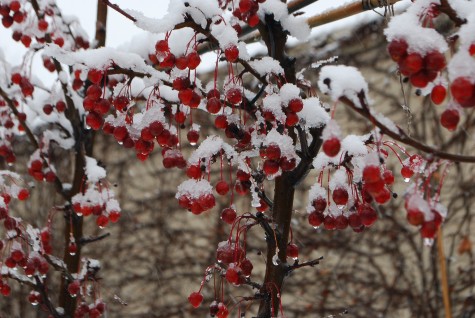
A pair of espaliered crabapples need to come into the garage for the winter. As soon as the bulk of our winter containers are done, space will open up for them. This is the only plant with color on the entire shop property. The pattern of the snow on the berries-I am glad I got a chance to see this.