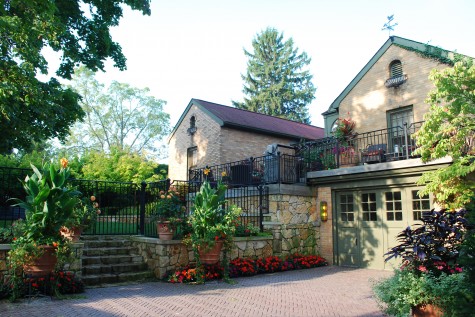
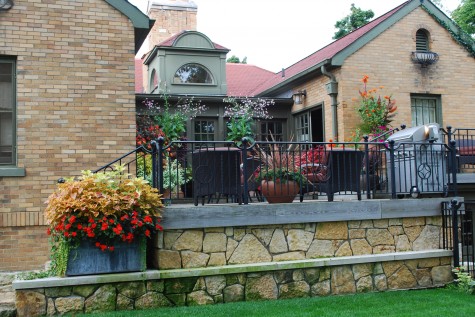
 Given that I took this picture September 24, why wouldn’t I be unprepared for the weather here this past week? Just three weeks ago, I still had my summer. Though describing any Michigan weather as “ordinary” is glossing over the truth, our weather ordinarily cools off at a slow enough pace to make keeping up with the job of putting the garden to sleep relatively easy. My fall cleanup and shovelling out is based on the distinction I draw between gardening, and housekeeping.
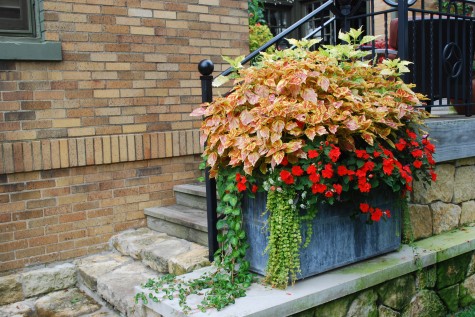 I have seen those properties that look as though every shred of organic debris has been blown, vacuumed up and disposed of weekly; anyone who has inadvertently turned a blower on themselves realize what an invasion they are. Every green leaf looks dusted; every surface has been swept, every shred or organic debris is bagged and removed. The stone is scrubbed clean, and the cushions are only on the furniture when company is in attendance. I like the look of cultivated soil as well as the next person, but all of the above is housekeeping, not gardening. Years ago a gardener whom I greatly respect, Marge Alpern, told me she disturbed her plants as little as possible. She maintained that plants can be worried such that they refuse to prosper. I think this is a point well taken. I will not take on the perennial gardens until much later in the fall.
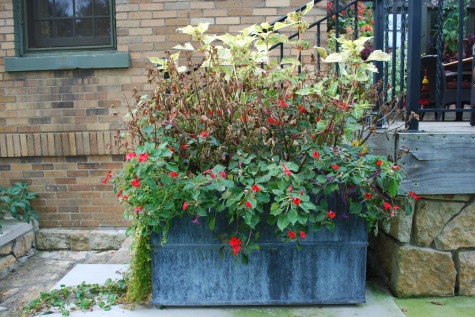 A series of nights with temperatures hovering in the mid thirties left my pots looking like this-devastated. It does not matter one bit that I know this day is coming, I am never ready for it, nor do I like it. I do not like to let go. On a much more dramatic scale than the time changing to daylight savings, I adjust slowly, and poorly.
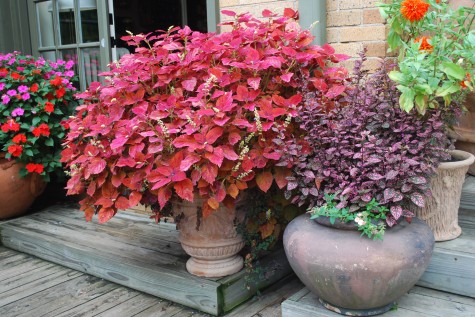 Coleus are astonishingly intolerant of cold weather. Anyone who does poorly with them is probably planting them out too early; every plant thrives in some conditions, and sulks in all else. This five foot diameter fiery orange ball was glorious all season; in late August the corgis were breaking off the branches encroaching on the doorway. They keep the extreme understory clear of any obstructions.
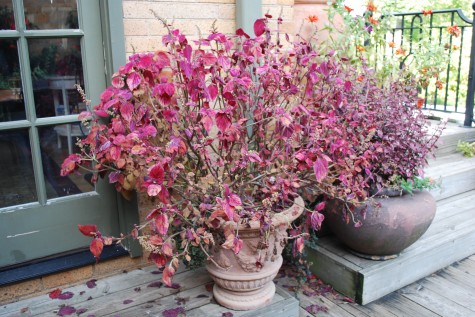 In what seemed like the blink of an eye my fireball shed almost every leaf. Unlike the gingko tree which sheds every leaf on that certain perfect fall day, leaving a beautiful pool of yellow on the ground, the coleus leaves dessicate, drop, and disappear before you can even mourn properly.
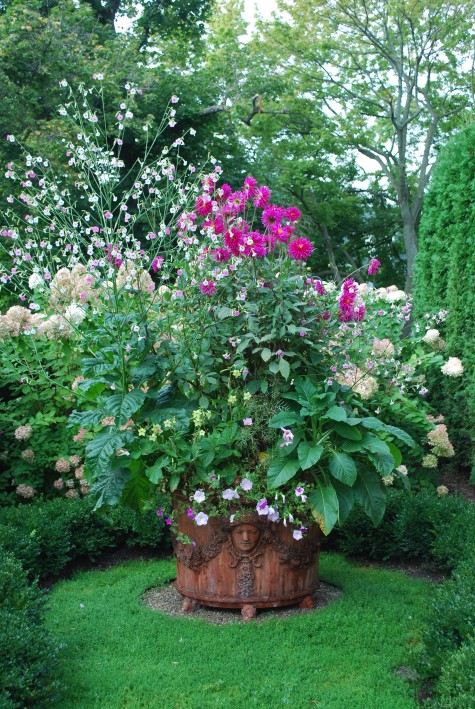 My English-made Italian style pots were home to the biggest bouquet I have ever grown. The nicotiana mutabilis got busy throwing spikes in September, and the dahlias were blooming profusely. I like that extravagant and exuberant look. No matter how the day had gone, I could go home and congratulate myself on having grown one of the annual wonders of the western world. You may be laughing, but how the look of it pleased and cheered me.
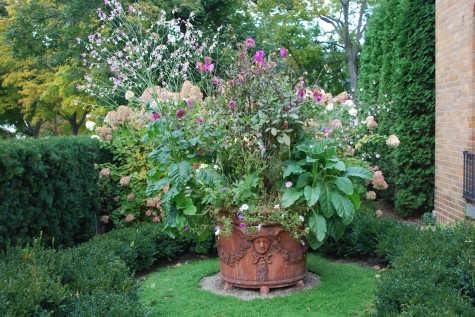 Though the nicotiana mutabilis is yet bravely defending its home, the cold pierced the heart of the whole. Buck is always amazed and amused and the depth and breadth of the despair which attends the beginning of the end of my gardening year. I alternately rage and whine-he murmurs, and pours the wine.
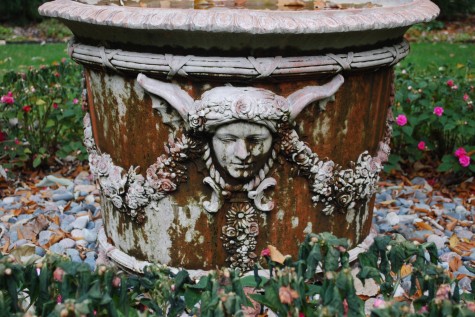 This sister to my pots, adapted for use as a fountain, bears all the signs of a season’s worth of mineral laden water, weather,heat and growth. Does that gorgeous Italianate face not seem completely grief stricken?
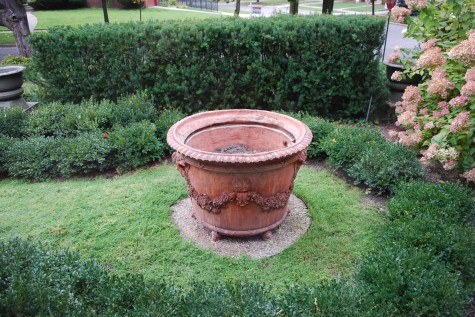
It will no doubt take time, but I will get to thinking about what I will do with these pots for the holidays, and the winter. But for the moment, I am inconsolable.
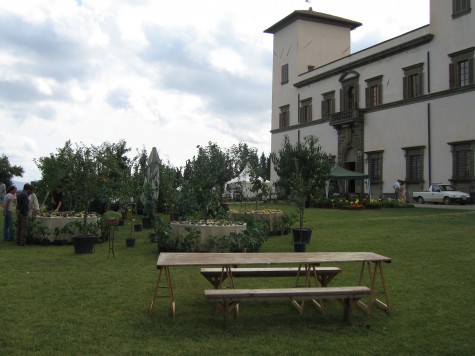
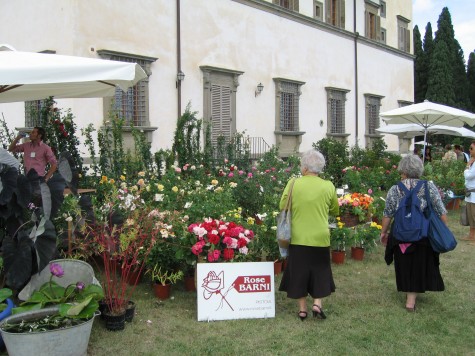
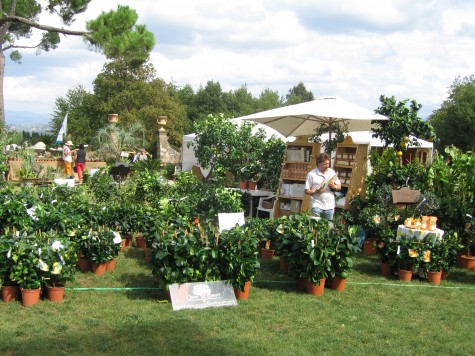 Fruit trees, fruiting shrubs and grape vines were represented in lots of varieties. We plan to offer fruiting trees, shrubs and grapevines at the store this coming spring, as Rob’s memory of this fair is a strong and good one. My favorite-the fruit cocktail trees, with 5 varieties of apples or pears, grafted onto a single rootstock. The idea of this appeals to my idea of gardening fun and festivity. I would have loved trees like this as a child, and I still do.
 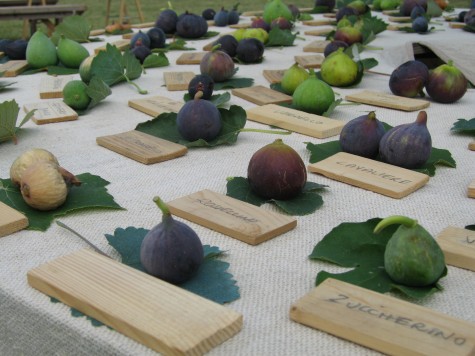 This display of different varieties of figs-more fun. How better to choose a fig tree than to have the fruit in front of you to hold, smell, and see? I do have a client of Italian descent growing fig trees; her love of gardening, growing food and cooking she inherited from her grandfather. One of his grapevines now grows in her garden. She is willing to bury her fig trees in compost for the winter-this tells you how much she wants them. How I envy the Italian climate such that they can grow figs, lemons and limes.
 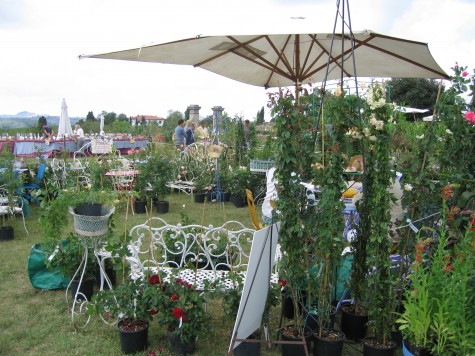 The little of this and some of that quality of this fair is engaging and charming. This is my favorite time of year for my own farmer’s market. The produce and fruit is as beautiful to look at, as it is to eat. The bunches of cut flowers, grass bouquet’s, the evidence of the summer harvest, speaks to much about why I garden. Making something grow is just plain satisfying.
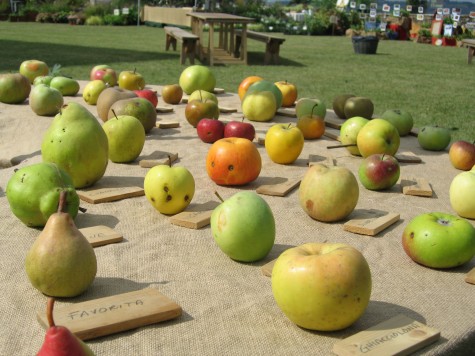 The apples and pears have the spots, dings and scars that come with naturally grown fruit. Years ago I owned five acres that came with 20 fruit trees. I would pick the fruit warm from the sun and eat right then and there-around the spots if need be. This is a version of fine dining that I like.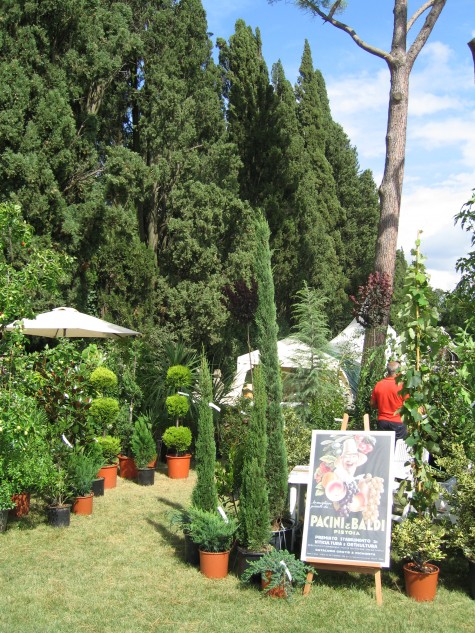
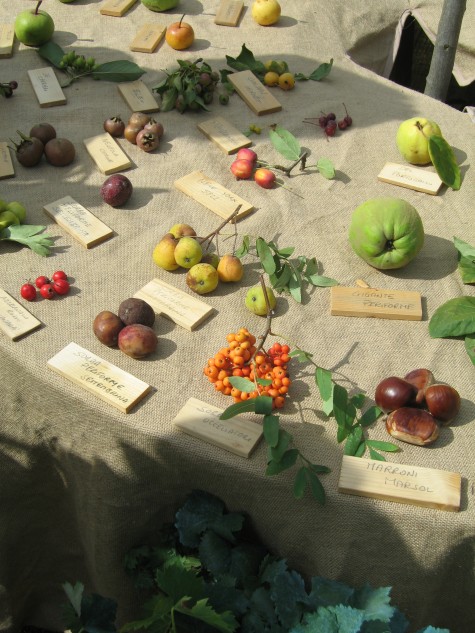 I am able to buy and eat food that cannot be grown where I live. I am glad I do not have to do without figs, lemons and mangoes. But Rob’s pictures make me wish I had been there.
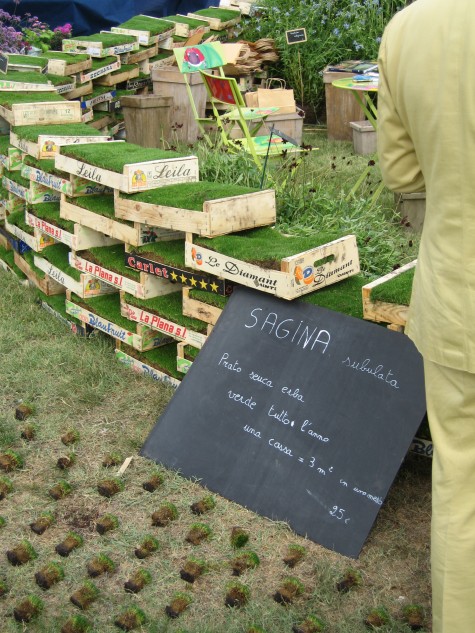 This is my favorite display-sagina subulata grown in fruit boxes. What a gorgeous look. This I could easily do. I might even like to just grow it in boxes. What would never occur to me to do-display the spacing layout on the ground. The sign says one box will get you three square meters of Sagina; if you don’t believe it, look here.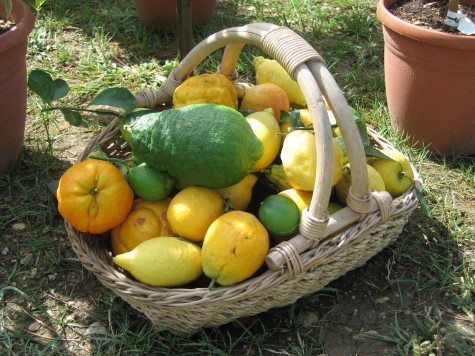
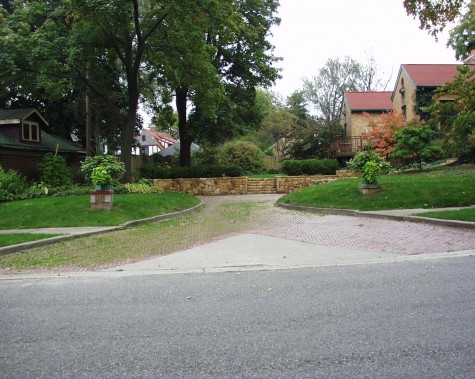 Just yesterday I was telling new clients for whom I had just finished a landscape master plan – pick one small part of your plan and install it. I told them if they got started, and kept at it, a very large piece of work would get done in no time. I did not realize how truly fast the years can go by, until I ran across these pictures of my own yard from 2000. After I moved in my house, I mulched some beds and grassed over others, until I could get to the work. I had just finished the stone wall and stairs; in 2000, my entire landscape effort was put to those walls. It would be years later before I would be able to do the limestone caps.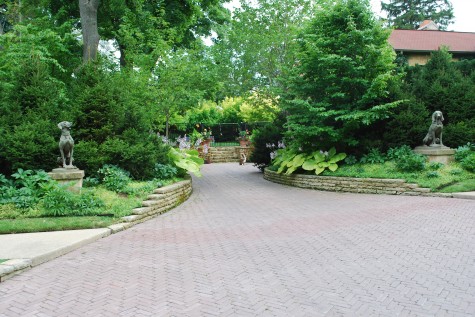
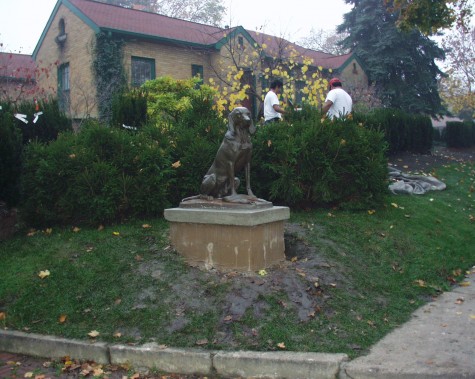 These antique French cast iron dogs guard the drive. The day of installation, my Hicks yews were 36″-42″ tall. Today they are almost nine feet tall. The dwarf picea mucrunulatum behind the dogs have more than doubled in height and width. In lieu of muddy lawn, I have sweet woodriff and hellebores. No doubt my gardening life has gotten better over the past decade.
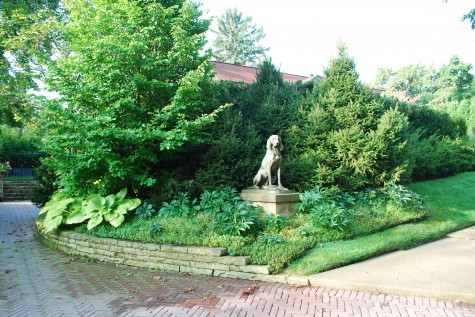 The parrotias, yews, picea, and magnolias screen my house from the street; I have a private home life in an urban neighborhood where the properties are small. The concrete pedestals built for the dogs have aged, and moss is growing on the walls.
 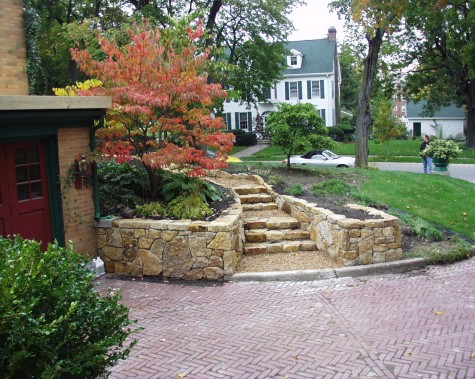 When I was at this stage of the landscape renovation, the thought of a decade of construction and growing never occurred to me. It just would take as long as it would take. The beginning of a project has its charms-the planning, the fussing, and the rethinking. The time has gone by incredibly fast; these low-tech time lapse photographs dramatically detail how much change there has been.
 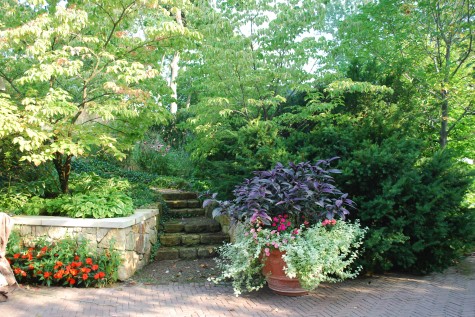 That stone staircase no longer looks so lonely and disassociated from the ground around it. The limestone caps got made for the walls. There is a woodland garden to go with the rustic staircase.
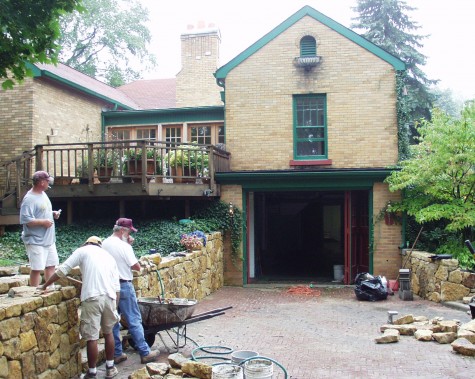 I had forgotten the red and green trim that came with the house. The octagonal wood deck would get a stone skirt, and a narrow Romeo and Juliet balcony would be installed above the garage doors. The wood rails would be replaced with iron. My folly would be installed above the back porch.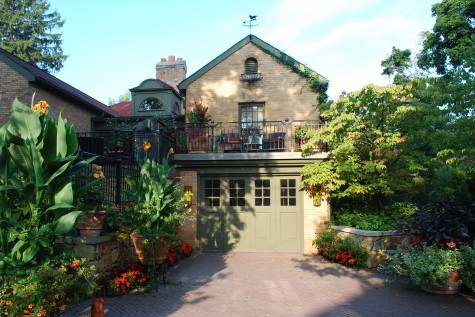
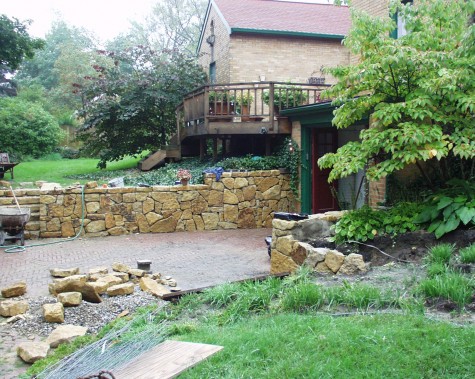 I am so glad to have these old pictures. I had forgotten how awful that deck and stairs looked. Without tearing the entire thing out and starting over, I do think the look of it is greatly improved. No landscape existed per se-I had a collection of plants. I am sure the previous owners liked each plant individually, but there was no thought put to their relationships to each other. My landscape is much more simple, and easy for me to maintain.