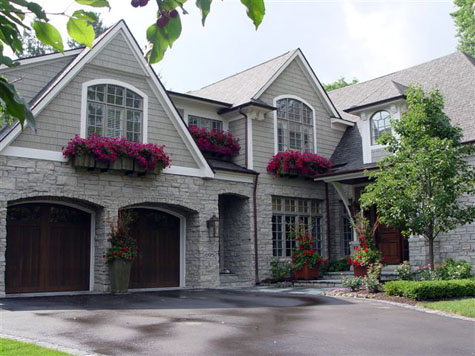
Window boxes have large areas for planting, which can give the impression of annuals in the ground-minus the turning of the dirt, the stooping and the stooping again to weed. They also put the action at eye level. Window boxes on a second story is a striking surprise. Sizing a window box appropriately is the toughest part. Plan carefully, so your boxes thrive.
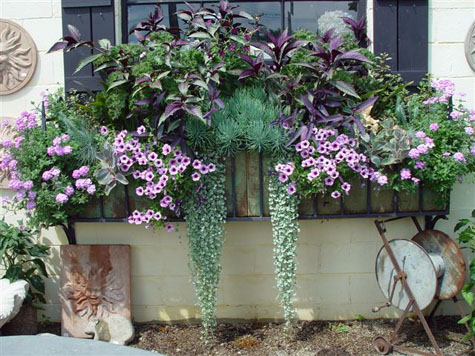
I like window boxes to be sized generously in width. Sizing the box wider than the window puts the visual weight at the bottom, where it should be. A box narrower than the window makes the window look top heavy and oppressive-windows are large dark shapes during the day. �
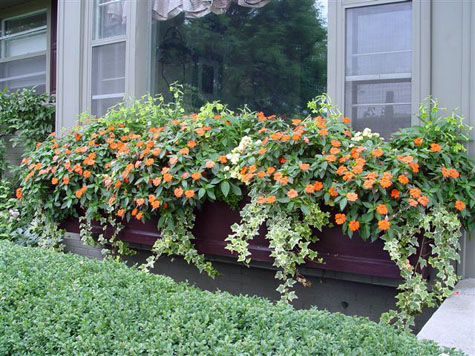
Window boxes are not just for French and English cottage style homes. A sleek contemporary box can compliment the architecture of a modern home. They provide great mass and substance in the horizontal plane. They have the added attraction of views from inside, as well as the outside.
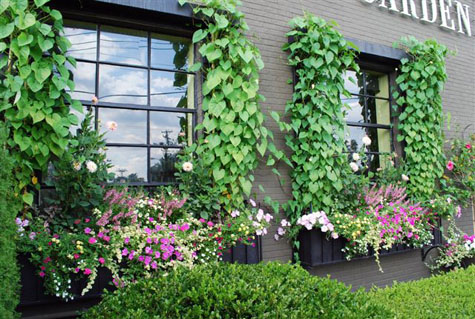
A very wide box invites planting tall annuals, even vines, which serve to frame the window. The large planting space allows you to showcase the relationship between a number of different plants. Boxes have the heart of a whole garden, in a smaller space.
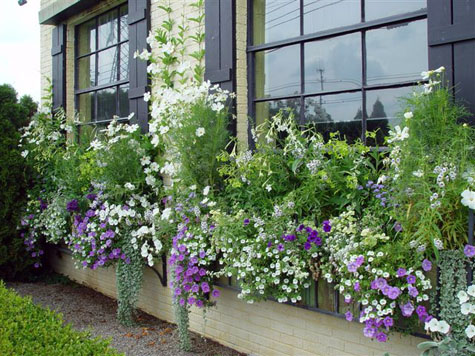
Many ready made window boxes are sized more to be convenient to load into your car, than convenient for good plant growth. Undersized boxes are the devil to keep watered, once the plants have rooted in well. These boxes are 11″ wide and 16″ tall-plenty of room for a soil mass that will retain moisture evenly, and allow for root growth. A window box that is 8″ tall and 10″ long will need succulents, as they do not root deeply, and they are happy in dry soil.
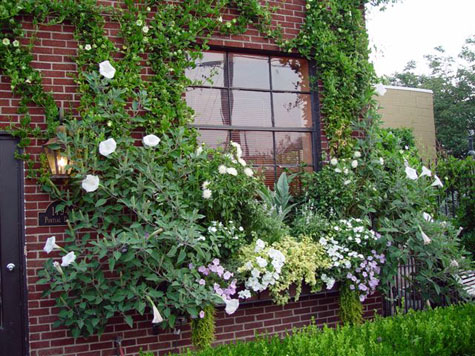
Window boxes have no need to be fancy, especially if your idea of a good one is profuse and spilling over with flowers. Luxuriant-I like the word, and the look. These boxes are made from a simple iron grillwork, and lined with galvanized sheet metal liners. Wood boxes will last much longer, if they have sheet metal liners. Wood that is constantly wet deteriorates quickly.�
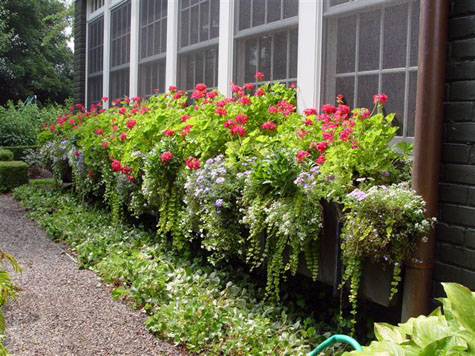
Wet soil is incredibly heavy; be sure the boxes are securely fastened to the wall. The weight issue is somewhat mitigated by the drainage material; I routinely fill the box at least half full with drainage material; bagged bark works well.
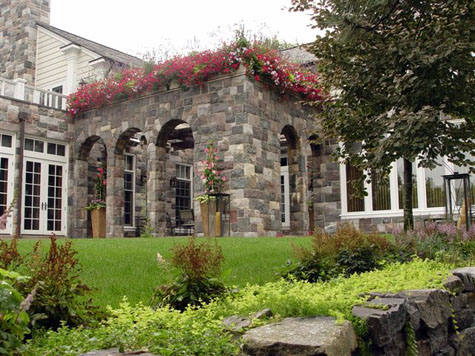
Not all boxes need to be attached to a wall. Boxes can be integrated into a pergola roof, or placed on top of a wall to good effect. Clear irrigation tubes can be run to them. This makes watering simple, as long as you experiment until you know how much time it will take to soak them. A plain sheet metal box will need reinforcement on the interior to prevent the metal walls from bowing out. I sometimes screw treated lumber to the inside to maintain a cleanly rectangular shape.
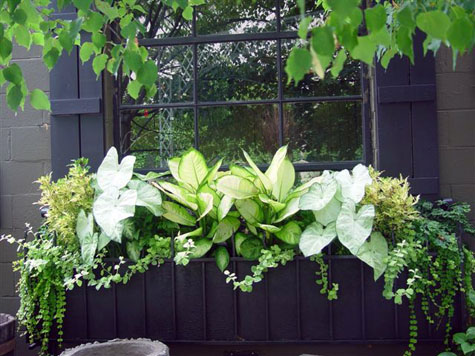
Window boxes are not just for sunny locations. The caladiums, dieffenbachia, and yellow coleus in this box light up a very shady spot. The trailing licorice is surprisingly tolerant of shade.�
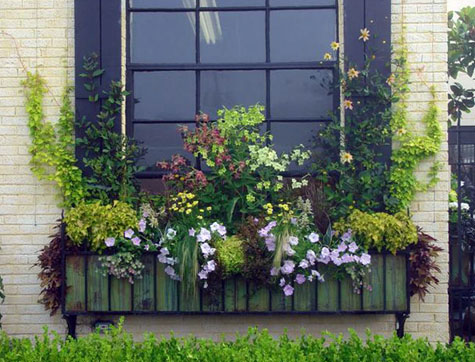
A great window box is rhythmic. Decide if you want the height in the middle, or at the ends. A uniform height is a more contemporary look. The colors of nicotiana-terra cotta, and 2 shades of lime, set the stage for this box. All the supporting cast plants repeat color, or contrast in texture. A lime green variety of hops is growing on wires outside the shutters. Wispy small growing grasses are great in boxes, as they are neither upright nor trailing. If you are after a tall middle, plant the center first, then work to the edges. If you are fond of symmetry, reverse the order of right half on the left.
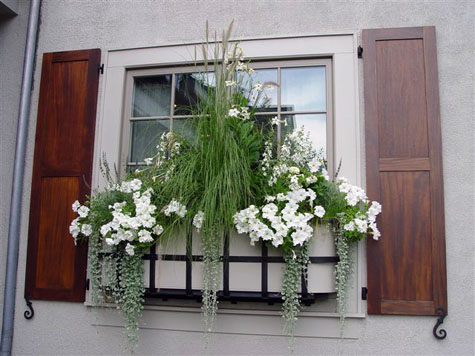
This box, tucked neatly between dark stained shutters, makes the flowers, and shutters the center of attention. This arrangement of a formal box and equally formal shutters, and green and white planting is elegant, but lively. �
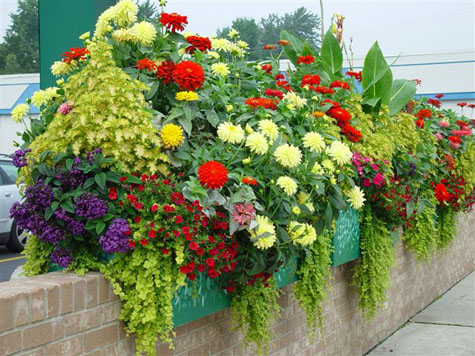
These boxes, specially constructed to sit astride a narrow brick wall, say welcome in a very big way. What a happy improvement over the wall.
The Window Box: A Hybrid Vehicle
Annuals in the Ground
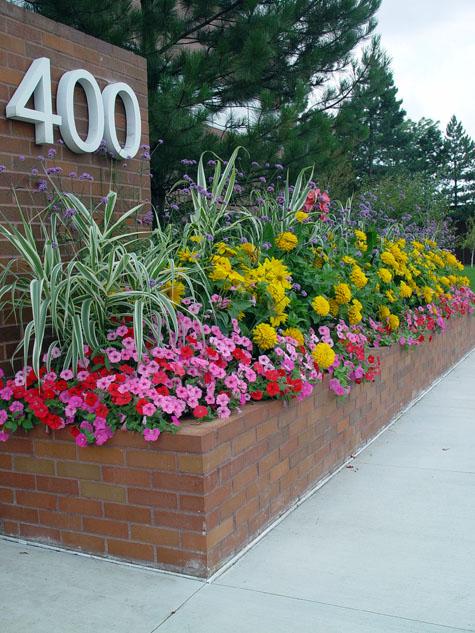 It’s such a good thing that shopping centers and the like plant fibrous begonias and impatiens, in vast quantities, so you don’t have to. The Victorian gardening era in England produced some very inventive schemes for bedding plants. Beautifully designed and executed, they made use of annual plants of compact habit and low maintenance. Many of them were representational in their design-the most familiar of these would be the bedding plant clocks. Only rarely do I see bedding plants done to this level. There are those who plant oceans of uniformly growing fibrous begonias, impatiens, dusty miller and so on, without much in the way of interesting design-just lots of color. I like color as well as the next person, but I am glad this way of planting is being done by others, so I don’t have to.
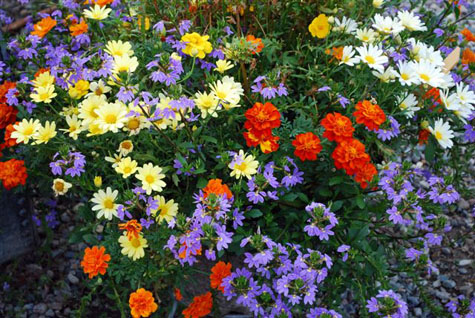
I like annuals in the ground that mix shapes and colors in a dynamic, airy way. I like annuals in the ground that are unexpected. Some in ground annuals can be designed to give the impression of a perennial garden-with the added bonus of a very long season of bloom.
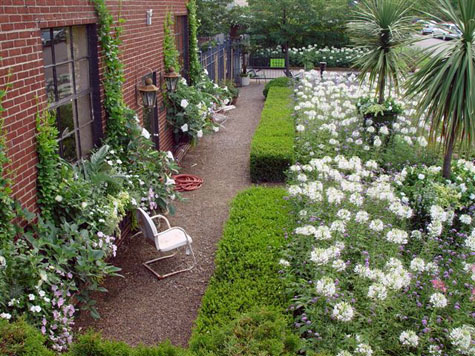
Big growing annuals are often passed by in garden centers, as they take time to get to blooming size, and do not show well in a cell pack, or 4” pot. Zinnias, cleome, cosmos, verbena bonariensis, and nicotiana alata varieties fall into this category.
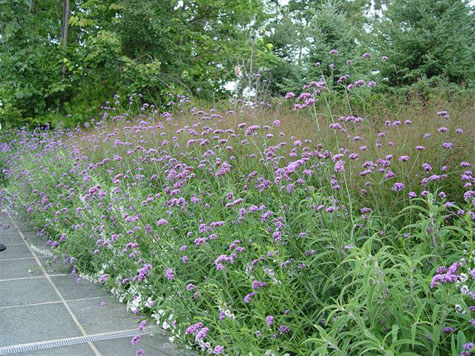
But I find their old fashioned grace and size can make for a stunning annual display. Even shady annual areas can be enlivened by the addition of coleus, or tropicals; no shade garden is restricted to begonias and impatiens.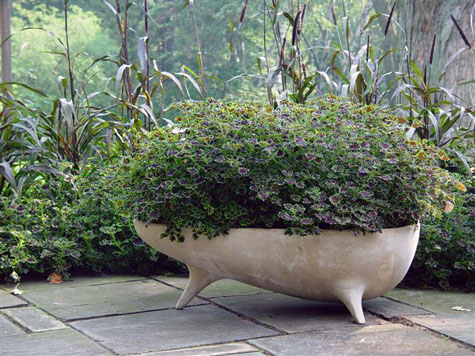
No doubt some very formal, and some contemporary annual plantings ask for a restricted plant palette, but I like to see this done on purpose.
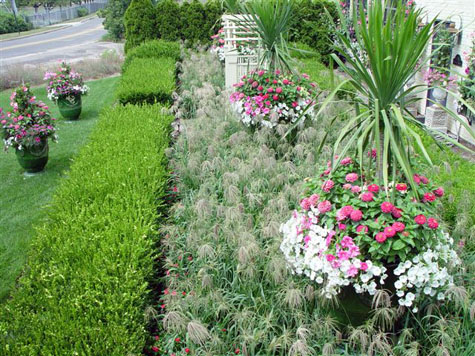
If you garden is cottage-style, grasses, or the wispy textured verbena bonariensis added to the annual mix is charmingly meadow-like.
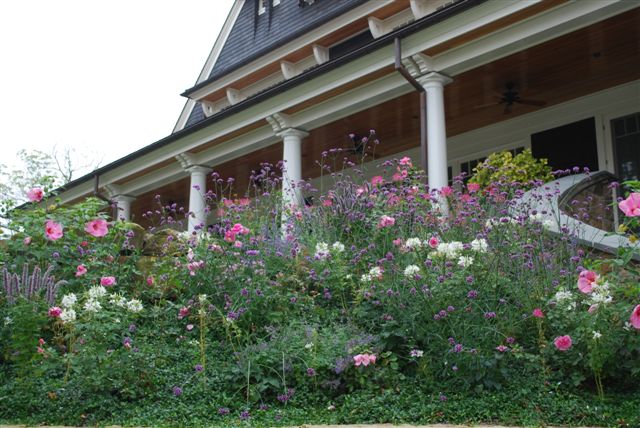
Grey plectranthus, the broad-leaved cirrus dusty miller, or chocolate sweet potato vine, grown in ground, is cool and contemporary looking.
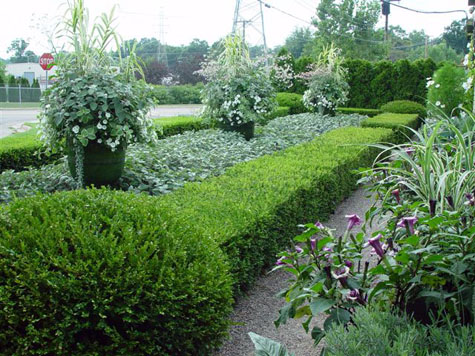
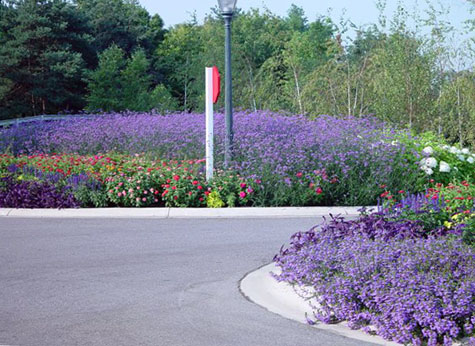
Bold growing annuals in bold colors warm up, and loosen up a space. Zinnias, dahlias, green-eyed daisies, and giant marigolds read well from a distance. One of my favorite annuals, nicotiana mutabilis, is a cloud of white and pink when planted in masses; try interplanting a short growing annual to give color and interest at ground level.
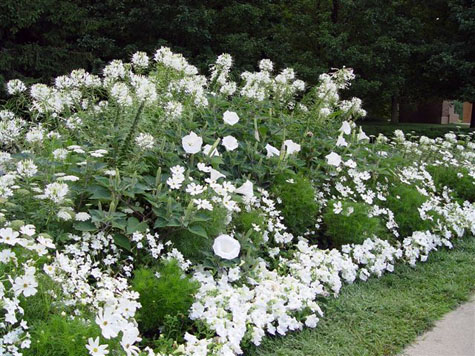
There is another very good reason to plant mixed annual beds-the summer weather. Some years impatiens grows poorly. If that’s all you grow, it’s a poor year for your annual garden. If you have mixed in other annuals, perhaps not all is lost. A mix which highlights the color, textures, and volumes of annual plants will keep your interest over the course of the season. A mix of heights gives you color interest from top to bottom. Check out the annual flowers at your local nursery that are green right now, or unknown to you, or unusual to your eye; they may be promising additions to your summer annual garden.
Green Respite
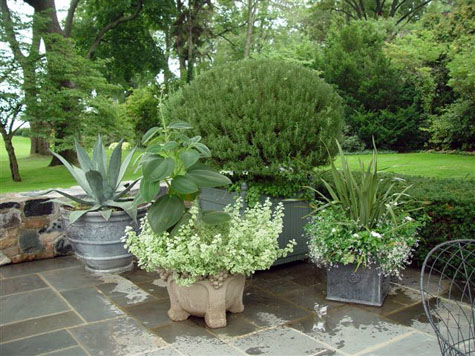 If all the color of my past few posts has put you on overload, perhaps these pots will suit you better. As I have said, annual plants are those plants that survive but one season-this is a large group-some of which have no flowers of consequence.
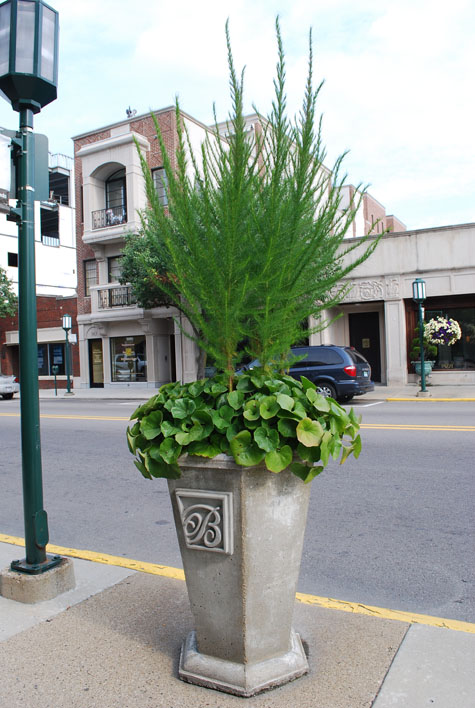 Annual plantings or pots without flowers can be very effective and attractive. Some locations for annuals do not have enough sun to support good flower production. Annual plants can be as much about their forms, their leaves, and their architecture, as they are about flowers. This very tall “elegant feather” plant-no longer in production at Proven Winners, is a great foil for the round-leaved farfugiums. There are very few greens I do not like. My yews go black green in the winter when it is really cold, much like this Moses in the Cradle. The chartreuse and yellow coleus “Wild Lime” provides lots of punch in shade.
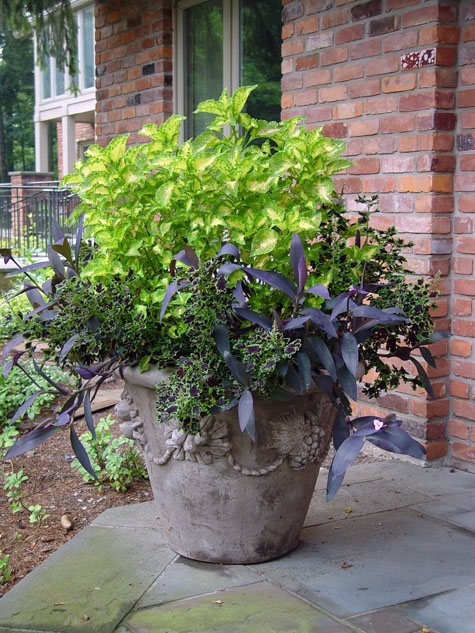 Chartreuse green is spring like, and fresh, no matter what time of year I see it.Grass after an electrical storm is so intensely dark gorgeous green-thus the term grass green. Lime creeping jenny is a versatile plant that highlights darker plants and obligingly trails.
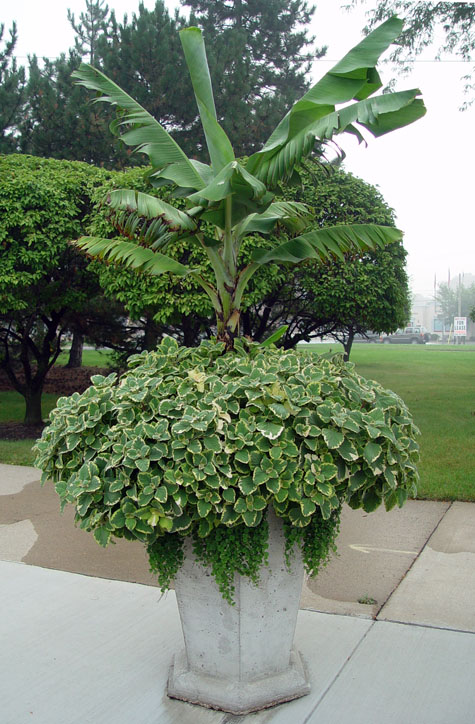 Green can be as much about texture and scale, as color. The slick, massive texture of this banana is complimented by the thick felted leaves of this variegated Plectranthus.
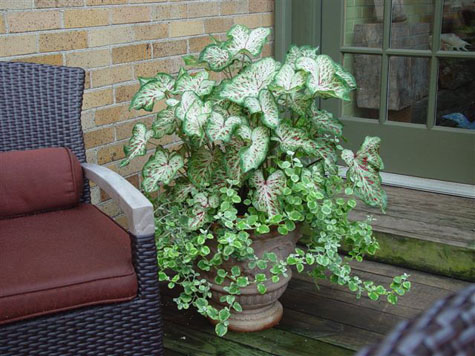 Caladiums, calocasias, and cannas have spectacularly large foliage.
 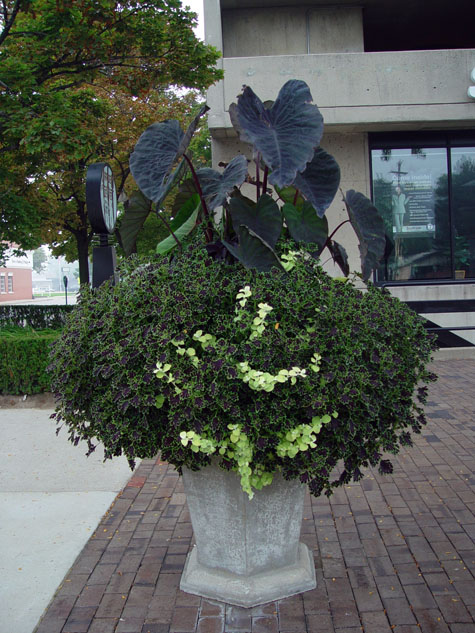 Calocasias and caladiums are thin-leaved (this refers to their “substance”); light will shine through them. Helicrysum both in lime and variegated leaf are densely felted.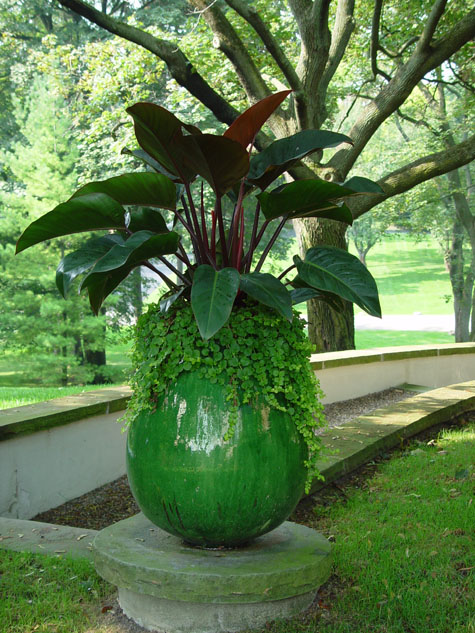
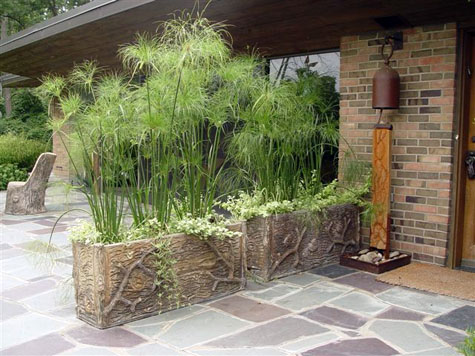
I confess I lump most houseplants into the genus “houseplant”, but most of them are good outdoors in shady spots. King Tuts, like other reeds and grasses have the added graceful beauty of motion.
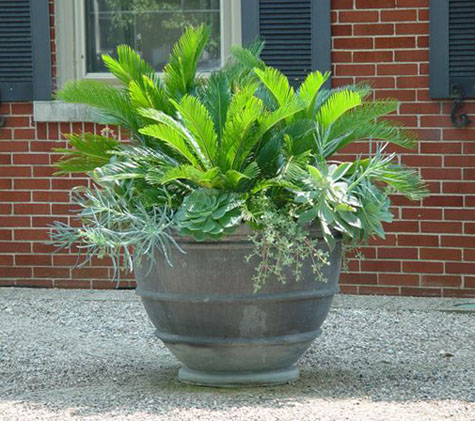
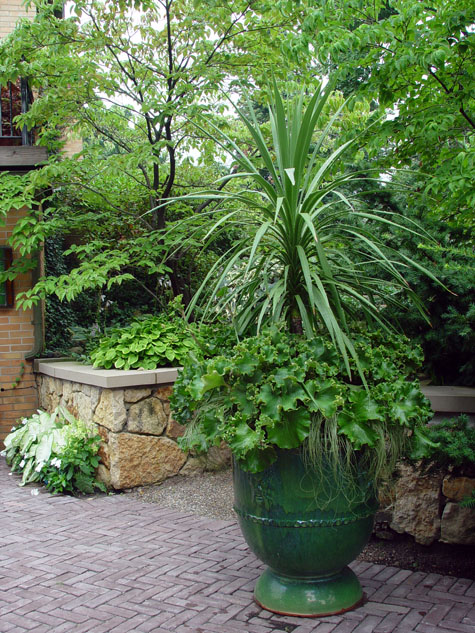 Phormiums, and dracaenas are stiff-strapped, and sword-like-an interesting contrast to this curly leaved farfugium. Cycads and escheverias have that dense waxy texture, and can be rounded, or spiky.
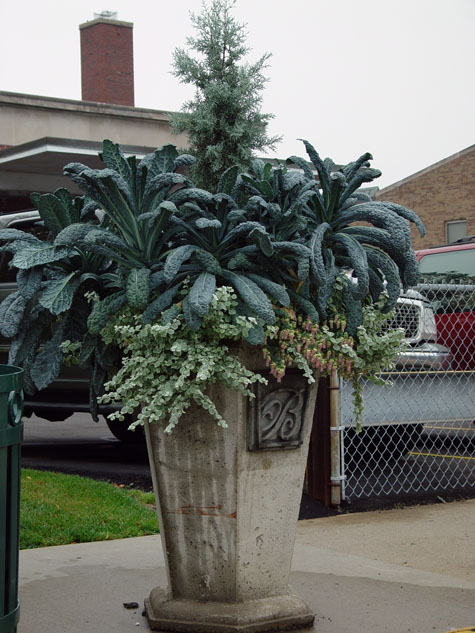 Tuscan blue kale has great size, a blistered leaf surface, and a very blue color-just the thing to pair with a blue juniper column, variegated licorice, and ornamental oregano “Kent Beauty” .
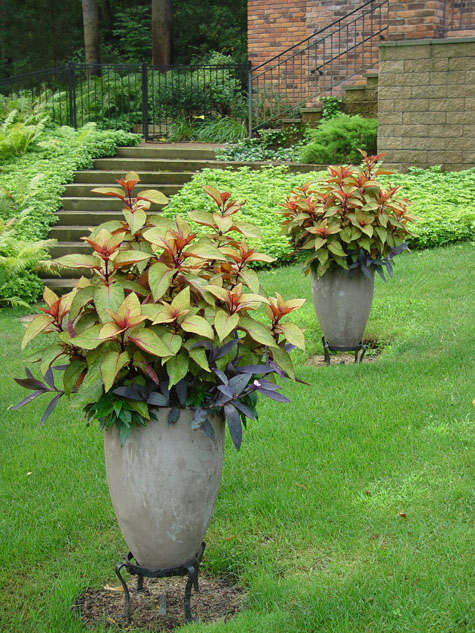 One of my favorite coleus is a yellow/olive color I call turtle green. The striped grass, miscanthus zebrina, is a happy companion to a plectranthus with the same color variation. The third element: the pairing of the plant material is complimented by the pairing of the pots close enough to encourage all the plectranthus to grow together.
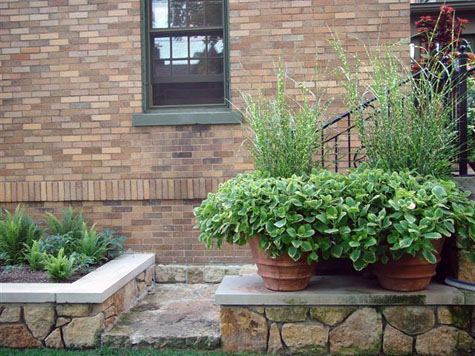 So many beautiful greens. So many ways in which green is beautiful.
More Places
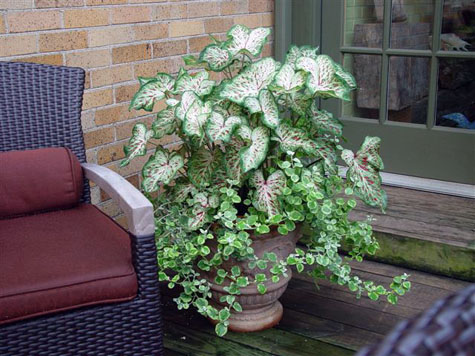 No matter that I have been planting annuals for the better part of 25 years; I have yet to get to that point where I have had enough. It’s a yearly conversation I have with myself, usually in late February. Do I still want to do this? Would I like some other career? Am I done with my career-would I just like a job? Another words, I am wringing my hands and fretting such, it would make you laugh.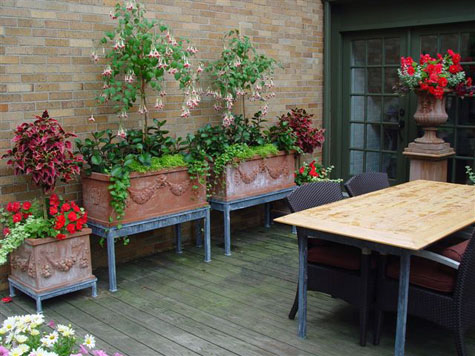
Incidentally, my idea of a good job would be to gang mow 1-75 between Detroit, and Flint, and back. Repeatedly, through 3 seasons. No phones to answer, no problems to solve-just headphones blasting whatever music seems good that day. A responsibility for short grass, and short grass, only. Some days, the Mozart Requiem (fall music for sure) and other days, Aretha Franklin, or the Propeller Heads. Or Bob Dylan-that would be good. I would sculpt that grass for miles, and look forward to that sculpture’s next incarnation. I would park my mower and that job at the end of the day, and head for home. 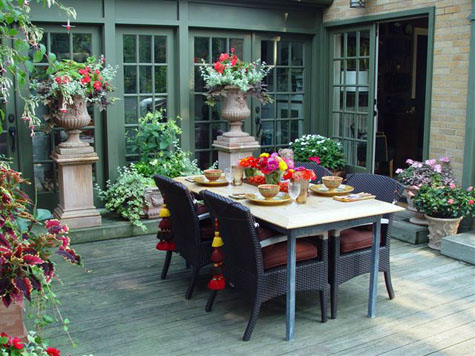
But I am not ready for that, yet. I still love that I have my home and my garden-but also that I have lots of other gardens that belong to me in a certain way, as I’ve designed and planted them.
There are the people that own those gardens with whom I have a relationship. I think God steered me to this career-as I have more gardens and landscapes than years left, that I want to plant.
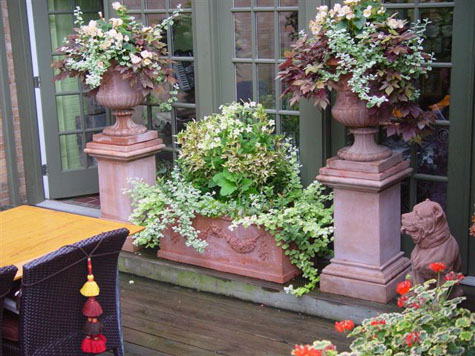
That an annual garden, or any garden for that matter, is ephemeral is key to my love for them. So intensely present all season, one good frost and poof, gone. Why do without memories like these?